
London: The Complete Agent's Guide
The Destination Overview
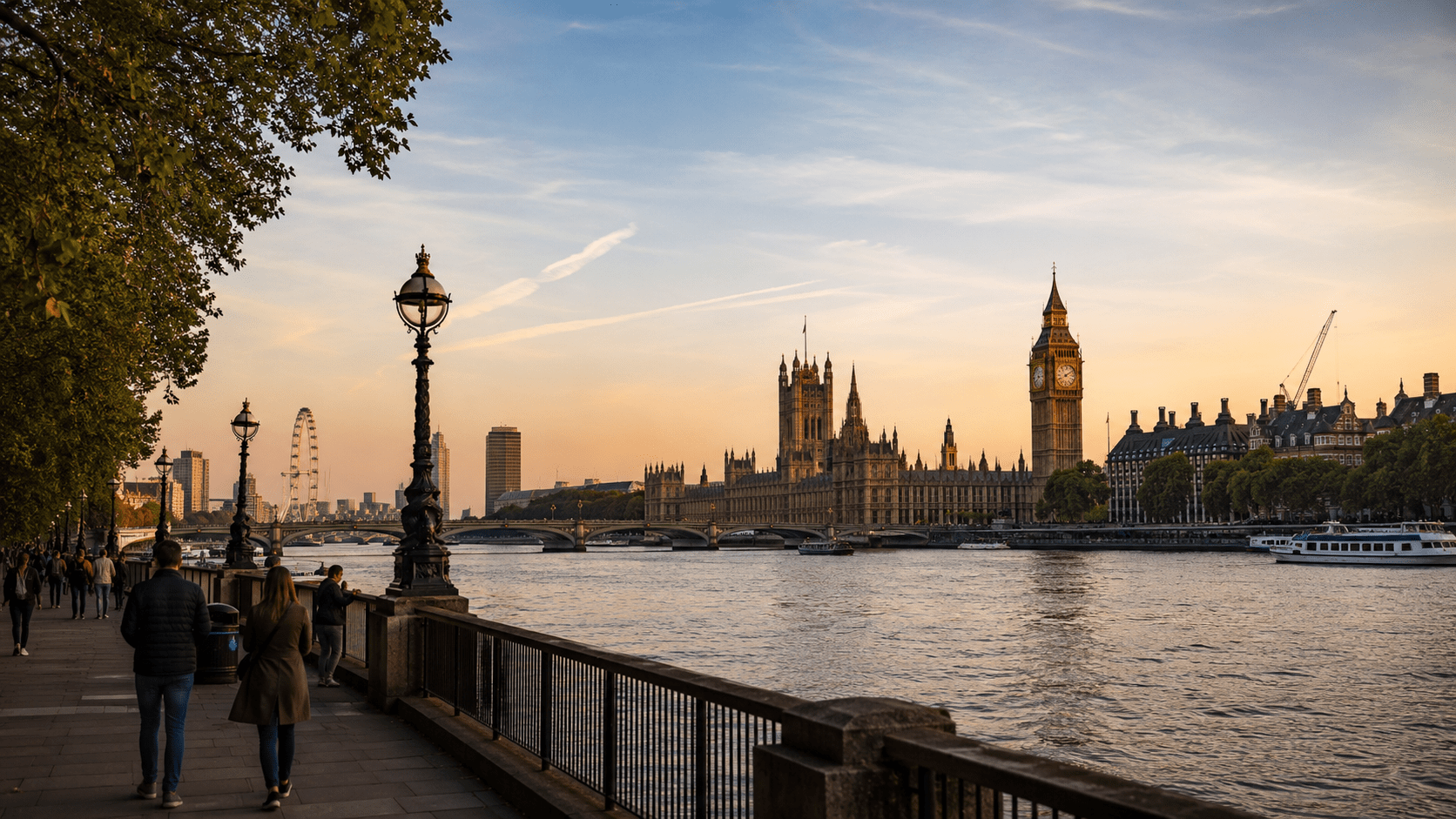
London is the capital of England and the United Kingdom: a city of approximately nine million people that has been continuously inhabited and continuously reinventing itself for two thousand years. It sits on the River Thames in southeastern England, roughly 60 kilometres from the English Channel.
It is one of the world's three great financial capitals, one of its great cultural capitals, and one of the world's great visitor capitals. For a travel agent, it is both the easiest destination to sell (clients already want to go) and the most important one to sell well, because the difference between a mediocre London trip and a great one is almost entirely a matter of planning, sequencing, and knowing what the brochure doesn't tell you.
The city is not compact. It covers 1,572 square kilometres and spreads across 33 boroughs, each with its own character. London is very walkable by neighbourhood cluster, but not walkable as a whole. Clients who treat it like Paris or Amsterdam, assuming they can walk between everything, will exhaust themselves and miss most of it. The key is the Tube, a mental map of the neighbourhoods, and a realistic sense of what is achievable per day.
What makes London consistently worth selling: the major national museums are entirely free. The parks are vast and central. The theatre is the finest in the English-speaking world. The food scene, long unfairly dismissed, is now genuinely world-class. And the depth of history is such that almost every street in the centre of the city has a story worth knowing.
Quick Reference
- Country / Region: England, United Kingdom
- Time zone: GMT (BST, UTC+1, late March to late October)
- Currency: British Pound Sterling (GBP / £)
- Language: English
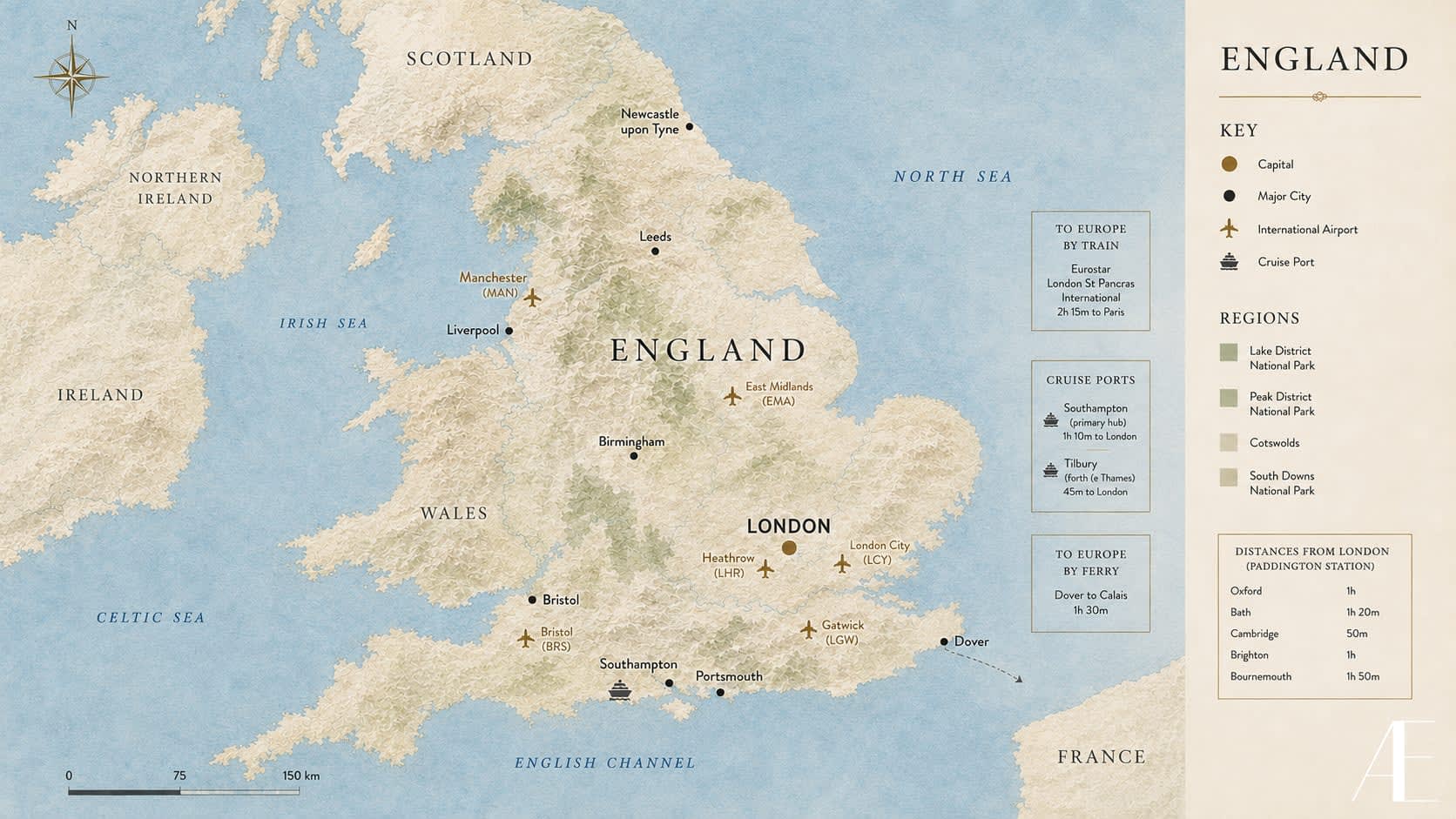
- Best airports: Heathrow (LHR), primary hub. Gatwick (LGW), second largest. City Airport (LCY), closest to central London. Stansted (STN) and Luton (LTN) for budget carriers.
- From Montreal (YUL): 6.5–7 hrs non-stop (Air Canada, British Airways, Air Transat seasonal). Multiple daily departures to Heathrow.
- From Toronto (YYZ): 7 hrs non-stop (Air Canada, British Airways). One of the most-served transatlantic routes.
- From New York (JFK/EWR): 7 hrs non-stop (British Airways, American, Virgin Atlantic, Delta, others). Multiple daily departures.
- Visa, Canadian citizens: No visa required for standard tourism stays of up to 6 months. UK Electronic Travel Authorisation (ETA) required before travel. Apply only through GOV.UK or the official UK ETA app. Current cost: £20; always verify before departure.
- Visa, American citizens: No visa required for standard tourism stays of up to 6 months. UK ETA required before travel. Apply only through GOV.UK or the official UK ETA app. Current cost: £20; always verify before departure.
One-line client pitch: "It is one of the world's great visitor capitals for a reason: two thousand years of history, the best theatre in the English-speaking world, world-class free museums, and a food scene that has nothing left to apologize for. And your clients already speak the language."
The History that Shaped London
The Roman Foundation
London begins, as so many British stories do, with the Romans. In approximately 43 CE, the Emperor Claudius's legions crossed the Thames and established a settlement they called Londinium at the point where the river was narrowest and crossable: roughly where London Bridge stands today. The site was strategic: tidal, accessible from the sea, and central to the road network the Romans were building across the province of Britannia.
Londinium grew rapidly into the largest city in Roman Britain, with a forum-basilica complex larger than any north of the Alps, a governor's palace, an amphitheatre (whose outline survives under the Guildhall Yard in the City of London), extensive bathhouses, and a defensive wall that encircled the settlement. Significant portions of that Roman wall survive today: in a car park at Tower Hill, in the churchyard of St Alphage, in the basement of the Museum of London Docklands. The boundary of the Roman city, roughly a square mile in area, is still visible in the street plan of the City of London, which the Corporation has preserved with remarkable fidelity.
London was sacked and burned by Boudicca, Queen of the Iceni, in 60 or 61 CE, in the most dramatic act of resistance to Roman rule in British history. Boudicca's forces destroyed Colchester (then the Roman capital of the province), London, and St Albans in succession, killing an estimated 70,000 people. The Romans suppressed the revolt and rebuilt London larger than before. A layer of red ash found beneath the streets of the City, dating to exactly this period, is the archaeological signature of the destruction.
For agents: The City of London (the "Square Mile," the financial district) sits almost exactly on the footprint of the Roman city. Clients walking from the Monument to the Museum of London are walking through two thousand years of continuous urban history on the same ground.
The Saxons, the Vikings, and Alfred the Great
When Roman administration collapsed in Britain in the early 5th century, Londinium was largely abandoned. The Saxons who settled the area established a trading settlement called Lundenwic about one kilometre to the west, in the area now known as Covent Garden.
In the 9th century, Viking raids on Lundenwic forced Alfred the Great, King of Wessex, to re-occupy the old Roman city walls for defensive purposes and re-establish London within them. Alfred's repopulation of "Lundenburh" in 886 is effectively the re-founding of the City of London. The street plan he laid down, running perpendicular to the old Roman walls, is largely the street plan that survives in the City today.
William the Conqueror and Medieval London
The Norman Conquest of 1066 transformed London permanently. William I built the Tower of London, beginning around 1078, as the definitive statement of Norman power over the Anglo-Saxon population: a fortress-palace-prison that dominated the eastern approach to the city. He also recognized, in the first royal charter granted to the City of London, the commercial privileges and self-government rights that the City's merchants had accumulated under the Saxons. That charter, and the independence it conferred, is why the City of London remains to this day a separate municipal entity with its own Lord Mayor, its own police force, and its own constitutional quirks that predate Parliament.
Medieval London grew rapidly along the riverfront and northward from the Thames. Westminster, downstream, became the seat of royal government and the church. London Bridge, the only crossing of the Thames until the 18th century, was lined with houses and shops and featured severed heads of executed traitors displayed on spikes at the southern end.
The Black Death of 1348–1349 killed approximately half of London's population. The city recovered within a generation, drawing migrants from across England, and by the 15th century was again the largest and richest city in England.
The Tudor City
The Tudor period (1485–1603) was transformative for London. Henry VIII's dissolution of the monasteries (1536–1541) transferred enormous amounts of land in and around the city from the Church to the Crown and then to secular ownership, triggering a wave of development. The city's population, perhaps 50,000 in 1500, grew to around 200,000 by 1600, making it one of the largest cities in Europe.
Elizabethan London produced the greatest flowering of English literature and theatre in history. Shakespeare's Globe Theatre stood on the South Bank (Bankside), alongside the bear-baiting arenas and other entertainments that occupied the area outside the City's jurisdiction. The rebuilt Globe (opened 1997) stands 200 metres from the original site and remains one of the most powerful theatrical experiences London offers.
The Great Fire and the Rebuilding
On September 2, 1666, a fire broke out in a bakery on Pudding Lane, near London Bridge, and burned for four days. The Great Fire of London destroyed 373 acres of the medieval city, 13,200 houses, and 87 churches, including the medieval St Paul's Cathedral. Remarkably, recorded deaths were few.
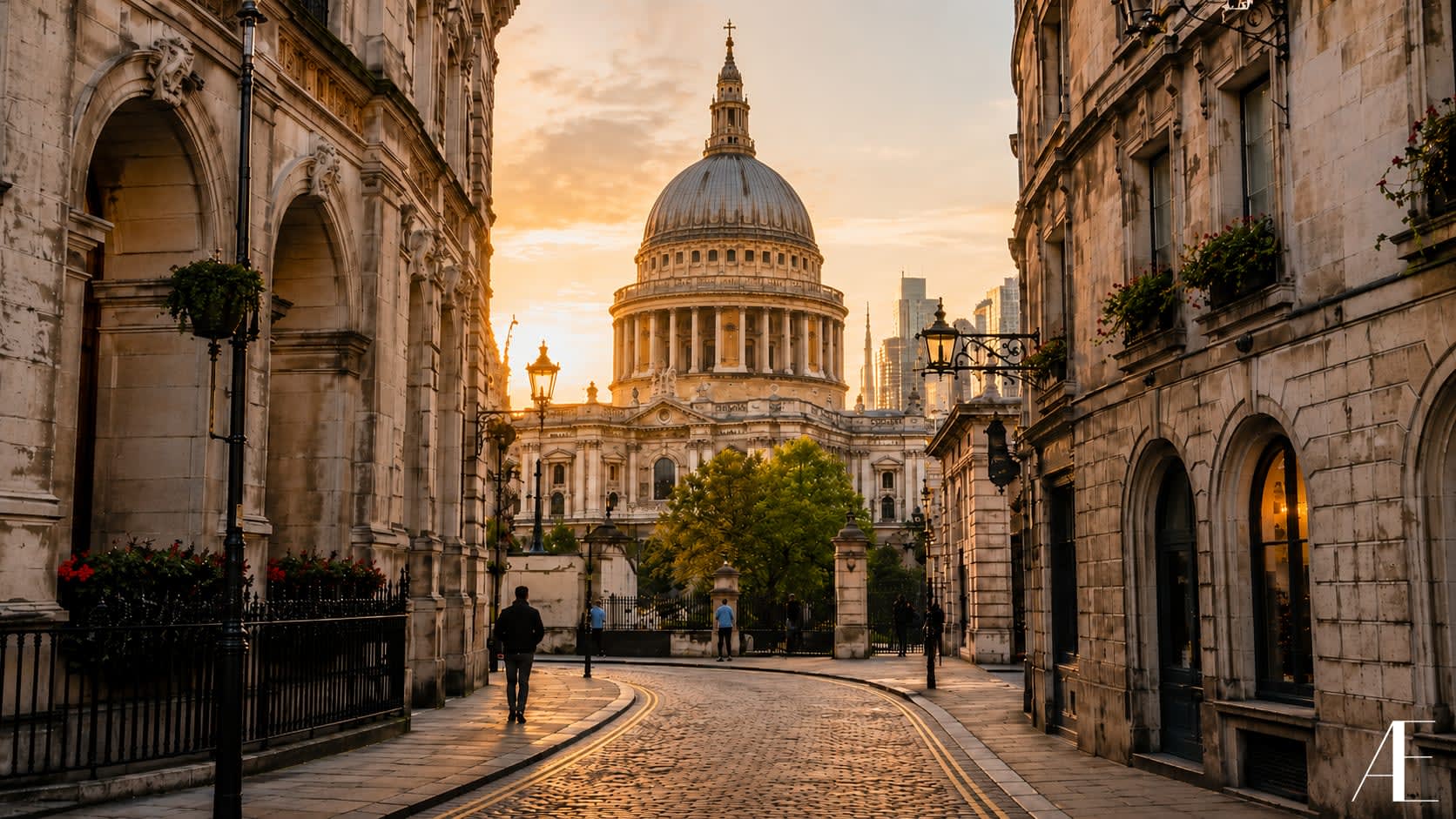
The rebuilding that followed, largely complete by the 1680s, was one of the great urban projects of the 17th century. Christopher Wren, appointed to supervise the reconstruction, designed 51 new churches, including the new St Paul's Cathedral, which took 35 years to complete.
The Monument to the Great Fire, a column 62 metres tall designed by Wren and Robert Hooke, stands at the precise distance of 62 metres from the bakery where the fire started. If the Monument were laid horizontal, its tip would point to the origin of the fire.
For agents: The Monument, the Tower of London, St Paul's, and the City's medieval street plan are all comprehensible as a single story of destruction and rebuilding. Clients who know the Great Fire narrative walk through the City of London in a completely different way.
The 18th Century: Empire, Commerce, and the West End
The 18th century saw London become the capital of a global empire and the world's leading commercial city. The Port of London, the busiest in the world, handled trade from India, the Caribbean, the American colonies, West Africa, and the Far East. The wealth generated by this trade funded the Georgian architecture of the West End: the squares, the terraces, the parks, and the grand townhouses of Mayfair, Bloomsbury, and Marylebone that give central London much of its visual character today.
This period also produced the first genuinely modern city institutions: the Bank of England (founded 1694), Lloyd's of London (insurance, founded in a coffee house in 1688), and the stock exchange. The coffee house culture of 18th-century London was the incubator of the Enlightenment in England.
Victorian London: The World's Greatest City
By the mid-19th century, London's population had reached two million. By 1900, it was over six million, making it the largest city in the world by a considerable margin. The Victorian era produced the infrastructure of the modern city: the world's first underground railway (the Metropolitan line, opened 1863), the sewage system designed by Joseph Bazalgette that still underlies the city, the Embankment, the great railway terminals, and the Victorian museums of South Kensington.
Victorian London was also the city of Dickens: the workhouses, the debtors' prisons, the foggy Thames, and the barely-surviving underclass that provided his subject matter. Dickens is buried in Westminster Abbey.
The Blitz of 1940–1941, in which German bombing killed approximately 30,000 Londoners and destroyed or damaged a third of the city, is the defining trauma of modern London. The rebuilding that followed produced the South Bank arts complex and, eventually, the creative re-use of industrial buildings (Tate Modern in a power station, Borough Market under the railway arches) that defines the most interesting parts of contemporary London.
The Modern City
Post-war London has been shaped by immigration on a scale without precedent in its history: from the Caribbean (the Windrush generation, arriving from 1948), from South Asia, from East Africa, West Africa, Hong Kong, Cyprus, and, since EU enlargement, from Poland, Romania, and across Europe. The result is the most ethnically diverse major city in the world. Forty per cent of Londoners were born outside the UK. Over 300 languages are spoken in the city's schools.
This diversity is most visible in the food and market culture that makes contemporary London remarkable: the Bangladeshi restaurants of Brick Lane, the Caribbean food culture of Brixton, the Vietnamese restaurants of Hackney, the Turkish community of Stoke Newington, the Japanese restaurants of Soho, and the pan-African food market of Peckham.
The Geography & Neighborhoods
The Overall Geography
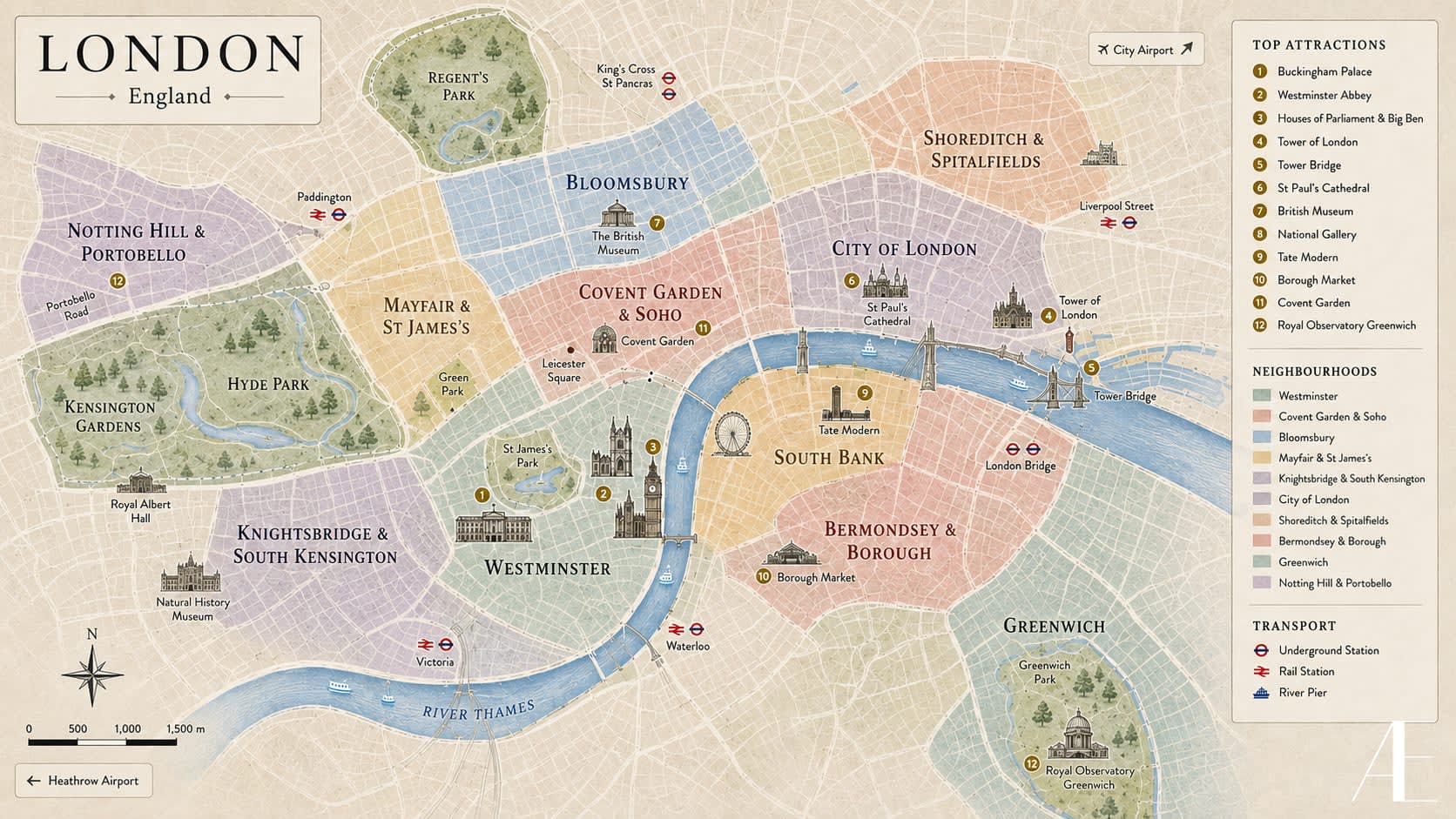
London sits in a broad, flat Thames valley, bisected by the river running east-west. The Thames is the defining physical and symbolic axis of the city: everything is oriented relative to it.
The centre of gravity for visitors is a rough triangle bounded by:
- Hyde Park Corner to the west
- Tower Bridge to the east
- King's Cross to the north
Almost all the major visitor attractions, hotels, and restaurants fall within or just outside this triangle. The Underground connects the entire area efficiently.
The key east-west axis: The Thames, with the South Bank walk from Westminster to Tower Bridge as the finest free promenade in the city.
The key north-south axis: From King's Cross south through Bloomsbury, Covent Garden, the Strand, Trafalgar Square, Whitehall, Westminster, and across the river to the South Bank.
The City of London (the Square Mile)
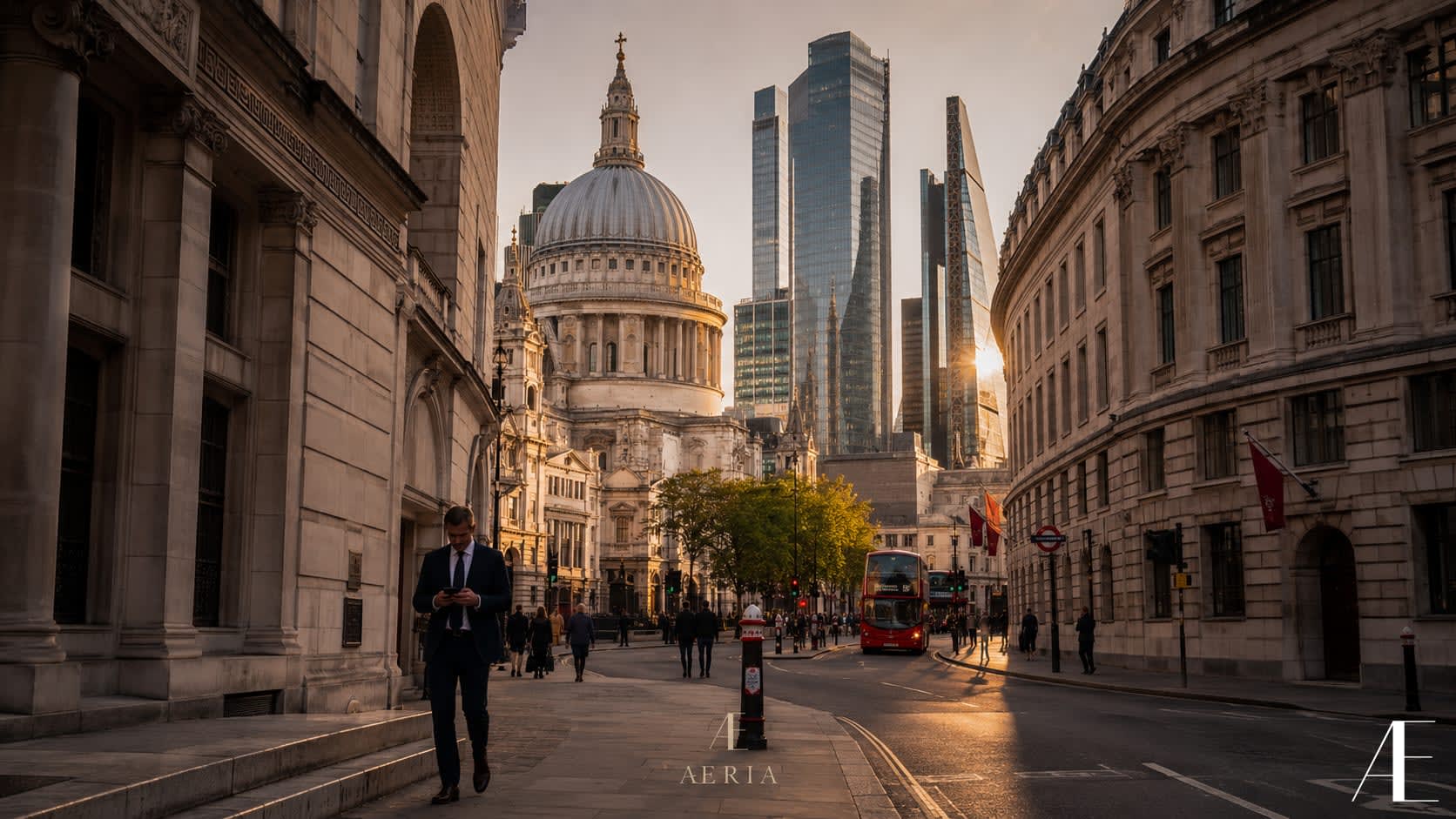
The historic and financial core: the original Roman and medieval city, now the global financial district. Remarkably empty at weekends but extraordinary for its architectural layers: Roman wall fragments, medieval churchyards, Wren churches, Victorian markets (Leadenhall), and glass-and-steel skyscrapers on the same streets.
Character: Businesslike weekdays, eerily quiet weekends. Best for architecture and history.
Who it's right for: History clients, architecture enthusiasts, those doing the Great Fire story.
Westminster
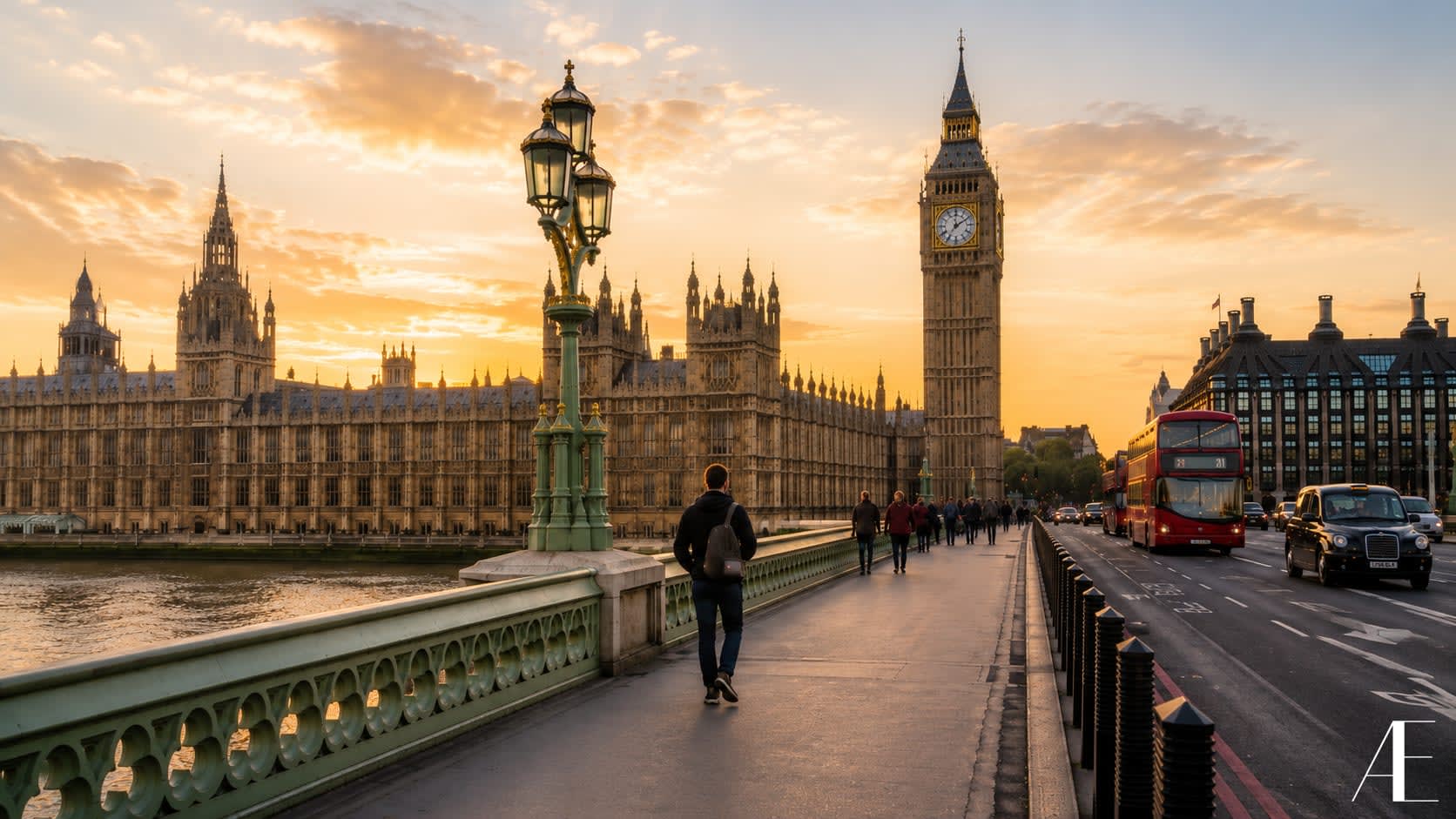
The governmental and ceremonial heart of the city: Parliament, the Supreme Court, Buckingham Palace, Westminster Abbey, and St James's Park.
Character: Grand, formal, tourist-dense. Essential for first-timers.
Who it's right for: Every client on a first visit.
The South Bank
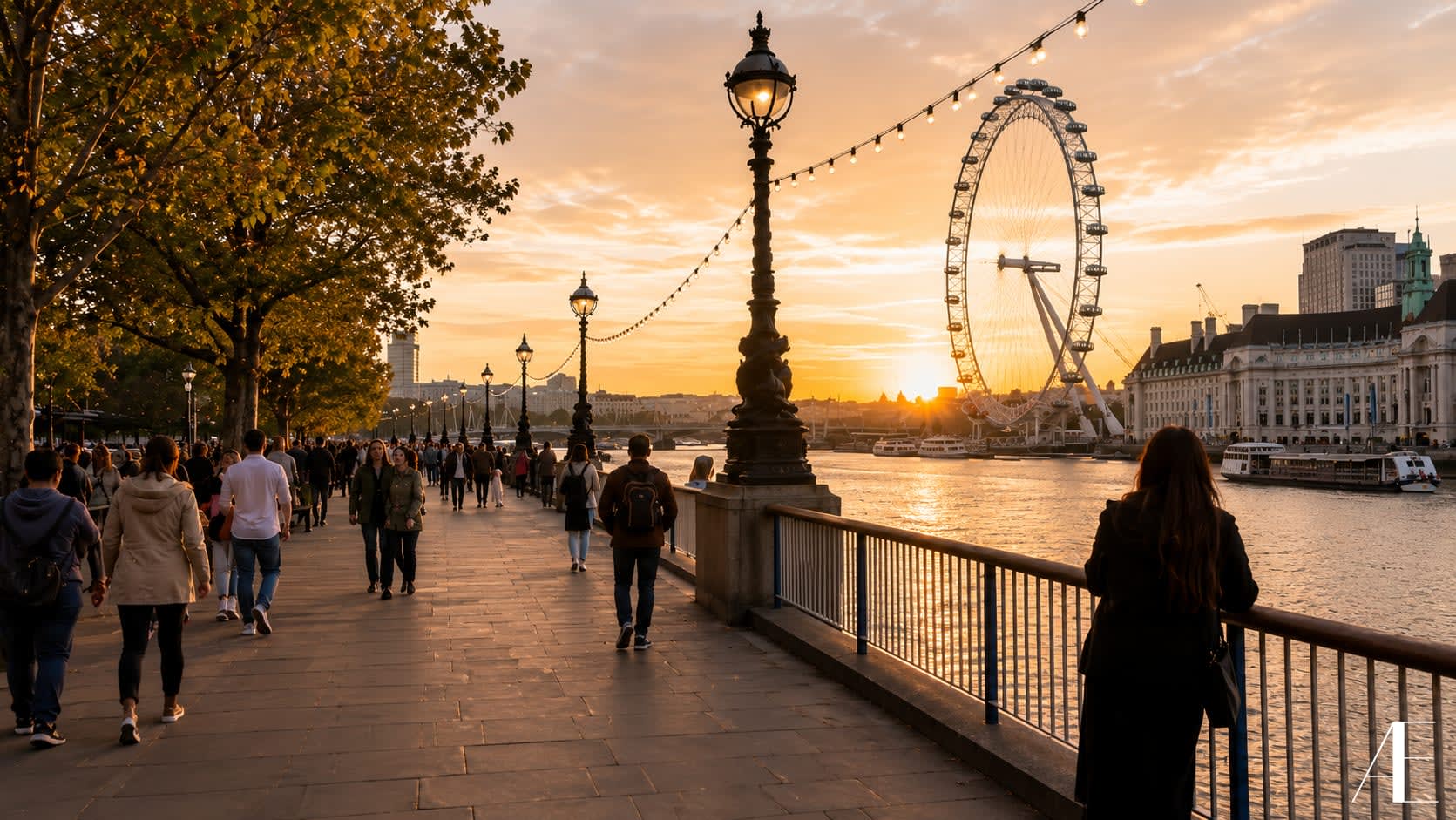
The stretch of Thames riverfront south of the river, from Westminster Bridge to Tower Bridge: the National Theatre, the BFI Southbank, the Tate Modern, the Globe Theatre, Borough Market.
Character: Cultural, walkable, excellent for evening.
Who it's right for: All clients. The South Bank walk should be on every London itinerary.
Covent Garden and Soho
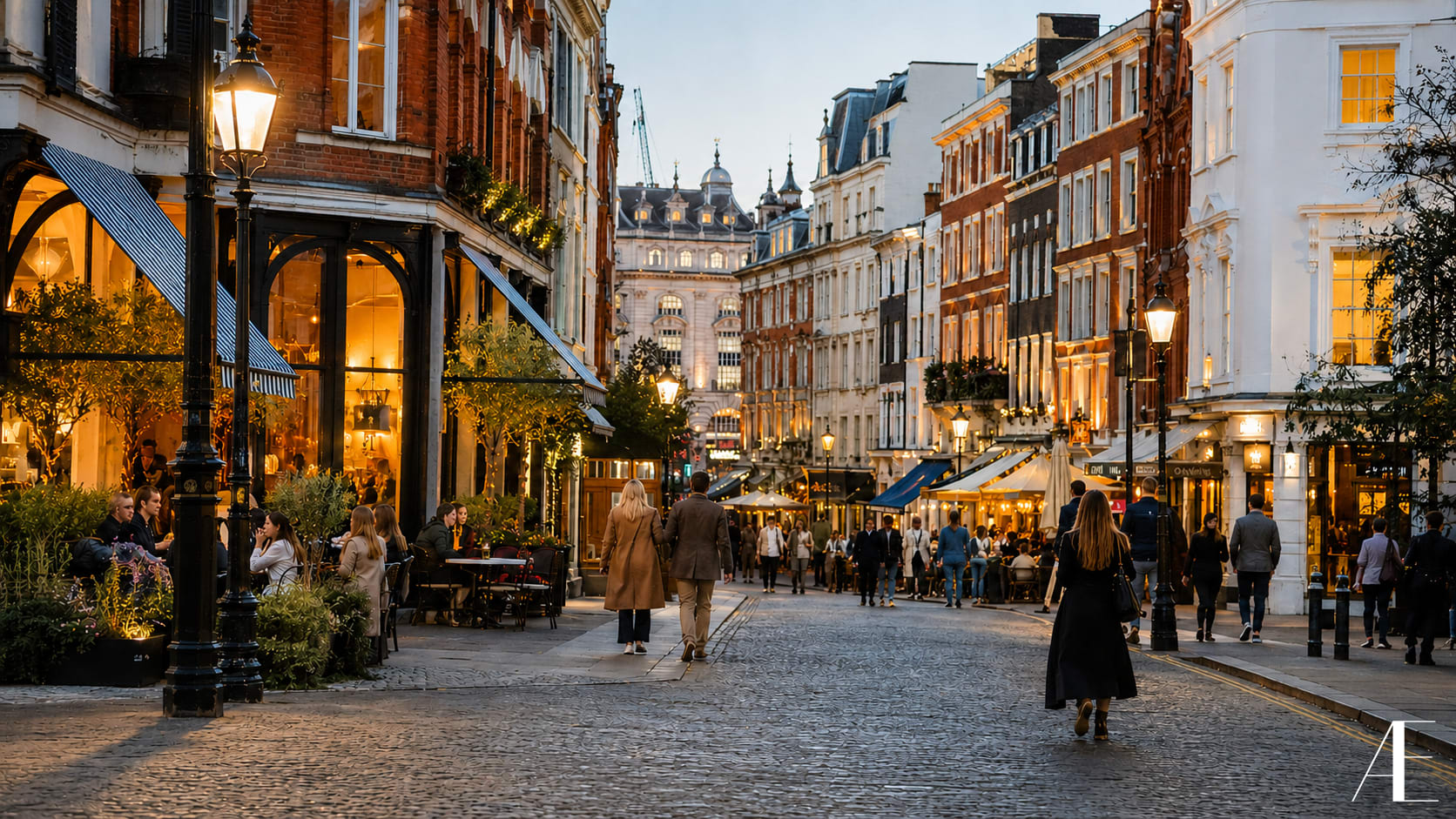
The entertainment and dining heart of the West End. Covent Garden's restored Victorian market hall is surrounded by good restaurants. Soho, to the west, is London's most concentrated neighbourhood for restaurants, late-night bars, and the theatre district.
Character: Lively, diverse, excellent for evening.
Who it's right for: Virtually all clients. Especially food and theatre clients.
Bloomsbury
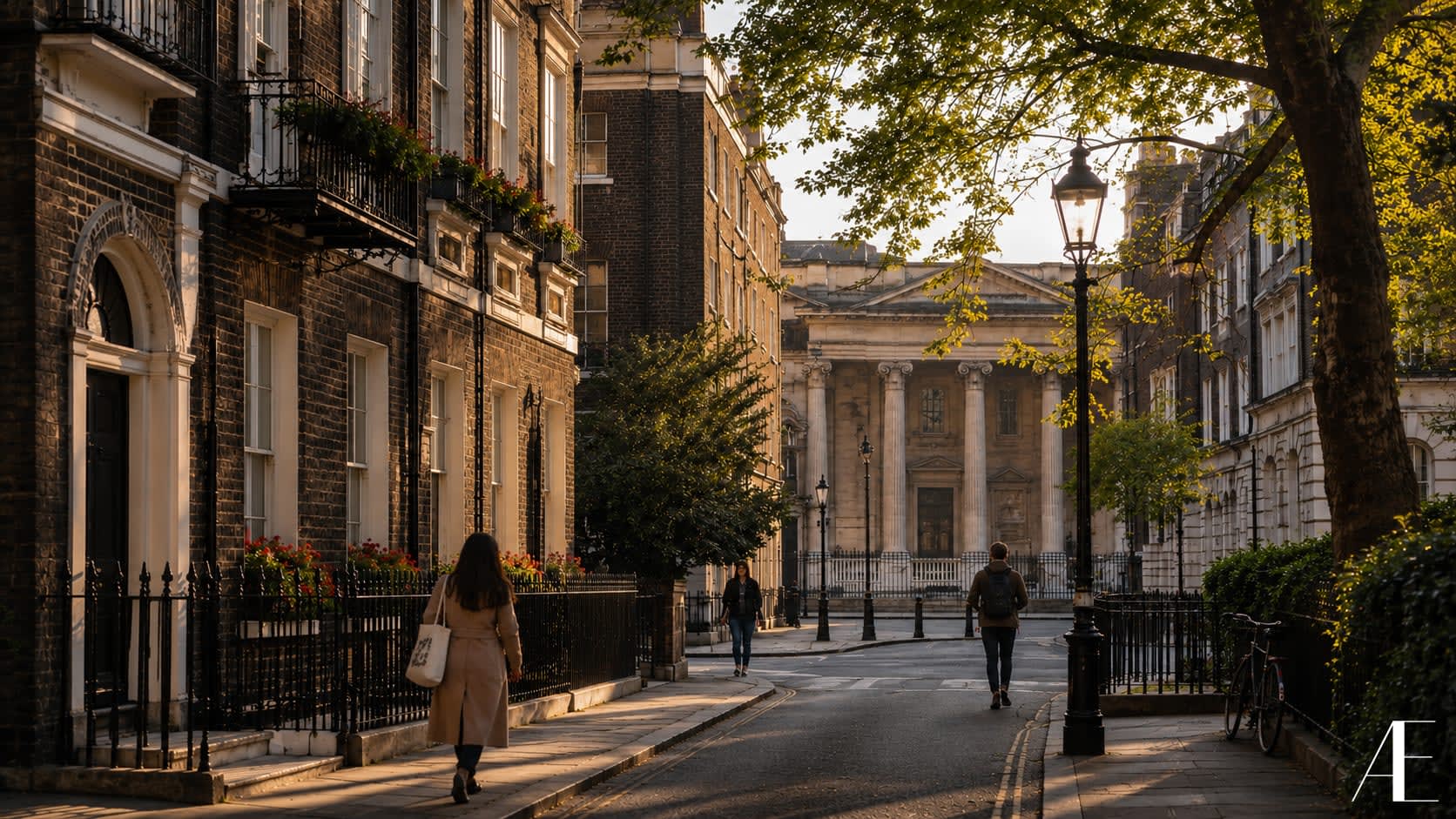
The academic and literary quarter north of the Strand: the British Museum, the University of London, the Inns of Court.
Character: Intellectual, calm, good for walking. One of the more underrated parts of central London.
Who it's right for: History and culture clients. Good hotel territory: central, quieter, better value than Mayfair.
Mayfair and St James's
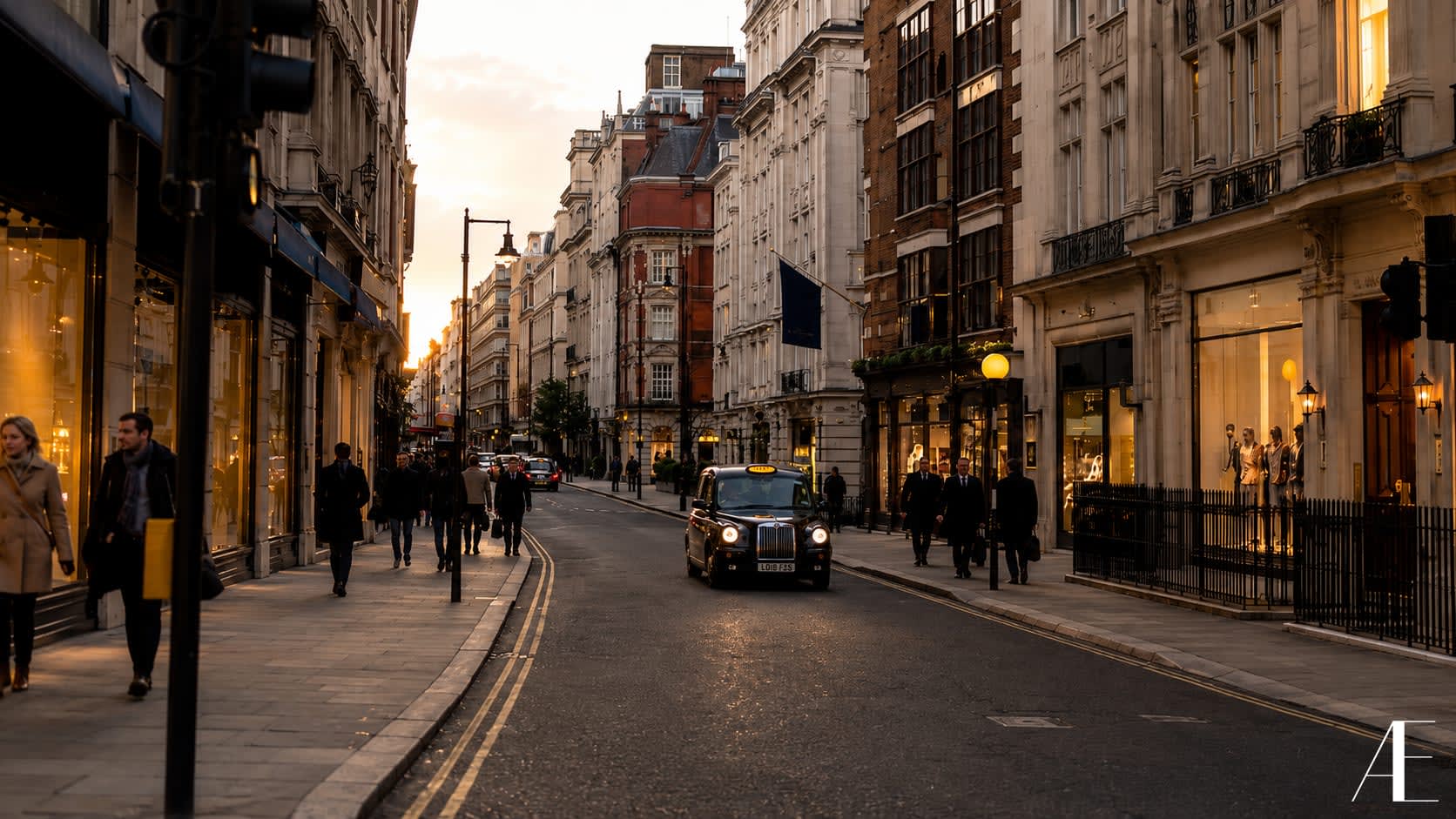
The most expensive real estate in England. Bond Street, Burlington Arcade, the Royal Academy, and the finest hotels in London. St James's has the gentlemen's clubs, the finest traditional men's tailors (Jermyn Street), and Fortnum & Mason.
Character: Expensive, formal, impeccably maintained.
Who it's right for: Luxury clients.
Knightsbridge and South Kensington
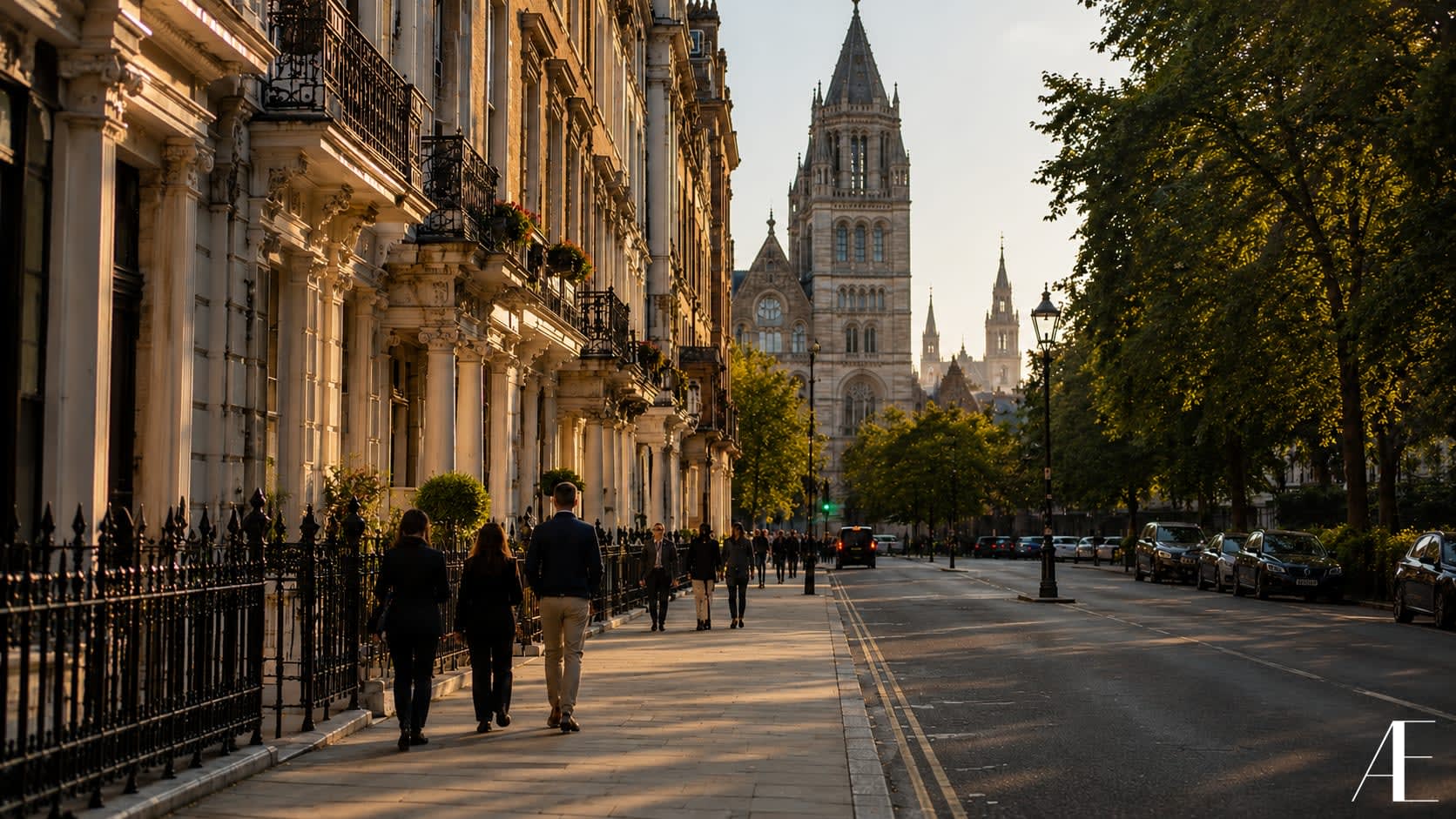
Harrods, Harvey Nichols, and the three great free museums of Exhibition Road: the Natural History Museum, the Victoria and Albert Museum, and the Science Museum.
Character: Wealthy residential and tourist.
Who it's right for: All clients. The V&A and Natural History Museum are among the finest in the world.
Notting Hill and Portobello
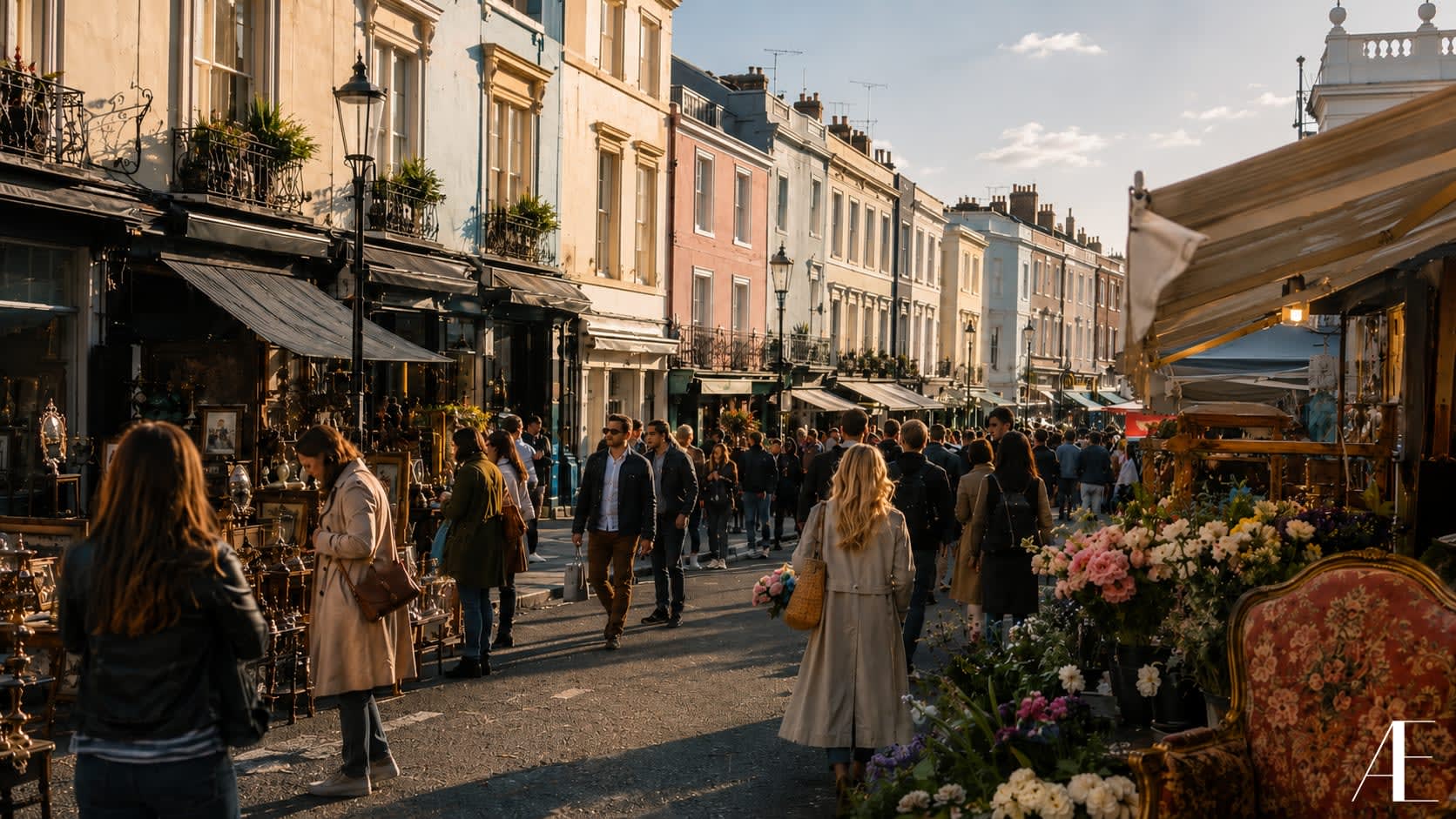
The colourfully painted stucco terraces of Notting Hill. Portobello Road Market on Saturdays is the best antiques and street food market in London.
Character: Photogenic, characterful, excellent on Saturdays.
Who it's right for: Anyone visiting on a Saturday. Specifically good for antiques clients.
Shoreditch and Spitalfields
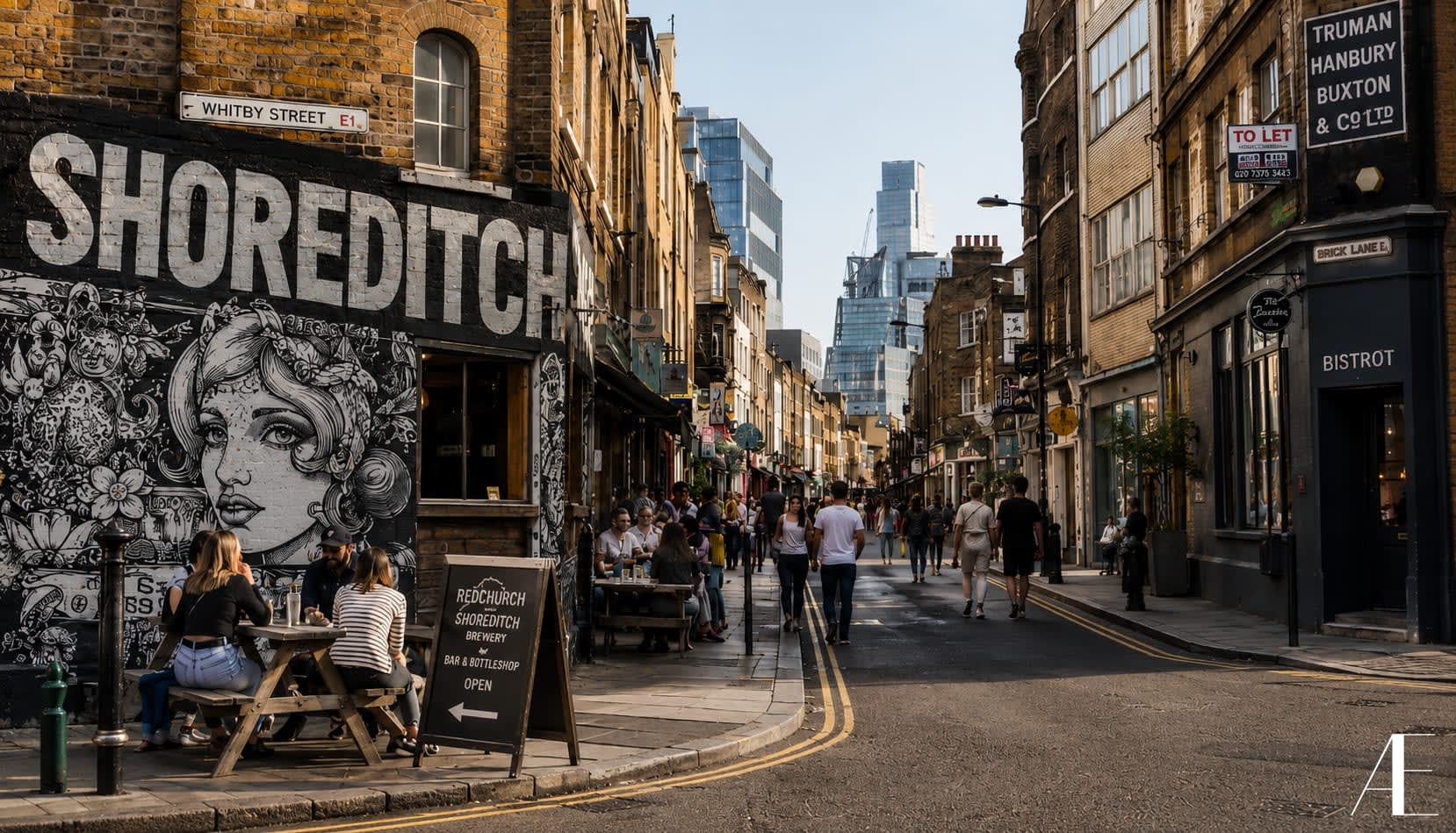
East London's creative quarter. Spitalfields Market (covered, Victorian hall) is excellent for food and design. Brick Lane on Sunday is chaotic and fun. Shoreditch has the city's most concentrated street art, best coffee, and most experimental restaurant scene.
Character: Edgy, creative, excellent for food and nightlife.
Who it's right for: Younger clients, food-obsessed clients, design-oriented clients.
Bermondsey and Borough
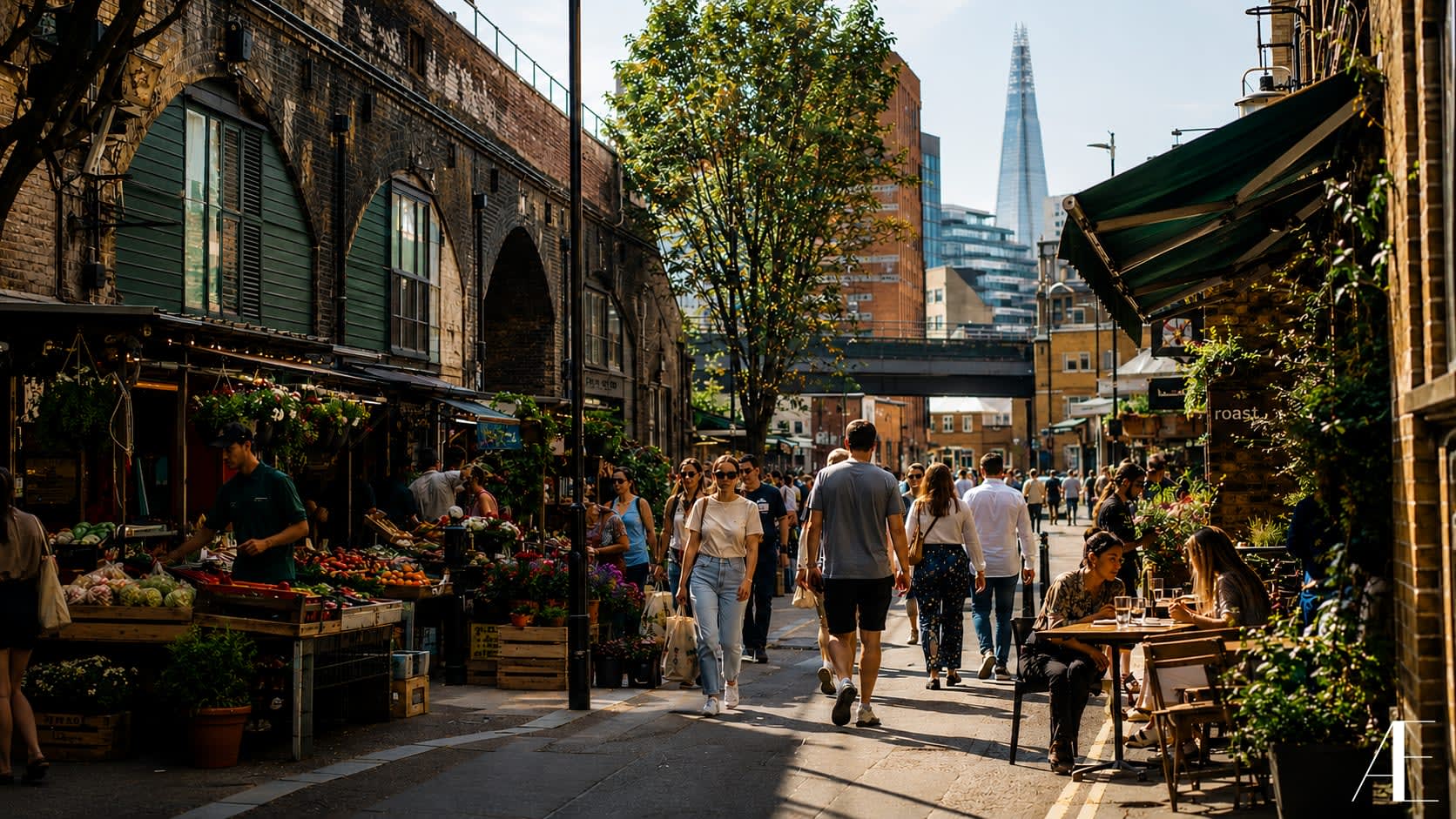
South London's food and drink heartland, immediately south of London Bridge. Borough Market, Maltby Street Market, the Bermondsey Beer Mile (independent breweries under the railway arches on Saturday mornings).
Character: Food-focused, local, increasingly prosperous.
Who it's right for: Foodies, Saturday morning visitors, clients doing the South Bank walk.
Greenwich
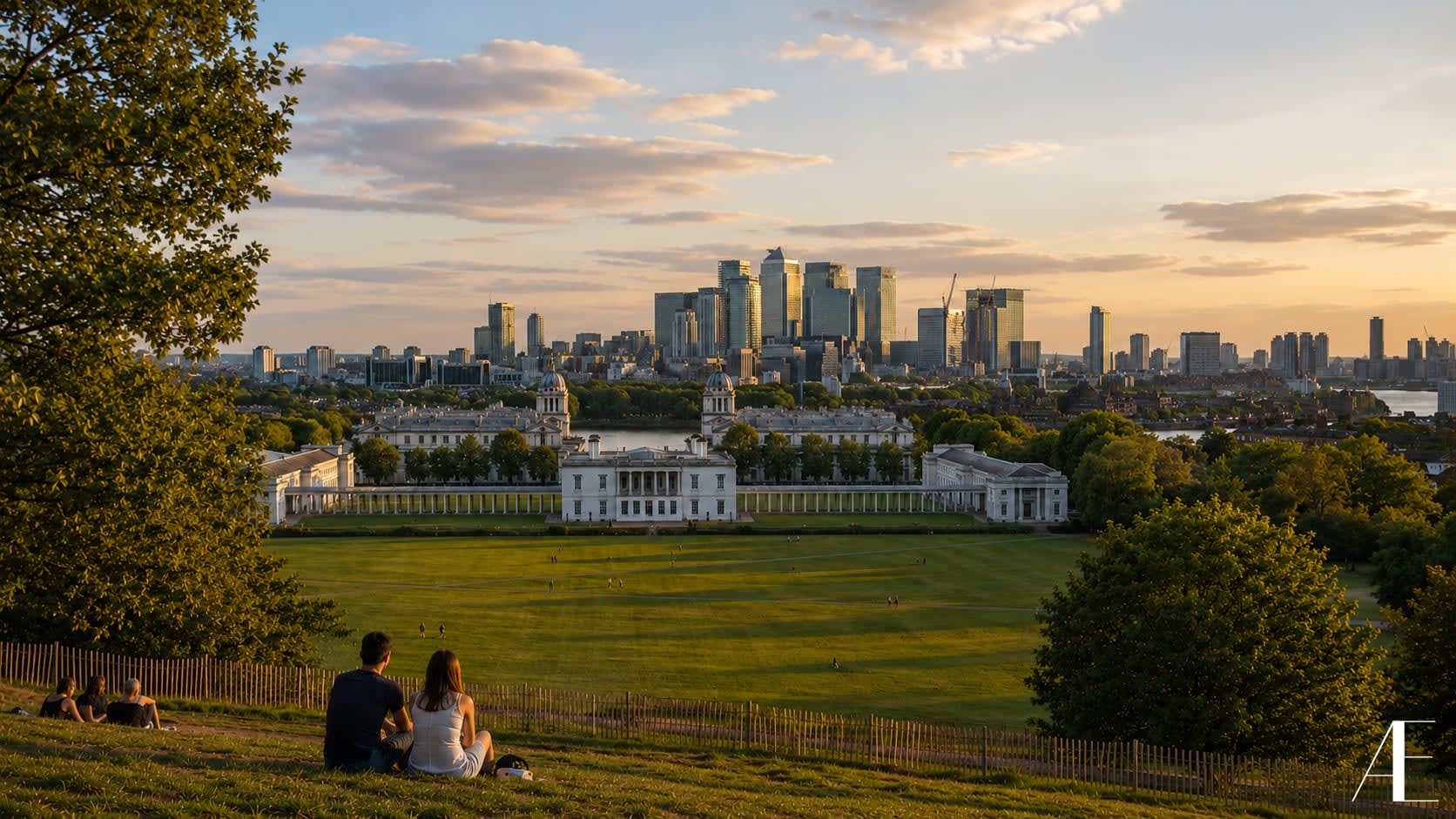
Downstream from Tower Bridge, accessible by DLR or river boat. The Royal Observatory, Cutty Sark, the National Maritime Museum, the Queen's House, and the park on the hill above.
Character: Village-within-the-city. Relaxed, historic, worth a half day.
Who it's right for: History and maritime clients. Excellent for families.
Where to Stay for Different Client Types
- First-timers: Covent Garden, Soho, South Kensington, or Bloomsbury
- Luxury clients: Mayfair, St James's, Knightsbridge
- Boutique / design clients: Shoreditch, Fitzrovia, Marylebone
- Families: South Kensington (near the free museums), Bloomsbury
- Budget-conscious: Bloomsbury, Shoreditch, King's Cross area
- Food-focused clients: Bermondsey / Borough, Shoreditch
- Repeat visitors: Chelsea, Notting Hill, Clerkenwell
What Is Walkable vs. What Requires the Tube
Walkable clusters (within 20–30 min of each other):
- Westminster, St James's Park, Buckingham Palace, Trafalgar Square: one continuous walk
- South Bank: Westminster Bridge to Tower Bridge in approximately 90 minutes
- Bloomsbury / British Museum / Covent Garden / Soho: connected on foot
- Knightsbridge / South Kensington / Chelsea: connected on foot
Requires Tube or bus:
- Notting Hill from the centre (10 min, Central line)
- Shoreditch from Westminster (20 min, Central or District line)
- Greenwich from central London (DLR from Bank, 25 min; or river boat, 45 min)
- Heathrow Airport (50–60 min, Piccadilly line; approximately 27–35 min to Paddington on the Elizabeth line; 15 min to Paddington by Heathrow Express)
The Overhyped and Overvisited
- Madame Tussauds: Skip for most clients. Long queues, high prices, not representative of London's real cultural offer.
- Oxford Street: Excellent for chain retail but not a cultural experience.
- The London Eye: Fine views but long waits. Clients with 4+ days can skip it.
- Changing of the Guard: Worth seeing once, but very crowded. Arrive early on the Palace forecourt side.
The Cruise Connection
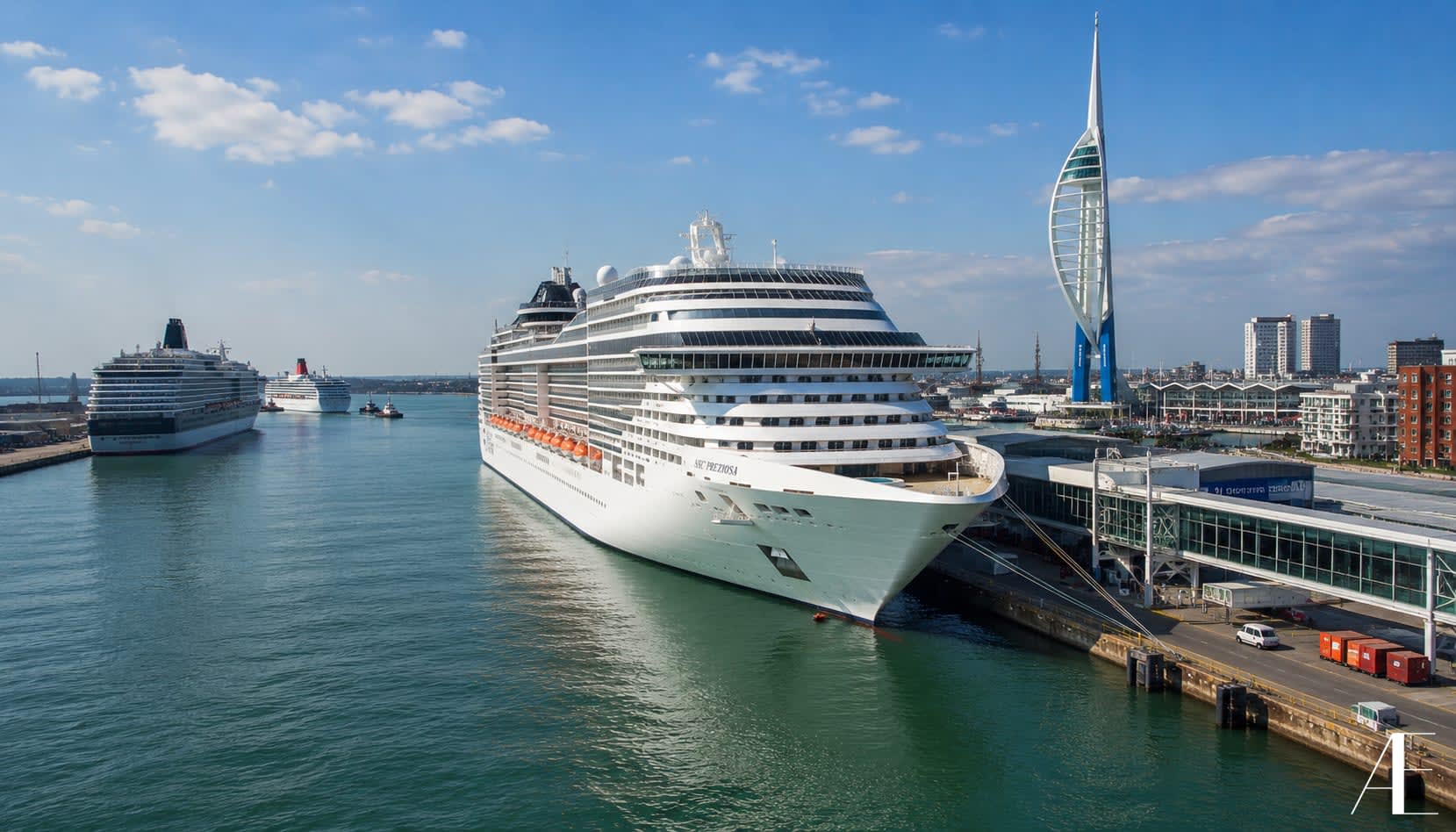
London is one of the great cruise gateway cities in the world. Most ships associated with "London" do not berth in the city itself: they use the Port of Southampton, 130 kilometres to the southwest. A smaller number use Tilbury, 40 kilometres downstream from central London. Agents need to be clear about this distinction with every cruise client.
The Ports
Port of Southampton The primary London-area cruise hub
- Location: Southampton, Hampshire, approximately 130 km southwest of central London. About 90 minutes by road or 80 minutes by direct train from London Waterloo.
- Type: Major turnaround port. The majority of British Isles and European itineraries from the UK originate and terminate here.
- Key point for agents: Southampton is the home port from which clients travel to London. Agents should build a pre- or post-cruise London stay into any Southampton embarkation itinerary.
Recommended structure: 2–3 nights in London pre-cruise, then transfer to Southampton for embarkation. Or: embark Southampton, disembark Southampton, then 2–3 nights London post-cruise. Train from London Waterloo to Southampton Central takes approximately 80 minutes.
Port of Tilbury The London river cruise port
- Location: Tilbury, Essex, approximately 40 km east of central London. Transfer to central London: approximately 60–75 minutes by rail (C2C rail from Tilbury Town to Fenchurch Street).
- Type: Both turnaround port and port of call. Used by P&O, Fred. Olsen, Saga, and others.
- Key point for agents: Tilbury is where clients can genuinely "cruise to London." The transfer to central London (approximately 60 minutes by rail) eats significantly into port time. Recommend the train over ship's coaches.
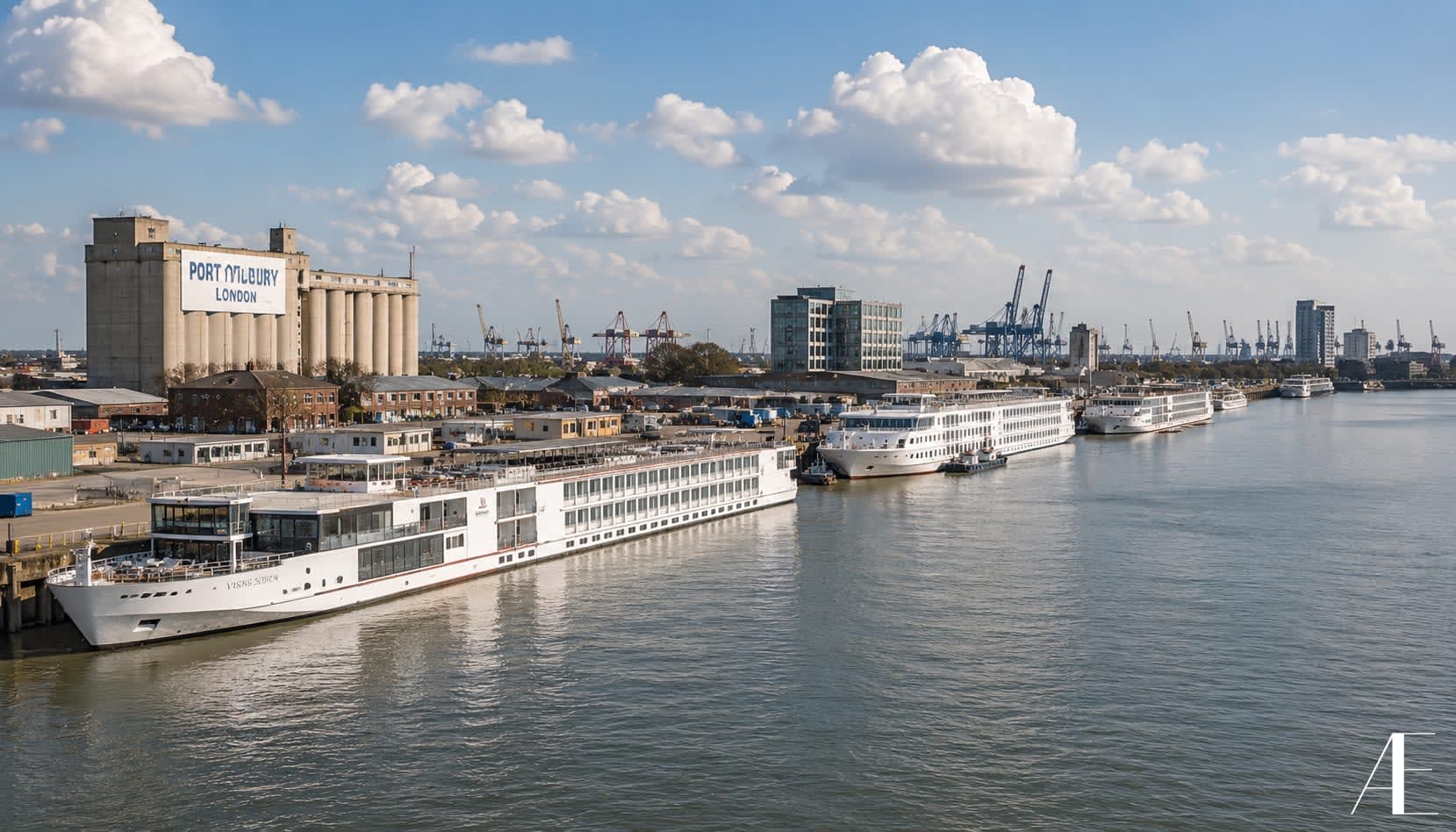
Greenwich (river calls) Some small river cruise vessels and luxury barges berth at Greenwich Pier, which puts clients in the heart of Greenwich rather than in a container port — a significantly more pleasant arrival.
Cruise Lines That Use These Ports
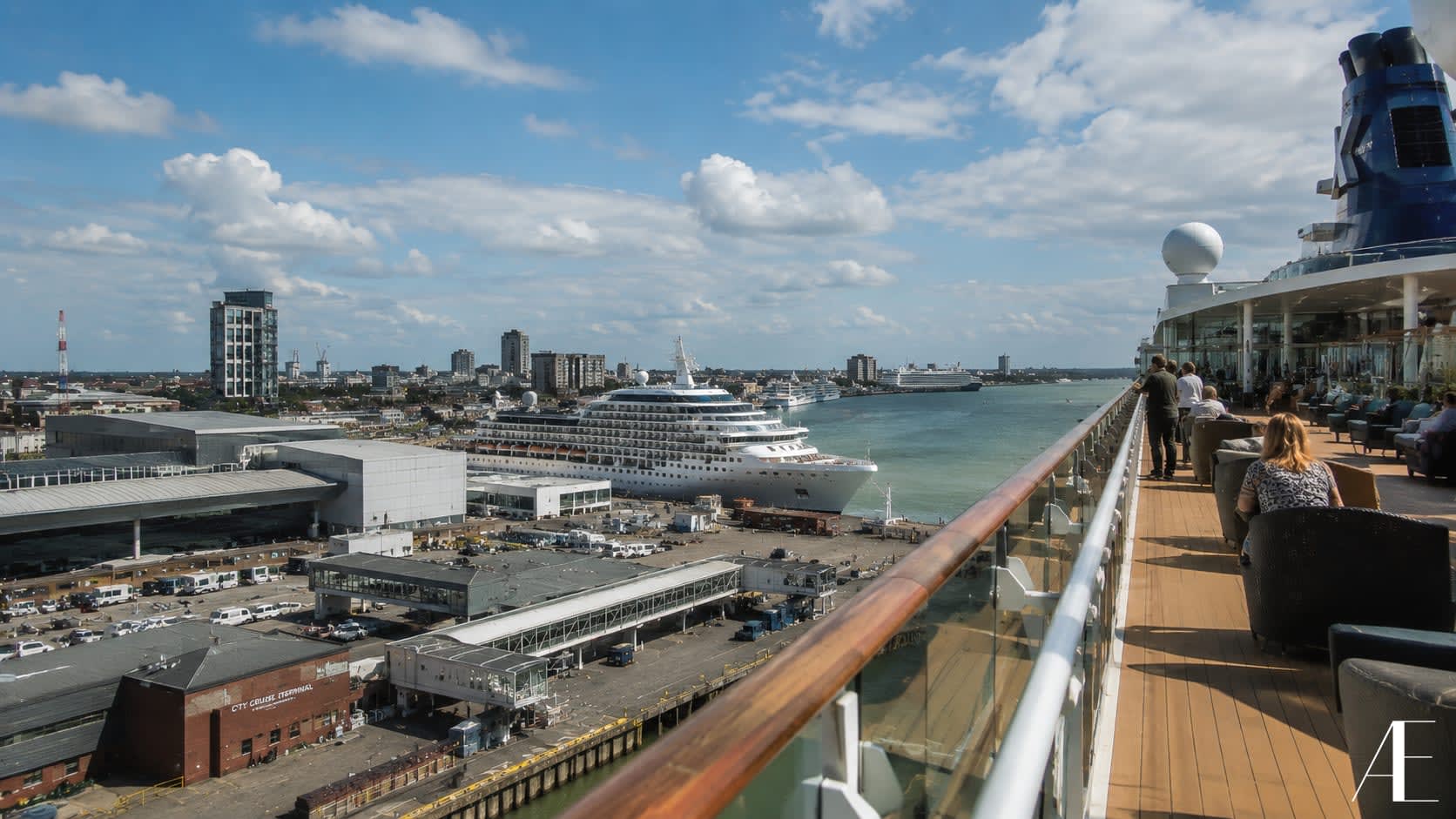
Cunard Line Home port: Southampton. Cunard's Queen Mary 2 operates regular Transatlantic crossings between Southampton and New York, making London the natural pre- or post-voyage city for North American clients. Agent note: The QM2 Transatlantic crossing is one of the great travel experiences. Always build the London nights in.
P&O Cruises Home port: Southampton. P&O is the dominant Southampton-based British cruise line, with most itineraries operating from Southampton. Selected itineraries may use or call at other UK ports depending on the season. Agent note: For Canadian and American agents selling P&O to international clients, the London pre/post stay is essential framing.
Royal Caribbean International Home port: Southampton for selected European and British Isles itineraries, depending on the season and ship deployment. Agent note: Royal Caribbean's Southampton departures can involve some of the largest ships sailing in Europe. Always verify the ship and embarkation port for the specific year, then build London pre-cruise nights for clients flying into Heathrow.
Celebrity Cruises Home port: Southampton for British/European itineraries. Agent note: Celebrity's premium positioning makes the London pre/post stay a natural fit. A boutique London hotel plus Celebrity Silhouette or Apex is a well-matched combination.
Viking Ocean Cruises Home port: London (Tilbury) for some British Isles itineraries. Viking positions Tilbury as "London" in their marketing. Agent note: Viking's destination-focused clients are ideal London pre/post candidates. The 3-night London extension before or after a Viking British Isles voyage is one of the most natural packages in the market.
Princess Cruises Home port: Southampton for UK-based itineraries. Strong Canadian and American client base; London pre/post is standard practice for this market.
Holland America Line Home port: Rotterdam or Dover for some European itineraries; Southampton for others. Tilbury occasionally used as a port of call.
Fred. Olsen Cruise Lines Home port: Multiple UK ports including Southampton and Tilbury. London (Tilbury) used both as embarkation and port of call.
Silversea Home port: Various European ports. Southampton used for some British Isles voyages. Agent note: Silversea's ultra-luxury clients are among the most London-compatible in the cruise market. A private London itinerary plus a Silversea British Isles voyage is an outstanding product.
Selling London as a Cruise Gateway
The fundamental pitch: For any North American client flying into London for a Southampton-based cruise, the journey time to Southampton means they are going through London anyway. The question is whether they stop for 2–3 nights or rush through. Always recommend stopping.
What is realistic with a Tilbury port call (8–10 hours ashore)?
The rail journey from Tilbury to Fenchurch Street takes approximately 40 minutes; then Tube or taxi to the desired area adds 15–20 minutes each way, leaving approximately 6–7 hours in the city.
With 6–7 hours:
- The South Bank walk (Westminster to Tower Bridge) plus the Tower of London: the most natural combination
- Alternatively: the British Museum plus lunch in Covent Garden, and the South Bank walk
What agents should recommend booking independently:
- Tower of London tickets (hrp.org.uk, always book in advance)
- Westminster Abbey (westminster-abbey.org)
- Theatre tickets for any pre- or post-cruise London nights
The insider detail that makes the agent look good: The Yeoman Warders (Beefeaters) at the Tower of London conduct their guided tours as they have since the 19th century. The last tour of the day is the most atmospheric and least crowded. For a Tilbury port call, the morning entry (first slot, pre-booked) is essential: this avoids the afternoon queues and gives maximum time before clients need to return to the ship.
The Attractions & Experiences
Planning note: Prices and opening hours change frequently. Use the figures below as planning guidance only and always verify details on the official attraction website before booking.
The Tower of London
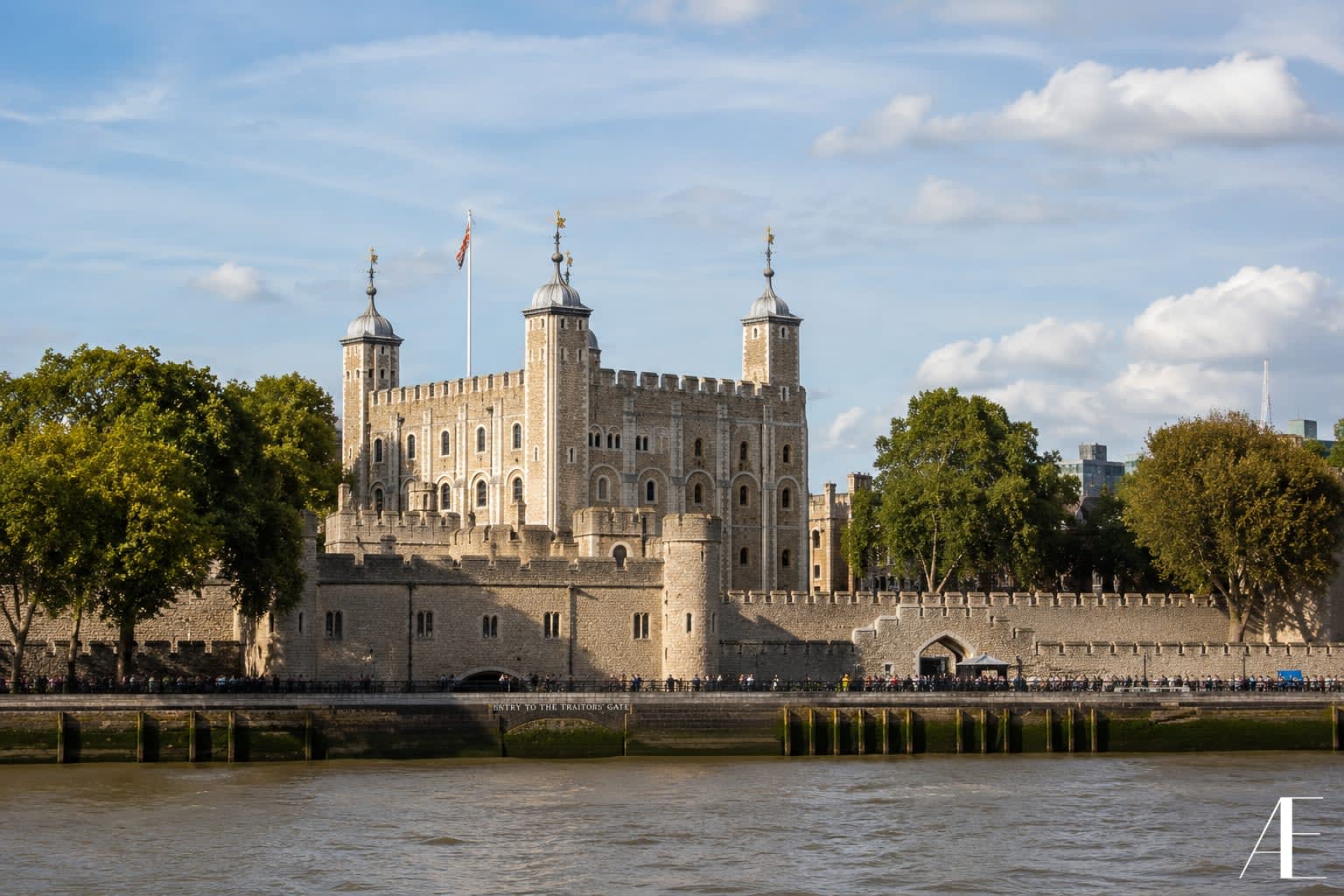
What it is and why it matters: The most complete medieval castle in England and one of the most historically significant buildings in British history, built by William the Conqueror from approximately 1078. For over 900 years, it has served simultaneously as a royal palace, a state prison, a treasury, a mint, a menagerie, and a place of execution. Anne Boleyn, Catherine Howard, Lady Jane Grey, Thomas More, Thomas Cromwell, Walter Raleigh, and Rudolf Hess were all held here. Two of Henry VIII's wives were beheaded within its walls.
The Crown Jewels in the Jewel House are the most significant group of working royal regalia in the world, used in coronation ceremonies and on great state occasions. The Imperial State Crown contains 2,868 diamonds, 17 sapphires, 11 emeralds, 269 pearls, and 4 rubies, including the Black Prince's Ruby worn by Henry V at Agincourt.
The Yeoman Warder tours are among the finest guided experiences at any historic site in Britain: personal, informative, usually darkly funny. Each Warder has a military career of at minimum 22 years behind them.
The ravens are not incidental: by royal decree, the Tower must maintain at least six ravens at all times, or the kingdom will fall. There are currently nine. The Ravenmaster is an actual job title.
Practical details:
- Location: Tower Hill, EC3. Tube: Tower Hill (Circle/District line)
- Opening hours: Tuesday–Saturday 9:00am–5:30pm, Sunday–Monday 10:00am–5:30pm (winter hours shorter). Always verify at hrp.org.uk
- Admission: Approximately £37+ for adults (2026 guidance). Always book online in advance and verify current pricing
- Time to allow: Minimum 2.5 hours. A full morning (3–4 hours) is comfortable
What clients often miss: The White Tower, the original Norman keep at the centre of the complex, contains the finest collection of armour in the world. Henry VIII's armour — showing his girth increasing over the years — is here. The Chapel of St John the Evangelist on the second floor is the oldest Norman church interior in England, essentially unchanged since 1080.
The detail worth knowing: The Crown Jewels conveyor belt can feel rushed. Advise clients to step off the moving walkway onto the static viewing area to their left, which allows as long as they want.
Book a tour with a local guide through GetYourGuide or Viator to get a commission.
Westminster Abbey
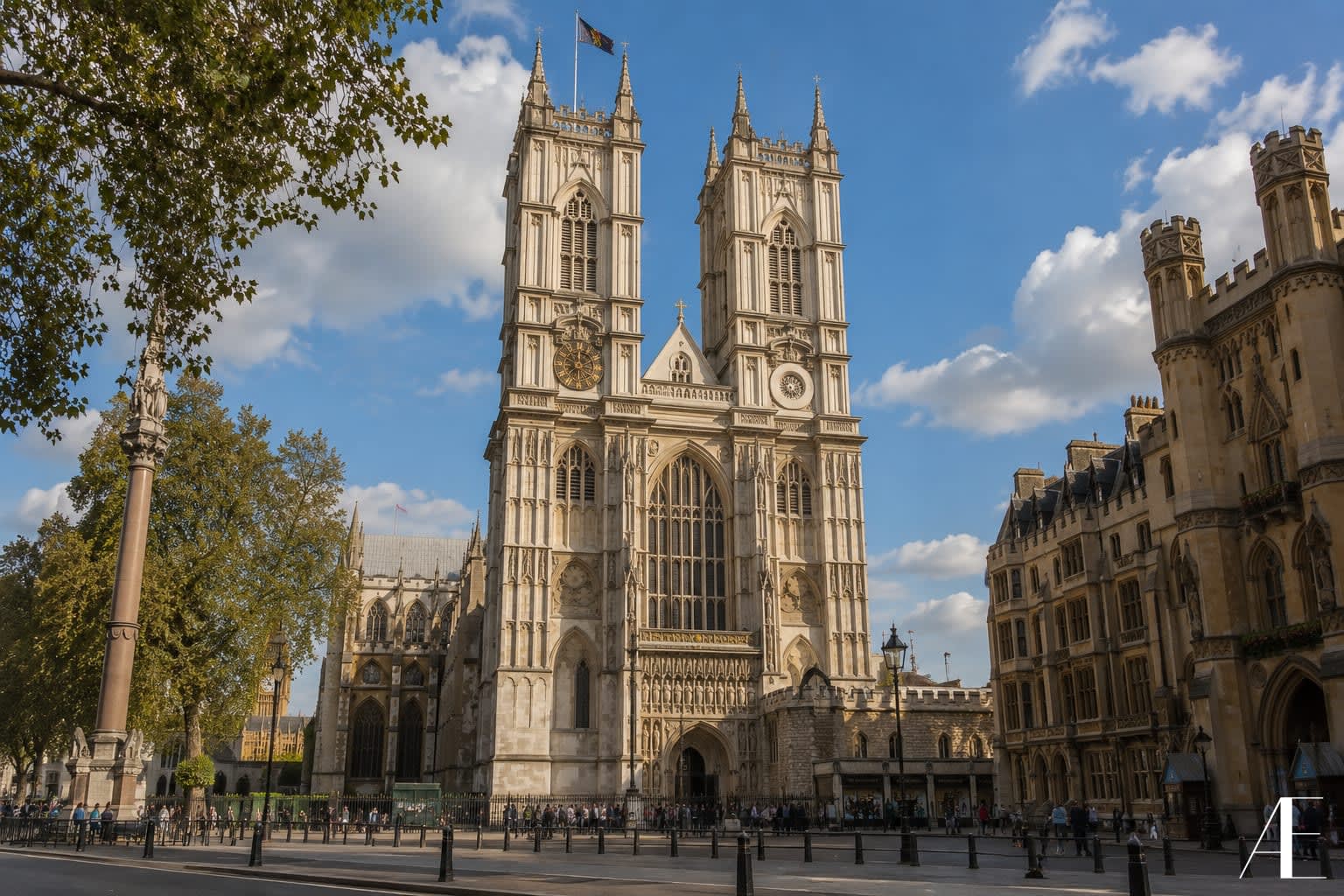
What it is and why it matters: The coronation church of England, where every English monarch since William the Conqueror has been crowned (with two exceptions), and one of the most historically saturated buildings in the world. Founded as a Benedictine monastery in 960 CE, rebuilt in its current Gothic form from 1245 under Henry III.
Poets' Corner contains the tombs and memorials of Chaucer, Shakespeare, Milton, Dickens, Hardy, Kipling, T.S. Eliot, and many others. Scientists: Newton, Darwin, Faraday, Hawking. The concentration of human achievement commemorated in a single building has no equivalent on earth.
Seventeen monarchs are buried here. Mary Queen of Scots is buried here. The chapel of Henry VII, with its spectacular fan vaulting, is the finest example of late Perpendicular Gothic architecture in England.
Practical details:
- Location: Parliament Square, SW1. Tube: Westminster
- Opening hours: Monday–Saturday 9:30am–3:30pm (last entry). Closed Sundays except for services (free to attend)
- Admission: Approximately £30+ for adults (2026 guidance). Usually includes an audio guide; verify current pricing
- Booking: Strongly recommended. Summer queues are substantial
- Time to allow: 1.5–2.5 hours
What clients often miss: The Chapter House (1253), where the medieval English Parliament met before the Palace of Westminster was built. The cloisters. The College Garden, one of the oldest gardens in England.
The detail worth knowing: Westminster Abbey is a working church. Choral evensong is open to all and free to attend most days at 5pm. It is one of the finest things you can do in London for free.
Book a tour with a local guide through GetYourGuide or Viator to get a commission.
Buckingham Palace and the Changing of the Guard
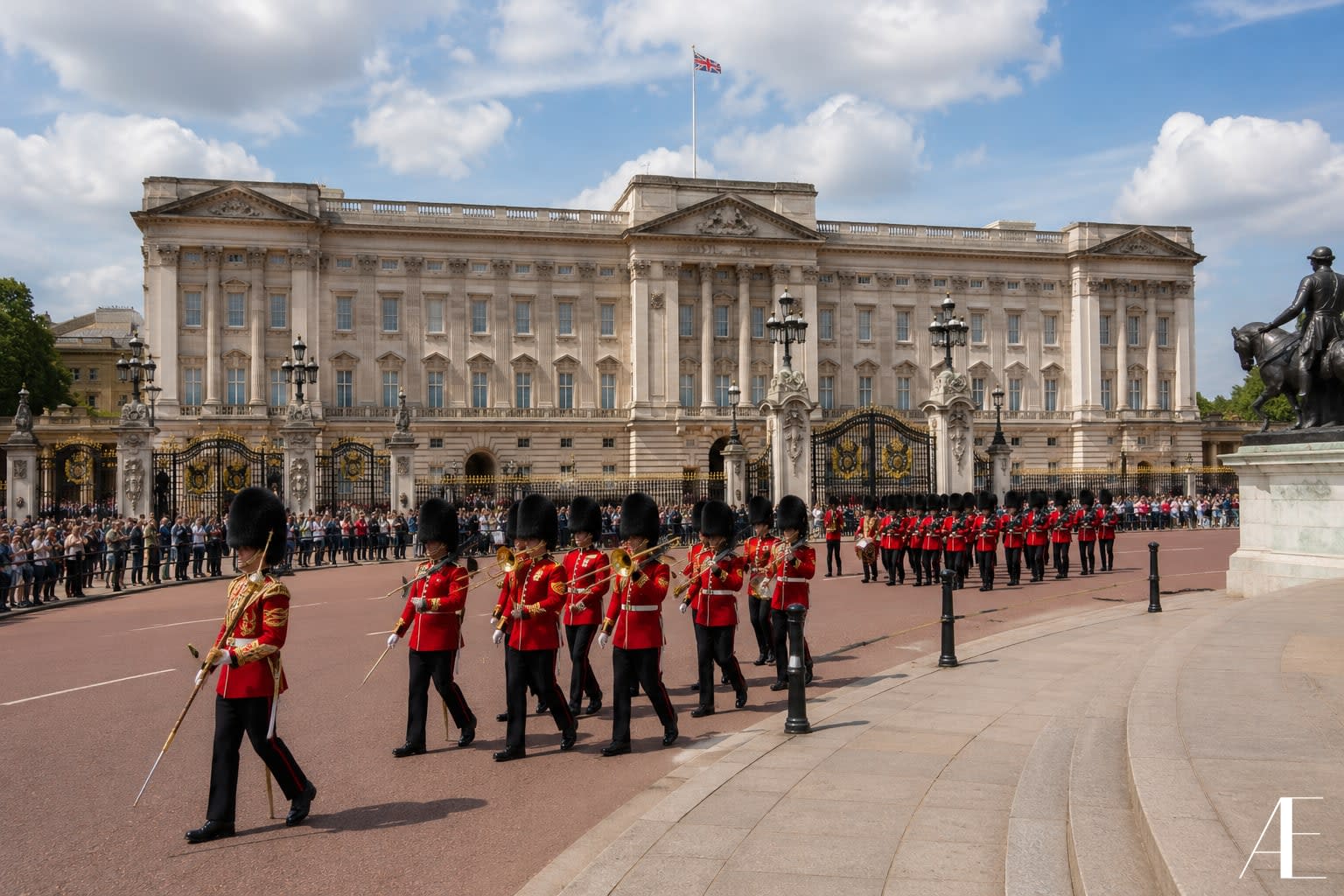
What it is and why it matters: The principal London residence of the British monarch since 1837. The Palace has 775 rooms, 19 State Rooms (open to visitors in August and September), 52 Royal and guest bedrooms, and 78 bathrooms.
The Changing of the Guard involves the relief of the Old Guard by the New Guard, accompanied by a regimental band. The ceremony takes approximately 45 minutes. It usually runs several times per week, with more frequent scheduling in peak season, but dates vary due to weather, security and royal events. Always check the official Household Division calendar before promising it to clients.
Practical details:
- State Rooms usually open seasonally, often in late summer. Admission varies by year; verify dates and pricing on the official Royal Collection Trust website
- The Changing of the Guard: free to observe. Best position is on the forecourt railings (arrive 45 minutes early in summer) or slightly elevated on the Victoria Memorial steps
- The Royal Mews (the working royal stables, open seasonally on selected dates) is an underrated visit: the Gold State Coach (built 1762, used for every coronation since George IV) is on permanent display
Book a tour with a local guide through GetYourGuide or Viator to get a commission.
The British Museum
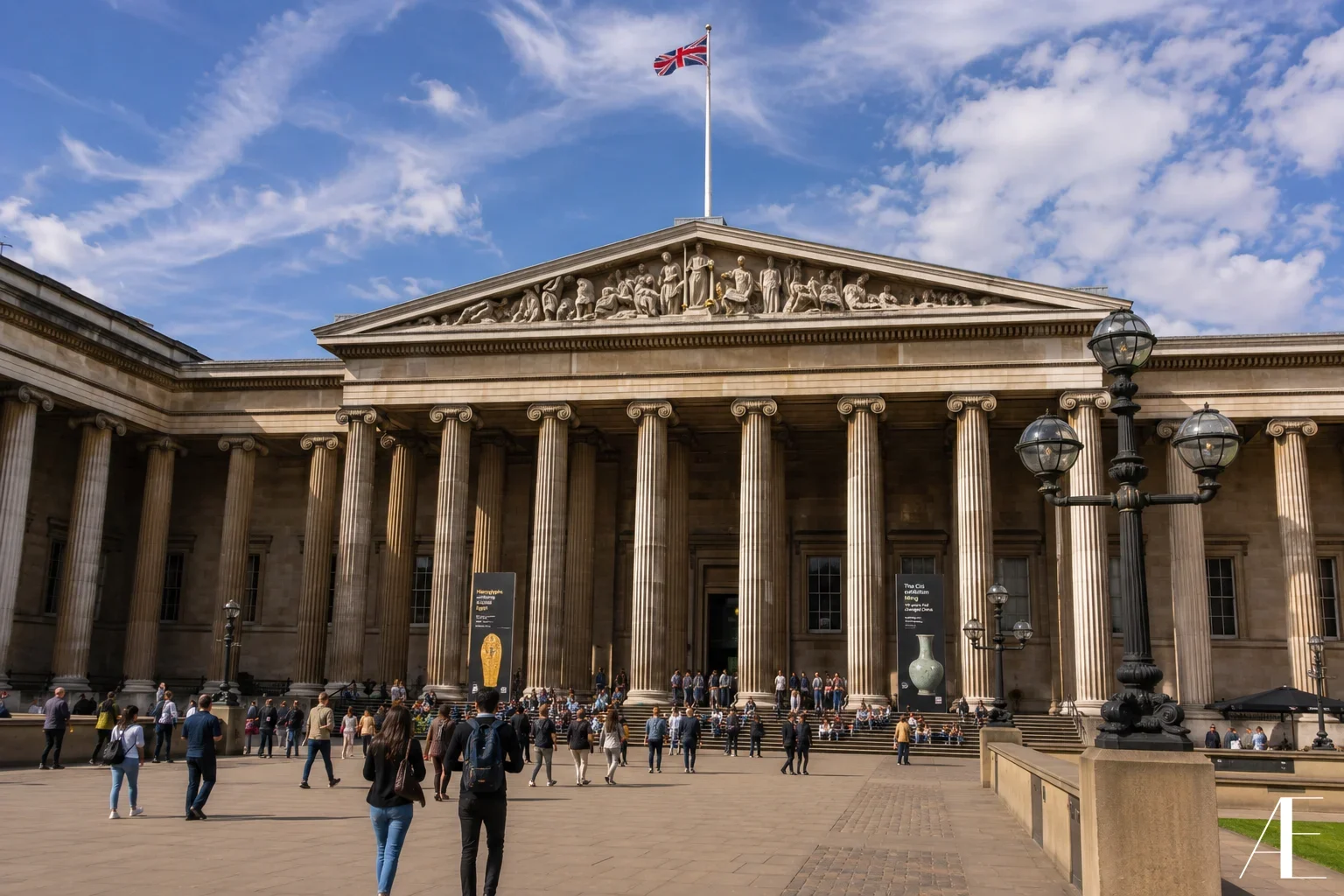
What it is and why it matters: The largest museum in the United Kingdom and one of the greatest in the world: eight million objects spanning the entirety of human history and civilization, displayed across 94 galleries. Founded in 1753 (the first national public museum in the world), housed in a spectacular Greek Revival building in Bloomsbury.
The collection contains the Rosetta Stone, the Elgin Marbles (Parthenon sculptures, subject of ongoing repatriation debate with Greece), the Sutton Hoo helmet (7th-century Anglo-Saxon royal burial), the Lewis Chessmen (12th-century carved walrus ivory), the Lindow Man (a preserved 1st-century Celtic man), and Mesopotamian, Egyptian, Greek, Roman, Viking, Japanese, Chinese, African, and pre-Columbian collections of global importance.
Practical details:
- Location: Great Russell Street, WC1. Tube: Tottenham Court Road or Holborn
- Opening hours: Saturday–Thursday 10:00am–5:00pm, Friday 10:00am–8:30pm
- Admission: Free for permanent collection
- Time to allow: 2–4 hours. A guided tour is strongly recommended for first-timers
What clients often miss: The Sutton Hoo gallery (Room 41). The Japanese collection (Rooms 92–94). The Waddesdon Bequest of medieval and Renaissance decorative arts (Room 2a).
The detail worth knowing: The Great Court is open to the public and completely free to enter. Clients can have coffee at the Great Court restaurant and admire the architecture without buying a museum ticket.
Book a tour with a local guide through GetYourGuide or Viator to get a commission.
The National Gallery
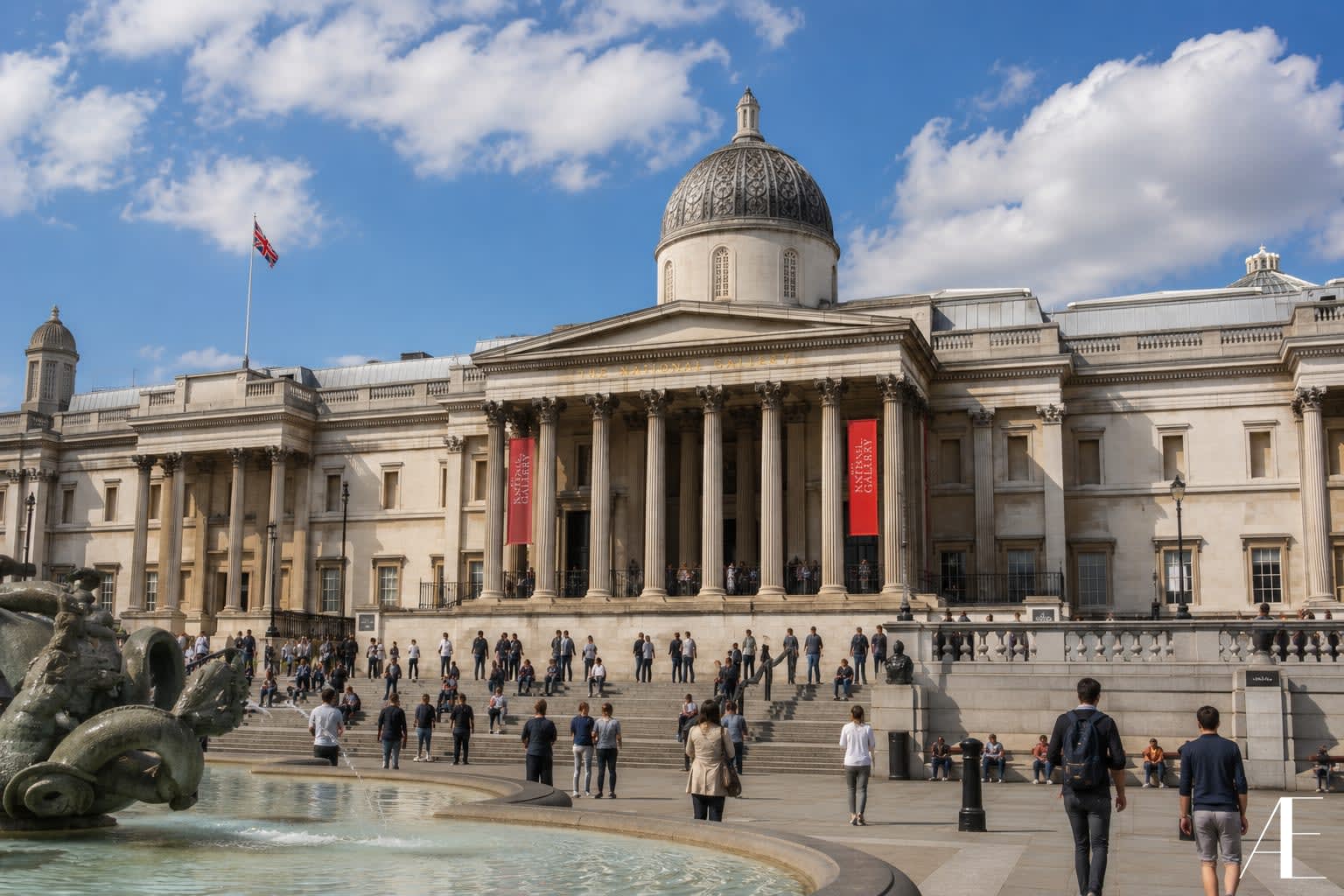
What it is and why it matters: The national collection of Western European painting from the 13th to the early 20th century, housed in a neoclassical building on the north side of Trafalgar Square. Entirely free.
The collection includes: Van Eyck's Arnolfini Portrait, Velázquez's Rokeby Venus, Vermeer's Lady Standing at a Virginal, Rembrandt's self-portraits, Caravaggio's Supper at Emmaus, Raphael's Madonna of the Pinks, Botticelli, Leonardo da Vinci's cartoon The Virgin and Child with Saint Anne, Constable's The Hay Wain, Turner's Fighting Temeraire (consistently voted the favourite painting in Britain), Monet, Seurat, and Van Gogh's Sunflowers.
Practical details:
- Location: Trafalgar Square, WC2. Tube: Charing Cross or Leicester Square
- Opening hours: Daily 10:00am–6:00pm, Friday until 9:00pm
- Admission: Free
- Time to allow: 2–4 hours
What clients often miss: Room 34, the Turner rooms, contain some of the most extraordinary paintings in the building. The Sainsbury Wing houses the earliest paintings (pre-1500) in one of the most thoughtfully designed gallery spaces in London.
Book a tour with a local guide through GetYourGuide or Viator to get a commission.
The Tate Modern
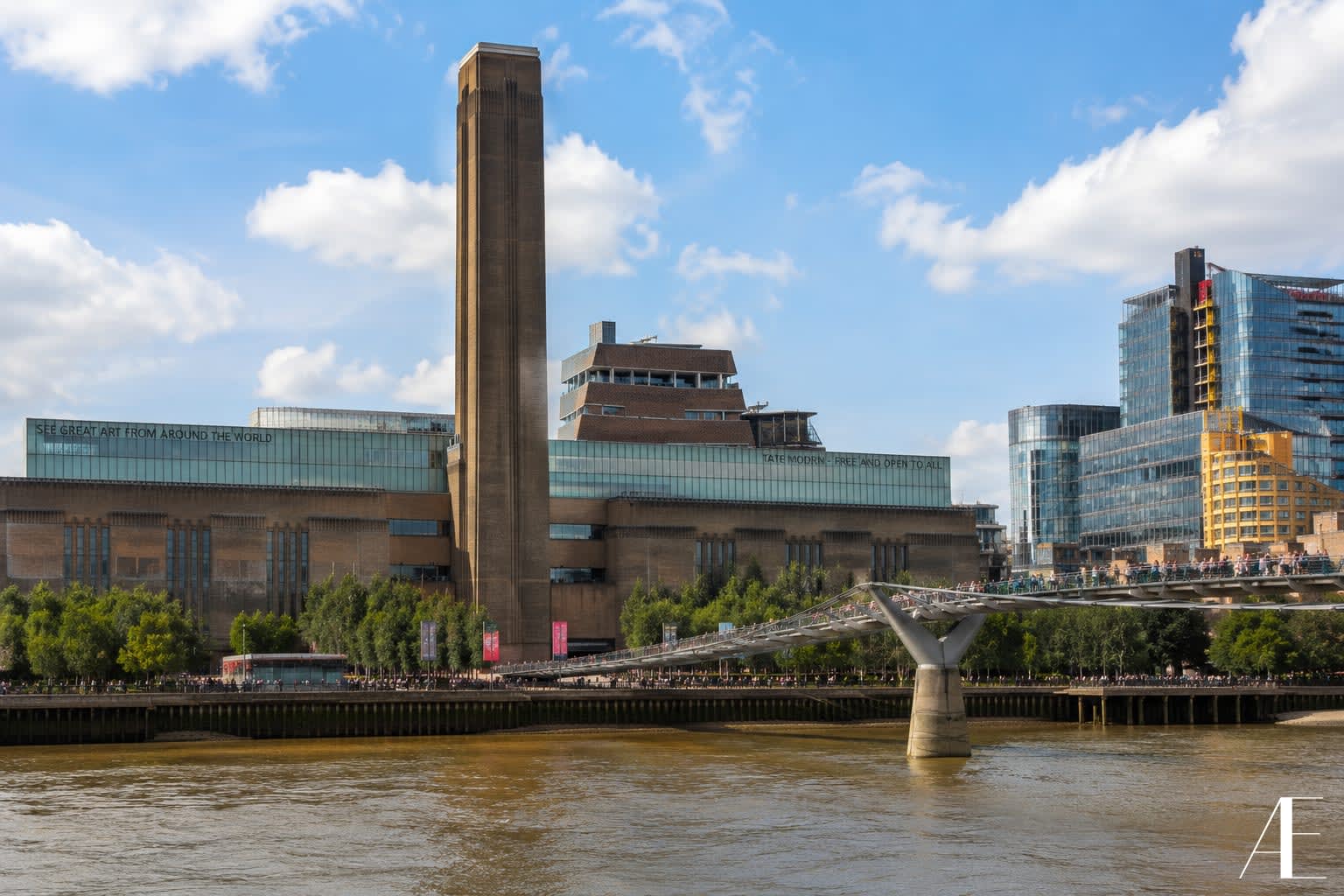
What it is and why it matters: One of the world's most visited modern art museums, housed in the former Bankside Power Station on the South Bank. The Turbine Hall is used for major large-scale art installations (the Turbine Hall commission is one of the most prestigious in contemporary art). The permanent collection covers international modern and contemporary art from 1900 to the present: Rothko, Warhol, Picasso, Dalí, Matisse, Mondrian, Bacon, Hockney.
The Blavatnik Building offers one of the best free views in London from its tenth-floor terrace, looking across the Thames to St Paul's Cathedral.
Practical details:
- Location: Bankside, SE1. Tube: Southwark or Blackfriars
- Opening hours: Sunday–Thursday 10:00am–6:00pm, Friday–Saturday 10:00am–10:00pm
- Admission: Free for permanent collection
- Time to allow: 2–4 hours
The Millennium Bridge: The suspension footbridge connecting the Tate to St Paul's is one of the most photographed crossings in London and appears in the Harry Potter films. Worth crossing at least once for the view.
Book a tour with a local guide through GetYourGuide or Viator to get a commission.
St Paul's Cathedral
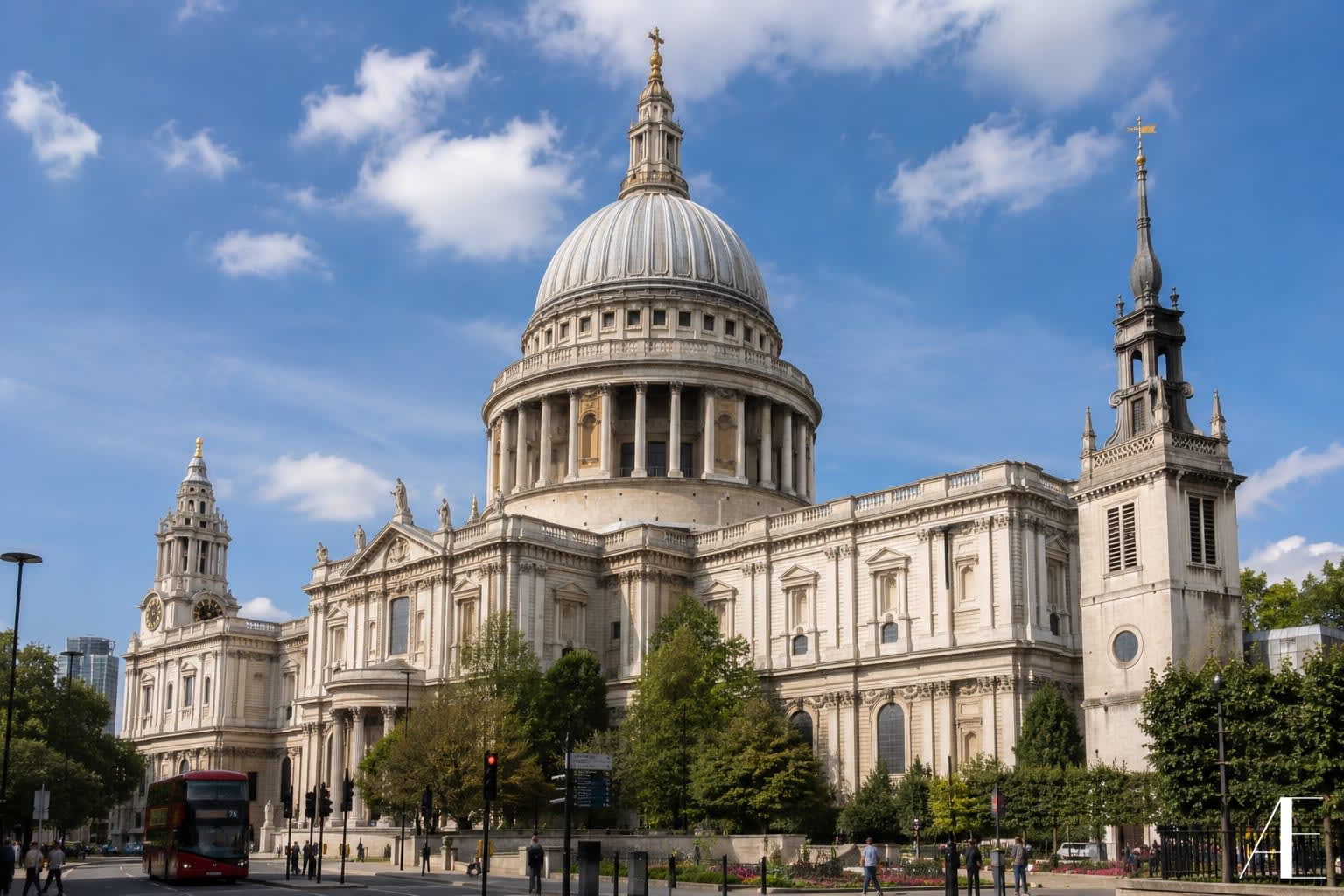
What it is and why it matters: Christopher Wren's masterpiece, built between 1675 and 1710 after the Great Fire destroyed the medieval cathedral. The dome is the second largest in the world (after St Peter's in Rome). St Paul's has been the site of the funerals of Lord Nelson, the Duke of Wellington, Winston Churchill, and Margaret Thatcher, and the wedding of Prince Charles and Lady Diana Spencer in 1981.
The Whispering Gallery, inside the base of the dome, has an extraordinary acoustic property: a whisper against the wall on one side can be heard clearly on the opposite side, 34 metres away. The Stone Gallery and the Golden Gallery at the very top offer the finest views of the City of London from above.
The crypt contains the tombs of Nelson and Wellington, as well as Wren's own tomb, bearing the inscription he reportedly requested: "Reader, if you seek his monument, look around you."
Practical details:
- Location: St Paul's Churchyard, EC4. Tube: St Paul's (Central line)
- Opening hours: Monday–Saturday 8:30am–4:30pm (last entry). Closed Sundays except for worship
- Admission: Approximately £25.00 for adults. Free during services
- Time to allow: 1.5–2.5 hours
The detail worth knowing: The Sunday morning services at St Paul's (Sung Eucharist at 11:15am, Choral Evensong at 3:15pm) are free to attend and include the cathedral choir. The building is full of light on a clear morning in a way that the tourist-hour visit does not always capture.
Book a tour with a local guide through GetYourGuide or Viator to get a commission.
Borough Market
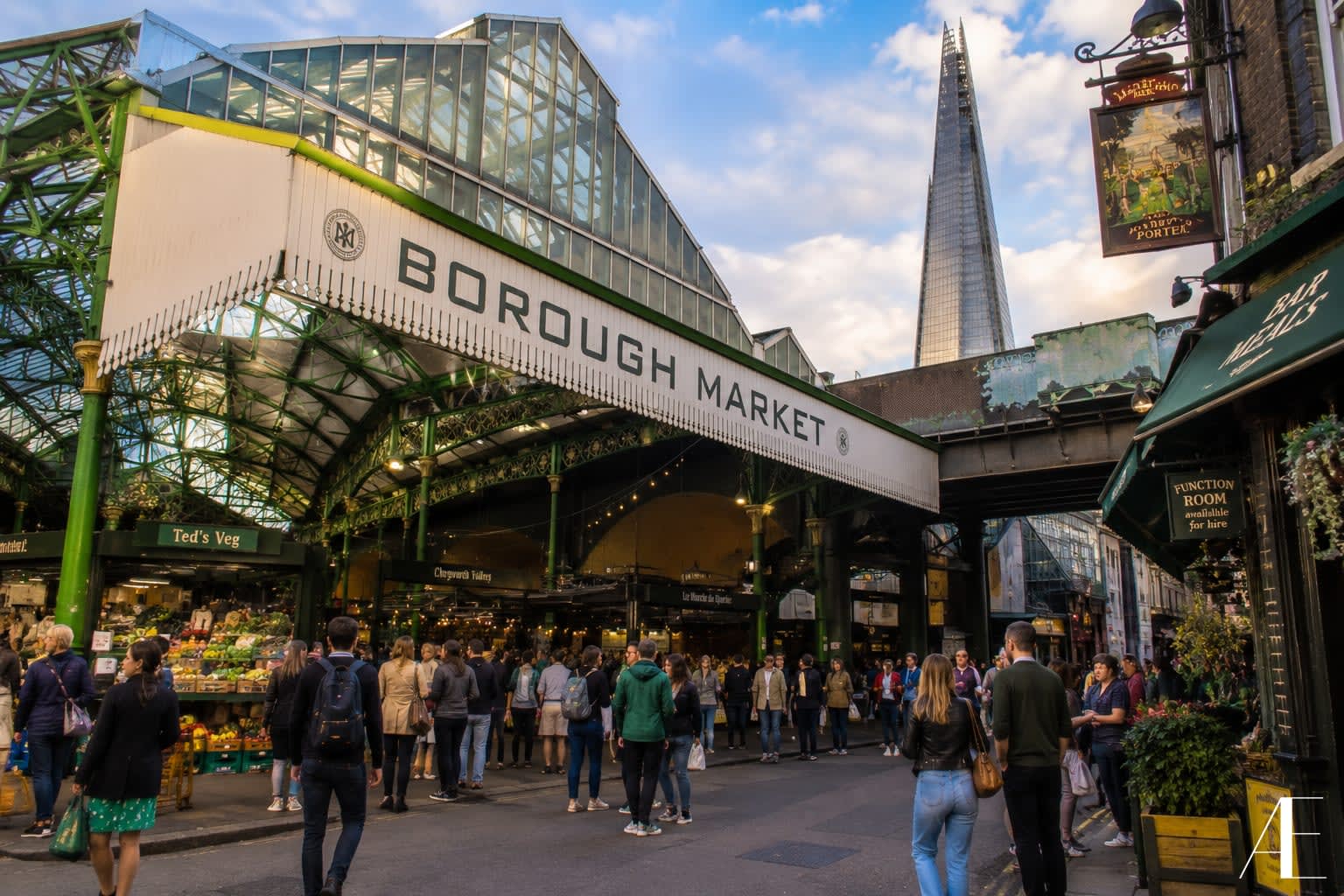
What it is and why it matters: London's most celebrated food market, in a complex of Victorian railway arches and covered buildings on the south side of London Bridge. Borough Market is at its best Thursday–Saturday. Saturday morning (arrive by 10am) is the peak experience: full stallholder presence, the most variety, and the busiest atmosphere.
Practical details:
- Location: 8 Southwark Street, SE1. Tube: London Bridge
- Opening hours: Monday–Thursday 10:00am–5:00pm, Friday 10:00am–6:00pm, Saturday 8:00am–5:00pm. Closed Sunday
- Admission: Free to enter
- Budget: £20–£40 for a representative walk-through of food and drink
Pair with: A walk along the South Bank (10 min west to the Tate Modern), or lunch at one of the neighbouring restaurants: Padella, Arabica, Elliot's.
Book a tour with a local guide through GetYourGuide or Viator to get a commission.
The Victoria and Albert Museum
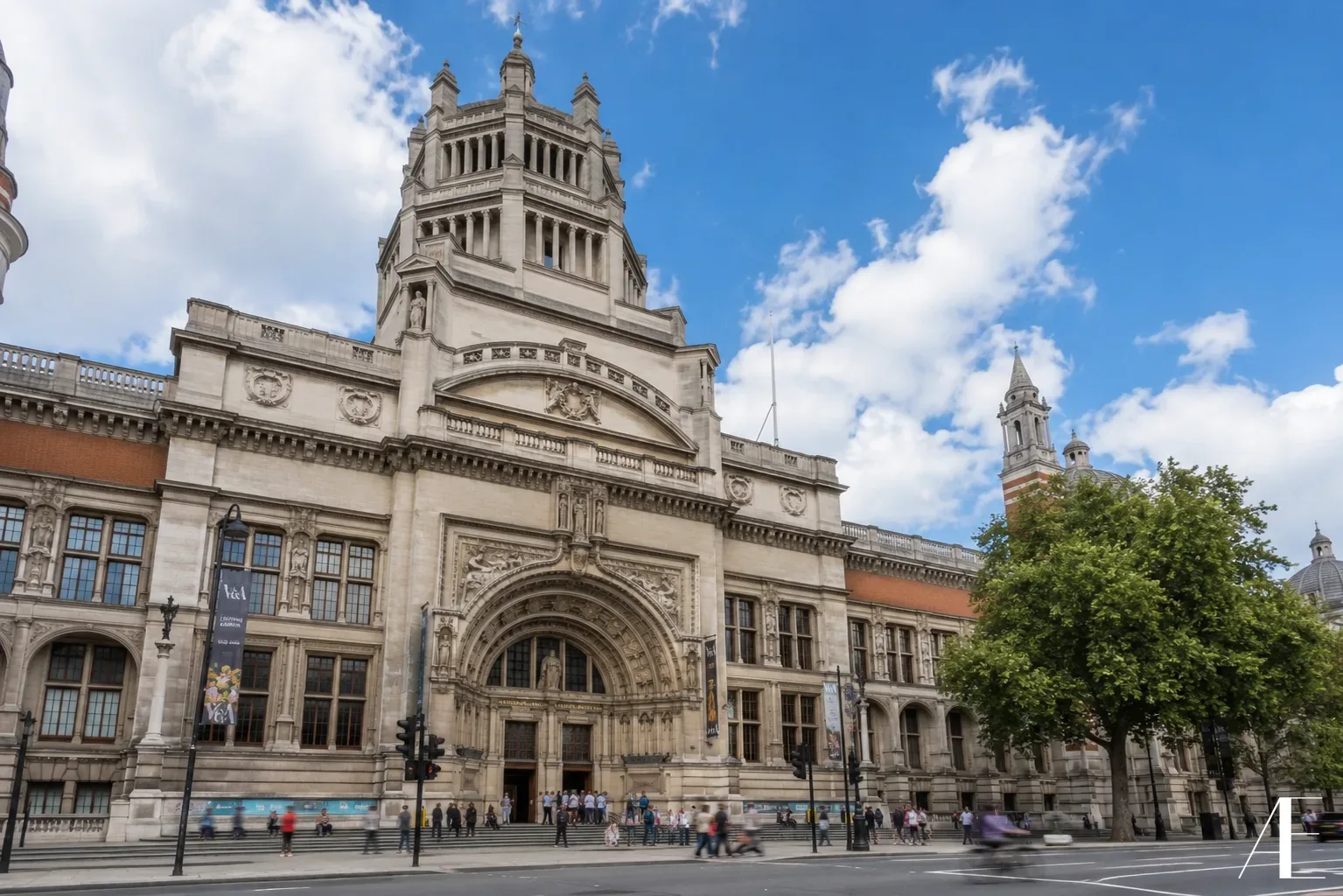
What it is and why it matters: The world's largest museum of decorative arts and design, covering 5,000 years of art and design across 145 galleries. The collection encompasses fashion (the most important fashion collection in Britain), jewellery, ceramics, glass, furniture, textiles, ironwork, silver, photography, and entire rooms transported from European palaces.
Notable highlights: the Cast Courts (enormous plaster casts of Trajan's Column and Michelangelo's David); the Medieval and Renaissance Rooms; the Raphael Cartoons (full-size preparatory drawings for tapestries for the Sistine Chapel, painted around 1515); and the John Madejski Garden, one of the finest outdoor spaces in London.
Practical details:
- Location: Cromwell Road, SW7. Tube: South Kensington
- Opening hours: Daily 10:00am–5:45pm, Friday until 10:00pm
- Admission: Free for permanent collection
- Time to allow: 2–4 hours minimum
Book a tour with a local guide through GetYourGuide or Viator to get a commission.
The Natural History Museum
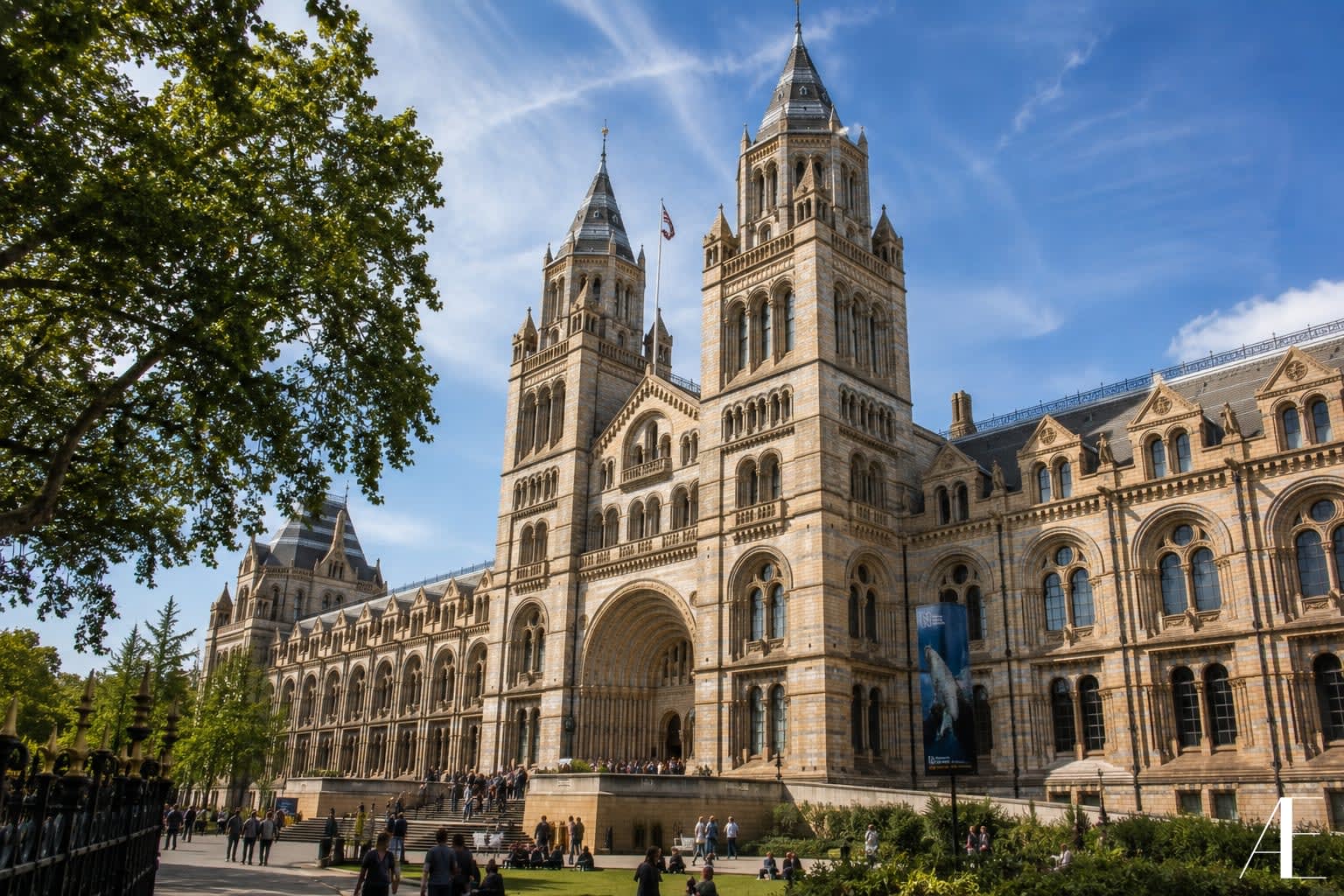
What it is and why it matters: One of the finest natural history museums in the world, housed in Alfred Waterhouse's spectacular Romanesque terracotta building (1881) in South Kensington. The Dinosaur Galleries, the Blue Whale skeleton in the Hintze Hall (hanging from the ceiling in a diving posture), the Darwin Centre, and the Mineral Gallery are the highlights.
Practical details:
- Location: Cromwell Road, SW7. Tube: South Kensington (same station as the V&A and Science Museum)
- Opening hours: Daily 10:00am–5:50pm
- Admission: Free for permanent galleries
- Time to allow: 2–4 hours. Excellent for families; allow longer
Book a tour with a local guide through GetYourGuide or Viator to get a commission.
West End Theatre
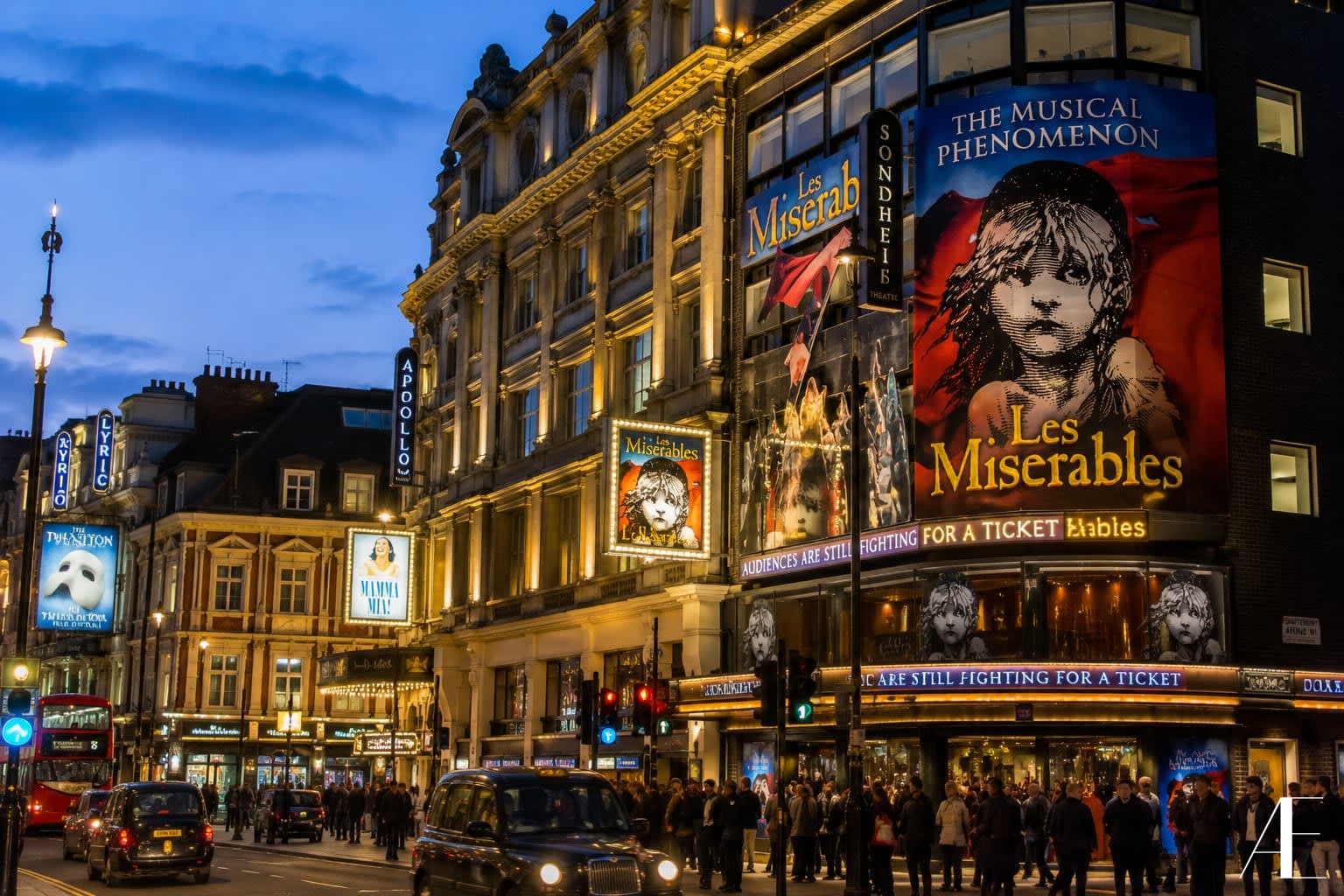
What it is and why it matters: The theatrical capital of the English-speaking world: over 40 major productions running simultaneously on any given evening, from 2,000-seat musical venues to 200-seat drama spaces. The West End is the global benchmark for musical theatre. The National Theatre and Royal Court push the standards of the West End's commercial competitors.
Practical details for agents:
- Book popular shows 2–3 months ahead for best selection
- The TKTS booth in Leicester Square offers same-day discounts (up to 50%) on a wide range of shows
- The National Theatre offers day tickets and returns at reduced prices from 9am on the day of performance
- Evening shows typically start at 7:30pm; matinees at 2:30pm
The insider detail: The cheapest seats at major West End productions are not the worst. The back of the Upper Circle at theatres like the Lyceum (Lion King), the Palace (Hamilton), or the London Palladium offers perfectly adequate views for significantly lower prices.
The South Bank Walk
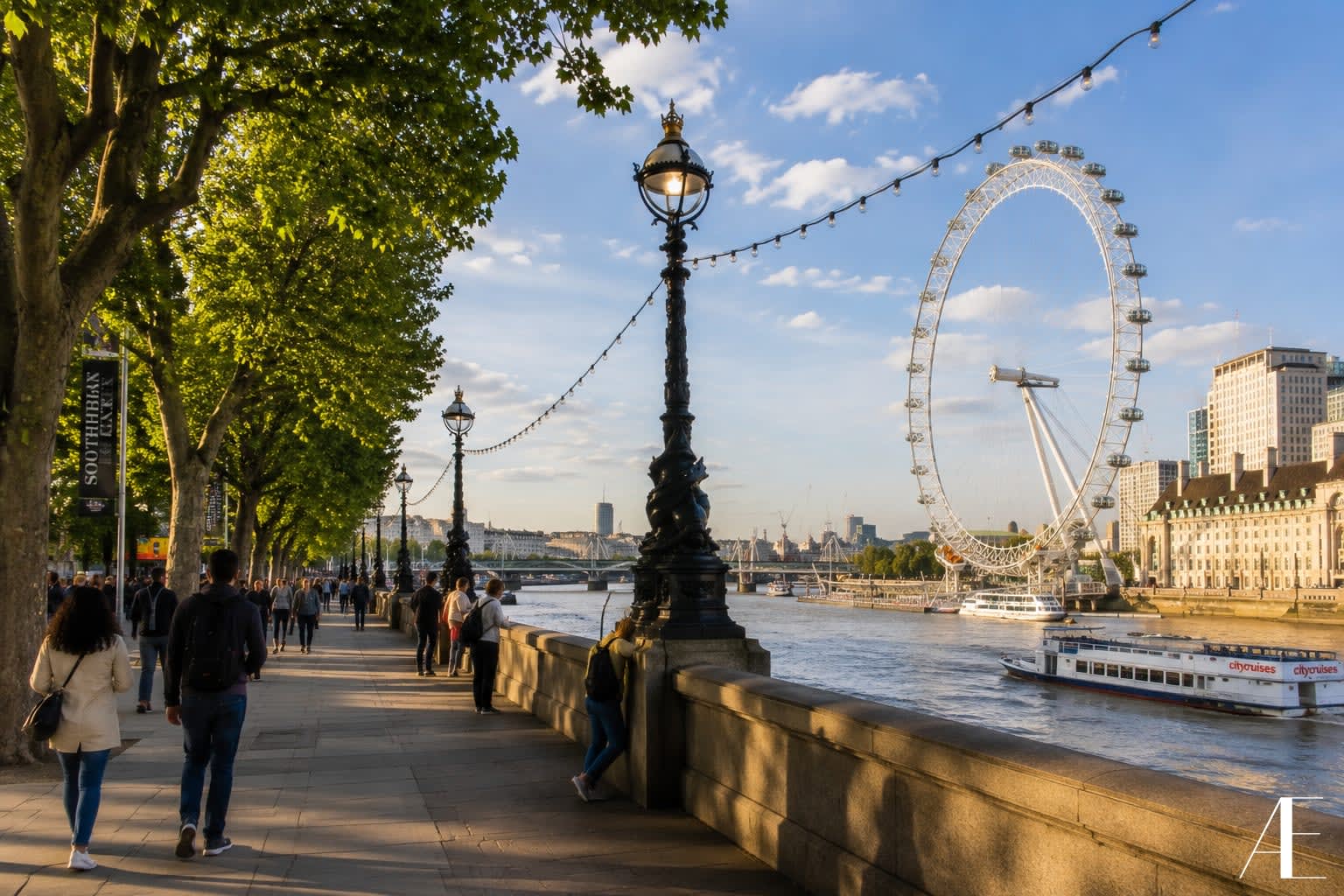
What it is and why it matters: The finest free experience in London: walking the south bank of the Thames from Westminster Bridge to Tower Bridge, a distance of approximately 3 kilometres taking 60–90 minutes at a relaxed pace, passing the London Eye, the National Theatre, the BFI Southbank, the Tate Modern, the Globe Theatre, Borough Market, and approaching Tower Bridge from the south.
Practical details:
- Free. Always accessible
- Direction: Walking east (Westminster Bridge toward Tower Bridge) puts the sun behind you in the afternoon and gives the best light on the City skyline
- Stop for: Coffee at the National Theatre (ground floor café, river view), lunch or provisions at Borough Market, views from the Tate Modern's free tenth-floor terrace
Greenwich
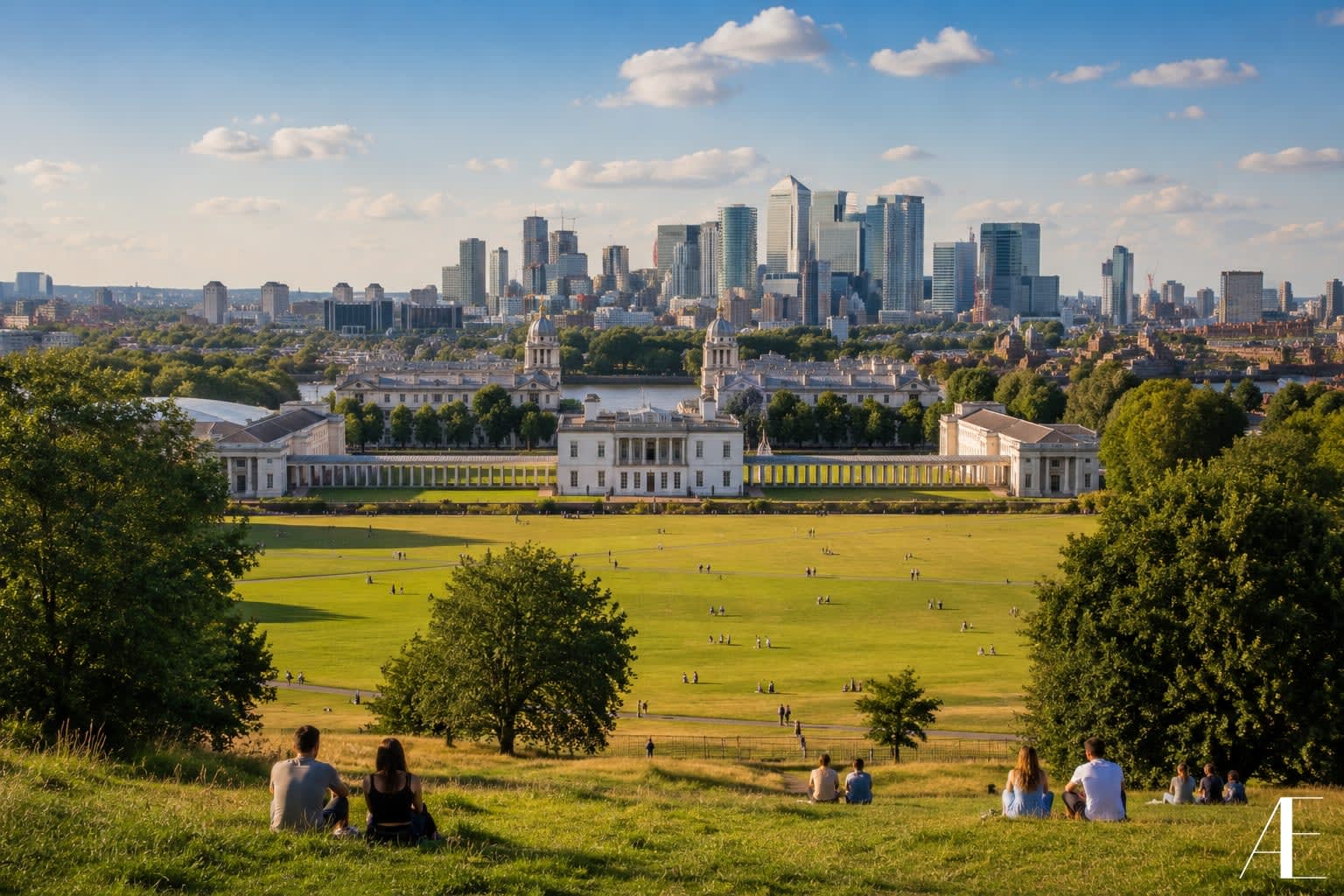
What it is and why it matters: A UNESCO World Heritage Site 8 kilometres downstream from central London: the Royal Observatory (where the Prime Meridian of the world is established at 0° longitude), the Cutty Sark (the last surviving Victorian tea clipper), the National Maritime Museum (the largest maritime museum in the world), the Queen's House, and Greenwich Park on the hill above with one of the finest views over the Thames and the City skyline.
Practical details:
- Getting there: DLR from Bank or Tower Gateway (approximately 25 min) or Thames Clipper river boat from Westminster or Embankment (approximately 45–50 min, highly recommended as an experience in itself)
- Royal Observatory admission: Approximately £18 for adults
- National Maritime Museum: Free
- Cutty Sark: Approximately £20 for adults
- Time to allow: Half day minimum; full day comfortable
The detail worth knowing: Standing astride the Prime Meridian line in the courtyard of the Observatory, with one foot in the Eastern Hemisphere and one in the Western, remains one of the most oddly satisfying things to do in London, and the photograph is reliably popular.
The Day Trips & Regions
Oxford
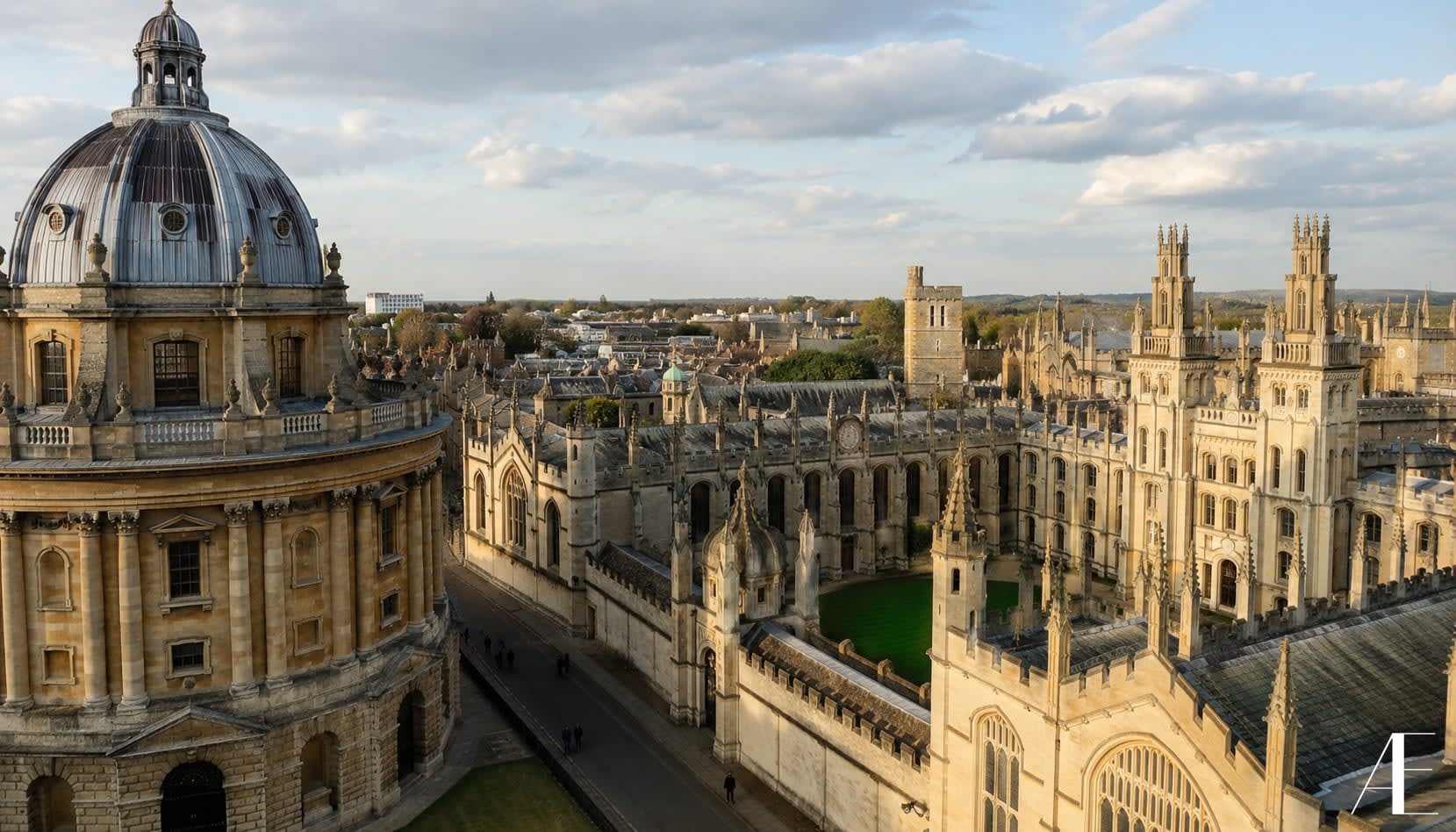
Distance / time: 60 minutes by train from Paddington, approximately 90 minutes by coach.
What's there: The oldest university in the English-speaking world, with teaching recorded by the late 11th century, with 39 colleges, the Bodleian Library, the Ashmolean Museum, the covered Market, and streets of medieval and Renaissance architecture. Christ Church (whose dining hall was used as the model for Hogwarts' Great Hall in the Harry Potter films), Magdalen College and its deer park, the Radcliffe Camera, and the Bridge of Sighs are the visual highlights.
Best for: History and literature clients. Families with Harry Potter interest. Architecture clients.
Worth it? Absolutely. Oxford is the best half-day or full-day trip from London and is manageable independently by train.
Pair with: Blenheim Palace (30 min northwest of Oxford, the birthplace of Winston Churchill and the most spectacular Baroque palace in England) for a full day.
Cambridge
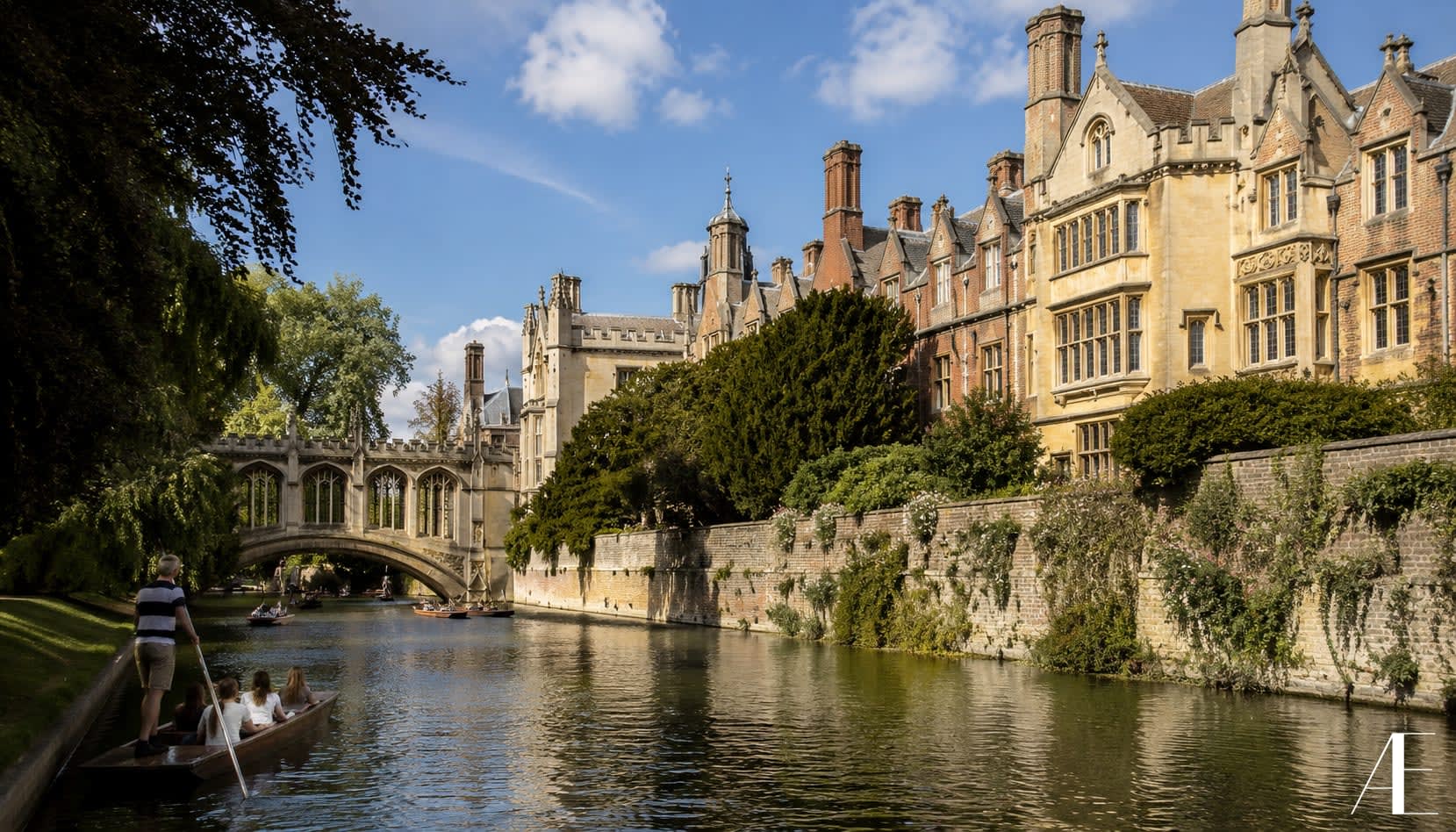
Distance / time: 50 minutes by train from King's Cross.
What's there: Oxford's great rival and a genuinely different experience: flatter, more intimate, centred on the Backs (the green lawns behind the colleges, running along the River Cam). King's College Chapel has the finest fan vaulting in England and Rubens' Adoration of the Magi as its altarpiece. Punting on the Cam between the college gardens is the most English of afternoon activities.
Best for: Similar to Oxford but the punting experience differentiates it strongly.
Worth it? Yes. The fastest train is 50 minutes and the city is completely manageable independently.
Bath
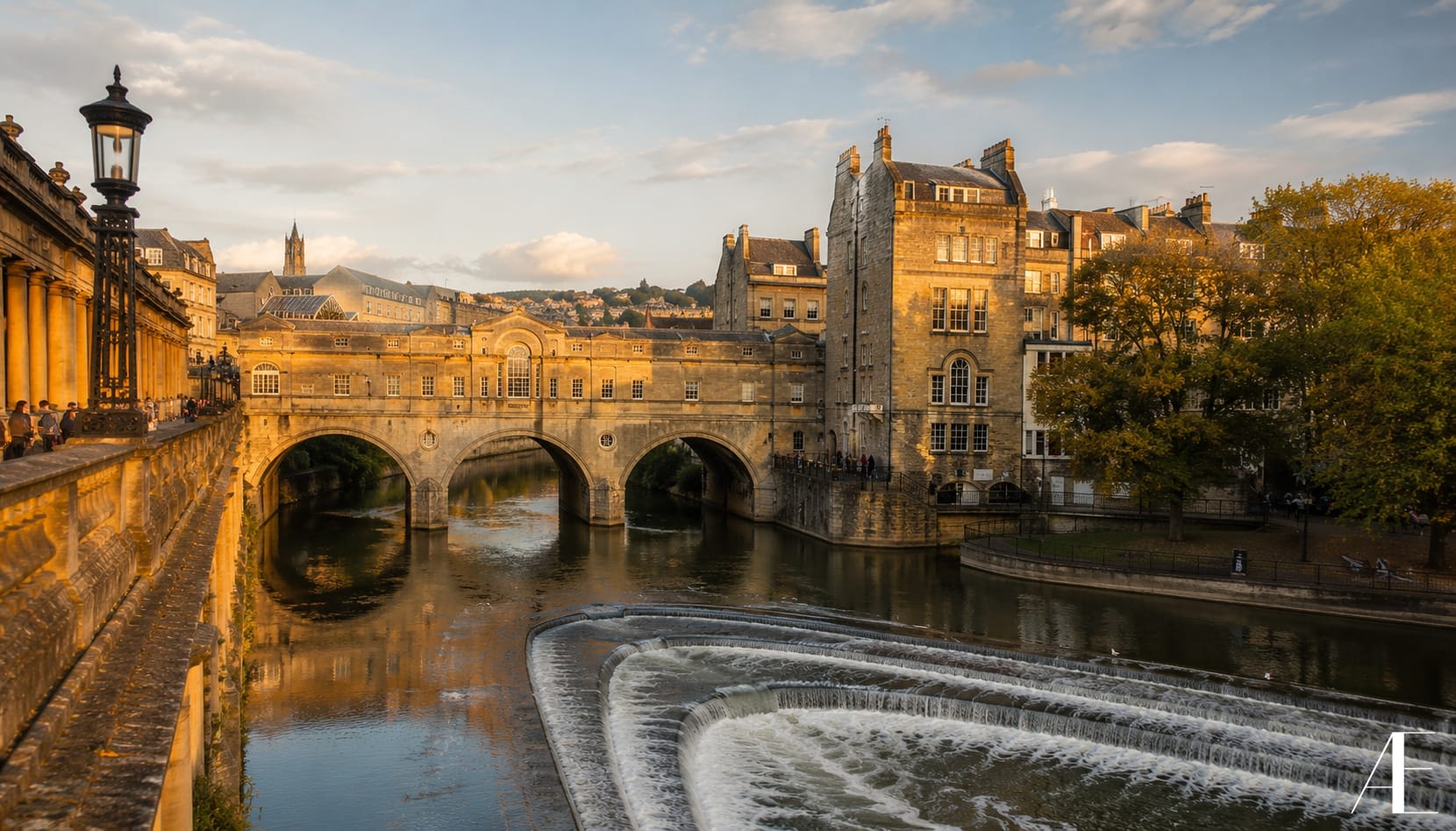
Distance / time: 90 minutes by train from Paddington.
What's there: The finest intact Georgian city in Britain, built on the site of a Roman spa town. The Roman Baths (the best-preserved Roman thermae in northern Europe), the Royal Crescent, the Circus, Pulteney Bridge, the Assembly Rooms, and Jane Austen's city (she set two of her novels here and lived here from 1801 to 1806).
Best for: History and architecture clients. Literature clients (Jane Austen). Almost universally popular.
Worth it? One of the best day trips in Britain. Works as a half-day (Roman Baths plus the main streets) or a full day.
Stonehenge and Salisbury
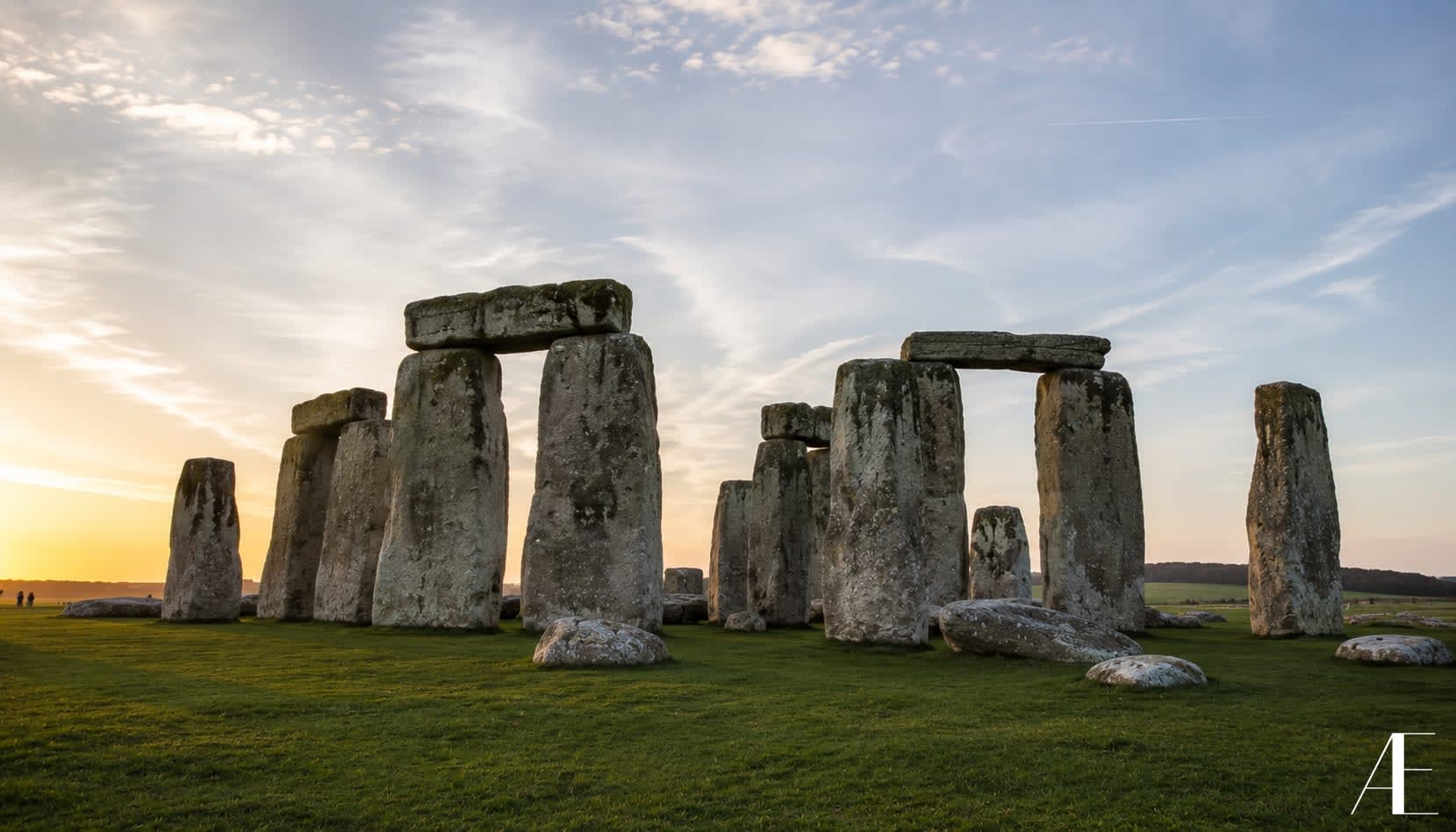
Distance / time: 90 minutes by train to Salisbury, then 30 minutes by bus to Stonehenge. Or by coach tour from London (full day).
What's there: Stonehenge is the most famous prehistoric monument in the world: a ring of standing stones on Salisbury Plain, erected in phases between approximately 3000 and 1500 BCE. Salisbury, nearby, has the finest medieval cathedral in England (the tallest spire in the UK, the best-preserved of the four original copies of Magna Carta).
Best for: History clients, clients interested in prehistoric Britain.
Worth it? The best experience is the Access the Stones sessions at dawn or dusk (small-group, bookable at english-heritage.org.uk). Combine with Salisbury Cathedral for a complete day.
Windsor
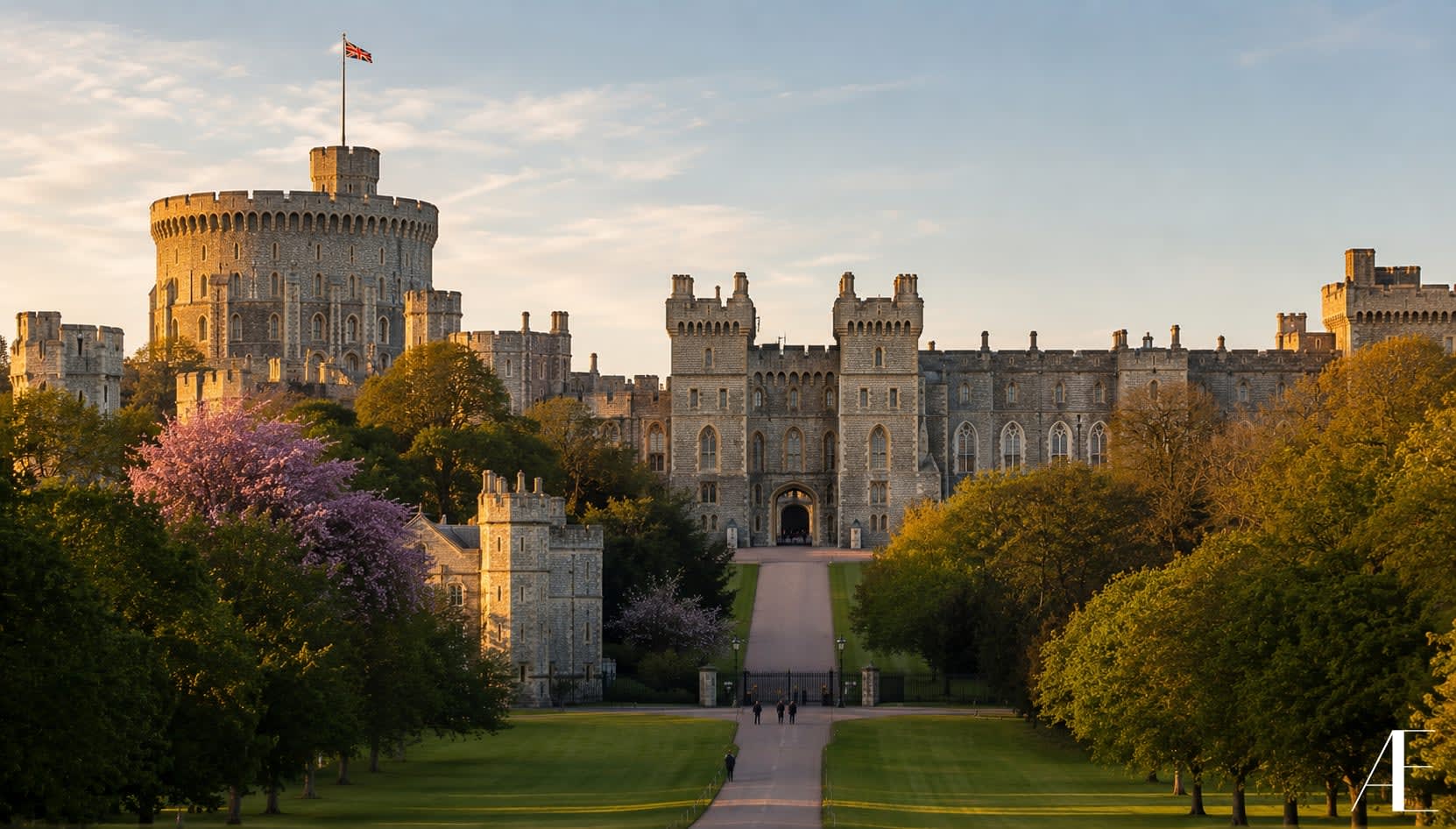
Distance / time: 30–40 minutes by train from Paddington or Waterloo.
What's there: Windsor Castle, the oldest and largest occupied castle in the world, the official weekend residence of the King, and the burial place of most English monarchs since Henry VIII. The State Apartments, St George's Chapel (burial chapel of the Order of the Garter, where both Henry VIII and Queen Elizabeth II are buried), and the Long Walk stretching south from the castle.
Best for: Royal-interest clients.
Worth it? Yes. Easy half-day from London.
The Cotswolds
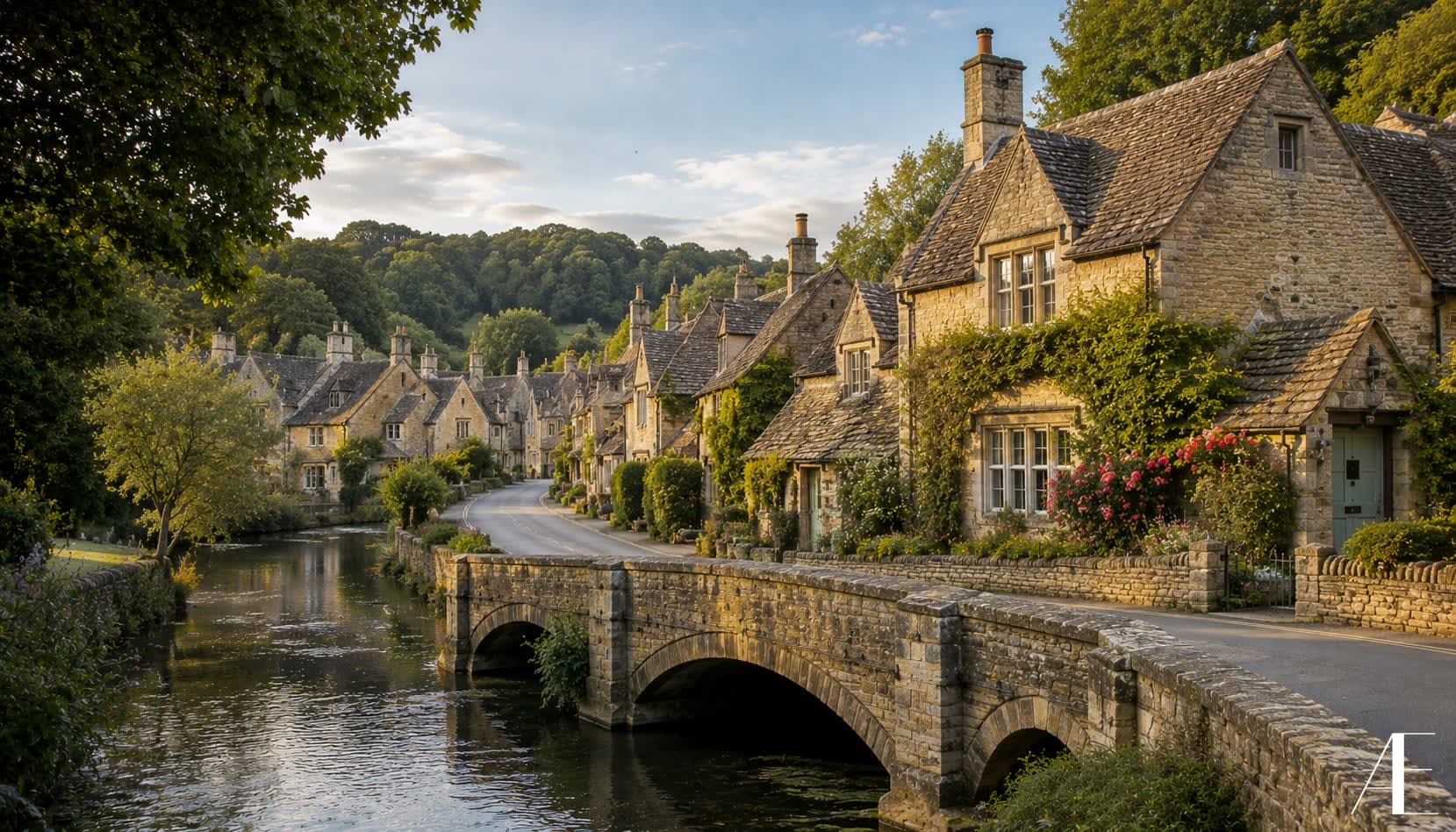
Distance / time: Approximately 2 hours by coach (best by organised tour, as the villages require a car to visit independently).
What's there: The most archetypal English rural landscape: limestone hills, honey-coloured stone villages, Norman churches, hedgerow-bordered lanes. Bourton-on-the-Water, Bibury, Burford, Chipping Campden, and Stow-on-the-Wold are the most visited.
Best for: Clients who want the English countryside experience. Photography clients. One of the most booked day trips from London for North American visitors.
Worth it? Yes, particularly for the right client.
The Broader London Itineraries
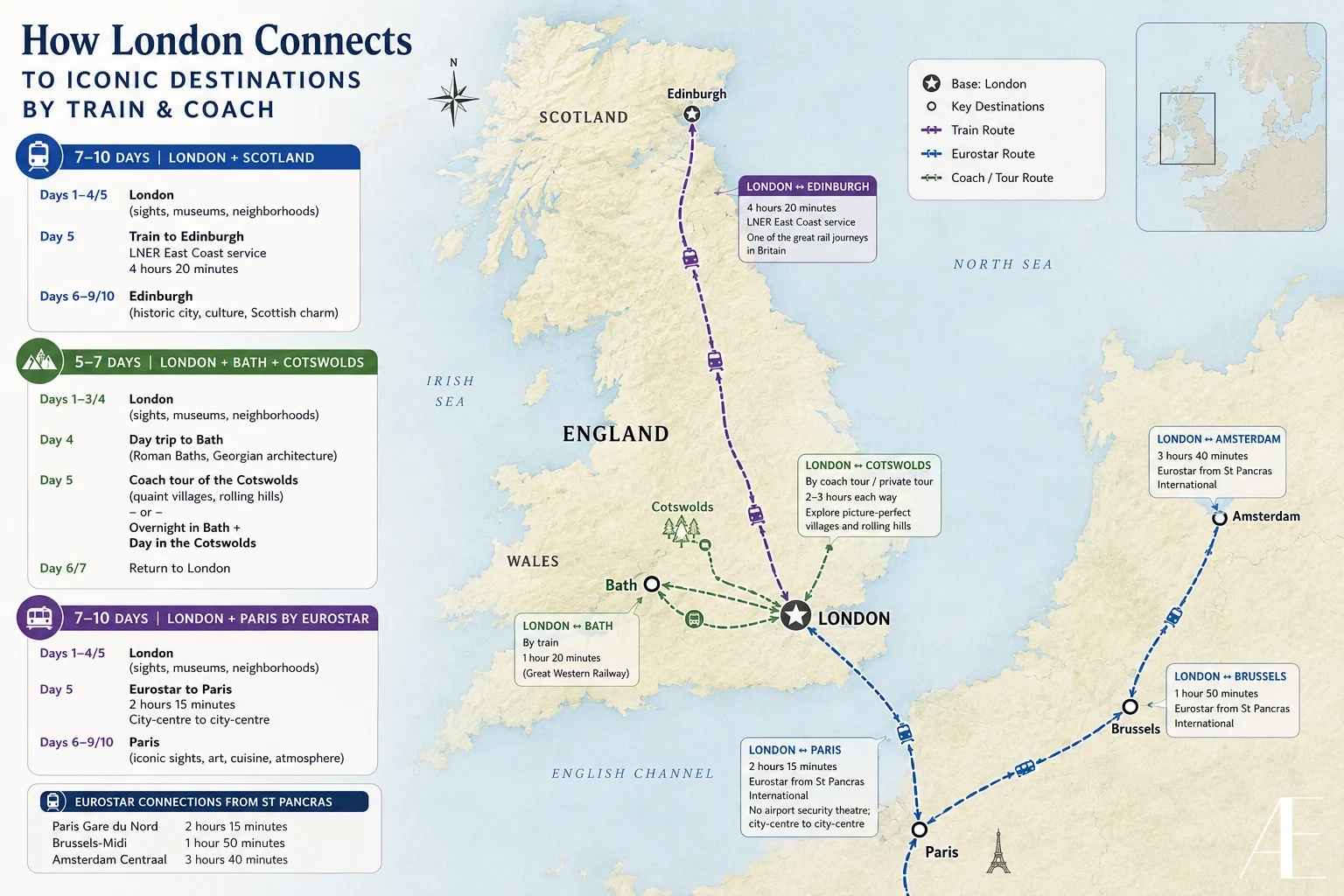
5 to 7-Days Itinerary: London, Bath & Cotswolds
This is the classic London-plus-countryside itinerary for clients who want England beyond the capital without committing to a long multi-city route. Start with 3–4 days in London, covering the essential museums, royal landmarks, theatre, food and neighbourhoods, then add Bath and the Cotswolds for a softer, more romantic view of England.
For a shorter trip, Bath works well as a full-day rail excursion from London, with enough time for the Roman Baths, the Royal Crescent, Pulteney Bridge and the Georgian city centre. For a stronger 6–7 day itinerary, overnight in Bath, then continue into the Cotswolds by private driver or small-group tour. This allows clients to experience the honey-stone villages, countryside roads, market towns and slower pace without trying to force everything into one rushed day.
Agent note: Bath is easy by train; the Cotswolds are not. For the Cotswolds, recommend a driver-guide, small-group tour or overnight structure rather than independent rail planning. This pairing is ideal for couples, literary clients, photography clients and travellers who want the “postcard England” experience after London.
7 to 10-Day itinerary: London & Scotland
This is one of the strongest first-time UK itineraries for North American clients. Start with 4–5 days in London, giving clients enough time for Westminster, the Tower of London, the major museums, theatre, neighbourhood exploration and at least one strong food experience. Then continue by train from London King’s Cross to Edinburgh Waverley, usually around 4 hours 20 minutes on the East Coast Main Line. The route is part of the experience, especially the coastal sections through Northumberland as the train approaches Scotland.
Spend 3–4 days in Edinburgh, using the city as a compact but deeply rewarding Scottish introduction: the Castle, Royal Mile, Holyrood, New Town, Leith, whisky, food and possible day trips to Stirling or St Andrews. This itinerary works because it combines two very different capitals without airport transfers, baggage re-checks or wasted travel days. For clients who want Britain’s history, culture, rail romance and city-to-city efficiency, this is the natural pairing.
Agent note: Position this as the classic “first real UK trip” for clients who do not want London only. London delivers scale, theatre and global culture; Edinburgh delivers atmosphere, Scottish identity and a strong sense of place. The train connection makes the itinerary feel seamless rather than complicated.
7 to 10-Days Itinerary: London & Paris by Eurostar
This is one of the most efficient and attractive two-country itineraries for North American clients. Start with 4–5 days in London, then travel by Eurostar from St Pancras International to Paris Gare du Nord in approximately 2 hours 15 minutes. The appeal is simple: city centre to city centre, no airport transfer, no baggage re-check, and no lost day in transit.
In London, clients get royal history, theatre, museums, markets and neighbourhood exploration. In Paris, they shift naturally into art, architecture, cuisine, fashion and café culture. The two cities contrast beautifully: London feels layered, global and theatrical; Paris feels elegant, visual and deeply atmospheric.
Agent note: This is the easiest multi-country European itinerary to sell to first-time transatlantic clients. Position it as two major capitals with one simple rail connection. Remind clients that Eurostar requires advance check-in and security, but it is still far smoother than flying between the two cities.
Eurostar connections from St Pancras:
- Paris Gare du Nord: 2 hours 15 minutes
- Brussels-Midi: 1 hour 50 minutes
- Amsterdam Centraal: 3 hours 40 minutes
8 to 14-Days Itinerary: Southampton Cruise & London
This is the standard cruise-plus-London structure for North American clients sailing from Southampton. Start with 2–3 nights in London before the cruise, giving clients time to recover from the transatlantic flight, adjust to the time zone, see the major highlights and avoid the risk of same-day arrival before embarkation. Then transfer to Southampton for a 7–14 night British Isles, Northern Europe, Mediterranean or transatlantic itinerary, depending on the cruise line and season.
After disembarkation, add 1–2 nights in London if the schedule allows. This gives clients a softer landing after the cruise and avoids turning disembarkation day into a rushed airport transfer. It also creates space for anything they missed before the sailing: theatre, shopping, a museum, afternoon tea or a final London dinner.
Agent note: Never recommend flying into London on the same day as a Southampton embarkation for North American clients. A London pre-cruise stay is not just an upsell; it is smart risk management. Position it as comfort, recovery and protection against flight delays. For clients with more time, the post-cruise London night is also valuable because disembarkation mornings are rarely elegant. They are more “luggage ballet in a cruise terminal” than grand finale.
When to Visit London
Spring (March–May)
- Average temperatures: 9–17°C (48–63°F)
- Daylight hours: Rising from 12 to 15+ hours through the season
- Rainfall: Moderate. April is famously unpredictable but frequently beautiful.
- Crowd levels: Low to moderate. Manageable queues at major attractions.
- Key events: Chelsea Flower Show (late May), Oxford and Cambridge boat race (late March/early April on the Thames), Easter at Westminster Abbey and St Paul's.
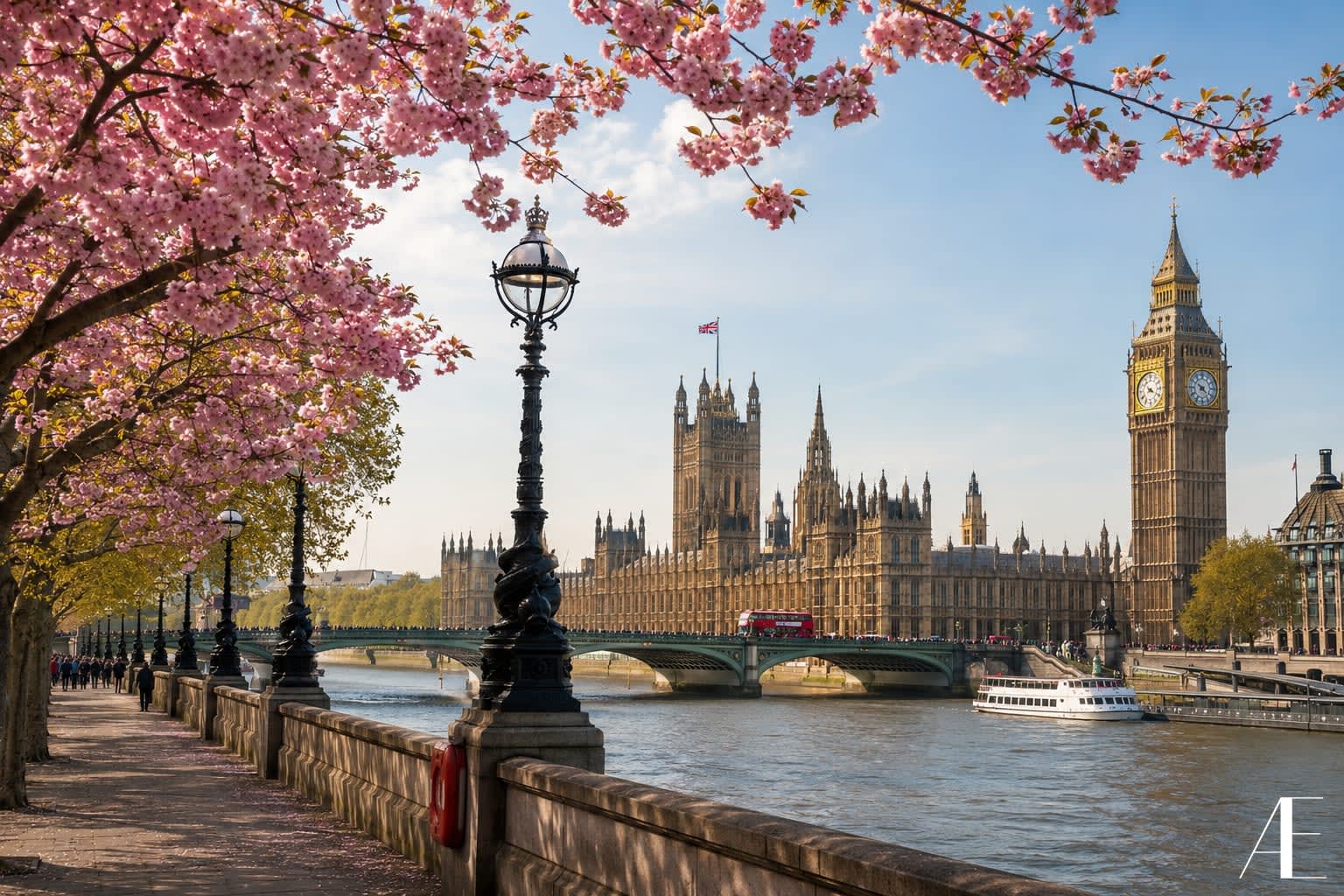
- Who this season is right for: One of the two best times to visit. The parks are spectacular in April and May (cherry blossom in April, tulips in the Royal parks). Book the Chelsea Flower Show well in advance if that is a draw.
- Booking lead time: 4–8 weeks for most hotels and attractions. Chelsea Flower Show tickets: 3–6 months.
Summer (June–August)
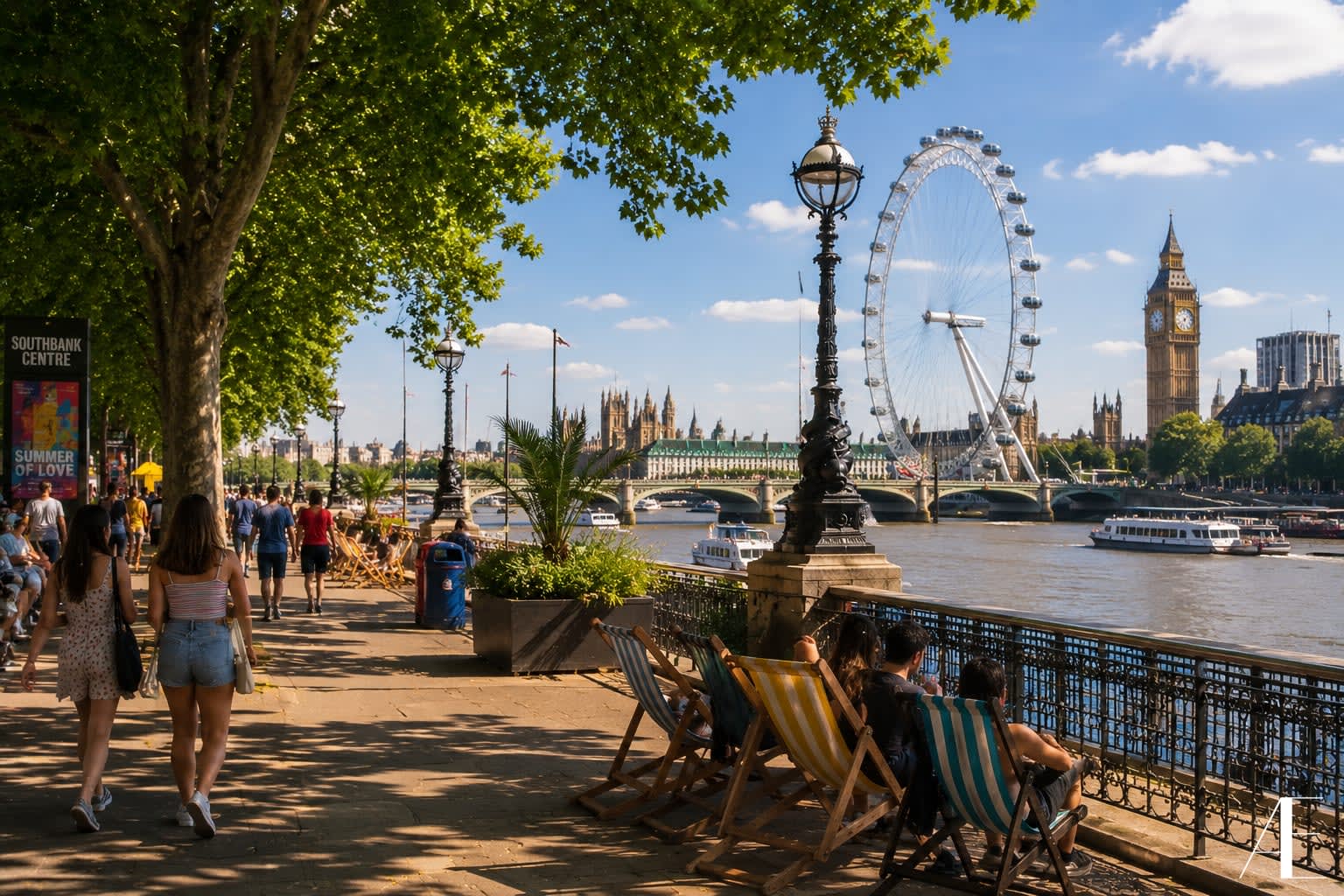
- Average temperatures: 17–24°C (63–75°F), occasionally higher
- Daylight hours: Up to 16.5 hours. Sunset at 9:15pm in late June.
- Rainfall: Moderate, with occasional heat waves and thunderstorms.
- Crowd levels: HIGH. The major tourist sites are very crowded from late June to late August.
- Key events: Wimbledon Championships (late June–early July), Notting Hill Carnival (August Bank Holiday weekend, the largest street festival in Europe), The Proms (BBC Promenade Concerts at the Royal Albert Hall, July–September).
- Who this season is right for: Festival and event clients. Families (school holidays from mid-July). Not ideal for clients who dislike crowds or heat.
- Booking lead time: 4–6 months for Wimbledon tickets. 2–4 months for hotel accommodation at reasonable prices.
Autumn (September–October)
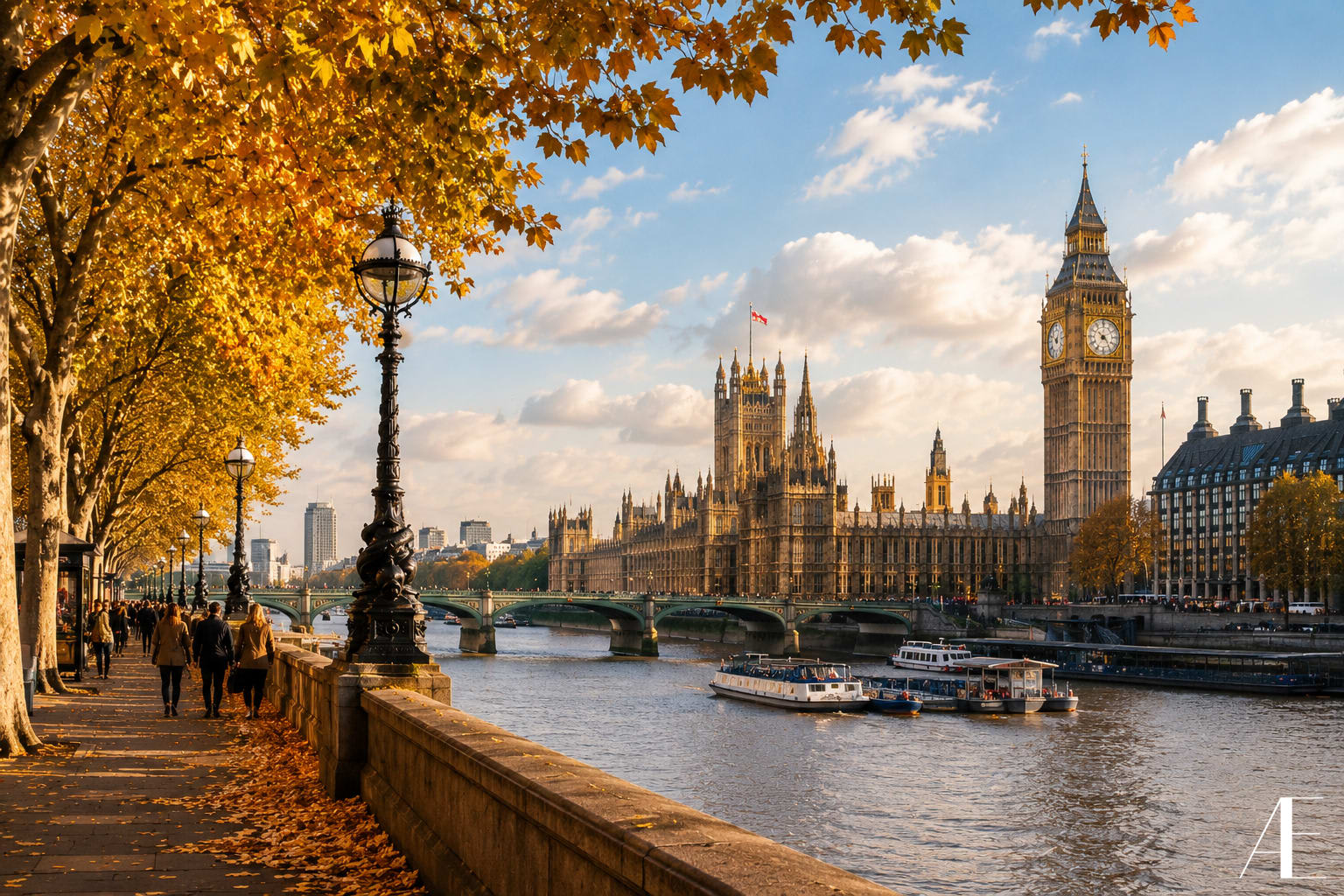
- Average temperatures: 12–19°C (54–66°F)
- Daylight hours: Declining from 13 to 10 hours through the season.
- Rainfall: Increasing through October. September is frequently one of the finest months.
- Crowd levels: Moderate, dropping to low by late October.
- Key events: London Fashion Week (September), Frieze Art Fair (October), BFI London Film Festival (October). The cultural season is in full operation: theatre, galleries, classical music, and opera all at peak activity.
- Who this season is right for: One of the two best times to visit. Recommended for virtually all client types. The London theatre season is at its richest. The parks in late October with turning leaves are spectacular.
- Booking lead time: 4–8 weeks for most hotels. Book theatre 4–8 weeks ahead for popular productions.
Winter (November–February)
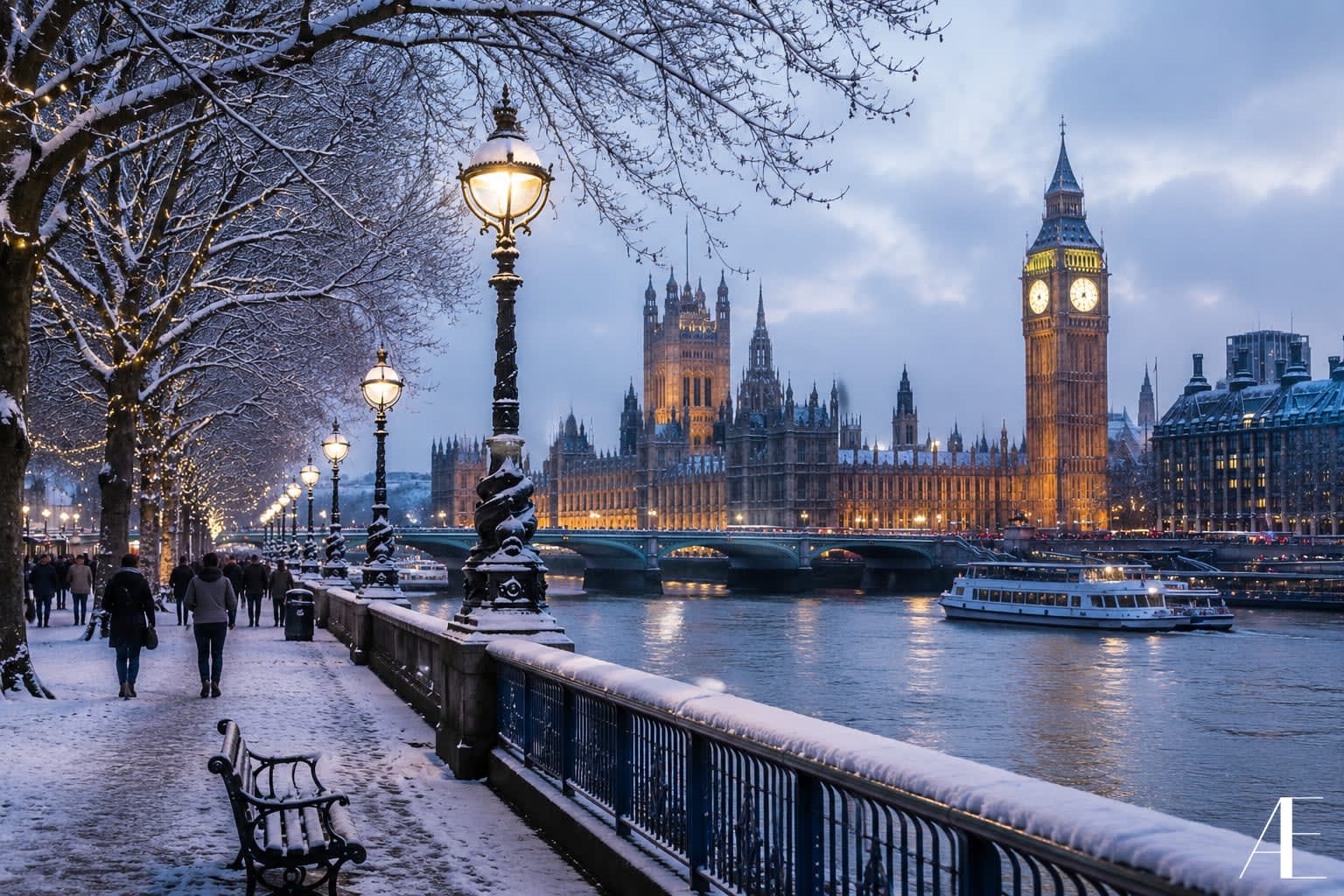
- Average temperatures: 4–10°C (39–50°F)
- Daylight hours: Minimum approximately 8 hours in December.
- Rainfall: Regular. Snow is rare in central London (perhaps once every 3–5 years).
- Crowd levels: LOW outside the Christmas period.
- Key events: Christmas lights on Regent Street, Oxford Street, and Carnaby Street (switched on late November). Hyde Park Winter Wonderland (mid-November to January). New Year's Eve fireworks over the Thames at midnight.
- Who this season is right for: Budget-conscious clients (lowest hotel prices of the year). Clients who want the Christmas atmosphere.
- Booking lead time: Christmas week (23–31 December): 4–6 months. Standard winter: 2–4 weeks often sufficient.
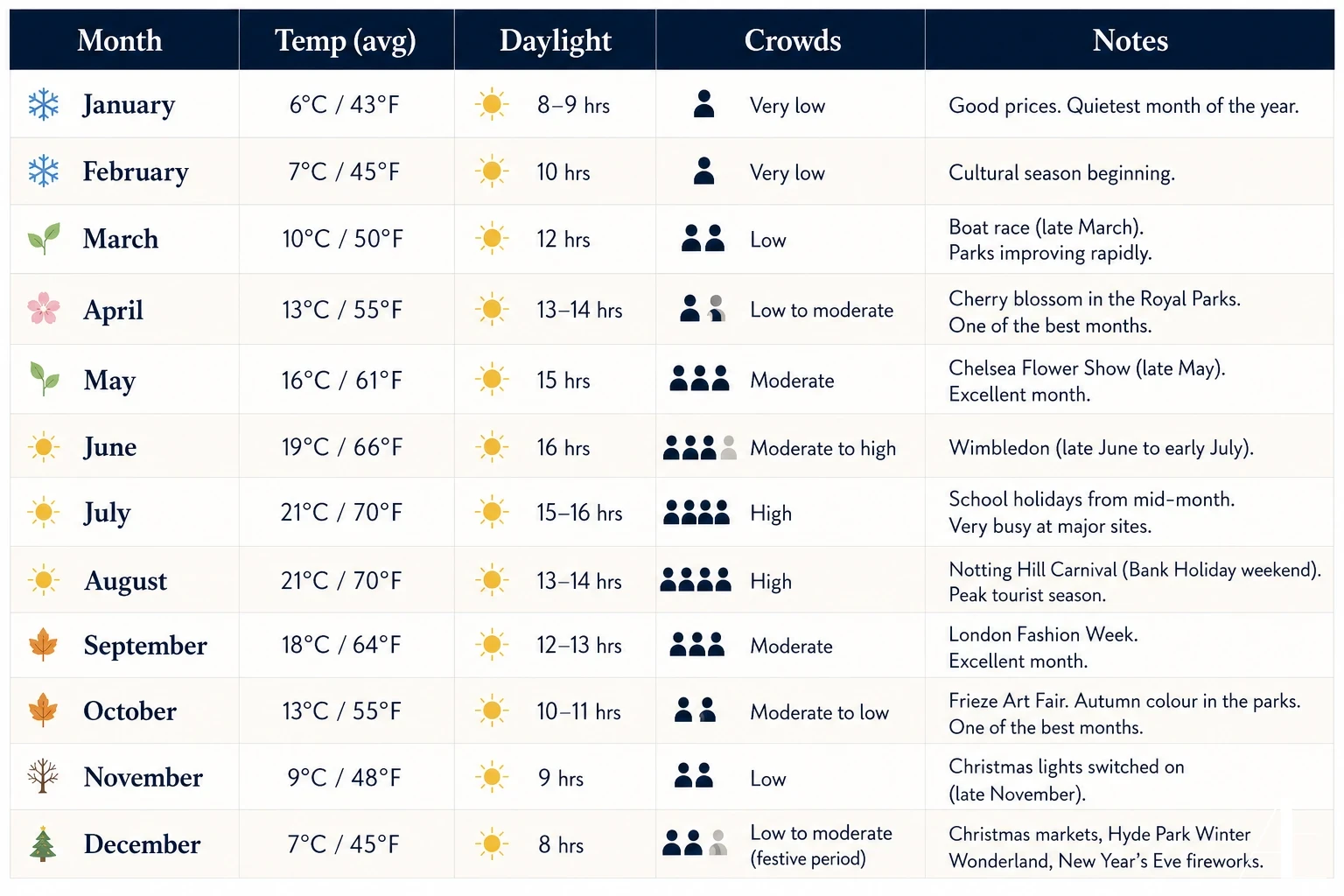
Month-by-Month Quick Reference
How Many Days to Stay
2 days, absolute minimum
Two days allows clients to see the headlines, but not to understand the city. A workable structure would be Westminster on day one, including Westminster Abbey, Big Ben, St James’s Park, the South Bank walk, Tate Modern and Borough Market. Day two should begin with the Tower of London, booked for the first entry slot, followed by the British Museum or the National Gallery in the afternoon. This is useful for a stopover, but it is not a complete London visit.
3 days, the standard short stay
Three days is what many first-time clients request, and it can work if the itinerary is tightly structured. Add a West End evening, Trafalgar Square, the National Gallery, Covent Garden or Soho, and enough time for one or two proper meals rather than constant sightseeing. It covers the essential range, but it remains busy.
4–5 days, the ideal first visit
This is the right recommendation for most first-time visitors. It gives clients time for the major landmarks, the Tower, Westminster, the South Bank, at least one major museum, a theatre evening, a market morning, and neighbourhood time in places like Notting Hill, Shoreditch, South Kensington or Bloomsbury. It also allows for one easy day trip, such as Oxford, Windsor or Bath, without making the trip feel rushed.
7 days, the richer London stay
A full week lets clients begin to understand London beyond the postcard version. Add Greenwich, South Kensington, a second theatre evening, smaller galleries such as the Courtauld, Wallace Collection or National Portrait Gallery, and deeper neighbourhood exploration in Bermondsey, Marylebone, Chelsea, Hampstead, Peckham or Clerkenwell. This is where London starts to feel like a city to inhabit, not just a city to visit.
10+ days, London as a base
For clients who want to use London as a hub, ten days or more opens the door to a full city programme plus several day trips. Bath, Oxford, Cambridge, Windsor, Stonehenge, Salisbury and the Cotswolds all become realistic options, depending on pacing and interests.
The rule for agents
Never let clients assume that two days in London is enough. It is not. Two days gives them the icons. Three days gives them a compressed introduction. Four to five days is the strongest recommendation for a meaningful first visit. A week or more is where London becomes truly rewarding.
Where to Eat: The Curated List
London is genuinely one of the great food cities in the world. The combination of exceptional produce (British seasonal ingredients are outstanding: Cornish seafood, game from the English countryside, salt marsh lamb, aged beef from heritage breeds), the diversity of the city's immigrant communities, and a generation of chefs trained across Europe and Asia has produced a food scene with no real weaknesses.
St John Restaurant
Smithfield, City of London · British · £££
One of the most influential British restaurants of the last 30 years. Fergus Henderson and Trevor Gulliver opened St John Smithfield in 1994 in a former smokehouse near Smithfield Market, helping revive serious interest in traditional British cooking and nose-to-tail dining. Roast bone marrow with parsley salad and toast remains the defining signature dish.
- Right for: Serious food clients, adventurous eaters, anyone interested in the British food revival.
- Booking: Essential. Book ahead for the dining room; the bar may be possible for walk-ins.
- Agent note: Best for serious food clients who want to understand modern British cooking at its source. Not ideal for picky eaters or clients who want polished luxury; this is influential, honest, ingredient-driven dining rather than glamour.
Dishoom
Multiple locations · Indian / Bombay café · ££
One of London’s most popular restaurant groups, inspired by Bombay’s Irani café culture. The black daal and bacon naan roll are among its best-known dishes, and the restaurants work well for clients who want something lively, accessible and reliably crowd-pleasing.
- Right for: Most client types, especially groups, families and clients who may not usually choose Indian food.
- Booking: Dishoom accepts reservations for groups of any size until 5:45pm. After that, reservations are generally for groups of six or more, with most tables kept for walk-ins. Breakfast and daytime bookings are especially useful for clients who want to avoid queues.
- Agent note: One of the safest London restaurant recommendations for a wide range of clients. Use it for groups, families, first-time visitors and clients who want energy, atmosphere and excellent food without fine-dining formality.
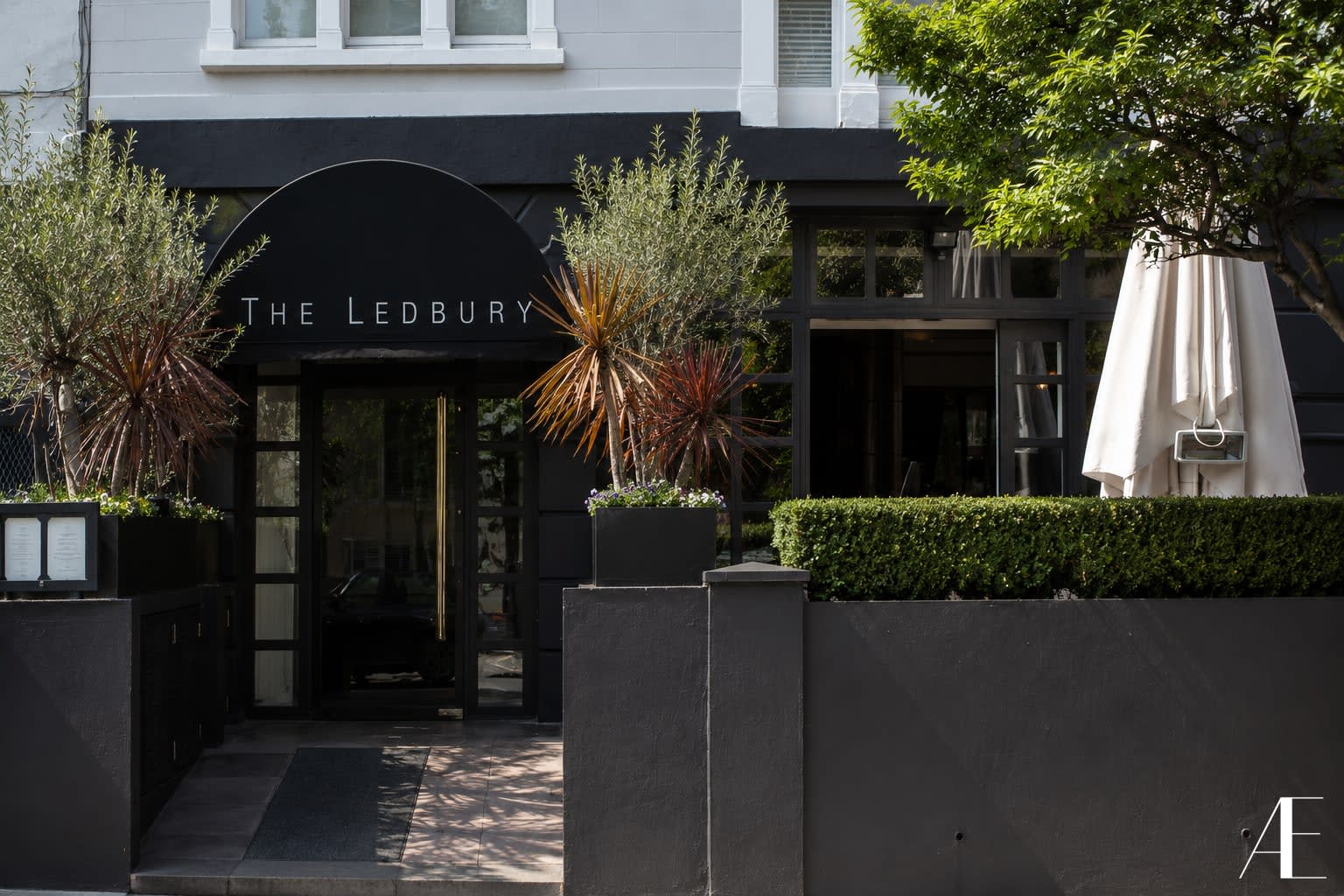
The Ledbury
Notting Hill · Modern European · ££££
Brett Graham’s three-Michelin-star restaurant is one of London’s most important fine-dining addresses. Opened in 2005, it is known for precise, ingredient-led cooking and a dining experience that feels polished without being stiff.
- Right for: Luxury clients, serious food clients, anniversary or occasion dining.
- Booking: Essential. Recommend booking well ahead, especially for weekends and peak travel periods.
- Agent note: A true occasion restaurant for luxury clients and serious food travellers. Best positioned for anniversaries, milestone dinners and clients who actively seek Michelin-level dining. Book well ahead and treat it as a major experience, not just dinner.
Padella
Borough Market · Pasta · £–££
A small, high-demand pasta restaurant beside Borough Market, known for fresh pasta at unusually strong value for central London. The Borough Market location does not take reservations; guests join a virtual queue by QR code or through the Dojo app.
- Right for: Most client types, especially clients who want excellent food without fine-dining prices.
- Booking: No reservations at Borough Market. Use the virtual queue or arrive early. Larger groups should consider the Shoreditch or Soho locations.
- Agent note: Excellent for clients who want one of London’s best-value food experiences, but not for those who dislike queues or uncertainty. Recommend it to flexible, food-curious clients who are comfortable with a more casual, high-demand setup.
Brat
Shoreditch · Wood-fire cooking · £££
Tomos Parry’s Michelin-starred Shoreditch restaurant is built around wood-fire cooking, with Basque-influenced British dishes and a strong emphasis on seafood, meat and seasonal produce. Whole grilled turbot is the dish most closely associated with the restaurant.
- Right for: Food-focused clients and those wanting a contemporary London dining experience.
- Booking: Essential. Book ahead, especially for dinner.
- Agent note: Best for clients who want contemporary London dining and are interested in the current food scene. It is a strong recommendation for repeat visitors, design-conscious travellers and clients who prefer atmosphere and flavour over traditional luxury service.
The Wolseley
Piccadilly · Grand European café · £££
A grand café-restaurant on Piccadilly, set in a former car showroom with a strong sense of occasion. It serves breakfast, lunch, afternoon tea and dinner, and is useful for clients who want a classic London room without committing to a full tasting-menu experience.
- Right for: Clients who want tradition, atmosphere and occasion. Strong for breakfast, afternoon tea and pre-theatre meals.
- Booking: Recommended. The restaurant accepts reservations and also holds some tables for walk-ins. Avoid listing a fixed afternoon-tea price unless updating regularly.
- Agent note: Use The Wolseley when clients want classic London atmosphere, breakfast, afternoon tea or a polished pre-theatre meal. The room is the selling point as much as the food, which makes it excellent for first-time visitors who want occasion without a tasting menu.
Barrafina
Multiple locations · Spanish tapas · £££
One of London’s best-known Spanish tapas groups, built around counter dining, daily specials and high-quality ingredients. The original Dean Street location remains the most classic counter experience, while other locations also offer reservations and, in some cases, traditional tables.
- Right for: Couples, food clients and travellers who enjoy counter dining and a lively room.
- Booking: Check by location. Several Barrafina restaurants now take reservations as well as walk-ins, so “no booking at most sites” should be removed.
- Agent note: Best for couples, solo travellers and food clients who enjoy counter dining and a lively room. Less ideal for clients who want a quiet, lingering dinner or guaranteed privacy. Check the reservation policy by location before recommending.
The River Café
Hammersmith · Italian · ££££
Ruth Rogers and the late Rose Gray founded The River Café in 1987, and it remains one of the most influential Italian restaurants in Britain. Set beside the Thames in Hammersmith, it is known for seasonal Italian cooking, a strong alumni legacy and a dining room that still feels special decades after opening. Michelin lists it as a one-star restaurant in the 2026 guide.
- Right for: Occasion dining for food-focused clients and luxury clients who value restaurant history.
- Booking: Essential. Book well ahead, especially for dinner and weekends.
- Agent note: Best for luxury clients, food-focused repeat visitors and clients who appreciate restaurant legacy. The Thames-side setting and history make it feel special, but it is expensive, so position it as an occasion meal rather than casual Italian dining
Where to Stay: The Full Breakdown
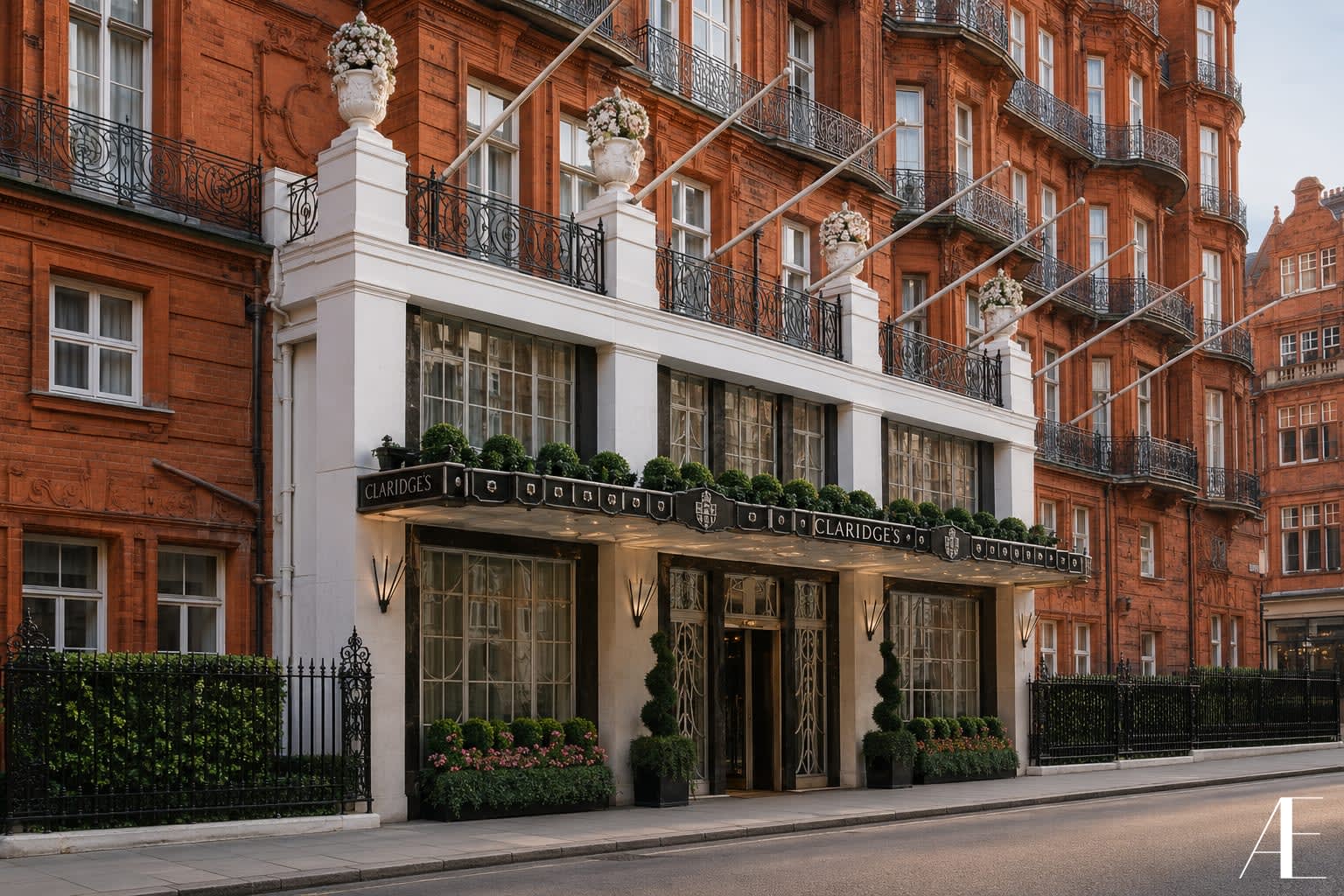
For the Luxury Client
Claridge's
Mayfair · ££££
Claridge’s is one of London’s great luxury hotels, known for its Art Deco glamour, Mayfair address and deeply polished service. The hotel has been associated with royalty, heads of state and major cultural figures for generations, and remains one of the clearest choices for clients who want classic London grandeur without sacrificing contemporary comfort.
During the Second World War, Claridge’s was closely associated with European royalty in exile, including the famous Suite 212 story connected to the birth of Crown Prince Alexander of Yugoslavia. The hotel’s own site dates its history back to 1812 and positions it as one of Mayfair’s defining luxury addresses.
- Commission-eligible: Yes, through luxury hotel programs, preferred partner channels and standard advisor booking routes.
- Agent note: Best for clients who want the iconic London grande dame experience: Mayfair, impeccable service, history, afternoon tea, serious luxury and a strong sense of arrival. Not the right choice for clients who want edgy design or neighbourhood immersion; this is classic London at the highest level.
The Connaught
Mayfair · ££££
The Connaught is the quieter, more understated Mayfair luxury choice: highly polished, intimate and deeply service-driven. It is especially strong for clients who value discretion over spectacle. The hotel is also a major culinary and cocktail destination, with Hélène Darroze at The Connaught currently holding three Michelin stars, and the Connaught Bar regularly ranked among the world’s great cocktail bars.
- Commission-eligible: Yes, through luxury hotel programs, preferred partner channels and standard advisor booking routes.
- Agent note: Best for ultra-luxury clients who dislike ostentation. Use it for repeat London visitors, culinary travellers, cocktail clients and guests who want “quiet power” rather than theatrical grandeur.
The Savoy
Strand · ££££
The Savoy is London’s most storied riverside grand hotel, opened in 1889 by Richard D’Oyly Carte. Its history includes theatre, music, art, royalty, celebrity culture and classic London hospitality. The American Bar, opened in 1893, is one of the city’s most historic cocktail bars, while the Savoy Grill continues under Gordon Ramsay Restaurants.
- Commission-eligible: Yes, through Accor/Fairmont luxury channels and standard advisor booking routes.
- Agent note: Best for clients who want theatre, history and a glamorous London story. The location works especially well for West End, Covent Garden, South Bank and river-focused itineraries. For Mayfair shopping clients, Claridge’s or The Connaught may be a better fit.
The Ned
City of London · £££–££££
The Ned occupies the former Midland Bank headquarters in the City of London, designed by Sir Edwin Lutyens and transformed into a large lifestyle hotel and members’ club. Its vast former banking hall, with restaurants and bars under high ceilings and original architectural detail, is one of London’s most dramatic hotel interiors. The property includes multiple restaurants and bars, a spa and member/guest facilities, with rooftop areas associated with Ned’s Club access. The Ned’s official site lists its restaurants and rooftop club spaces, including a heated rooftop pool for members.
- Commission-eligible: Yes, but advisor booking channels and benefits should be checked by supplier.
- Detail to share: Breakfast or drinks in the ground-floor banking hall is one of the best ways to experience the building, even for clients not staying there.
- Agent note: Best for clients who want energy, design, restaurants, bars and a members-club atmosphere. Not ideal for clients who want hushed traditional luxury. The City is quieter on weekends, which can be either a benefit or a drawback depending on the client.
For the Boutique / Design Client
Chiltern Firehouse
Marylebone · ££££
Chiltern Firehouse is André Balazs’s luxury hotel and restaurant in a converted Victorian fire station in Marylebone. The property is small, high-profile and design-led, with 26 suites and a restaurant that became one of London’s most talked-about reservations after opening. Its official site describes it as a five-star hotel with 26 suites and an award-winning restaurant.
- Booking: Check current operating status before recommending, following the 2025 fire and restoration period.
- Agent note: Best for celebrity-aware, design-conscious and repeat London clients who want something intimate and scene-driven rather than formal Mayfair luxury. Do not sell it as a practical family base or a quiet classic hotel.
The Hoxton, Shoreditch
Shoreditch · ££–£££
The Hoxton, Shoreditch is the original London Hoxton property and remains a strong design-led option in East London. It works well for clients who want restaurants, bars, street art, independent shops, Spitalfields, Brick Lane and a more creative neighbourhood base. The official site highlights Shoreditch’s creative energy, independent boutiques, bars, eateries and street-food culture.
- Agent note: Best for younger clients, repeat visitors, design-oriented travellers and clients who want East London energy. Less ideal for first-timers who want to walk easily to Westminster, South Kensington or the West End every day.
Artist Residence London
Pimlico · £££
Artist Residence London is a small, highly individual townhouse hotel in Pimlico, with 10 bedrooms, an all-day neighbourhood restaurant and a cocktail bar. The hotel’s official site describes it as a homely 10-bedroom townhouse in leafy Pimlico, which is exactly the selling point: intimate, personal, creative and much less corporate than most central London hotels.
- Agent note: Best for boutique clients, couples and solo travellers who want charm, individuality and a quieter base near Victoria, Westminster and Chelsea. Not ideal for clients who require full-service hotel amenities or large public spaces.
For the Value-Conscious Client
The Hoxton, Holborn
Bloomsbury / Holborn · ££
The Hoxton, Holborn is a practical design-led option in a stronger first-time location than Shoreditch. The British Museum, Covent Garden, Oxford Street and the West End are all within easy reach, and the hotel keeps the Hoxton formula: compact stylish rooms, lively public spaces and good central value. The official site specifically notes that Covent Garden, Oxford Street and the British Museum are within walking distance.
- Agent note: Best for clients who want style and location without luxury pricing. A very useful recommendation for younger couples, solo travellers and value-conscious first-timers who still want central London.
Z Hotels (multiple locations)
Multiple locations · £–££
Z Hotels offer compact, efficiently designed rooms in very central locations at prices that often undercut traditional mid-market London hotels. The brand’s own site emphasizes central locations and cleverly designed compact rooms; Soho and Victoria are especially useful for visitors because of their proximity to theatres, restaurants, Buckingham Palace, Westminster and transport links.
- Agent note: Best for short stays, solo travellers and clients who value location over space. Be very clear that rooms are compact. This is not the right choice for clients who need room to unpack, work extensively or travel with lots of luggage.
Generator London
King’s Cross / Russell Square · £
Generator London is a design-conscious hostel near King’s Cross, Euston, Russell Square and the British Museum. It is housed in a former police station and offers both dormitories and private rooms, with social common areas and good transport access. Generator’s official site confirms the old police-station setting and its location near King’s Cross, Euston and Russell Square.
- Agent note: Best for budget travellers, solo travellers and younger clients who are comfortable with hostel energy. Private rooms can work for clients who want price control, but this should not be positioned as a hotel replacement for traditional travellers.
For Families
Leonardo Royal Hotel London St Paul's
City of London · £££
Leonardo Royal Hotel London St Paul’s is a practical family-friendly option near St Paul’s Cathedral, the Millennium Bridge and the South Bank. The hotel offers large rooms, an indoor heated pool, gym and spa facilities, which makes it more useful for families than many central London boutique hotels. Leonardo’s official site lists a 16.6-metre heated swimming pool and Rena Health and Fitness Club.
- Agent note: Best for families who want space, a pool and easy access to the South Bank, Tate Modern and St Paul’s. The City can be quiet on weekends, which is good for calm evenings but less ideal for clients who want nightlife at the door.
Thistle Marble Arch
Marble Arch · £££
The Marble Arch Hotel by Thistle is a large, practical hotel near Oxford Street, Hyde Park, Selfridges and Marble Arch station. Its value is not boutique charm; its value is room count, central-west location and straightforward family practicality. The official site describes it as just steps from Oxford Street with spacious rooms.
- Agent note: Best for families who want shopping, Hyde Park access and easy transport. Good for practical London stays, but do not oversell it as atmospheric or boutique. It is a convenience-first recommendation.
For Solo Travellers
Citizen M London Bankside
South Bank · ££
CitizenM London Bankside is a stylish, compact-room hotel near Tate Modern, Borough Market, Shakespeare’s Globe and the South Bank. The public spaces are designed for working, reading, meeting and relaxing, which makes it especially useful for solo travellers who do not want to feel isolated in a traditional hotel room.
- Agent note: Best for solo travellers, short stays and design-conscious clients who value location and smart public spaces over large rooms. Not ideal for clients who want traditional luxury service, large bathrooms or classic hotel formality.
The Practical Informations
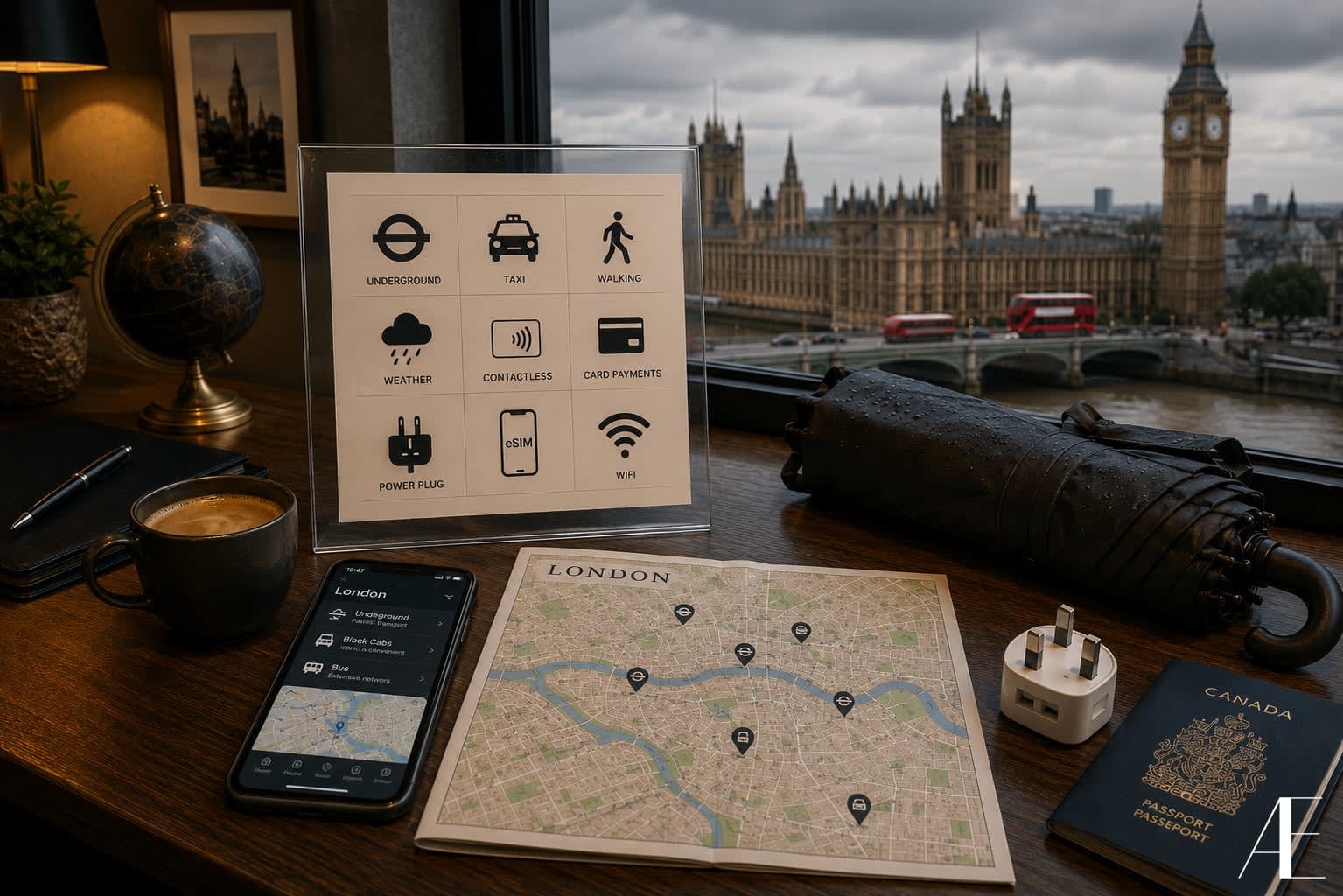
Currency and payment
British Pound Sterling (GBP / £).
Contactless payment is universal in London: the Underground, buses, taxis, restaurants, pubs, and markets all accept contactless bank cards or Apple/Google Pay. ATMs are widespread; use bank-brand ATMs rather than independent operators. Airport exchange rates are poor.
Getting around
From Heathrow Airport:
- Heathrow Express: Heathrow to Paddington in approximately 15 minutes. Fastest option, usually the most expensive, and useful for clients with luggage who are staying near Paddington or connecting onward by rail.
- Elizabeth line (Crossrail): Heathrow to Paddington in approximately 27–35 minutes depending on terminal and stopping pattern, with direct onward links across central and east London. Excellent value for many clients.
- Piccadilly line (Underground): Heathrow to central London in approximately 50–60 minutes. Cheapest option, but slower and less comfortable with luggage.
- Taxi: Black cab to central London approximately £50–£80 depending on traffic.
From Gatwick Airport:
- Gatwick Express: Victoria Station in approximately 30 minutes. Approximately £20 single.
- Southern / Thameslink trains: Victoria or London Bridge in approximately 30–45 minutes, significantly cheaper.
Within the city:
- The Underground (Tube): The backbone. 11 lines, 272 stations. Use a contactless bank card: tap in and out, the system calculates the cheapest fare and applies a daily cap. Verify the current TfL cap for Zone 1–2 before quoting a figure. Do not buy paper tickets.
- Buses: Cover every corner of the city, including areas not on the Tube. The same contactless system applies. The number 11 bus from Fulham to Liverpool Street passes Westminster Abbey, the Houses of Parliament, the Strand, and St Paul's Cathedral: one of the finest free sightseeing routes in the city.
- Thames Clippers (river bus): Commuter river service connecting Putney to Woolwich via central piers. Excellent for Greenwich and for the South Bank piers.
- Taxis and rideshare: Black cabs (metered, licensed, reliable, can be hailed anywhere) and Uber both operate. Black cab drivers have passed "The Knowledge," a rigorous test of every street in London.
Language
English is spoken everywhere.
Key practical vocabulary: "the Tube" (Underground subway), "the loo" (bathroom), "quid" (pound), "Oyster" (the reloadable travel card), "Mind the gap" (step carefully between the train and the platform).
Tipping Standards
- Restaurants: 10–12.5% for good service. Many restaurants include a service charge (usually 12.5%); this is optional and can be removed on request.
- Pubs: No tip expected for drinks ordered at the bar. If food is served table service, 10% is appropriate.
- Taxis: Round up or add 10%.
- Hotel porterage: £1–£2 per bag.
- Tour guides: £5–£15 per person depending on length and quality.
Accessibility
London is improving but still imperfect for wheelchair users and those with mobility limitations. Many Tube stations (particularly older Central, Bakerloo, and Northern line stations) have no step-free access. Key step-free accessible stations: all Elizabeth line stations, all Jubilee line stations from Waterloo eastward, King's Cross, and Paddington. The Overground and DLR (Greenwich) are step-free throughout. For clients with significant mobility limitations, black cabs are wheelchair accessible.
The South Bank walk is fully accessible (flat, paved). Major museums (British Museum, V&A, Natural History Museum, Tate Modern) are all fully accessible with lifts throughout.
Health and safety
- London is a safe city by global standards. Pickpockets operate on crowded Tube lines. Advise clients to keep bags in front of them in crowded areas.
- Emergency number: 999 (police, fire, ambulance). Non-emergency police: 101. NHS 24 (non-emergency medical): 111.
- Water is safe to drink everywhere.
Power: UK three-pin plug (Type G), 230V / 50Hz. Adapters required for North American devices. Most modern electronics are dual-voltage (adaptor only needed).
Internet and connectivity
- A UK eSIM is the most practical option for Canadian and American visitors (Airalo, Holafly, and UK operators offer competitive rates). Open an affiliate account with Breeze eSIM, GigSky, or Holafly to receive commissions on eSIM sales.
- London has good public and commercial Wi-Fi coverage, though a UK eSIM is still the smoother option for navigation-heavy days.
Open an affilate account with Breeze eSim, GigSky or Holafly and receive commissions on the sales of eSims.
Useful apps
- TfL Go: London transport, real-time Tube departures, step-free planning
- Citymapper: Alternative to TfL Go; very good for multimodal routing
- Trainline: UK-wide train booking
- OpenTable / Resy: Restaurant reservations
- TKTS London: Same-day theatre discount tickets (also physical booth in Leicester Square)
- Google Maps: Essential. Download offline map of London before arrival.
What to pack that most visitors forget
- A compact umbrella (London rain is often sideways)
- Comfortable walking shoes (the city is best experienced on foot)
- Layers (London temperatures can vary 10°C between morning and afternoon)
- A power bank (long days of navigation drain phones)
- A universal plug adapter
Who Is This Destination For?
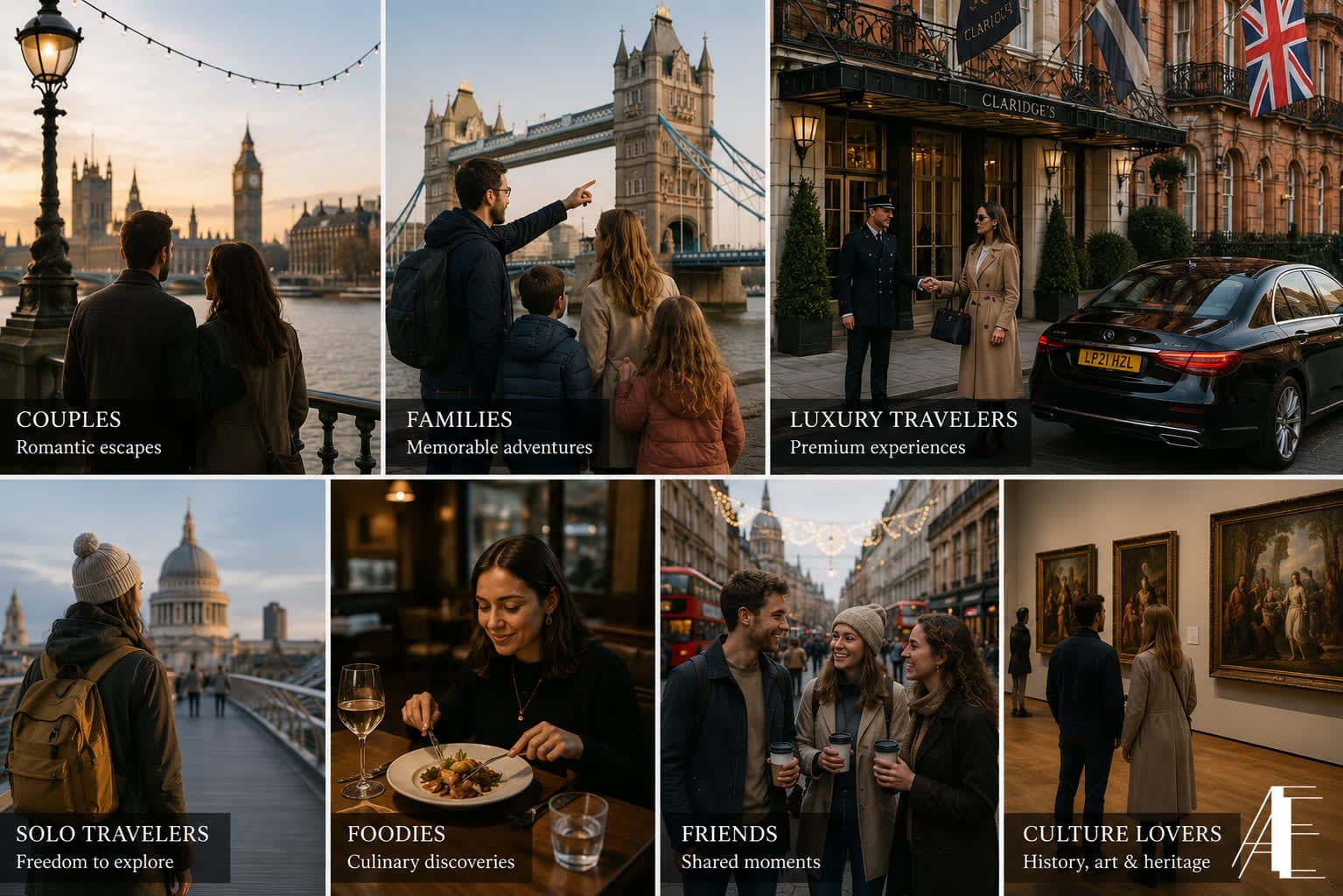
The first-time European traveller
London is the natural gateway. Lead with: "It is one of the world's great visitor capitals for a reason: English-speaking, safe, very walkable by neighbourhood cluster, with some of the finest free museums on earth." Every first-time European traveller should consider London. The question is how to sequence it.
The history and culture enthusiast
London is one of the richest history and culture destinations in the world, alongside cities such as Rome and Paris. Two thousand years of continuous urban history, the British Museum, Westminster Abbey, the Tower of London, the National Gallery, the V&A, the Globe. Lead with the specific history angle that connects to their interest.
The foodie / culinary traveller
Stronger than almost any client expects. Lead with: "London now belongs in the same conversation as Paris, Tokyo and New York for serious food travellers, and its street food and market culture rivals anywhere in Europe. Dishoom alone is worth flying for. And Borough Market on a Saturday morning is one of the great food experiences on the planet."
The theatre and arts client
London is one of the undisputed theatrical capitals of the world. The West End rivals Broadway in range, history and variety. The National Theatre is the finest producing theatre company in the English language. Lead with: "If they love theatre, there is no better city on earth. Period."
The luxury client
London has the finest concentration of luxury hotels, restaurants, shopping, and private experiences in the English-speaking world. Claridge's, the Connaught, the Savoy. Bond Street and Burlington Arcade. Private tours of the Tower of London before opening. A box at the Royal Opera House. For luxury clients from North America, exchange rates should be checked at the time of booking; when favourable, they can make London's top hotels, restaurants and private experiences easier to justify.
The budget-conscious traveller
London is not cheap, but it offers extraordinary value if you know where to look. Many of the world's finest museums are free. The parks are free and enormous. The pub is the social institution of the city and a drink is £6–£8. Lead with: "The free museums alone make London one of the best-value cities in Europe for a culturally curious client."
The festival or event traveller
London has something for every month: Chelsea Flower Show (May), Wimbledon (June–July), the Proms (July–September), Notting Hill Carnival (August), London Fashion Week (September), Frieze (October), the Christmas lights and markets (November–December).
The multigenerational family
Free museums carry most of the load: the Natural History Museum's dinosaurs, the Science Museum's interactive galleries, the British Museum's mummies and Lewis Chessmen, the Tower of London's Crown Jewels and ravens. Lead with: "Almost everything the children will love is free."
The solo traveller
London is one of the great solo travel cities: safe, English-speaking, with a pub and restaurant culture that does not penalise single visitors. The hostel scene is excellent. The theatre is completely normal to attend alone in London (buying a single ticket is common and unremarked).
The romantic / honeymoon client
London works for romance in the right configuration: a suite at the Savoy with the Thames view, an evening at the Royal Opera House, dinner at the River Café, a morning in the Chelsea Physic Garden, an afternoon at the Wallace Collection (the finest small gallery in London for romantic painting).
The cruise client (with a Tilbury port call, 6–7 hours)
The Tower of London is the single most important experience within practical reach. Pre-book tickets online before embarkation. Warn them: 40 minutes on the train each way leaves less time than they think.
The client who says "I've already been to London"
Ask what they saw: if it was only the monuments, they have not yet seen the city. Lead with: "You've seen the headline London. Now let's show you the real one: Borough Market on Saturday morning, the South Bank at golden hour, Dishoom for breakfast, a Sunday afternoon in Portobello, the National Theatre in the evening. This is a different city."
The client who says "London is too expensive"
Acknowledge it, then reframe: "The major museums are free. The parks are enormous and free. The pub is affordable. Borough Market is affordable. What makes London expensive is accommodation and the tourist-facing restaurants. We can solve both of those."
The Common Client Objections
Client says: "London is too expensive. We'd rather go somewhere cheaper in Europe."
Agent answers: "London has the most free world-class museums of any city on earth: the British Museum, the National Gallery, the Tate Modern, the Natural History Museum, the V&A are all entirely free. Accommodation and dining can be managed with the right picks. The pound has also been relatively favourable for Canadian and American travellers over the past few years. I can build an itinerary that delivers extraordinary value."
Client says: "We've heard the food in England is terrible."
Agent answers: "That was true in 1975 and hasn't been true for about 30 years. London now belongs in the same conversation as Paris, Tokyo and New York for serious food travellers, and its street food culture has extraordinary depth at every price point. The diversity of the immigrant communities means you can eat extraordinary Indian, Japanese, West African, Korean, and Vietnamese food at every price point. The food objection is the most outdated thing anyone says about London."
Client says: "We're worried about the weather. Won't it rain the whole time?"
Agent answers: "London gets less annual rainfall than Rome, Miami, or New York. What it has is unpredictable weather: sun and rain can alternate in the same afternoon. The solution is a waterproof layer and the willingness to go anyway, which is exactly how Londoners handle it. The major museums, galleries, and theatres are all indoors. A rainy afternoon at the British Museum is one of the great London experiences."
Client says: "It's just so big. We wouldn't know where to start."
Agent answers: "That's exactly what I'm here for. We'll structure it by neighbourhood clusters so you're not crossing the city unnecessarily: Westminster and the South Bank on day one (everything is walkable), the City and Shoreditch on day two, South Kensington and the parks on day three. With the right structure, the size becomes the point rather than the problem: every neighbourhood is a different city."
Client says: "We've already been to London. There's nothing left to see."
Agent answers: "You've seen the headline London. The real London is the Borough Market on Saturday morning, the National Theatre in the evening, Dishoom for breakfast, a Sunday in Portobello, the Wallace Collection (one of the finest small galleries in the world and almost never crowded), the Bermondsey restaurant scene, Greenwich by river boat. Most people who think they've 'done' London discover on a second visit that they've barely started."
Client says: "Is London safe? We're nervous about terrorism."
Agent answers: "London is one of the most heavily monitored and policed capital cities in the world. The security infrastructure around Parliament, the museums, and tourist sites is substantial and discreet. The everyday personal safety record is very good: pickpocketing is the main risk tourists face, and standard vigilance is sufficient. Millions of visitors travel to London every year without incident. The risk profile is comparable to Paris, New York, or Washington."
Client says: "We don't speak the language. Will we manage?"
Agent answers: "London is English-speaking. You won't need a phrasebook or a translator. The accent and idiom take a day or two to fully calibrate, but this is genuinely the most accessible major city in Europe for Canadian and American travellers."
Client says: "We're only there for two nights before our cruise from Southampton. Is it worth staying in London?"
Agent answers: "Two nights in London is the most important part of the cruise itinerary. You're flying 7 hours from North America; you need at least one full day to adjust and explore before you board the ship. And London deserves it. We'll structure it: arrive at Heathrow, check in, a walk along the South Bank that evening. Full day the next day: the Tower of London in the morning, Westminster Abbey in the afternoon, a West End dinner. Feeling settled and excited by the time the train takes you to Southampton."
Client says: "The Tube looks incredibly complicated."
Agent answers: "It looks that way on the map. In practice it's extremely simple: tap your credit card when you go in, tap when you go out, the system does everything else. The map uses colour-coded lines; the announcement on every train tells you the next stop. I'll give your clients a one-page guide to the five Tube journeys they'll actually use, and they'll feel like locals by day two."
Client says: "We'd rather do Paris than London. It's more romantic."
Agent answers: "Paris is extraordinary and I can sell it without hesitation. But I'd also suggest that London and Paris together, connected by the Eurostar, is one of the great travel itineraries: two capital cities, two very different cultures, two hours fifteen minutes apart by train. Many of my clients who start saying 'Paris' come home saying 'we can't believe we almost skipped London.'"
Client says: "We're travelling with kids. Will they get anything out of London?"
Agent answers: "London with children is extraordinary. The Natural History Museum alone is worth the trip for children under 14: dinosaurs, a blue whale skeleton, an earthquake simulator. The Tower of London (the ravens, the crown jewels, the Yeoman Warders) is riveting for most ages. The Science Museum has interactive galleries that take half a day. Hyde Park has the Diana Memorial Playground. The Thames river boat is exciting. And almost all of it is free. Children tend to love London."
The Conversation Starters
The Monument is its own measurement
The Monument to the Great Fire of London, completed in 1677, is exactly 62 metres tall. It stands exactly 62 metres from the bakery on Pudding Lane where the Great Fire of 1666 started. If you laid it on its side, the top of the column would touch the origin of the fire. This was deliberate: Wren and Hooke designed it as a scientific instrument as well as a memorial. The column was used for pendulum experiments and gravity measurements.
A coffee house once ran the global insurance market
Lloyd's of London, now one of the world's most important insurance markets, began in Edward Lloyd's coffee house on Tower Street in 1688. Ship owners and merchants would gather there to arrange marine insurance over coffee. The coffee house culture of 17th and 18th century London also produced the stock exchange (Jonathan's Coffee House, 1698), several of the major banks, and most of the early newspaper industry. London's financial and media establishment was built in coffee shops.
London has a ghost station you can still see from the train
Aldwych station on the Piccadilly line closed in 1994 but its platforms and signs are preserved exactly as they were in the mid-20th century. It is used regularly as a film location (it appears in V for Vendetta, Atonement, and numerous other productions). The Tube has 40 disused or "ghost" stations in total.
The ravens at the Tower are on the Crown's payroll
The six required ravens at the Tower of London each receive a daily food allowance of 170g of raw meat plus blood-soaked biscuits. They have their own quarters (Raven Lodge), healthcare provided by the Tower's veterinarian, and in one case, a retirement pension and cottage. Grip, the most famous Tower raven in history, was owned by Charles Dickens, who acquired him as a pet and was reportedly inspired by the bird for the raven in Barnaby Rudge.
Boudicca may be buried under Platform 10 at King's Cross Station
The great Queen of the Iceni, who burned London to the ground in 60 or 61 CE, died shortly after her defeat. Her burial site has never been found. One persistent tradition places it under what is now King's Cross Station. The same station also, of course, contains Platform 9¾. London's transport infrastructure has a mythological density that is genuinely extraordinary.
The Great Fire of 1666 killed almost nobody
The Great Fire of London destroyed 373 acres, 13,200 houses, and 87 churches over four days in September 1666. Official records show only six confirmed deaths. The scale of physical destruction versus the apparent human cost remains one of the more astonishing contrasts in urban history.
London had a pneumatic railway under the streets in 1863
The first underground railway in the world opened in London in January 1863 (the Metropolitan line between Paddington and Farringdon). But in 1863, a separate company opened a brief pneumatic dispatch railway under the streets of the City, powered by air pressure, to carry mail and parcels. Today a small stretch of the Post Office Railway ("Mail Rail") is open as a tourist attraction at the Postal Museum in Clerkenwell.
Wellington kept a colossal naked Napoleon in his stairwell
Apsley House, the London home of the Duke of Wellington at Hyde Park Corner (now a museum), displays a colossal nude statue of Napoleon as Mars the Peacemaker. It was commissioned by Napoleon himself, completed by Canova in 1806, bought by the British government after Waterloo, and presented to Wellington, who kept it in his stairwell. At approximately 3.4 metres tall, it is the largest work by Canova.
Lenin edited a revolutionary newspaper from a building in Clerkenwell
The neighbourhood of Clerkenwell (between the City and Islington) was inhabited at various points by Dickens, Marx, Lenin, and Mazzini. Lenin edited the revolutionary newspaper Iskra from offices on Clerkenwell Green in 1902–3. The building is now the Marx Memorial Library, which contains the desk where Lenin worked. It is open to visitors.
Nelson's Column is anatomically wrong
The four lions at the base of Nelson's Column in Trafalgar Square were designed by Edwin Landseer, who had never visited Africa and reportedly used a dead lion at London Zoo as his model. The lion's paws are anatomically wrong: the toes are configured as a dog's rather than a cat's. The monument itself was completed in 1843.
Richmond Park has 630 free-roaming deer inside the M25
Richmond Park, approximately 10 kilometres southwest of central London, is 1,000 hectares of ancient deer park established by Charles I in 1637. Approximately 630 red and fallow deer roam freely through it. It is the largest urban park in any European capital, and genuinely wild in character despite being inside the M25. Accessible by bus from the Underground.
The Tate Modern was specifically designed to flood
The former Bankside Power Station sits on the Thames floodplain. The architects (Herzog & de Meuron) and the Tate knew this. The ground floor galleries and turbine hall are designed to be sealed and pumped out in the event of a Thames flood. The river regularly comes within centimetres of the Tate's front door during high tides. The Thames Barrier, 18 kilometres downstream, has been raised over 200 times since opening in 1982.
ÆRIA Voyages Academy
Professional resources for travel agents who want to sell with complete confidence.
© 2026 ÆRIA Voyages. All rights reserved.
The content, text, and images contained in this guide are the exclusive property of ÆRIA Voyages and are protected by copyright law.
No part of this material may be reproduced, distributed, transmitted, or republished in any form or by any means without the prior written permission of ÆRIA Voyages.
This guide is intended solely for the professional use of registered ÆRIA Voyages Academy members.


Member discussion