
Dublin: The Complete Agent's Guide
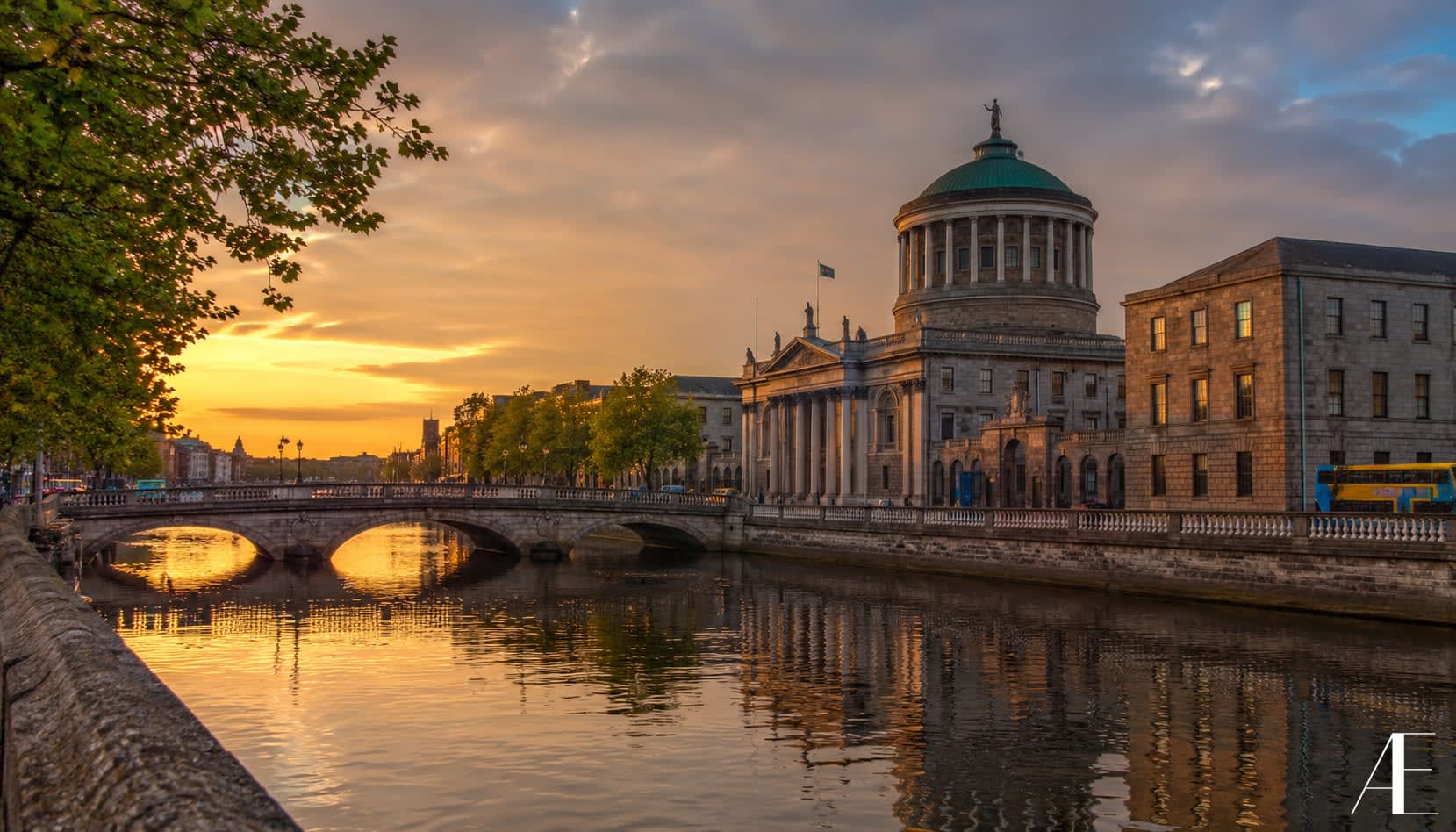
Dublin is the capital of the Republic of Ireland and the main gateway for most North American clients visiting the island. It sits on Dublin Bay at the mouth of the River Liffey, on Ireland's east coast, with the Dublin Mountains rising to the south and the Irish Sea opening toward Britain to the east. It is not Ireland's most beautiful landscape, and it is not the entire Irish experience. That distinction matters. Dublin is where clients begin to understand the country: politics, literature, music, migration, whiskey, rebellion, Georgian elegance, working-class humour, and the complicated intimacy of a small capital with an outsized cultural voice.
For travel agents, Dublin is easy to sell but easy to under-plan. Clients often treat it as a soft landing before "real Ireland": arrive, see Trinity, drink a Guinness, leave for the west. That is a mistake. Dublin rewards clients who give it enough time and who understand that the city is not just a list of sights. It is a layered capital where a Viking street plan, medieval cathedrals, British imperial architecture, revolutionary memory, literary history and contemporary European energy all sit within walking distance of each other.
The city itself is compact by capital standards, but not tiny. The core visitor area stretches from Phoenix Park and Kilmainham in the west to the Docklands in the east, and from Glasnevin and Drumcondra in the north to the Grand Canal and Georgian southside in the south. Many of the central sights are walkable, but clients need a realistic plan. Dublin is at its best when structured by neighbourhood: Trinity and Georgian Dublin, the Liberties and whiskey quarter, Kilmainham and Phoenix Park, the Docklands and EPIC, the northside literary and revolutionary axis, and the coastal villages by DART.
What makes Dublin consistently worth selling: the city has an unusually strong emotional payoff. It is literary without being precious, historic without feeling frozen, and social in a way clients remember. The museums are manageable. The pubs are not a cliché when chosen well. The food scene has become genuinely strong. The day-trip possibilities are excellent. And for cruise, rail, self-drive or island-wide itineraries, Dublin is the logical front door.
The Destination Overview
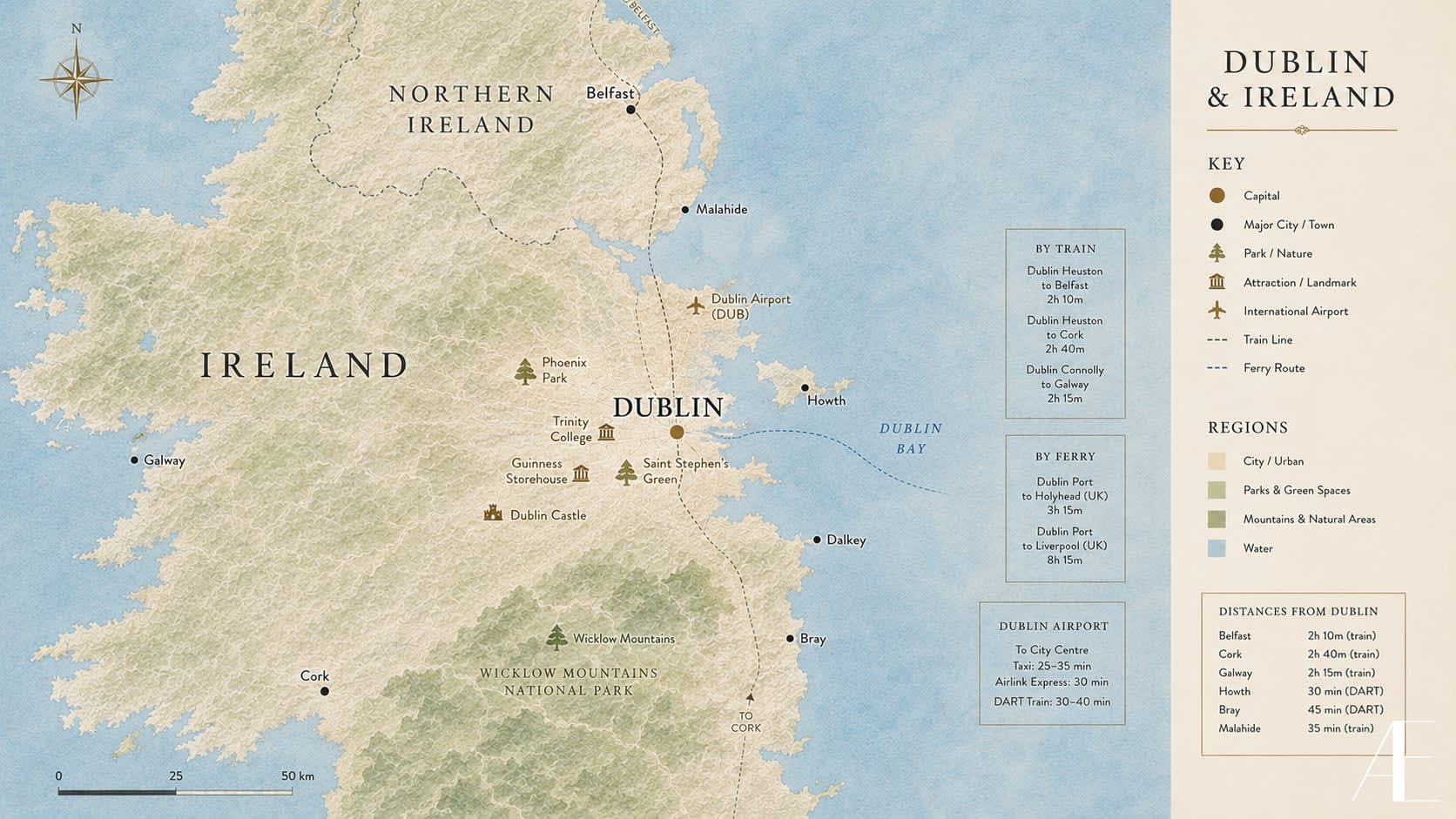
Quick Reference
- Country / Region: Republic of Ireland
- Time zone: GMT in winter; Irish Standard Time / UTC+1 from late March to late October
- Currency: Euro (EUR / €)
- Languages: English is the everyday language for visitors. Irish is the first official language of the state and appears on signage, public transport and cultural institutions.
- Best airport: Dublin Airport (DUB), approximately 10 km north of the city centre
- From Montreal (YUL): Seasonal or connecting options vary by year. Air Transat has listed Montreal–Dublin service; Air Canada has filed planned Montreal–Dublin nonstop service for 2027. Always verify current schedules before quoting.
- From Toronto (YYZ): Nonstop service is regularly available seasonally or year-round depending on airline and schedule, including Aer Lingus and Air Canada options. Verify exact operating dates.
- From New York (JFK/EWR): Nonstop service is widely available on Aer Lingus and U.S. carriers, with schedules varying by season.
- Visa, Canadian citizens: No visa required for tourist stays up to 90 days. Passport and entry requirements should be checked before travel.
- Visa, American citizens: No visa required for tourism or business stays up to 90 days. Passport must be valid for the duration of stay; proof of funds and onward/return travel may be requested.
- Schengen note: Ireland is in the European Union but is not part of the Schengen Area. A Schengen visa or Schengen entry permission does not automatically cover Ireland.
- Best months: May, June, September and early October for the best balance of daylight, weather and crowd levels.
One-line client pitch: "Dublin is the best introduction to Ireland: literary, musical, historic, walkable, pub-friendly, food-forward, and easy to combine with the rest of the island."
The History that Shaped Dublin
Before the Vikings: Áth Cliath and Dubh Linn
Dublin's story begins before it becomes "Dublin." The Irish name Baile Átha Cliath refers to the "town of the hurdled ford," a crossing point over the River Liffey used by travellers long before any permanent settlement. The name Dublin itself comes from Dubh Linn, meaning "black pool," referring to a dark tidal pool at the confluence of the Liffey and the Poddle where Dublin Castle now stands. These two names still matter: Baile Átha Cliath is the official Irish-language name of the city and appears on every bus, train and official sign. The geography of river, ford and tidal harbour explains why this particular bend in the Liffey became important, and why every subsequent power that controlled Ireland made it their base.
This is the first agent-level point: Dublin was not simply dropped into the Irish story by the Vikings or the English. It sits on an older Irish landscape, a crossing point that Gaelic society already understood as significant. The modern city is layered over Gaelic, Viking, Norman, English, British imperial and independent Irish histories. Clients who understand that complexity see a much richer city.
Viking Dublin
The Vikings established a longphort, or ship fortress, at Dublin in 841 CE, drawn by the deep tidal pool and the river access to the Irish interior. Over the following two centuries, the settlement grew into one of the most important Norse towns in the Irish Sea world, a trading hub connecting Scandinavia, Britain, the Frankish coast and the wider Atlantic. Dublin's Norse merchants traded slaves, silver, furs, amber and wool. The town had its own coinage, its own legal structures and its own kings.
Dublin's Viking past is not as visually obvious as York's Jorvik, but it is essential to understanding the city's foundation. The area around Wood Quay, Christchurch Place and Dublin Castle was the core of the original Viking town, and excavations in the 1970s at Wood Quay produced one of the most significant Viking-age assemblages ever found in Ireland — before the city council controversially built civic offices over much of the site. The National Museum of Ireland – Archaeology holds the recovered material, and it is far more revealing than the sanitised Dublinia experience beside Christ Church. Serious history clients should be directed there first.
For agents: The Viking story connects Dublin to a broader northern European narrative that resonates strongly with clients who have already visited Scandinavia or who are travelling on British Isles and Northern Europe itineraries.
The Anglo-Normans and Medieval Dublin
In 1169 and 1170, Anglo-Norman knights arrived in Ireland at the invitation of the exiled King of Leinster, Diarmait Mac Murchada. Within two years, they had taken Dublin. The intervention, initially a private military venture, was quickly claimed by the English Crown under Henry II, who arrived in 1171 to assert his authority. From that moment, Dublin became the administrative centre of English power in Ireland, a role it would hold, under one form of government or another, for the next seven and a half centuries.
Dublin Castle, begun in its current form in the early 13th century, became the seat of the English Lord Deputy and then the British Lord Lieutenant, the physical embodiment of colonial administration. Christ Church Cathedral and St Patrick's Cathedral became the city's two great medieval ecclesiastical centres. The city expanded behind its walls, with a tight medieval street plan that survives in fragments around Christchurch, Dame Street and the Liberties.
Medieval Dublin was also defined by what it excluded. The area of English control and law around the city eventually became known as the Pale — roughly the four counties surrounding Dublin — and Gaelic Ireland lay beyond it. The phrase "beyond the Pale," meaning outside the bounds of acceptable society, derives directly from this geography. It is a useful detail to share with clients who have heard the expression without knowing its Irish origin.
For agents: Christ Church, Dublin Castle and St Patrick's Cathedral are best understood together. They are not three separate attractions; they are the medieval city's three surviving anchors, each telling a piece of the story of Dublin as a political, legal and religious centre under English administration.
Georgian Dublin
The 18th century gave Dublin much of its architectural identity. The Irish Parliament, meeting in the building now occupied by the Bank of Ireland on College Green, presided over a period of significant civic ambition. The Wide Streets Commission, established in 1757, regularised and widened the city's street plan. New residential developments expanded the city north and south of the Liffey: Merrion Square, Fitzwilliam Square, St Stephen's Green, Mountjoy Square, Parnell Square and the planned streets of the north inner city created one of the finest concentrations of Georgian urban architecture in Europe.
This was also the Dublin of the Protestant Ascendancy: politically dominant, intellectually engaged, deeply stratified. The period produced figures of genuine importance: Edmund Burke, Oliver Goldsmith and Richard Brinsley Sheridan all had Dublin connections. The Royal Dublin Society, the Royal Irish Academy and Trinity College were central to an Irish Enlightenment that is less celebrated than the Scottish one but no less real.
The Act of Union in 1801 abolished the Irish Parliament and merged Ireland into the United Kingdom of Great Britain and Ireland. Dublin's political function shrank almost overnight. The aristocratic families who had maintained townhouses around the Georgian squares began to retreat to London or to their rural estates. The city's population continued to grow, but through poverty and migration rather than prosperity, and the Georgian townhouses that had been single-family residences began their slow conversion into tenements.
For agents: Georgian Dublin is one of the city's strongest selling points for architecture and culture clients. The southside squares are elegant, photogenic and easy to combine with Trinity, the National Gallery, the Little Museum of Dublin and a proper lunch in Merrion Row.
The 19th Century: Poverty, Emigration and Cultural Memory
The 19th century is essential to understanding Dublin, even though much of the Great Famine's most visible devastation occurred in rural Ireland. Dublin was a city of extremes: Georgian grandeur occupied by impoverished tenement families, a Catholic middle class beginning to assert itself politically, a Protestant establishment losing its grip, and an enormous underclass whose conditions Dickens could not have imagined worse. The city's northside inner streets, particularly around Henrietta Street and Gardiner Street, contained some of the most overcrowded tenement conditions in Europe.
The Great Famine of 1845 to 1852 accelerated emigration on a scale that permanently shaped Ireland's demographic relationship with the world. Approximately one million people died; another million emigrated in the Famine years alone. By 1900, the island of Ireland had lost roughly half its pre-Famine population. Many of those who left passed through Dublin, sailed from Dublin port or connected through the city before departure. The ships that carried them went to Quebec, New York, Boston, Liverpool and Sydney. The descendants of those emigrants are the global Irish diaspora that clients from Canada and the United States often belong to.
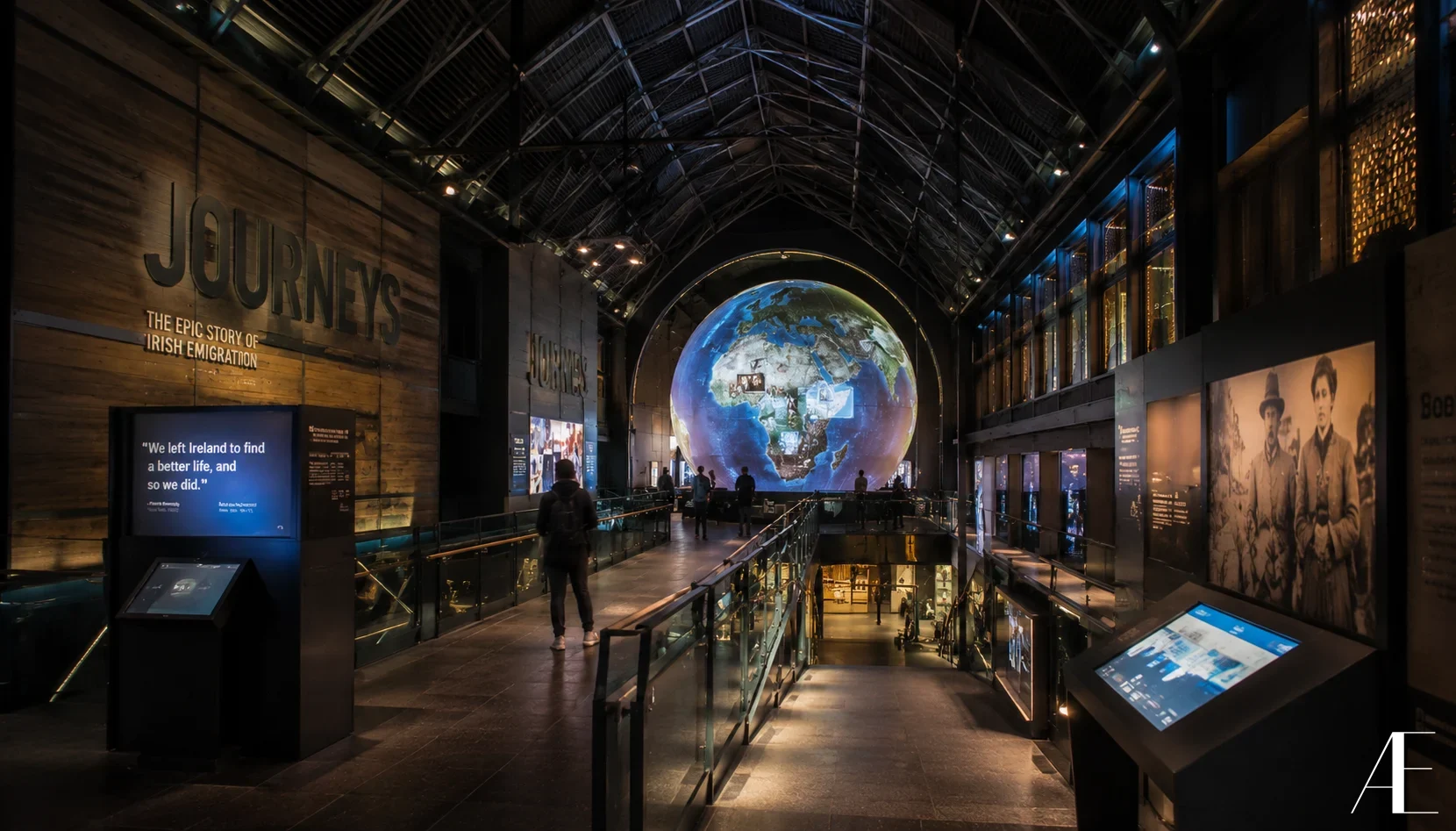
This is where EPIC The Irish Emigration Museum becomes an agent tool rather than just an attraction. It is not simply a museum about people leaving Ireland. It explains why Irish identity is simultaneously local and global, why a city of half a million can claim cultural ownership over tens of millions of people worldwide. For Canadian and American clients with Irish ancestry, this museum can be genuinely and unexpectedly emotional.
The Literary City
Dublin is a UNESCO City of Literature for a reason that has nothing to do with marketing. Jonathan Swift, born in Dublin in 1667, was Dean of St Patrick's Cathedral and the most savage political satirist in English literature. Oscar Wilde was born on Westland Row in 1854, educated at Trinity, and became the most brilliant and destructive wit in Victorian London. W.B. Yeats, born in Sandymount in 1865, won the Nobel Prize for Literature in 1923 and remains the central figure of the Irish literary revival. James Joyce, born in Rathgar in 1882, set his entire body of major work in Dublin, including Ulysses, which maps a single day in the city, 16 June 1904, with hallucinatory precision. Samuel Beckett, born in Foxrock in 1906, won the Nobel Prize in 1969 for work that could not have been written by someone who had not grown up in Ireland and then spent a lifetime trying to escape it. Seamus Heaney, from County Derry in Northern Ireland, taught at Harvard and is buried in County Derry, but his voice belongs to the same literary tradition.
The mistake is to sell Dublin's literary identity as homework for serious readers. It should be sold as atmosphere: walking the same streets Joyce walked, drinking in the pubs where Beckett drank, standing in the squares where Wilde grew up. The Museum of Literature Ireland (MoLI), opened in 2019 in Newman House on St Stephen's Green, is one of the finest small literary museums in Europe and does this atmosphere-selling job beautifully. The James Joyce Centre on North Great George's Street is essential for the right client. Sweny's Pharmacy on Lincoln Place, where Bloom buys his bar of lemon soap in Ulysses, still sells the soap.
The Easter Rising and the Road to Independence
The 1916 Easter Rising is the turning point in modern Irish political memory, and no agent selling Dublin to a North American client can afford to treat it as background detail. On Easter Monday, 24 April 1916, approximately 1,200 Irish republicans occupied key buildings in Dublin, including the General Post Office on O'Connell Street, and Patrick Pearse read the Proclamation of the Irish Republic from its steps. British forces suppressed the Rising within a week. The GPO was reduced to a shell. Sixteen of the Rising's leaders were executed by firing squad in Kilmainham Gaol between 3 and 12 May 1916.
The executions were the political turning point. Irish public opinion, which had been largely hostile or indifferent to the Rising itself, shifted dramatically after the executions. The War of Independence followed from 1919 to 1921, a guerrilla campaign led by Michael Collins that forced the British government to the negotiating table. The Anglo-Irish Treaty of 1921 created the Irish Free State, covering 26 of Ireland's 32 counties. The six counties of Northern Ireland remained within the United Kingdom. A bitter Civil War between pro-Treaty and anti-Treaty forces followed in 1922 and 1923, a division that shaped Irish politics for most of the 20th century.
The GPO, Kilmainham Gaol, Dublin Castle and Glasnevin Cemetery are the physical anchors of this story in Dublin. Kilmainham is the most emotionally powerful: the cells where the leaders spent their final nights, the yard where they were shot, and the extraordinary eastern wing of the gaol designed on the panopticon principle. It must be booked in advance; it is guided tour only, and availability is limited.
For agents: For North American clients interested in independence movements, political identity or Irish ancestry, this narrative is the most powerful thing Dublin offers. Frame it not as Irish history but as one of the most consequential events of 20th-century European political history.
Modern Dublin
Modern Dublin is a European capital shaped by whiplash economic change. The poverty and emigration of the mid-20th century gave way to the Celtic Tiger boom of the 1990s and early 2000s, followed by one of the most severe financial crashes in European history in 2008 and 2009, followed by a second sustained period of growth driven by technology, pharmaceuticals and foreign direct investment. The city is now young, international, expensive and increasingly diverse, with a housing crisis that shapes the daily reality of most Dubliners and a cultural life that has never been more confident.
This creates the Dublin clients experience today: a compact historic capital with serious cultural depth, a genuinely good restaurant scene, strong pubs when chosen well, and the constant energy of a city that has not quite decided what it is yet. It is not a stage set. It is alive, occasionally chaotic, and that vitality is part of the appeal.
The Geography & Neighbourhoods
The Overall Geography
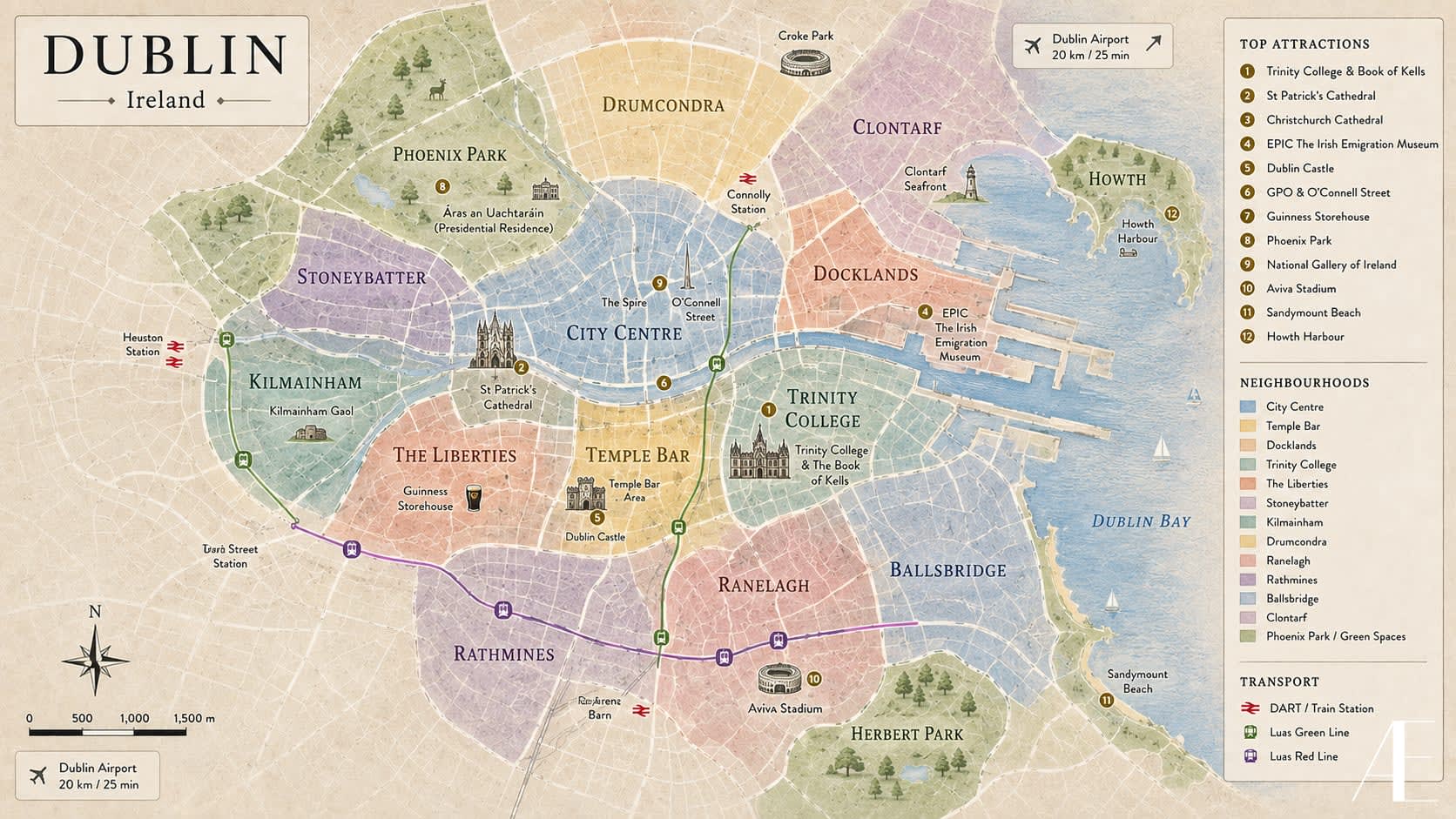
Dublin is organised by the River Liffey, which runs west to east through the city into Dublin Bay. The traditional shorthand is northside and southside, a distinction that is social, cultural, historical and sometimes exaggerated, but remains useful for orientation. The southside carries the Georgian squares, Trinity, the main shopping streets and the majority of the luxury hotels and restaurants. The northside carries the GPO, the Abbey Theatre, Glasnevin and much of the revolutionary history, as well as several of the city's most interesting emerging neighbourhoods.
The core visitor city is relatively compact. Trinity College, Temple Bar, Dublin Castle, Grafton Street, St Stephen's Green, Merrion Square, O'Connell Street and the Docklands are all within a manageable central area. The more spread-out sights, including Kilmainham Gaol, Phoenix Park, Glasnevin Cemetery and the Guinness Storehouse, require deliberate planning.
The key east-west axis: The River Liffey, from the Phoenix Park and Heuston area in the west to the Docklands and Dublin Bay in the east. The quays that line both banks are central to any mental map of the city.
The key north-south axis: O'Connell Street, across the Liffey via O'Connell Bridge, then College Green, Grafton Street and St Stephen's Green. This spine is what most clients will use to orient themselves.
The most useful planning principle: Group Dublin by clusters. A day in the Georgian southside (Trinity, National Gallery, Merrion Square, National Museum) is coherent. A day in the Liberties (Guinness, Teeling, St Patrick's) is coherent. Trying to combine Kilmainham and Howth and the Docklands in a single day is not.
Trinity / College Green / Grafton Street
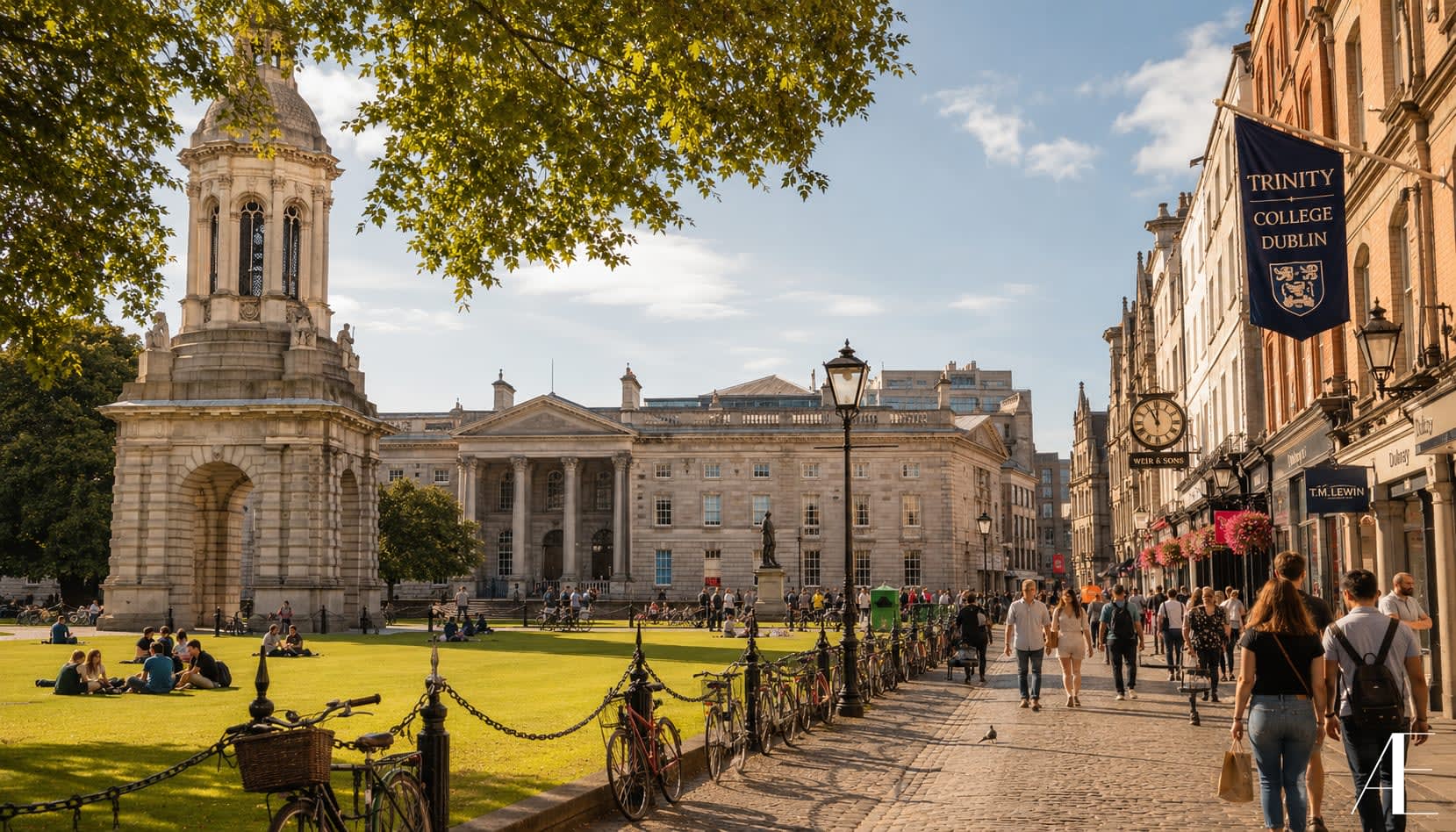
The polished visitor core: Trinity College, the Book of Kells Experience, Grafton Street, high-end shopping, cafés, street musicians and easy access to the Georgian southside. The physical and psychological centre of Dublin for most first-time visitors. Character: Central, elegant, busy, useful. Who it's right for: First-timers, luxury clients, walkers, clients who want easy orientation.
Temple Bar
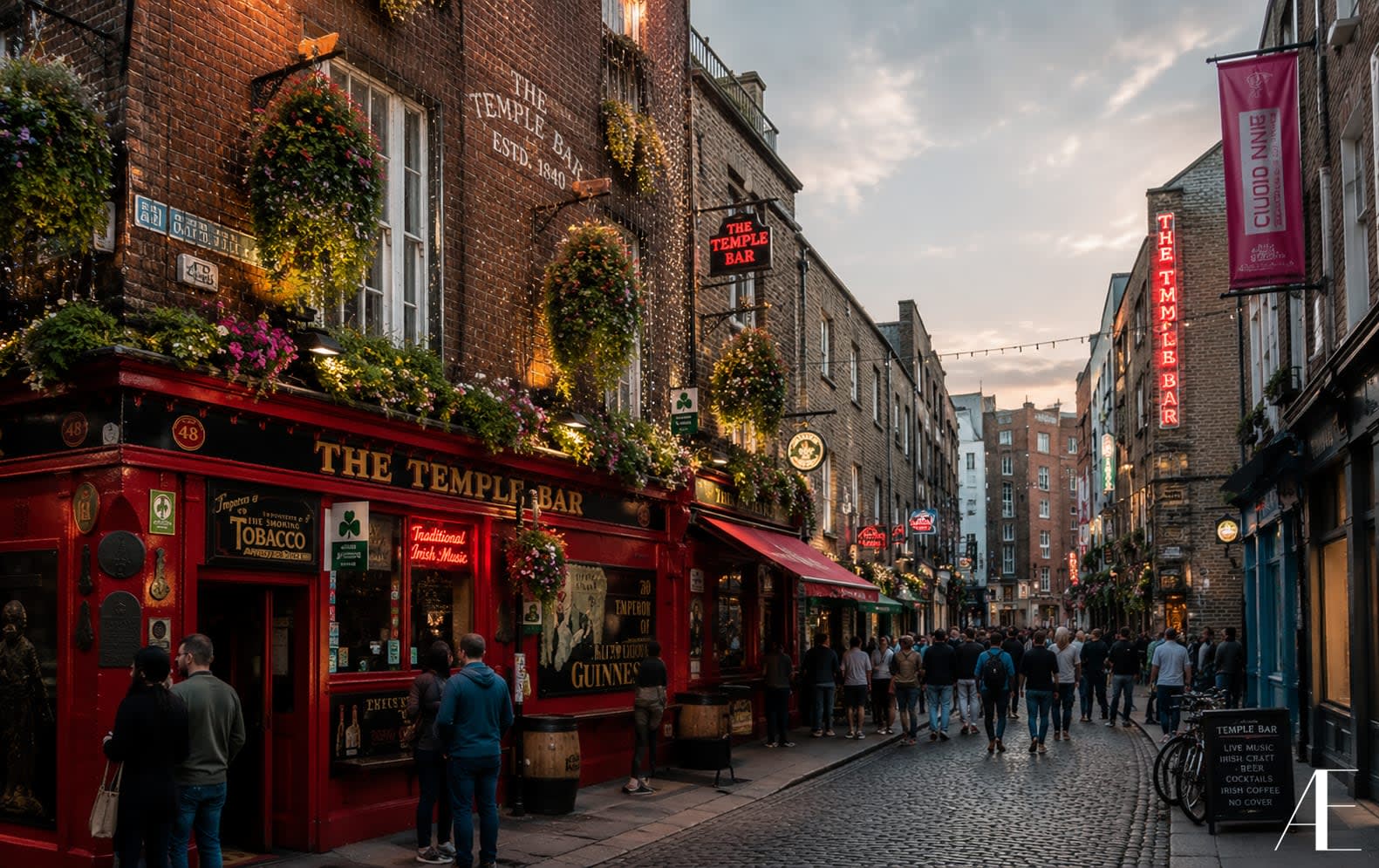
The cultural quarter south of the Liffey, famous for pubs, cobbled streets, street art, the Irish Film Institute, the Gallery of Photography and weekend markets. Temple Bar is useful, central and photogenic, but it is not where agents should send clients for the most authentic pub experience. The prices are tourist-level and the crowds can be oppressive. Character: Lively, tourist-heavy, expensive by Dublin standards. Who it's right for: First-timers who want to see it once. Not for clients seeking authenticity.
The Liberties
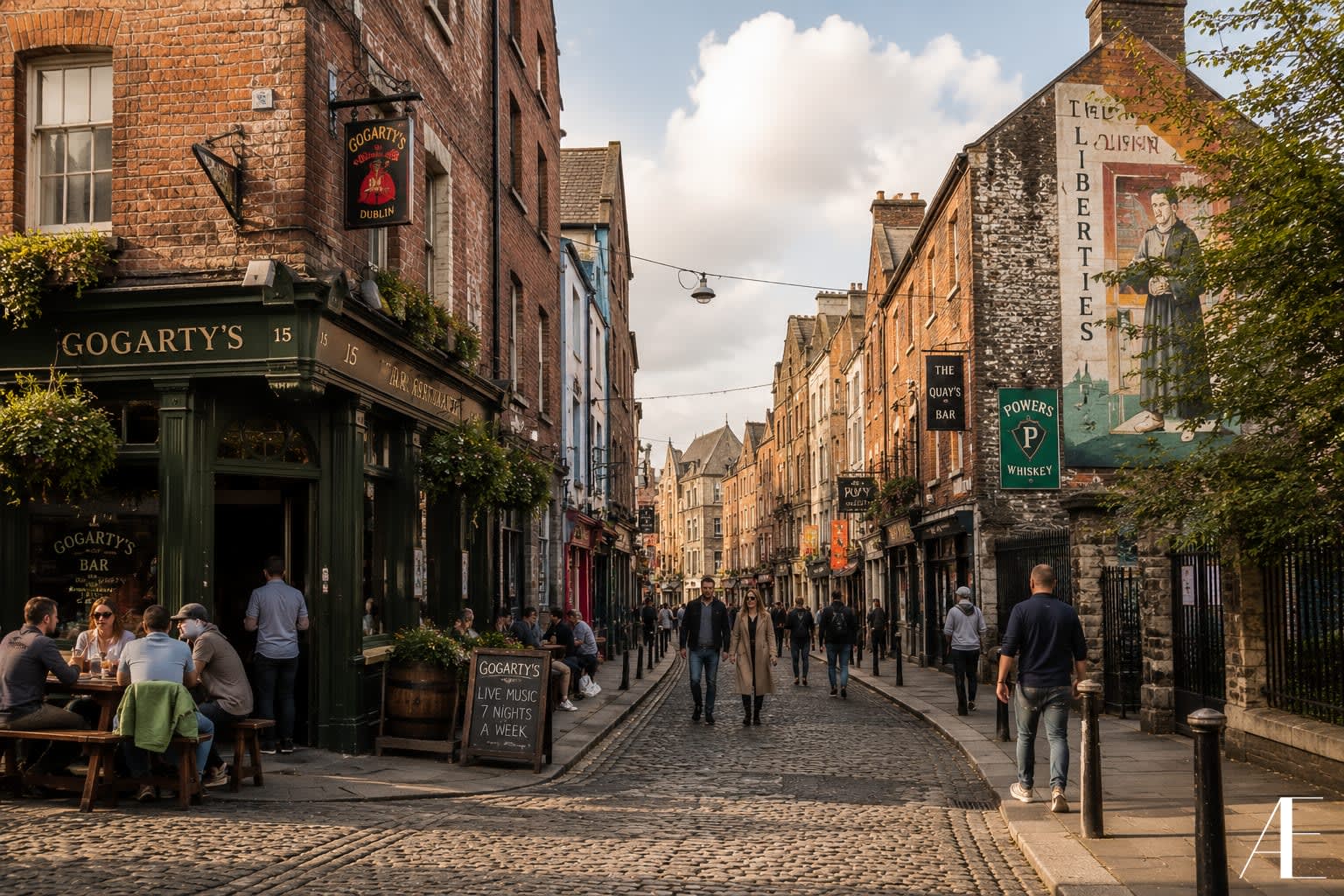
One of Dublin's oldest working-class districts, stretching west from the medieval cathedrals. Home to the Guinness Storehouse, Teeling Whiskey Distillery, St Patrick's Cathedral, the Iveagh Markets, antique shops, a growing food and drink scene and a strong sense of local identity that resists gentrification more stubbornly than most comparable Dublin areas. Character: Historic, gritty, changing fast, genuine. Who it's right for: Whiskey clients, Guinness clients, history clients, repeat visitors, clients who want to see beyond the polished southside.
Georgian Dublin / Merrion Square / St Stephen's Green
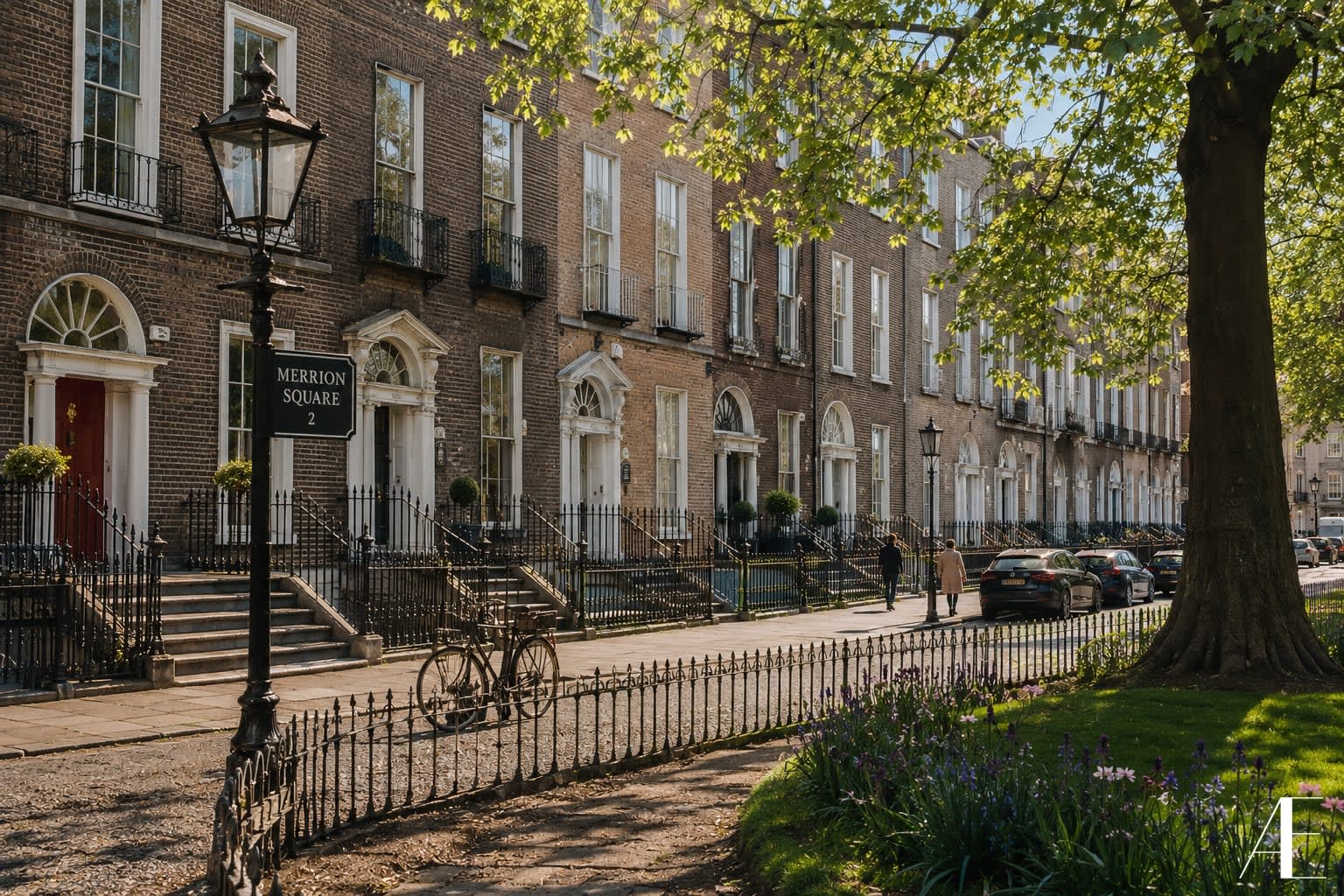
The elegant southside: Georgian townhouses with their famous colourful doors, museums, embassies, private parks and major cultural institutions. The National Gallery, the National Museum of Ireland – Archaeology, the Museum of Literature Ireland and the Little Museum of Dublin all cluster naturally here. Merrion Square itself, with Oscar Wilde's statue reclining on a rock opposite his birthplace, is one of the finest urban squares in Europe. Character: Refined, architectural, walkable, genuinely beautiful. Who it's right for: Culture clients, architecture clients, luxury clients, literary clients.
O'Connell Street and the Northside Core
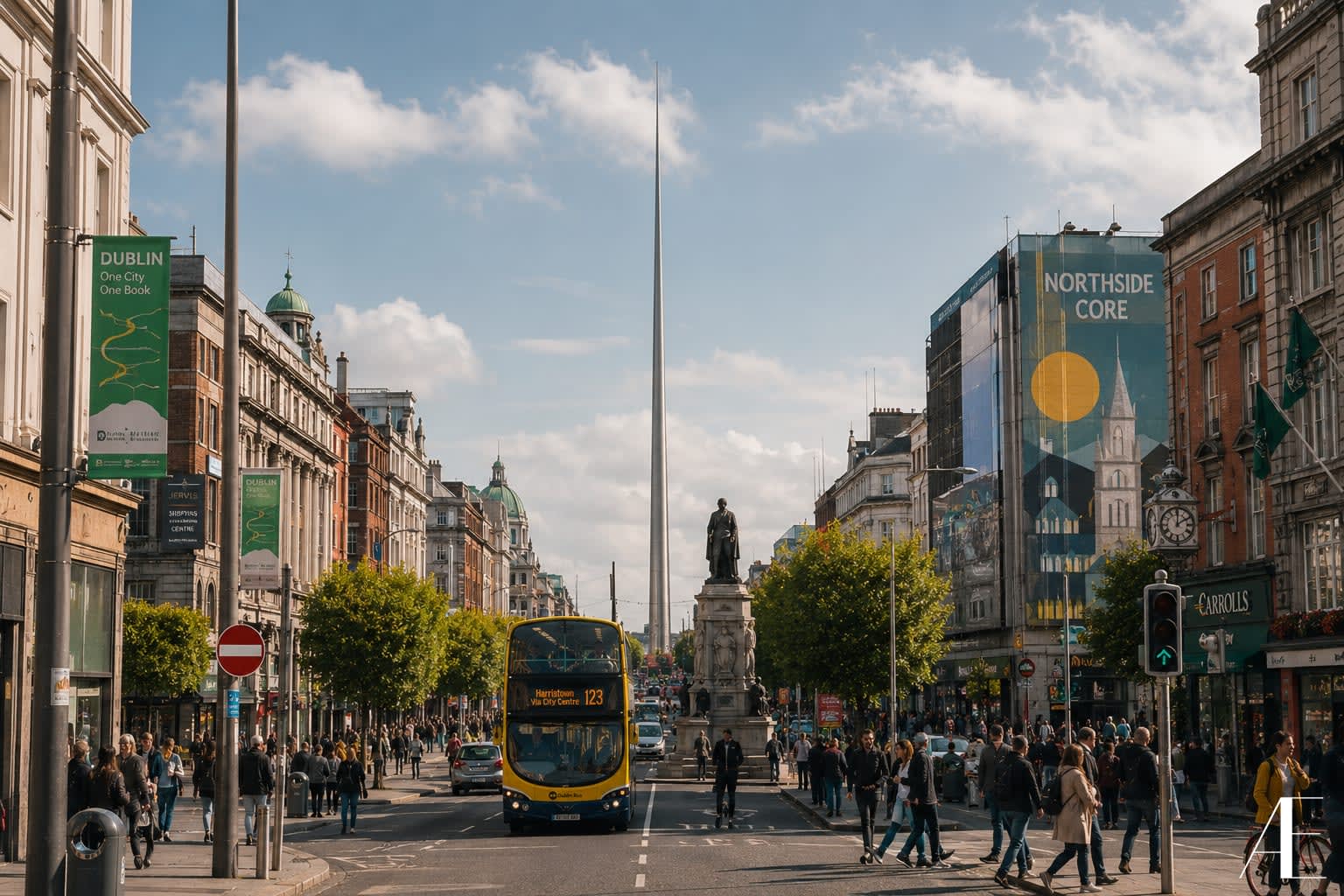
The ceremonial and political northside axis: the GPO, the Spire, the Abbey Theatre, bridges across the Liffey, the Gresham Hotel, shopping streets and layers of revolutionary history. O'Connell Street is the widest street in Ireland and was deliberately designed to impress; it has also seen more political violence than almost any other street in Western Europe. Character: Busy, mixed, historically important, not always polished. Who it's right for: History clients, clients doing the 1916 story, clients who want to understand the real northside.
Smithfield / Stoneybatter
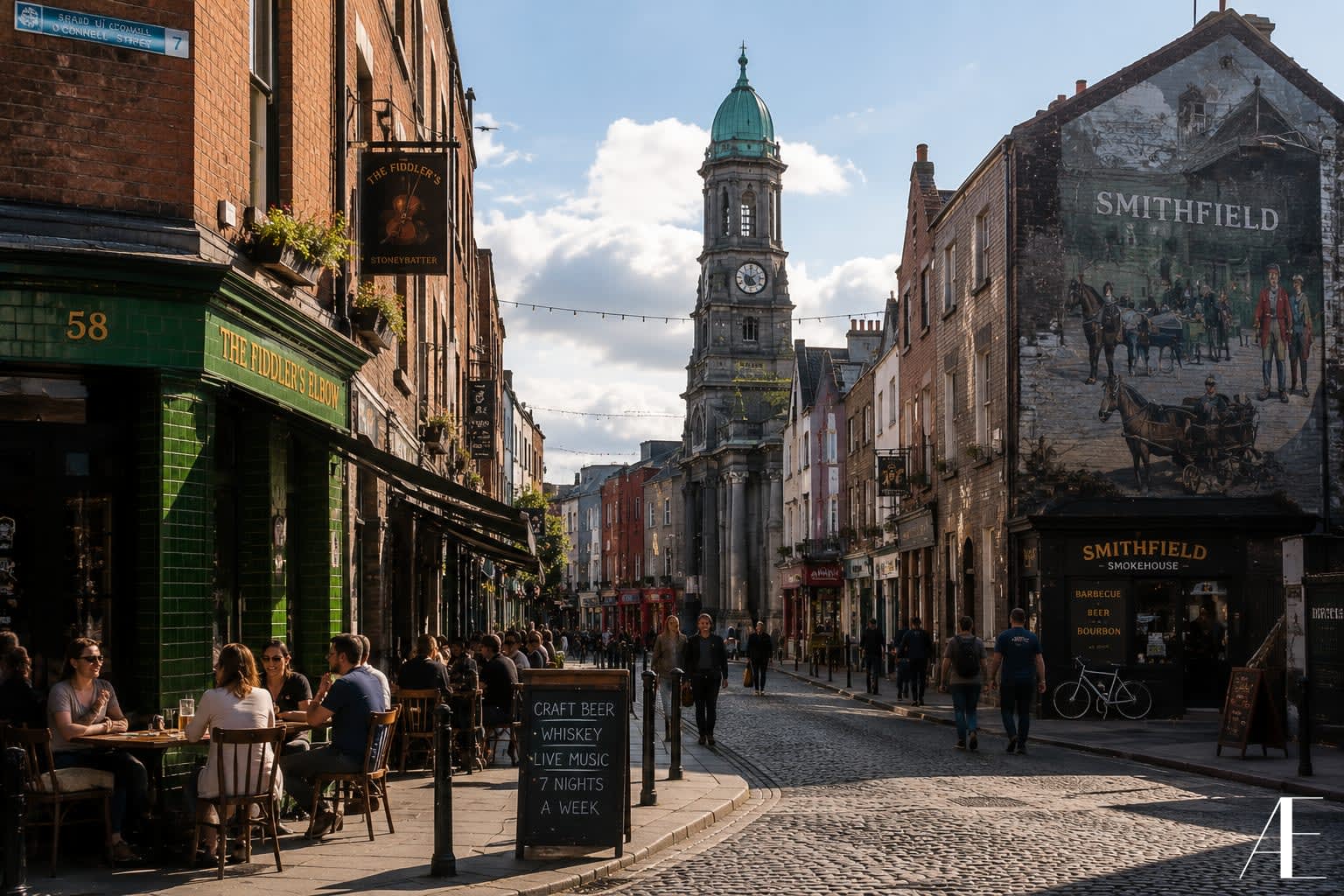
A rapidly transformed neighbourhood built around the old Smithfield Market square, Jameson Bow St., the Lighthouse Cinema, independent cafés, serious bars and restaurants. Stoneybatter, stretching west from Smithfield, has become one of the city's most interesting local neighbourhoods: a long residential street with excellent food, strong community identity and almost no tourist infrastructure. Character: Local, creative, food-and-drink focused, unpretentious. Who it's right for: Repeat visitors, younger clients, food clients, anyone who wants to see Dublin beyond the southside circuit.
Docklands / Grand Canal / IFSC
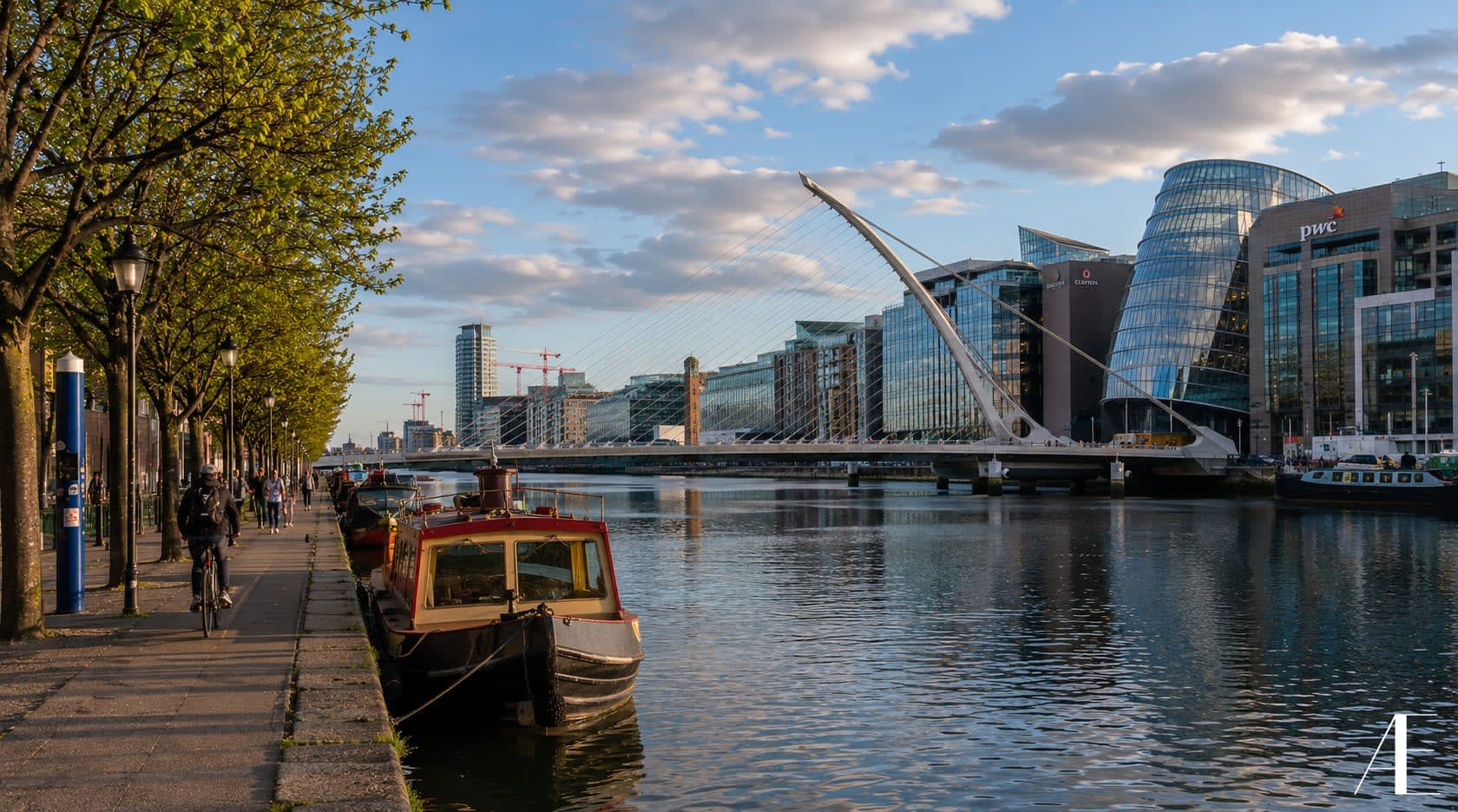
Modern Dublin: glass-and-steel tech offices, the Convention Centre, EPIC The Irish Emigration Museum, the Bord Gáis Energy Theatre, Samuel Beckett Bridge (designed by Santiago Calatrava in the shape of a harp) and Grand Canal Square. This is the Dublin of the Celtic Tiger and its aftermath, rebuilt fast and expensively. Character: Contemporary, waterside, businesslike, excellent for events and EPIC. Who it's right for: Business travellers, cruise clients, clients visiting EPIC, modern-hotel clients.
Phoenix Park / Kilmainham
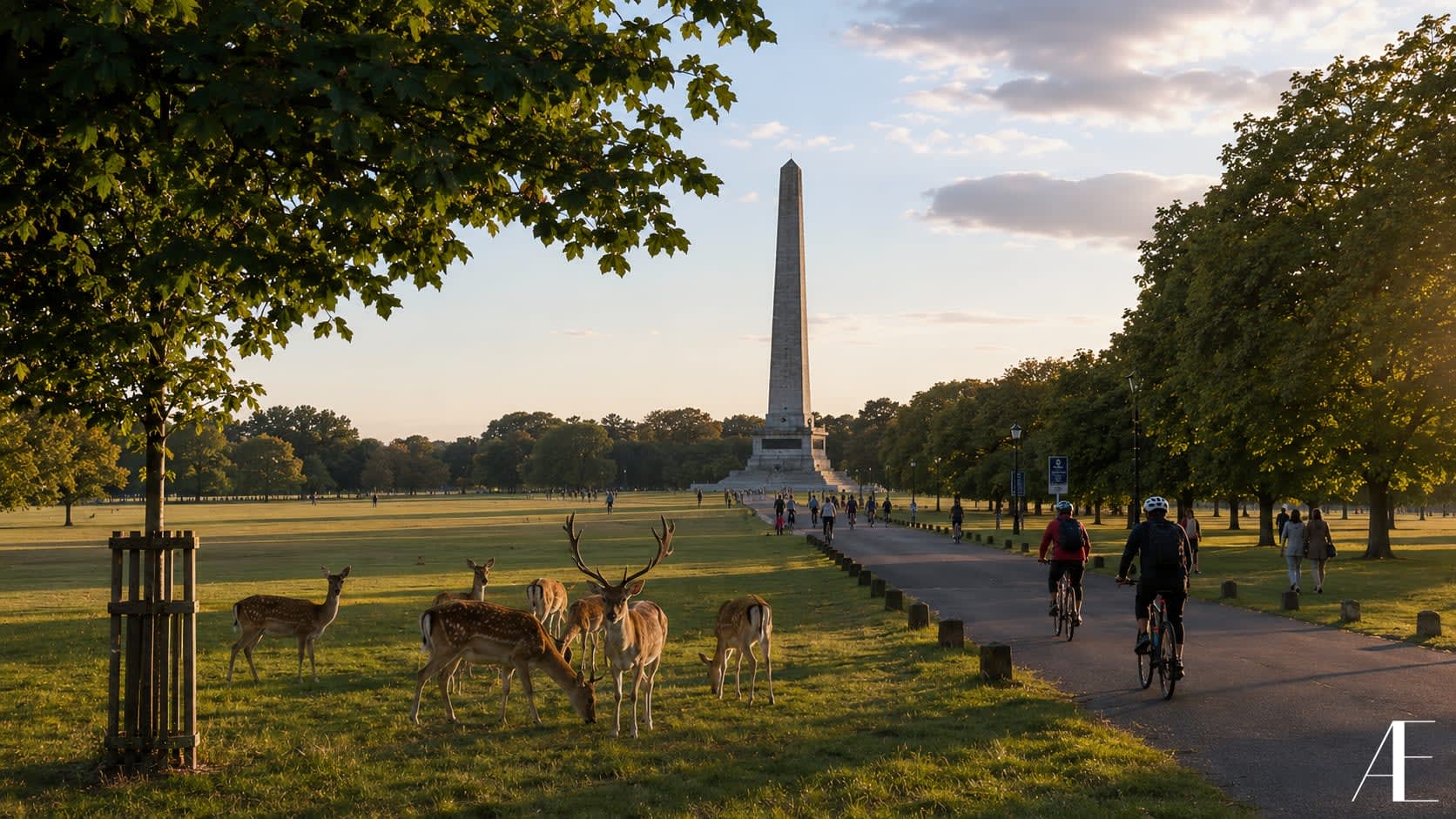
West of the centre. Phoenix Park is one of the largest enclosed urban parks in Europe; Kilmainham Gaol is one of Ireland's most important historic sites. The Irish Museum of Modern Art at the Royal Hospital Kilmainham sits between them and completes an excellent half-day or full-day combination. Character: Spacious, historic, reflective, away from the tourist circuit. Who it's right for: History clients, families, clients who need green space, clients serious about the independence story.
Ballsbridge / Donnybrook / Ranelagh
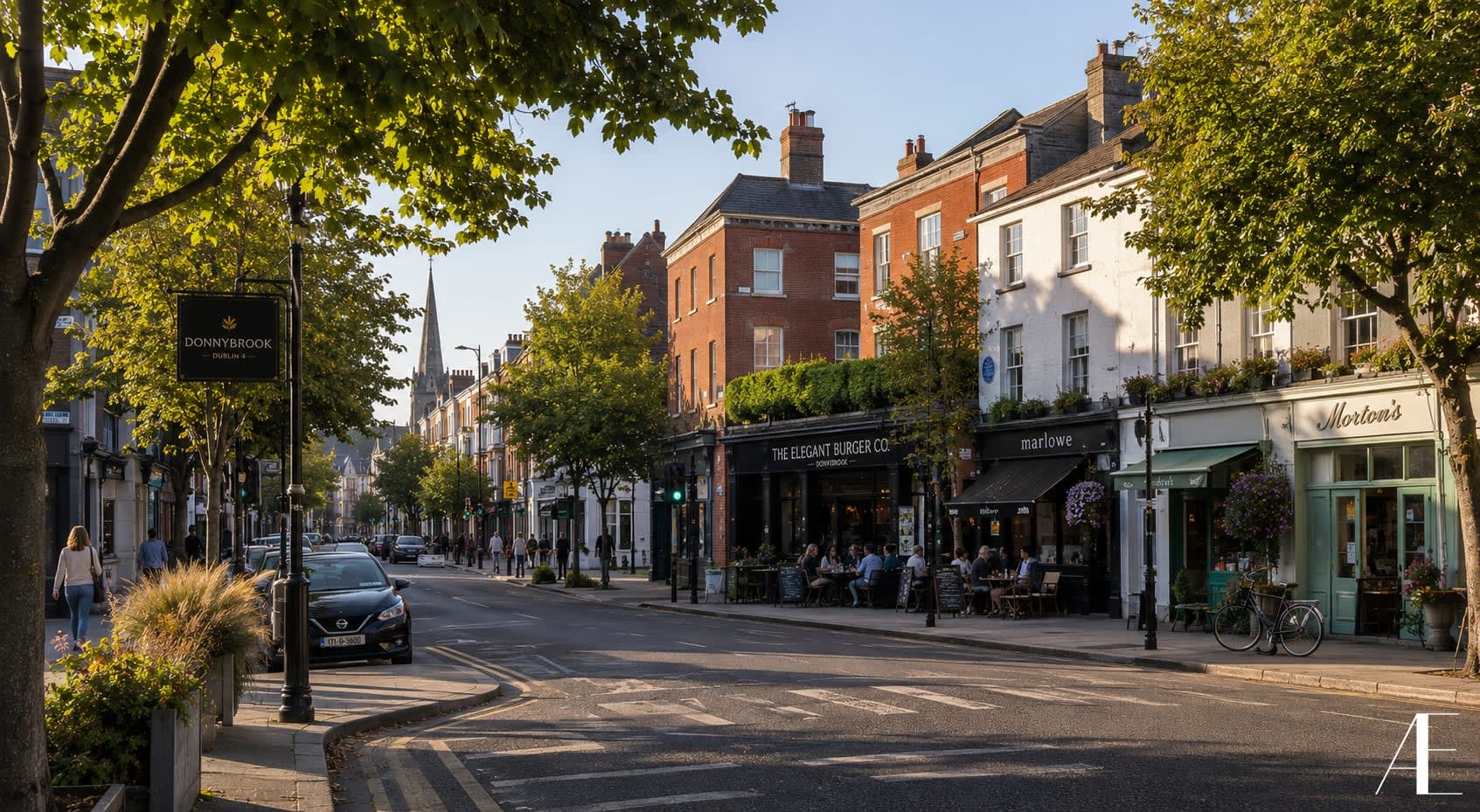
Leafy southside neighbourhoods with embassies, good hotels, excellent restaurants and a prosperous residential character. Ranelagh in particular has become one of the best neighbourhood dining areas in the city, with a village-like main street and consistently good independent restaurants and cafés. Character: Residential, polished, genuinely local, low tourist density. Who it's right for: Repeat visitors, clients who want quiet, long-stay clients, food clients.
Dublin Bay: Howth, Malahide, Dún Laoghaire and Dalkey
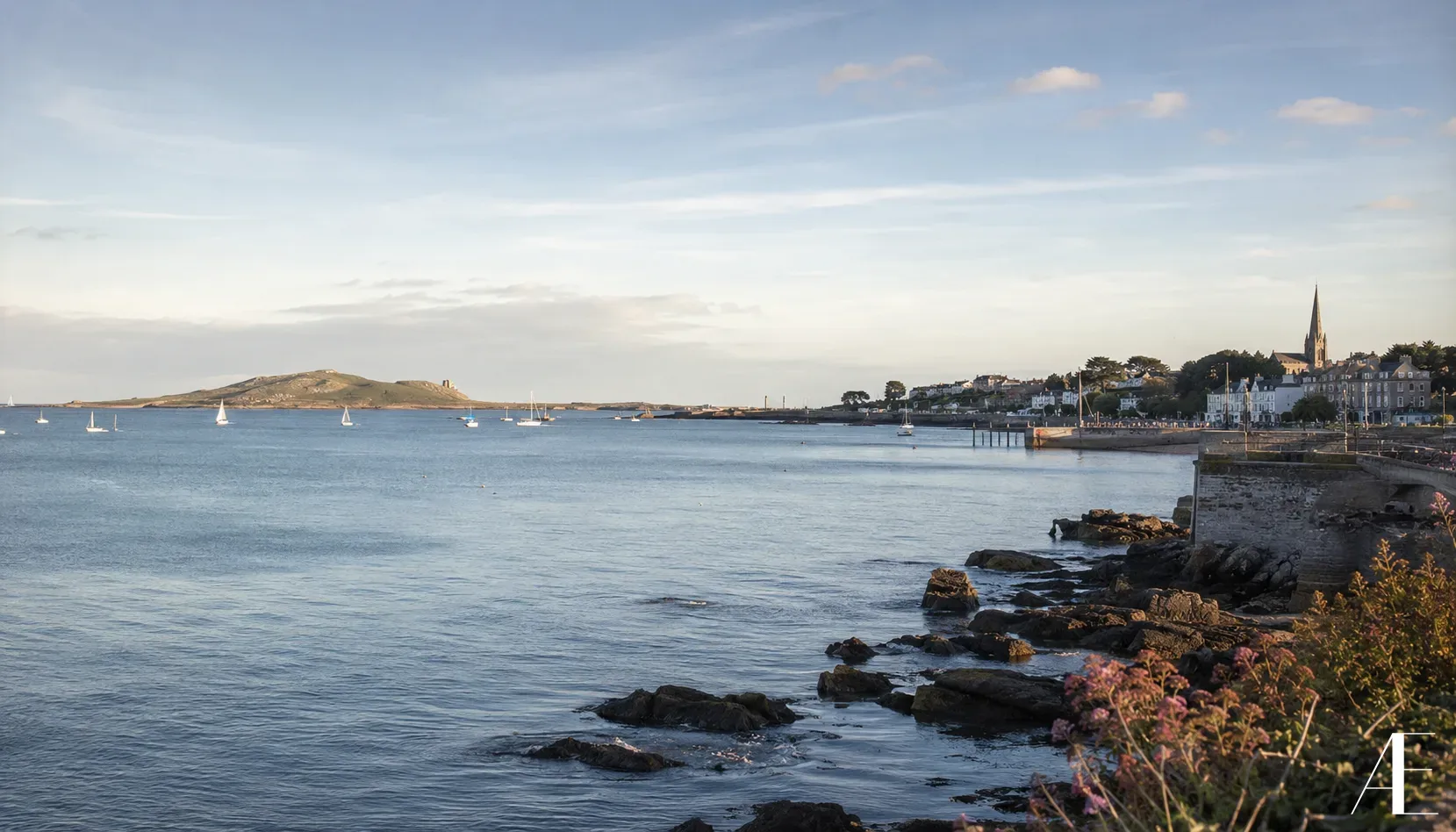
The coastal DART line is one of Dublin's great assets, largely unknown to first-time visitors. Within 25–40 minutes of the city centre, clients can be in a fishing village, a harbour town, a Victorian seaside suburb or a rocky headland with cliff walks and sea views. Dalkey, with its castle, Coliemore Harbour, offshore island and literary associations (Samuel Beckett spent part of his childhood there), is one of the genuinely beautiful places accessible by public transport from an European capital. Character: Coastal, scenic, local, excellent value for a half-day. Who it's right for: Repeat visitors, clients with 4+ days, walkers, seafood clients, families.
Where to Stay for Different Client Types
- First-timers: Trinity / Grafton Street, St Stephen's Green, Merrion Square, or central southside
- Luxury clients: St Stephen's Green, Merrion Square, Ballsbridge, or the best central five-star hotels
- Boutique / design clients: The Liberties, Smithfield, Portobello, central southside
- Families: St Stephen's Green, Merrion Square, Ballsbridge, Docklands
- Budget-conscious: Smithfield, Christchurch, Gardiner Street, northside central, selected Docklands properties
- Food-focused clients: Stoneybatter, Portobello, Ranelagh, Camden Street, south city centre
- Repeat visitors: Ranelagh, Portobello, Stoneybatter, Dalkey, Dún Laoghaire
What Is Walkable vs. What Requires Transport
Walkable clusters from the central southside:
- Trinity, Grafton Street, St Stephen's Green, Merrion Square, National Gallery, National Museum
- Dublin Castle, Christ Church Cathedral, Temple Bar, Ha'penny Bridge, O'Connell Street
- St Patrick's Cathedral, Teeling, The Liberties, Guinness Storehouse (20–25 min walk from Trinity)
- Docklands, EPIC, Samuel Beckett Bridge, Grand Canal Square (25 min walk from Trinity)
- Southside Georgian squares, Ranelagh and Portobello
Requires Luas, bus, taxi, DART or a deliberate longer walk:
- Kilmainham Gaol (Red Luas line from city centre or taxi, 15 min)
- Phoenix Park (bus or taxi from the centre, 20–25 min)
- Glasnevin Cemetery and the National Botanic Gardens (bus, 20–25 min)
- Howth, Malahide, Dún Laoghaire and Dalkey by DART (25–40 min)
- Airport transfers (30–50 min depending on mode)
The Overhyped and Overvisited
- Temple Bar pubs at peak evening hours: See the neighbourhood, photograph it, then move on to a better pub.
- Trying to combine Guinness, Kilmainham, Trinity and a coastal village in one day: This is itinerary greed, not itinerary planning. Do not recommend it.
- Assuming every pub with music is "traditional": Some are extraordinary; some are well-lit performance spaces with beer. The difference is significant. Curate carefully.
- Driving in the city centre: Not worth it for most clients. Dublin is a walking, DART, Luas and taxi city.
The Cruise Connection
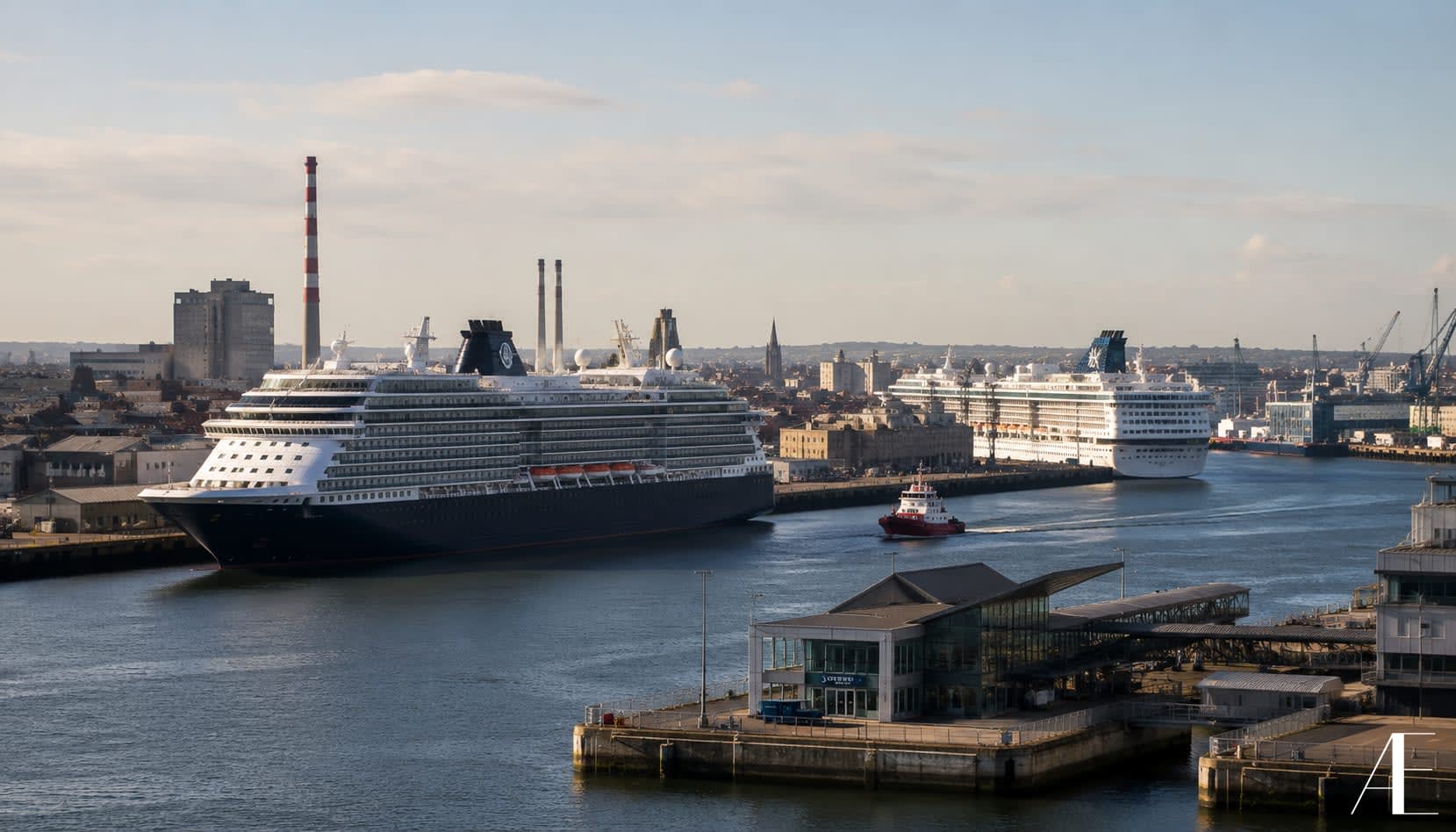
Dublin is an important port call on Ireland, British Isles and Northern Europe itineraries, but agents need to understand the operational distinction between Dublin Port and Dún Laoghaire before advising any cruise client. Cruise itineraries may market the call simply as "Dublin," but whether the ship docks in Dublin Port's working harbour or tenders into Dún Laoghaire's Victorian harbour on the south side of Dublin Bay creates fundamentally different logistics, timings and client experiences.
The Ports
Dublin Port The main working port close to the city centre
- Location: East of the city centre, in the Docklands and Alexandra Basin area, approximately 2 km from the Docklands visitor core
- Type: Working commercial port. Cruise ships berth within an industrial environment; the immediate arrival experience is not scenic.
- Transfer time to city centre: Approximately 15–25 minutes by shuttle, coach or taxi depending on traffic and the exact berth
- Port facilities: Shuttle services to the city centre are typically arranged by the cruise line or via taxis from the port gate
- Key point for agents: Dublin Port is efficient but not atmospheric. Clients should not expect to step off the ship into historic Dublin. A transfer is always required, and that transfer time eats into the shore day.
Dún Laoghaire Harbour The scenic Dublin Bay tender port
- Location: South side of Dublin Bay, approximately 12 km south of central Dublin, served directly by DART
- Type: Tender port for cruise ships; passengers are ferried ashore by tender from the ship anchored in the bay
- Transfer time to city centre: Approximately 25–35 minutes by DART from Dún Laoghaire station, plus tendering time (allow 20–30 min each way for the tender operation itself)
- Port facilities: Dún Laoghaire is a genuine harbour town with a Victorian pier, promenade, cafés and the East Pier walk. Clients who prefer not to go into the city can have a pleasant few hours simply in Dún Laoghaire itself.
- Key point for agents: Dún Laoghaire is more pleasant as an arrival experience than Dublin Port, and the DART connection is excellent, but the tendering process must be factored into every shore-excursion calculation. A client who wants to visit Kilmainham Gaol from Dún Laoghaire has perhaps 5 hours of actual city time after accounting for two tender trips and DART connections.
The practical rule: When a cruise itinerary says "Dublin," confirm the exact arrival point and whether tendering is involved before building any shore-excursion plan. The difference between 8 hours at Dublin Port and 8 hours at Dún Laoghaire (with tendering) can be 1.5 to 2 hours of usable shore time.
Cruise Lines That Call Here
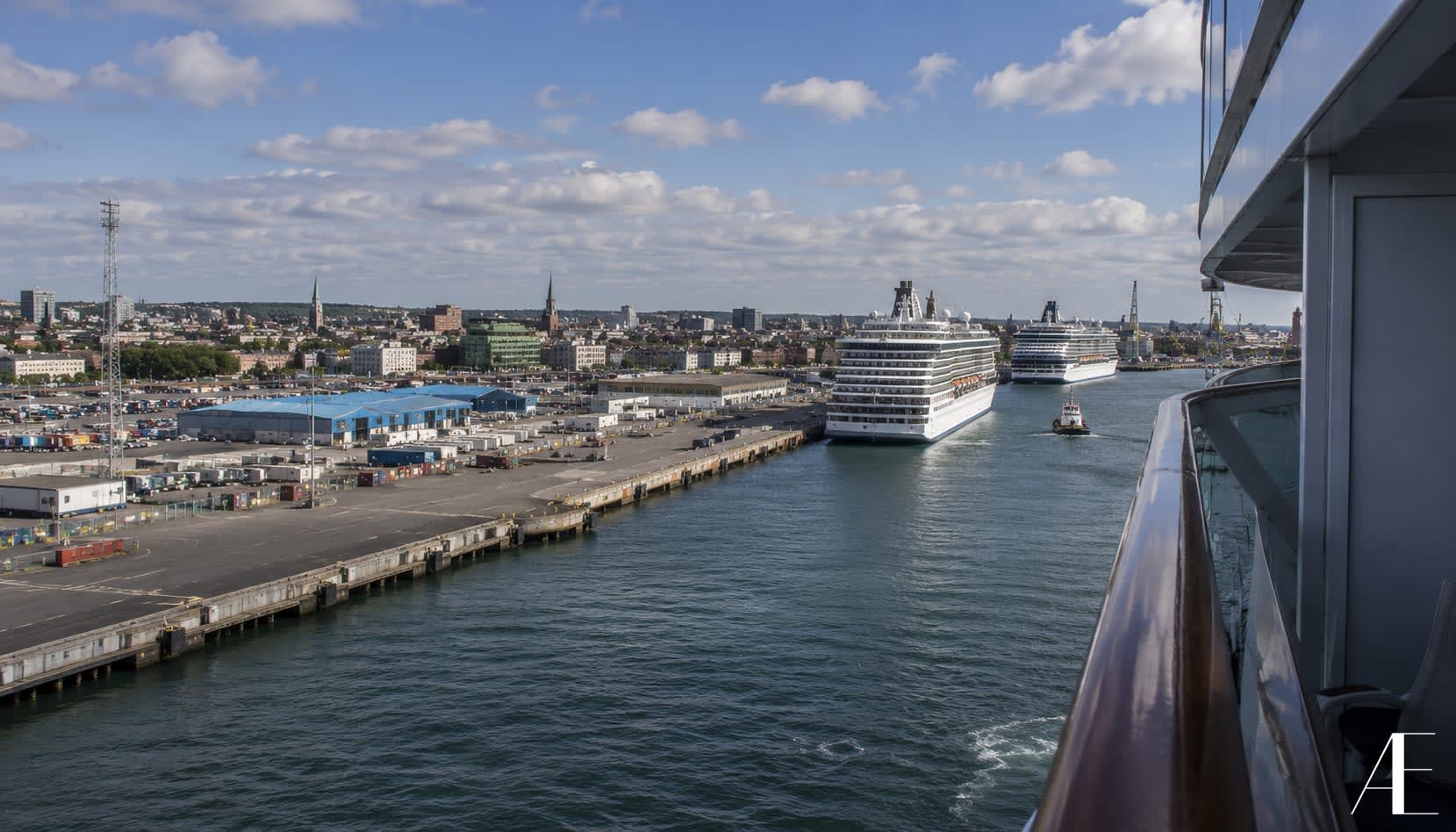
Dublin-area cruise schedules vary by year, ship deployment and berth allocation. Always verify the specific ship, date and port before advising clients. Lines that have appeared on recent Dublin schedules include the following.
Viking Ocean Cruises Viking has a strong presence on Ireland and British Isles itineraries and has been one of the more consistent callers at Dún Laoghaire in recent seasons. Viking's destination-intensive model typically allocates a full day. Agent note: Viking clients are almost ideally matched to Dublin: literary, historically engaged, independently minded and culturally curious. Recommend Trinity, the National Museum, a literary walk and a curated pub rather than a standard highlights tour.
Norwegian Cruise Line NCL appears on Dublin Bay schedules, including Dún Laoghaire calls, and should be treated as a tender-port operation. Verify carefully before advising. Agent note: NCL clients respond well to the Guinness Storehouse, Trinity, coastal excursions and independent exploration. Tendering must be explained clearly before embarkation.
Princess Cruises Princess ships may call in the Dublin area on British Isles itineraries departing from Southampton or other UK ports. Agent note: Strong fit for North American clients. Dublin works especially well as part of a broader British Isles and Ireland routing for Princess's Canadian and American demographic.
Celebrity Cruises Celebrity's premium clientele generally fits Dublin well, particularly for private tours, food experiences, literary walks and coastal half-days. Agent note: Recommend pre-booked touring for any client wanting Kilmainham, Trinity or a Wicklow excursion, since time is limited and these require advance tickets.
Oceania / Azamara / Silversea Small-ship and upper-premium and luxury lines use Dublin as a port of call on Ireland-intensive or British Isles itineraries. These ships often allocate more generous port time and attract clients who want depth rather than highlights. Agent note: These clients are strong candidates for private guides, literary and architectural walks, whiskey tastings at Teeling or a curated restaurant in Leith-equivalent Stoneybatter or Ranelagh.
Holland America Line HAL appears on Northern Europe and British Isles itineraries. Its typically older demographic responds well to the historic narrative (GPO, Kilmainham, Trinity) and to accessible experiences such as the Guinness Storehouse and EPIC.
Royal Caribbean International RCI operates British Isles itineraries from Southampton with Dublin as a port of call on selected sailings. Larger ships may use Dublin Port rather than Dún Laoghaire. Agent note: For RCI clients, the Guinness Storehouse and Trinity combination is reliable. Build in realistic transfer time from Dublin Port.
What Is Realistic on a Dublin Port Call?
With 6–7 usable hours ashore (Dublin Port):
- Trinity College and Book of Kells Experience, then Georgian Dublin and the National Gallery
- Guinness Storehouse plus St Patrick's Cathedral and a Liberties walk
- Dublin Castle (when open) and Christ Church, Temple Bar walk, GPO on O'Connell Street
- EPIC and the Docklands for clients interested in emigration and modern Dublin
With 8–10 usable hours ashore (Dublin Port):
- Add Kilmainham Gaol if tickets are secured well in advance and transfer timing is confirmed
- Consider a half-day coastal excursion to Howth by DART (30 min each way, 2 hours on the cliff walk and pier)
- Consider a guided city highlights tour with a proper lunch stop
With 6–7 usable hours ashore (Dún Laoghaire, after tendering):
- Realistically: Trinity plus Georgian Dublin, or Guinness plus The Liberties, not both
- Alternatively: stay in Dún Laoghaire itself (pier walk, lunch, the East Pier, Dalkey by DART one stop south) for clients who prefer a gentler day
Avoid overpromising: Trinity, Guinness, Kilmainham, the National Museum, Dublin Castle, a coastal village and live pub music do not fit into one cruise day. Dublin rewards focus. The clients who try to do everything arrive back at the ship exhausted and remember nothing clearly.
Selling Dublin as a Cruise Gateway
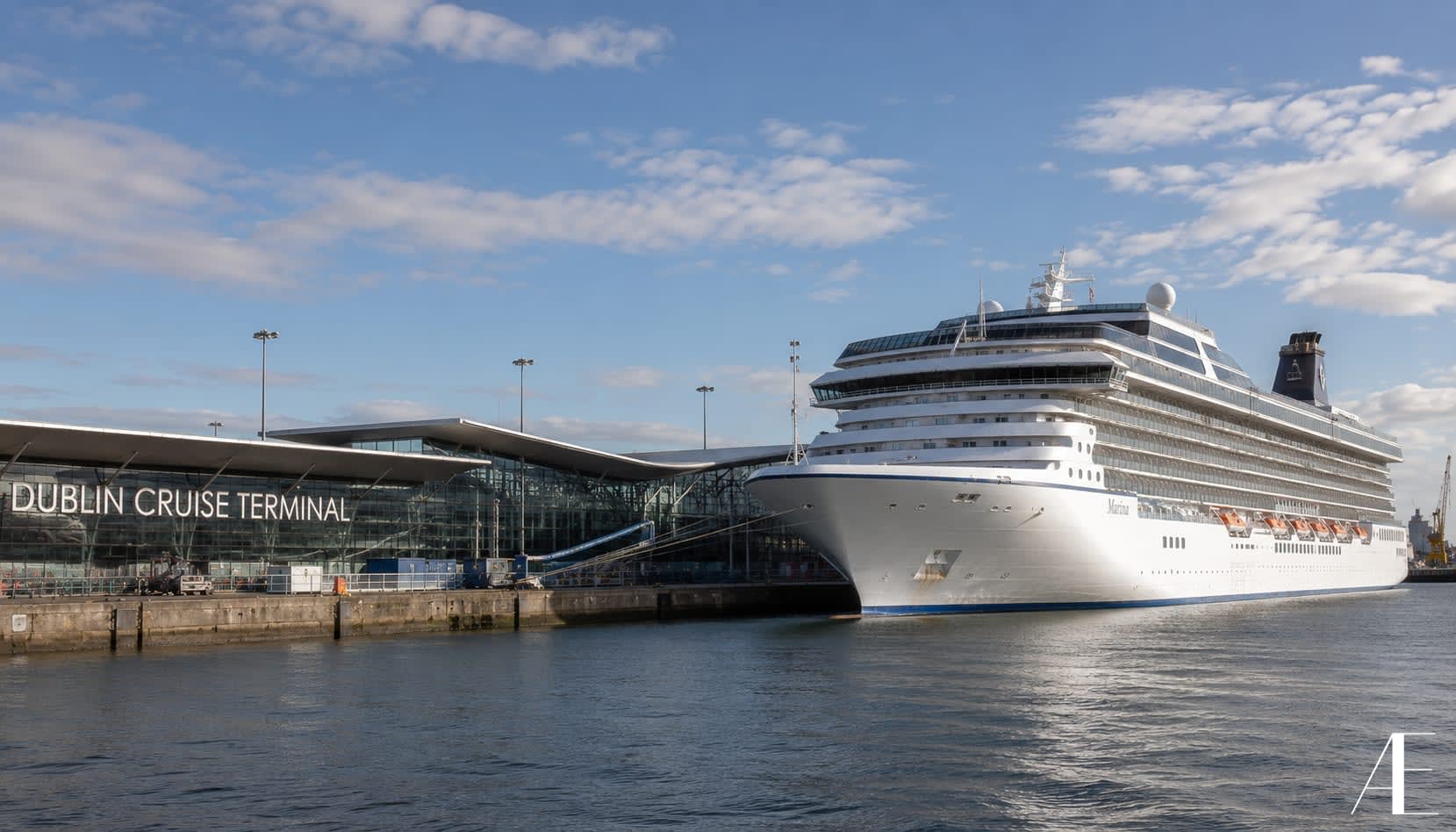
Dublin is not Southampton or Barcelona as a turnaround hub, but it is a valuable port call and a strong pre/post extension city for Ireland, British Isles and transatlantic itineraries. For any client whose cruise includes Dublin as a port call, the agent's best move is to propose adding two or three nights in the city around the sailing.
Best pre/post structure: 2–3 nights in Dublin before or after an Ireland or British Isles cruise allows Trinity, Guinness or Jameson, Kilmainham, one major free museum, one strong restaurant, and either a coastal half-day or a Wicklow excursion. That is the complete essential Dublin, and it makes the cruise feel like part of a properly planned Ireland journey rather than a collection of rushed days.
The Attractions & Experiences
Important planning note: Prices and opening hours change frequently. Use the figures below as planning guidance only and always verify on the official attraction website before booking. This is especially important in 2026: Dublin Castle is closed to the public from 5 May to 31 December to accommodate Ireland's Presidency of the Council of the European Union.
Trinity College and the Book of Kells Experience
What it is and why it matters
Trinity College Dublin, founded in 1592 by Queen Elizabeth I, is Ireland's oldest university and one of the most architecturally beautiful campuses in Europe. The cobbled Front Square, the Campanile (bell tower), the Rubrics (the oldest surviving buildings, dating from 1700) and the 18th-century buildings surrounding Parliament Square are all freely accessible to the public, and the atmosphere of the campus — students crossing between lectures, tourists pausing at the Campanile, the sound of the front gate closing — is one of the genuinely characteristic Dublin experiences.
The Book of Kells is a 9th-century illuminated manuscript of the four Gospels, created by Celtic monks, possibly on the island of Iona, and brought to the monastery of Kells in County Meath for safekeeping during Viking raids. It is one of Ireland's greatest cultural treasures: 340 vellum folios of extraordinary intricacy, with full-page illuminations and decorated letters of a precision that still astonishes conservators with modern technology. The visit now includes the Book of Kells Experience, a digital exhibition explaining the manuscript's creation and history, as well as access to the Old Library and its famous Long Room.
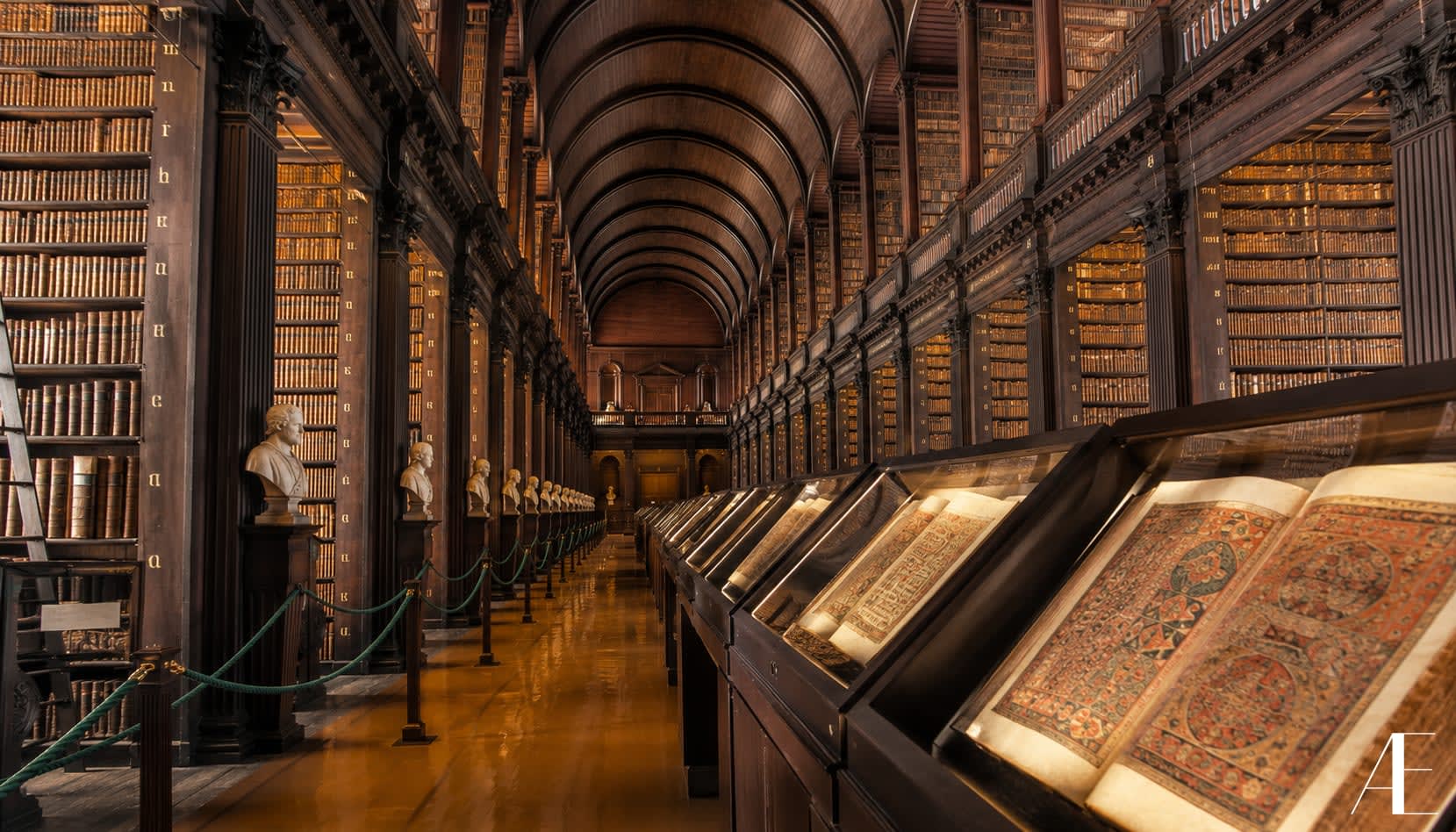
The Long Room is one of Dublin's most striking interiors: a barrel-vaulted hall 65 metres long, lined with shelves of ancient books and busts of great scholars and writers. Conservation work has affected the experience in recent years, with books removed from some shelves for restoration. The room itself remains extraordinary, but agents should verify current conditions before promising clients the fully stocked visual they may have seen in older photographs.
Practical details
- Location: Trinity College, College Green, Dublin 2. Entrances on College Green and Nassau Street.
- Booking: Pre-booking is essential. Walk-up queues can be very long in peak season and some timeslots sell out entirely.
- Time to allow: 90 minutes for the Book of Kells Experience; additional time if exploring the campus independently.
- Best time: First entry slot of the day or the last 90 minutes before closing.
What clients often miss: The Science Gallery, attached to Trinity and open free, hosts some of the most interesting temporary exhibitions in Dublin. The College Park cricket ground behind the main buildings is a pleasant escape from the crowds. The Douglas Hyde Gallery of modern art is also free and accessible from Nassau Street.
Agent note: Essential for first-timers, but manage expectations around the Book of Kells itself. The manuscript is displayed open to two pages only, under low light; the digital exhibition component is actually where most of the detailed interpretation happens, and it is very well done.
Book a tour with a local guide through GetYourGuide or Viator to get a commission.
Kilmainham Gaol
What it is and why it matters
Kilmainham Gaol is one of the most emotionally powerful historic sites in Ireland and one of the most important in the context of European political history. Opened in 1796, it held ordinary criminals, debtors and political prisoners across more than a century of Irish history. Its deepest significance comes from 1916: after the Easter Rising was suppressed, fifteen of its leaders were executed in the gaol's stone-breaker's yard by British firing squads between 3 and 12 May. Each execution was a political mistake. By the time James Connolly, so badly wounded he could not stand, was tied to a chair to be shot, Irish public opinion had turned decisively against British rule.
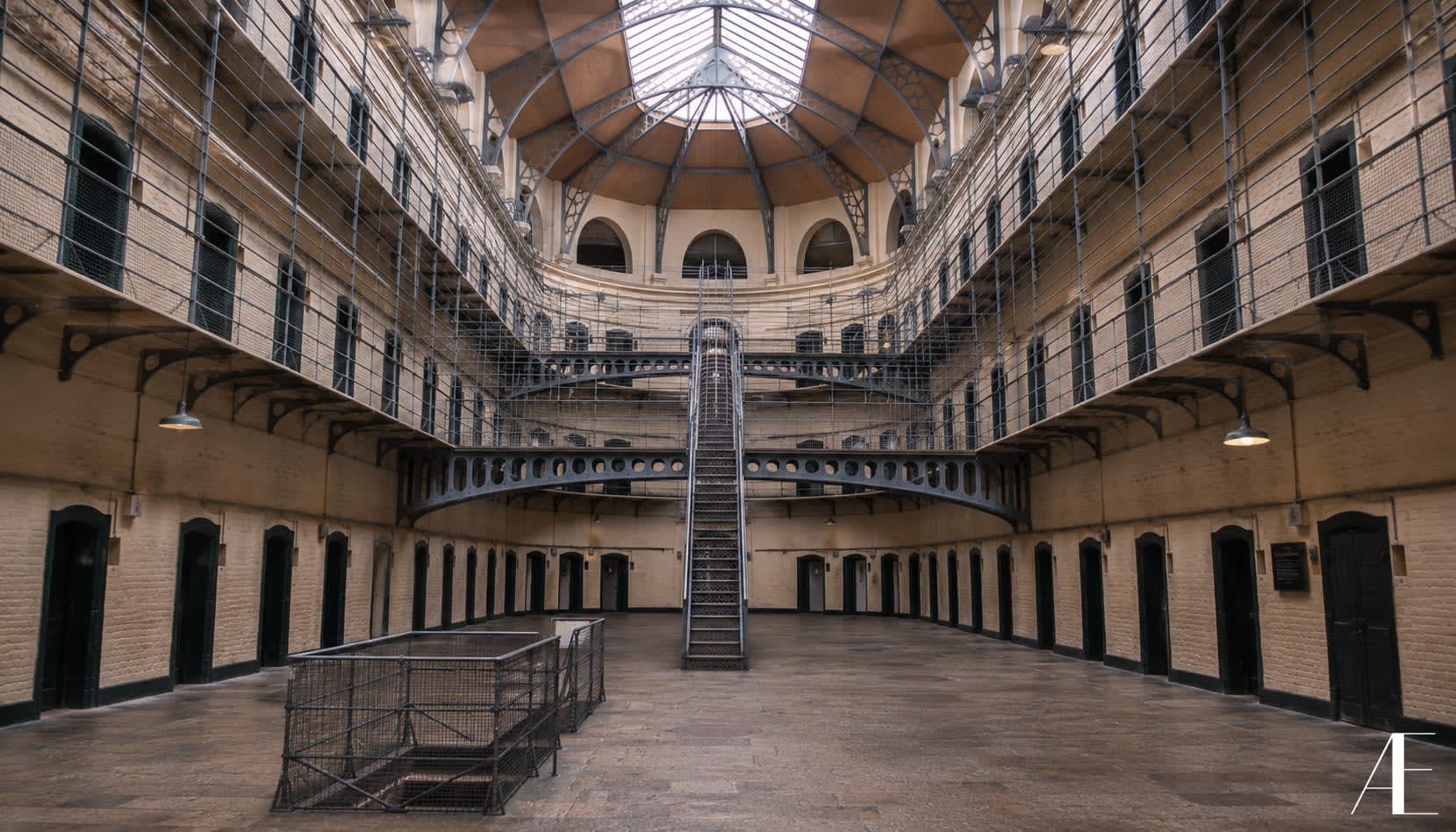
The gaol closed in 1924 and fell into dereliction. It was restored by volunteers in the 1960s and is now one of the most visited heritage sites in Ireland. The visit is by guided tour only, led by guides who understand the weight of the place and handle it with appropriate seriousness. The east wing, a Victorian addition with its radiating galleries and central atrium, is among the finest examples of panopticon prison architecture in Europe. The small chapel where Joseph Plunkett married Grace Gifford hours before his execution is still visited as part of the tour.
Tickets are released online through a limited booking window. Demand is consistently high. This is the one Dublin attraction an agent cannot leave to chance. If clients want Kilmainham, book it before they leave home.
Practical details
- Location: Inchicore Road, Kilmainham, Dublin 8. Red Luas line to Suir Road, then a short walk; or taxi from the centre (approximately 10–15 minutes).
- Admission: Modestly priced relative to comparable heritage sites in Britain and Europe. Always verify current pricing.
- Booking: Essential. Official website only: kilmainhamgaolmuseum.ie. Do not rely on third-party resellers.
- Time to allow: 1.5–2 hours including the accompanying exhibition.
- Best pairing: Irish Museum of Modern Art at the Royal Hospital Kilmainham (a 5-minute walk), Phoenix Park, or the Guinness Storehouse as a tonal contrast.
What clients often miss: The exhibition in the west wing of the gaol, covering the full history of Irish political imprisonment from the 1798 rebellion through to the Civil War, is as informative as the gaol tour itself and is often rushed through. Allow time for it.
The detail worth knowing: Joseph Plunkett, one of the executed 1916 leaders, married Grace Gifford in Kilmainham Gaol's chapel at midnight on 3 May 1916, hours before his execution. They had ten minutes together. The story is part of every Kilmainham tour and is one of those moments where history becomes completely human.
Book your client's tickets through GetYourGuide or Viator to get your commission.
Guinness Storehouse
What it is and why it matters
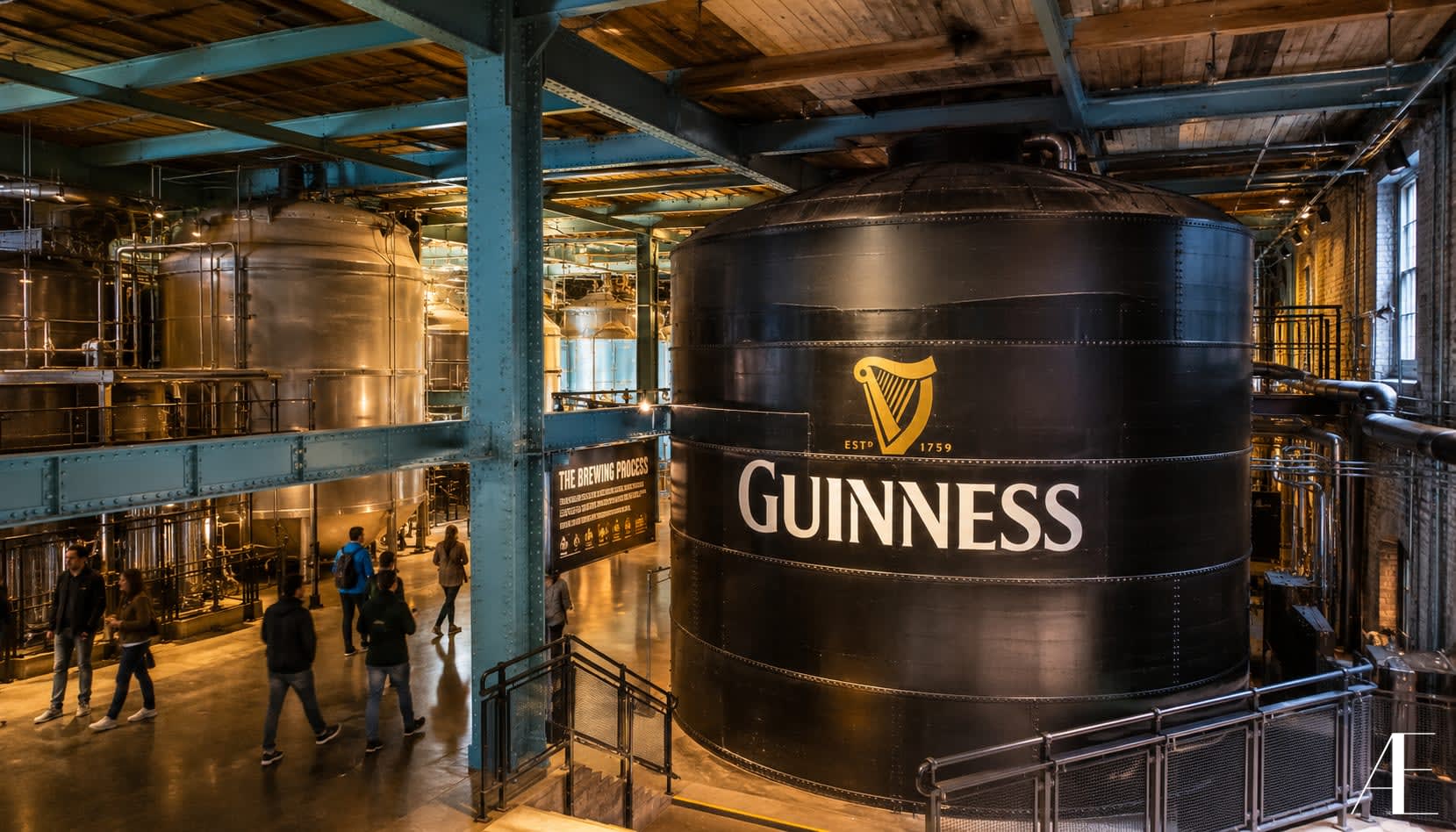
The Guinness Storehouse is Ireland's most visited paid attraction and a highly polished brand experience at St James's Gate, where Arthur Guinness signed his famous 9,000-year lease in 1759 and began brewing the porter that would become the world's most recognised dark beer. The self-guided experience unfolds across seven floors of a former fermentation building, covering the history of the Guinness family, the brewing process, the advertising legacy and the social history of Guinness in Ireland. The visit culminates at the Gravity Bar, an all-glass rooftop with 360-degree views across the city, where guests receive a complimentary pint of Guinness, Guinness 0.0 or a soft drink.
This is not a working brewery tour in the traditional sense. It is a large-scale, very well-produced interpretive experience, and that distinction matters when advising clients. Clients who love Guinness, brand storytelling and big rooftop views usually enjoy it genuinely. Clients who want an intimate craft-beer experience or something that feels more authentically local may be better directed to the Open Gate Brewery (Guinness's experimental tap room, also at St James's Gate, with a different character) or to independent Dublin breweries.
Practical details
- Location: St James's Gate, The Liberties, Dublin 8. A 20–25 minute walk from Trinity College; served by the number 123 bus or Luas Red Line to James's Street.
- Booking: Advance online booking is strongly advised. Peak-season queues without a timed ticket can be substantial.
- Admission: Approximately €25–€30 for adults (2026 guidance). Always verify current pricing.
- Time to allow: 1.5–2 hours.
- Best pairing: St Patrick's Cathedral (10 min walk), Teeling Whiskey Distillery or a Liberties food and pub walk.
What clients often miss: The advertising archive on one of the mid-floors contains some of the most creative commercial art of the 20th century. The Guinness campaigns from the 1930s through 1960s — the Gilroy toucans, the "Guinness is Good for You" series, the zoo animals — are genuinely brilliant and are usually passed quickly by visitors heading straight for the rooftop.
Agent note: Worth recommending for first-time Dublin clients, especially North Americans. It is unambiguously touristy, yes. It is also very well executed and the rooftop view on a clear day is genuinely one of the best in Dublin.
Book your client's tickets through GetYourGuide or Viator to get your commission.
EPIC The Irish Emigration Museum
What it is and why it matters
EPIC tells the story of Irish emigration and the global Irish diaspora through 20 interconnected gallery spaces in the CHQ building, a beautifully restored Victorian railway warehouse on Custom House Quay in the Docklands. It covers the full sweep of Irish emigration: the plantations, the Famine, the economic emigration of the 20th century and the contemporary Irish diaspora that extends to 80 million people worldwide.
What distinguishes EPIC from a conventional heritage museum is its explicit focus on what emigration produced: the Irish contribution to the United States, Canada, Australia, Argentina and beyond. The museum argues convincingly that Irish culture is not just a small-island story but a global phenomenon, and that the reason Irish identity resonates so strongly in North America is not sentiment but substance. For Canadian and American clients with Irish ancestry, the experience can be unexpectedly emotional, and not in a sentimental way. It is one of the clearest, most intelligent cultural museums in Ireland.
Practical details
- Location: CHQ Building, Custom House Quay, Dublin 1, in the Docklands.
- Admission: Approximately €16–€18 for adults (2026 guidance). Always verify current pricing.
- Opening: Generally daily 10:00am–6:45pm, last entry 5:00pm.
- Time to allow: 90 minutes to 2 hours.
- Best pairing: The Jeanie Johnston famine ship moored nearby, a walk along the Docklands quays and the Samuel Beckett Bridge.
What clients often miss: The genealogy research service available through EPIC and its partner organisations is one of the most useful things the museum offers for clients who want to trace Irish ancestry. It can be incorporated into the visit itself or arranged as a standalone service.
The detail worth knowing: The CHQ building (Custom House Quay) was originally a bonded warehouse built in 1820 to store goods before customs duties were paid. During the Famine period it was used as a food depot. The building's history layers quietly under the modern museum in a way that rewards paying attention.
Book your client's tickets through GetYourGuide or Viator to get your commission.
Dublin Castle
What it is and why it matters
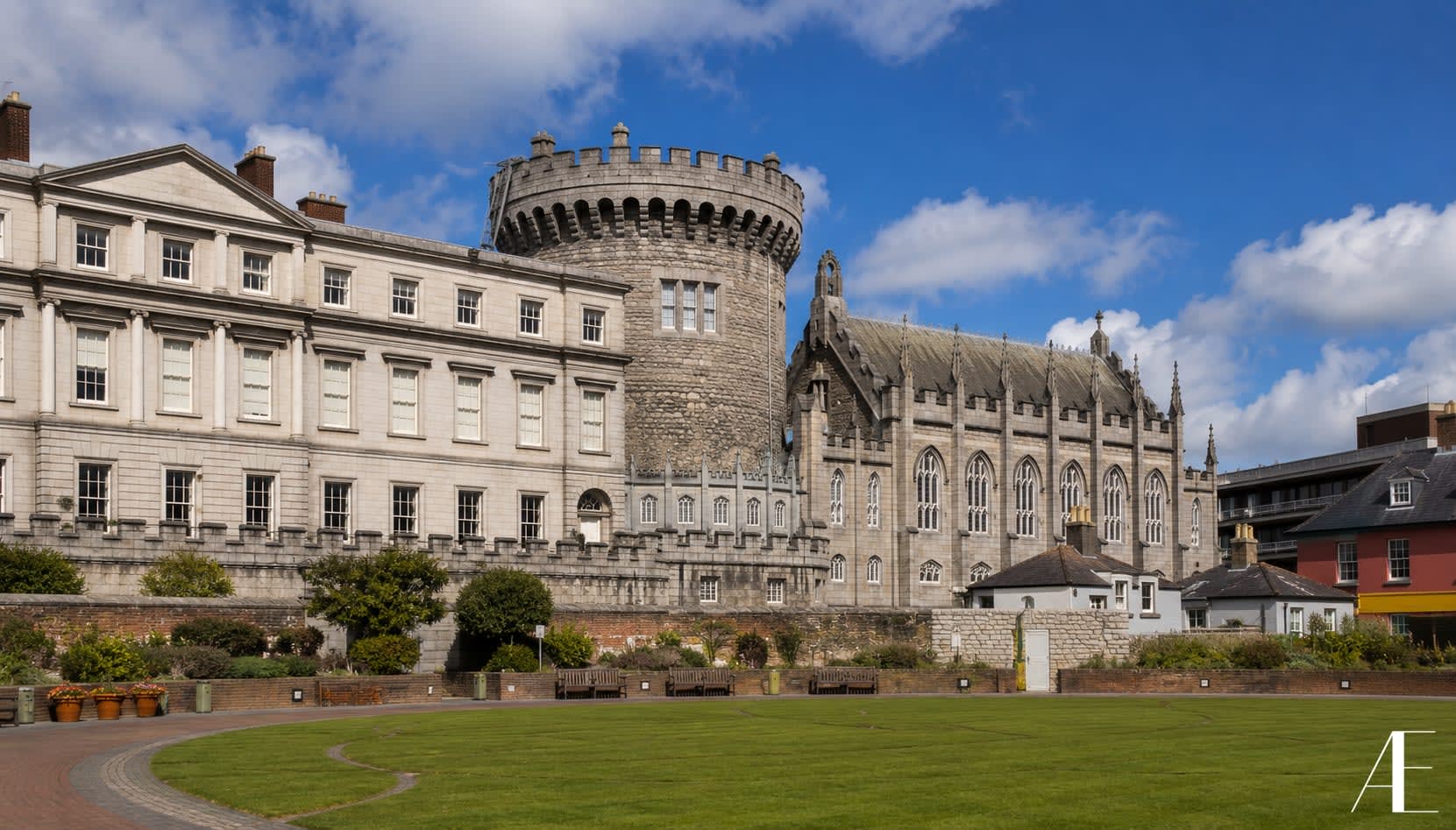
Dublin Castle occupied the site of the original Dubh Linn, the black pool that gave the city its English name, and served as the centre of English and later British administration in Ireland from the 13th century until 1922. The State Apartments, where the Lord Lieutenant received guests and the British administration conducted its formal business, are among the finest 18th-century interiors in Dublin. The Chapel Royal, completed in 1814 in the Gothic Revival style, is extraordinary in its decorative ambition. The medieval Record Tower is the only surviving element of the original 13th-century castle.
Important 2026 note: Dublin Castle is closed to the public from 5 May to 31 December 2026 to accommodate official Irish Presidency of the Council of the European Union business. Do not recommend it for client visits during that period unless reopening or special access is confirmed. Check dublincastle.ie before including it in any 2026 itinerary.
Practical details when open
- Location: Dame Street and Castle Street, Dublin 2. A short walk from Temple Bar, Christ Church and the southside centre.
- Opening hours: Normally daily, with last admission before closing. Hours vary; always verify.
- Time to allow: 30 minutes self-guided around the courtyard and exterior; approximately 1 hour with a guided tour of the State Apartments.
Agent note: Excellent when open, particularly as the anchor of a medieval and colonial Dublin walk combining Christ Church, St Patrick's Cathedral and the surrounding Liberties streets. The castle's significance is better understood through a guided context than a self-guided visit.
Book a tour with a local guide through GetYourGuide or Viator to get a commission.
Christ Church Cathedral
What it is and why it matters
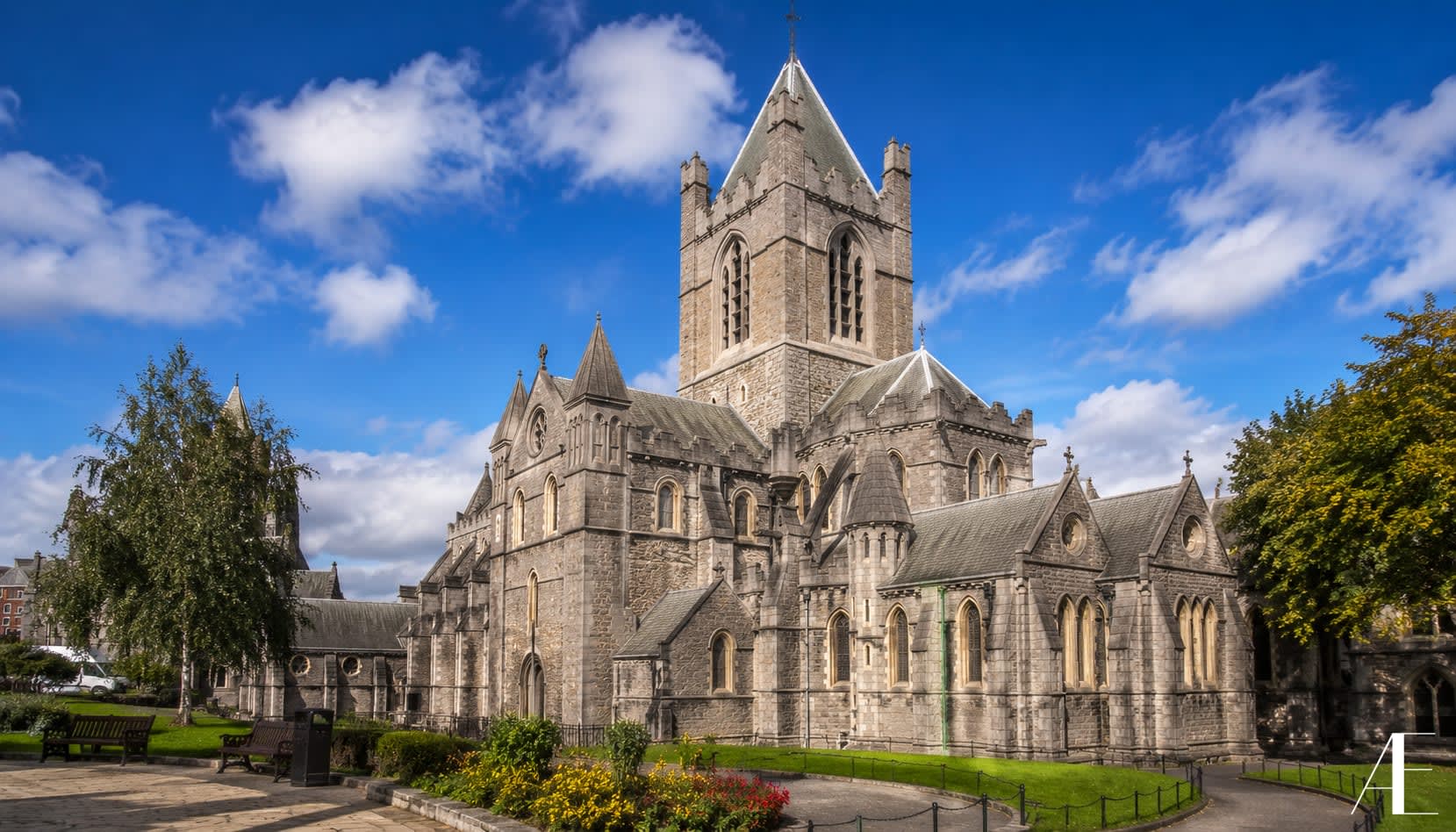
Christ Church Cathedral is Dublin's oldest cathedral foundation, established by the first Viking King of Dublin, Sitriuc Silkenbeard, in 1028. The current building is largely the result of 12th and 13th-century construction by the Anglo-Normans, with a major Victorian restoration by George Edmund Street in the 1870s. Its crypt, stretching the full length of the nave above, is one of the largest medieval crypts in Ireland or Britain and one of the most atmospheric spaces in Dublin.
The cathedral contains the tomb of Strongbow, the Anglo-Norman earl whose arrival in Ireland in 1170 began the process of English involvement. The original effigy was destroyed; the current tomb is likely a replacement, but it remains one of the most symbolically significant monuments in the city: the literal burial place of the man who changed Irish history.
Practical details
- Location: Christchurch Place, Dublin 8. A short walk from Temple Bar, Dublin Castle and the Liberties.
- Admission: Ticketed for the interior; self-guided audio tours available.
- Opening hours: Vary by day and service schedule; check christchurchcathedral.ie before visiting.
- Time to allow: 45–75 minutes.
- Best pairing: Dublinia (the adjacent Viking and medieval history exhibition, useful for families), Dublin Castle, St Patrick's Cathedral.
The detail worth knowing: The crypt of Christ Church contains a small museum that includes a preserved cat and rat from the 19th century — the cat apparently chased the rat into an organ pipe, where both became mummified. They are displayed in a glass case. It is genuinely odd, and it is one of those details that clients remember and repeat.
Book a tour with a local guide through GetYourGuide or Viator to get a commission.
St Patrick's Cathedral
What it is and why it matters
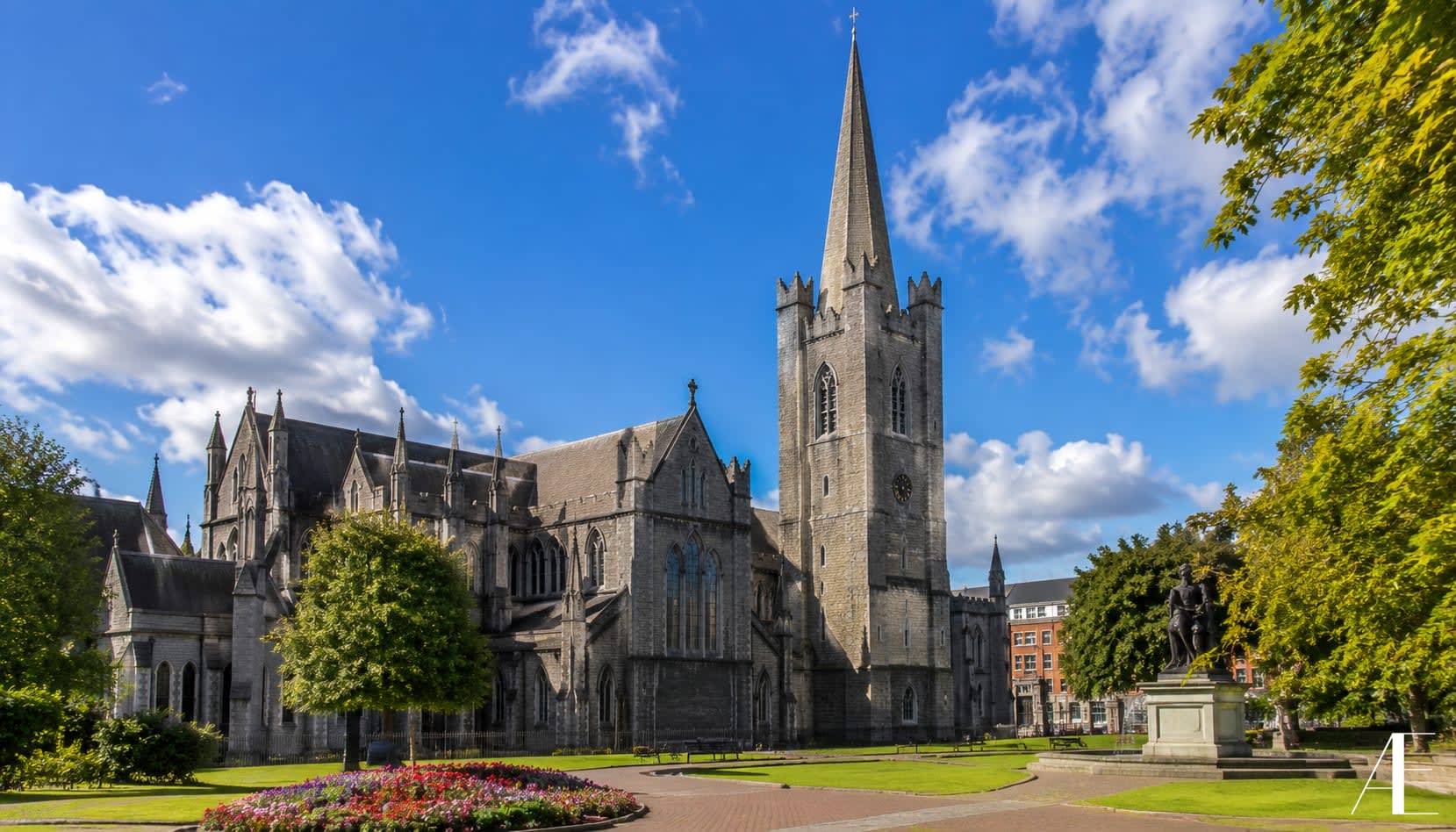
St Patrick's Cathedral is the National Cathedral of the Church of Ireland and the largest cathedral in Ireland, its nave stretching 91 metres. The site is traditionally associated with St Patrick himself, who is said to have baptised converts in a well nearby in the 5th century. The current building dates primarily from the 12th and 13th centuries, with significant Victorian restoration by Benjamin Lee Guinness in the 1860s, funded from the Guinness family fortune.
Jonathan Swift, the author of Gulliver's Travels, A Modest Proposal and some of the most devastating political satire in English literature, was Dean of St Patrick's from 1713 until his death in 1745. He is buried in the nave alongside Esther Johnson, the woman he called Stella and who was his companion for decades. His epitaph, which he wrote himself in Latin, was famously translated by W.B. Yeats: "Swift has sailed into his rest; Savage indignation there cannot lacerate his breast."
Practical details
- Location: Patrick Street, Dublin 8, near the Liberties.
- Admission: Ticketed; pricing varies. Check stpatrickscathedral.ie before visiting.
- Opening hours: Vary by day and service schedule; the cathedral is a working church, so services affect visiting hours.
- Time to allow: 45–75 minutes.
- Best pairing: Teeling Whiskey Distillery, the Guinness Storehouse or a Liberties neighbourhood walk.
What clients often miss: The Boyle Monument, in the north transept, is one of the most elaborately painted funerary monuments in Ireland, commissioned by Richard Boyle, Earl of Cork, in the 1630s. It was moved from its original position blocking the high altar when the Duke of Strafford, the Lord Deputy, found it intolerable that a monument to an Irish family should obscure the view of the altar during his prayers.
Book a tour with a local guide through GetYourGuide or Viator to get a commission.
National Museum of Ireland (Archaeology)
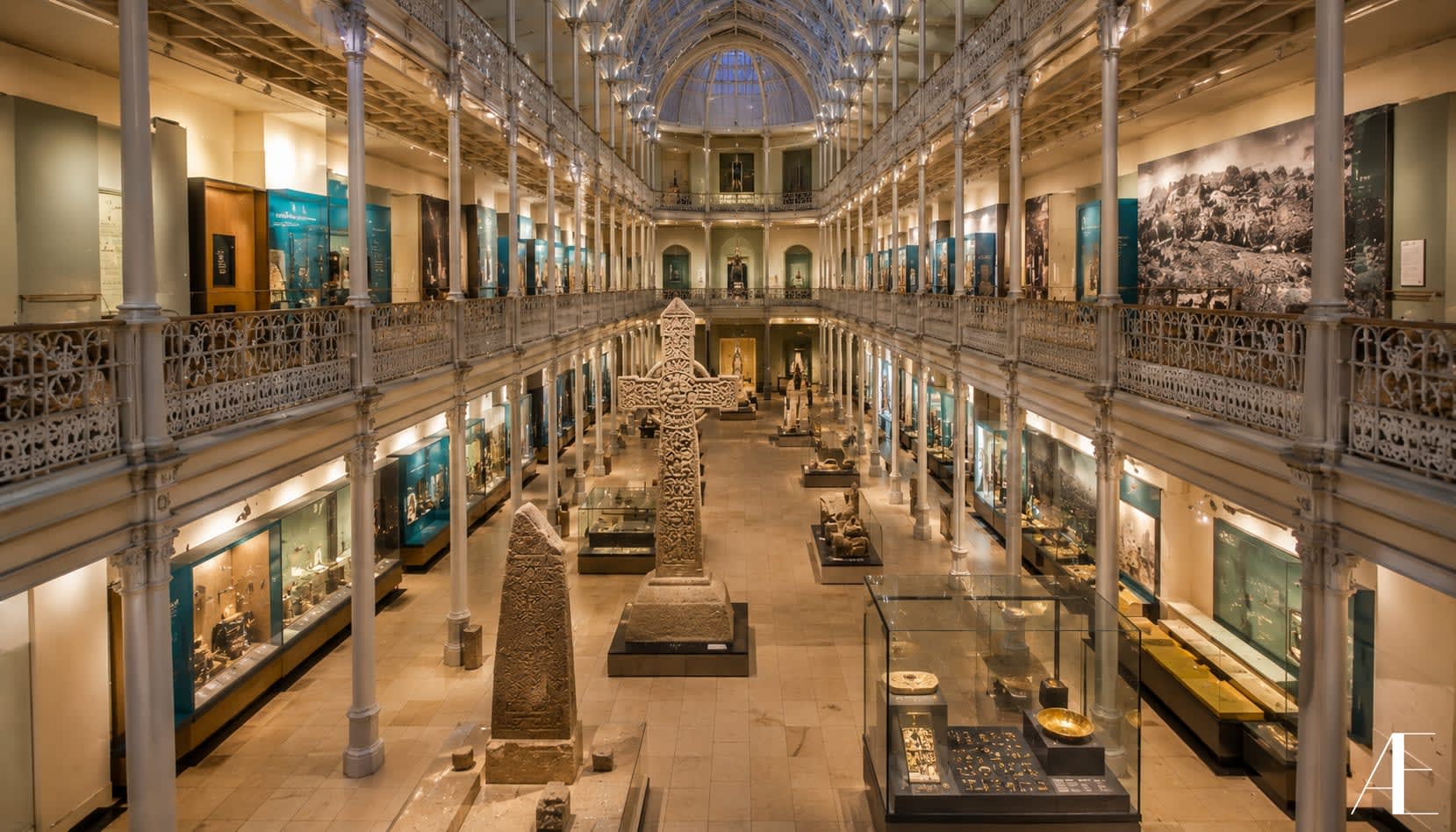
What it is and why it matters
One of Dublin's best free attractions and, for serious history clients, one of the most important museums in the country. The collection covers Irish prehistory, the Viking age and the early Christian period, including the most extraordinary concentration of early medieval gold and metalwork in Europe.
Highlights include: the Ardagh Chalice (8th century, one of the finest examples of early Christian metalwork in the world), the Tara Brooch (8th century, with filigree work of almost incomprehensible delicacy), the Derrynaflan Hoard (a collection of early Christian liturgical objects found in a bog in 1980), and the bog bodies — Iron Age humans preserved for millennia in the acidic conditions of Irish bogs, their faces, hands and final expressions still readable.
The Viking age material from the Wood Quay excavations is also here, providing the serious historical counterpart to the more accessible Dublinia experience next to Christ Church.
Practical details
- Location: Kildare Street, Dublin 2. A short walk from St Stephen's Green, Trinity and Merrion Square.
- Admission: Free for permanent collections.
- Opening: Tuesday–Saturday 10:00am–5:00pm; Sunday and Monday 1:00pm–5:00pm, with some holiday closures.
- Time to allow: 1.5–2.5 hours.
What clients often miss: Most visitors go directly to the Treasury collection (Ardagh Chalice, Tara Brooch) and miss the bog bodies, which are in a separate gallery and are among the most haunting exhibits in any Irish museum.
Agent note: Essential bad-weather option. Essential for any client serious about ancient Ireland. And it is free, which makes it one of the strongest value plays in Dublin.
Book a tour with a local guide through GetYourGuide or Viator to get a commission.
National Gallery of Ireland
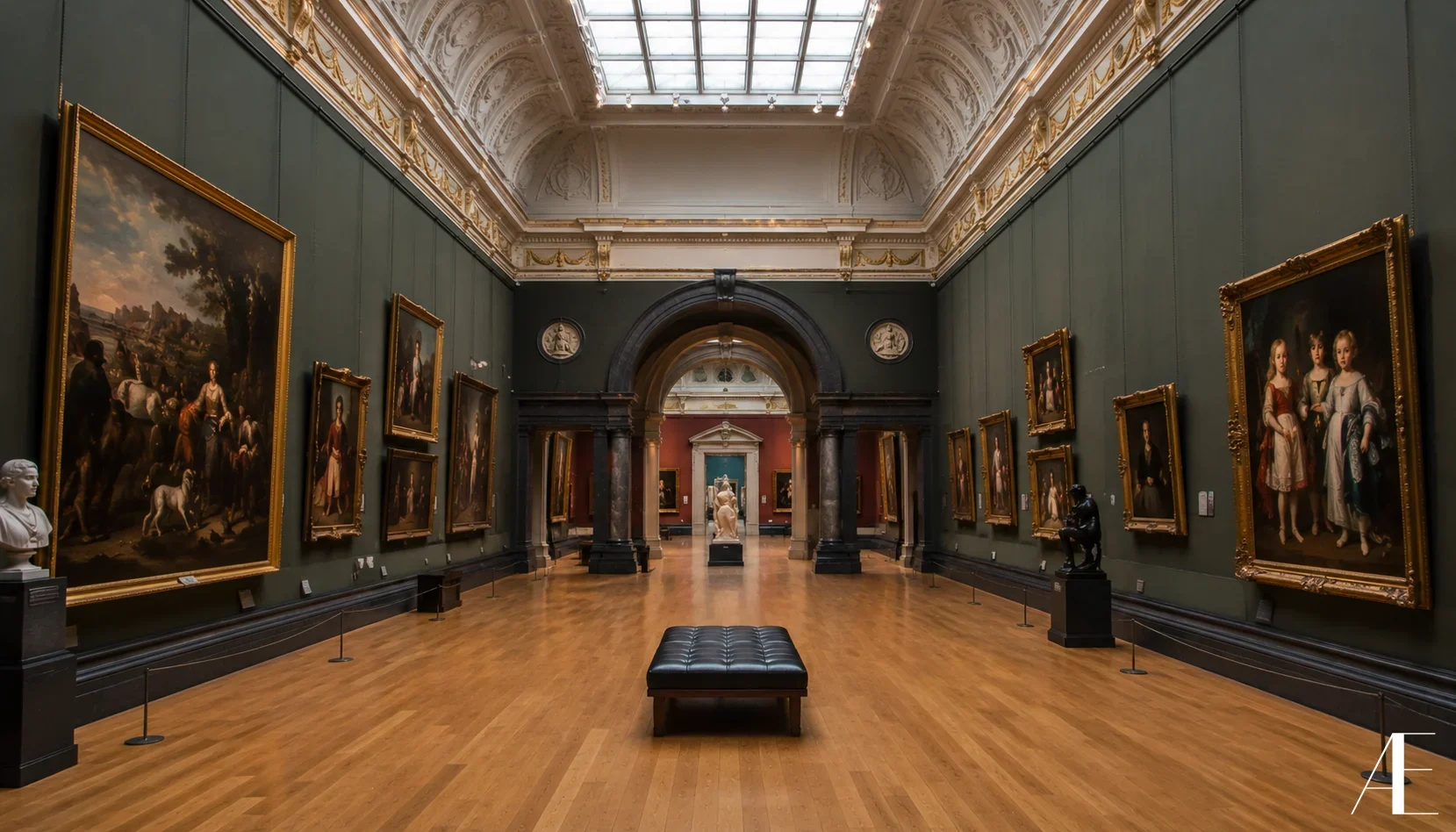
What it is and why it matters
The National Gallery of Ireland holds the national collection of Irish and European art across a complex of buildings on Merrion Square West, including the original 1864 building, the Milltown rooms and the Millennium Wing. The permanent collection is free and covers European painting from the medieval period through the early 20th century, with particular strengths in Dutch and Flemish masters, Italian Renaissance painting, and the Irish collection.
The Caravaggio room holds The Taking of Christ, rediscovered in a Dublin Jesuit house in 1990 after having been lost for centuries. It is one of the most significant Caravaggio discoveries of the 20th century and is now one of the National Gallery's most important works. The Irish collection, covering painters from the 17th century to the present, includes outstanding work by Jack B. Yeats (W.B. Yeats's brother), William Orpen and Walter Osborne.
Practical details
- Location: Merrion Square West, Dublin 2.
- Admission: Permanent collection free; some temporary exhibitions ticketed.
- Opening: Open seven days a week; Thursday late opening until 8:30pm. Check nationalgallery.ie for current hours.
- Time to allow: 1.5–2.5 hours for a thorough visit; 1 hour for highlights.
What clients often miss: The Shaw Room, named after George Bernard Shaw, who left a third of his estate to the National Gallery in gratitude for the education it gave him as a young man in Dublin. It is one of the finest Victorian gallery interiors in Ireland.
Book a tour with a local guide through GetYourGuide or Viator to get a commission.
Phoenix Park
What it is and why it matters
Phoenix Park is one of the largest enclosed public parks in any European capital, covering more than 707 hectares: larger than Central Park in New York, larger than Hyde Park and Kensington Gardens combined. It was established as a royal deer park in 1662 and is now home to Áras an Uachtaráin (the official residence of the President of Ireland), the residence of the U.S. Ambassador (one of the finest ambassadorial residences in Europe), Dublin Zoo, the Wellington Monument (the tallest obelisk in Europe at 62 metres), and a herd of approximately 600 fallow deer that roam freely throughout the park.
The park is not a manicured garden. It is a genuine landscape: forest sections, open grassland, long avenues of mature trees and the kind of space that feels completely removed from the city even though it is 3 kilometres from the city centre.
Practical details
- Location: Entrances at Parkgate Street (east, near Heuston Station) and at Castleknock and Chapelizod (west). Best reached by taxi, bus (number 37, 38 or 39 from the city centre) or bicycle.
- Admission: Free for the park. Dublin Zoo ticketed separately.
- Opening: Main gates open around the clock; some side gates have restricted hours.
- Time to allow: 1.5 hours minimum for a meaningful visit; a full morning or afternoon is comfortable.
What clients often miss: The Papal Cross, erected for Pope John Paul II's open-air Mass in Phoenix Park in 1979, attended by 1.25 million people: the largest single gathering in Irish history. It remains standing in the park's central plain and is a significant landmark for clients who understand its context.
Agent note: Do not underestimate the size. Phoenix Park is not a quick garden stroll; it is a major urban landscape. Combine it with Kilmainham Gaol for a coherent west-of-centre day.
Book a tour with a local guide through GetYourGuide or Viator to get a commission.
Jameson Distillery Bow St.
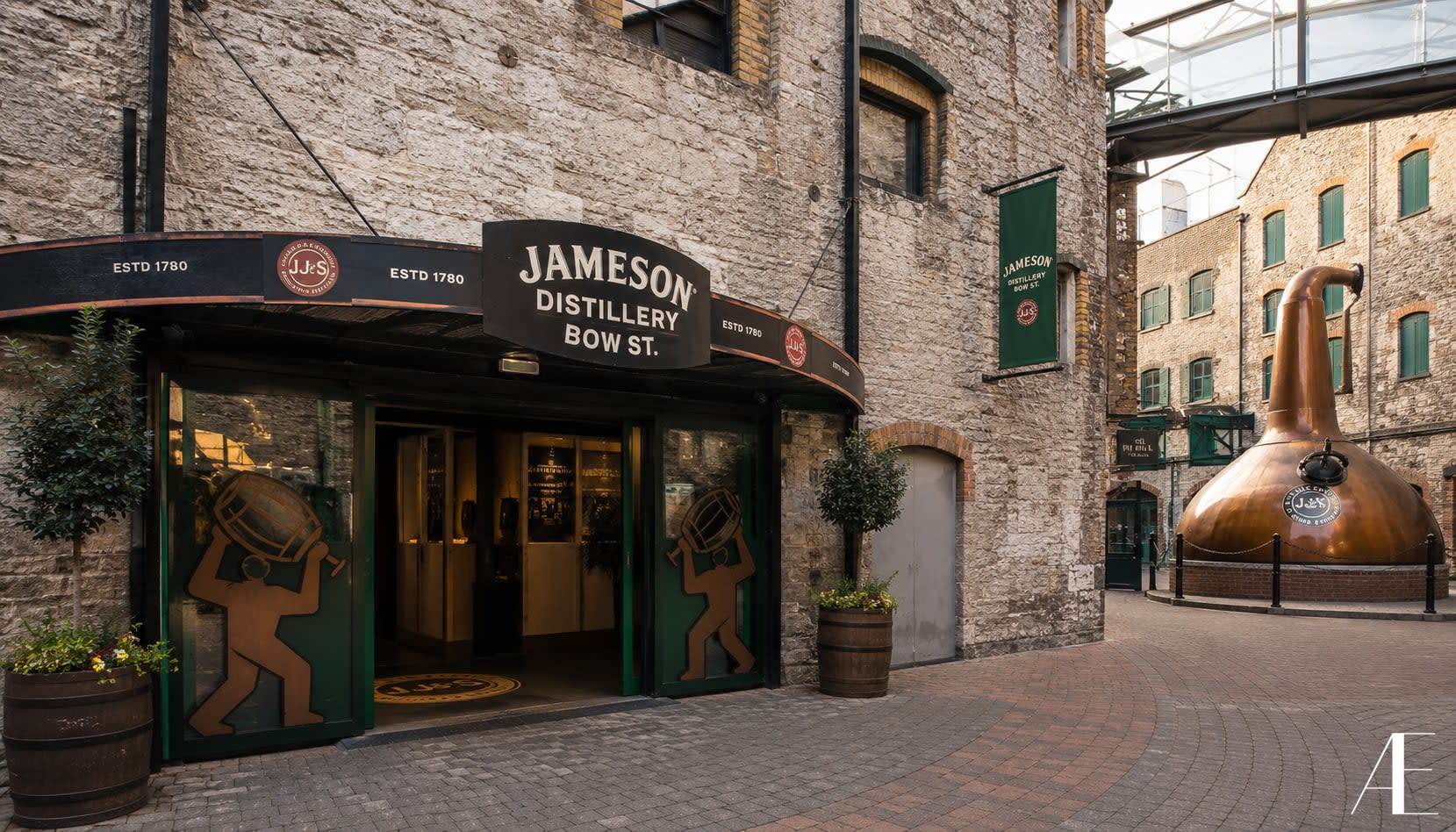
What it is and why it matters
The former Jameson distillery in Smithfield operated from 1780 until 1971, when production moved to Midleton in Cork. The Smithfield site reopened as a visitor experience and has become one of the most popular whiskey destinations in Dublin: more compact than the Guinness Storehouse, more focused and easier to schedule into a half-day. The core Bow St. Experience is a guided tour explaining Irish whiskey history and the Jameson production process, culminating in a tasting and a cocktail. Premium options include masterclasses and more extensive tastings.
Practical details
- Location: Bow Street, Smithfield, Dublin 7. Luas Red Line to Smithfield (a short walk).
- Core experience duration: Approximately 45 minutes for the standard tour.
- Pricing: From approximately €26 for the standard experience; premium experiences cost more. Verify current pricing.
- Best pairing: Smithfield Square, Stoneybatter for lunch or dinner, or the Old Jameson Distillery area.
What clients often miss: At the end of the standard tour, a small group of visitors is chosen to become "Jameson Whiskey Ambassadors" by completing a comparative tasting between Jameson, a Scotch whisky and an American bourbon. Volunteer for this; it is the most educational part of the experience and is included in the standard ticket price.
Agent note: More compact and easier to schedule than the Guinness Storehouse. Strong for clients who want a whiskey experience without committing half a day, and a natural pairing with the Smithfield neighbourhood for lunch or early evening.
Book your client's tickets through GetYourGuide or Viator to get your commission.
Teeling Whiskey Distillery
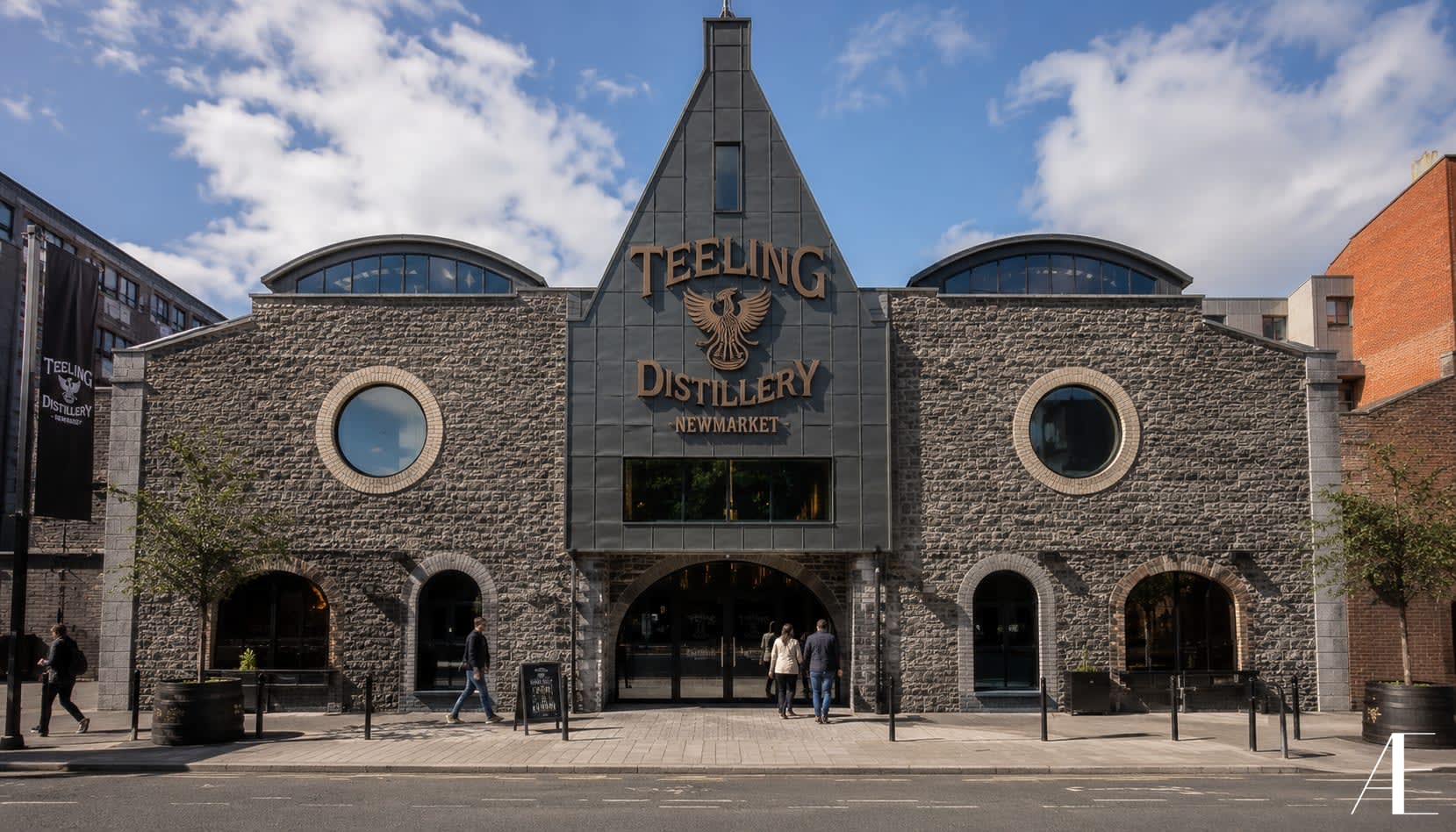
What it is and why it matters
Teeling opened in 2015 in the Newmarket area of the Liberties, making it the first new distillery to open in Dublin in over 125 years. The Teeling family had previously owned Great Northern Distillery; the Dublin operation represents a deliberate return to the tradition of urban distilling that characterised 19th-century Dublin when the city had dozens of operating distilleries. Teeling distils, matures and bottles on site, making it a genuine working distillery experience rather than an interpretive centre.
The tour covers the distilling process, the wood and maturation philosophy and the family history, and concludes with a tasting of Teeling's core expressions: Small Batch, Single Grain and Single Malt.
Practical details
- Location: 13-17 Newmarket, The Liberties, Dublin 8. Walking distance from St Patrick's Cathedral and the Guinness Storehouse.
- Time to allow: 1–1.5 hours.
- Best pairing: St Patrick's Cathedral, the Guinness Storehouse or a Liberties neighbourhood walk.
Agent note: The right recommendation for clients who have already done Jameson or who want a more contemporary and craft-focused whiskey experience. Teeling's positioning as a genuine working distillery in a recovering inner-city neighbourhood gives it a different character from the large brand museums.
Book your client's tickets through GetYourGuide or Viator to get your commission.
The Pub Experience
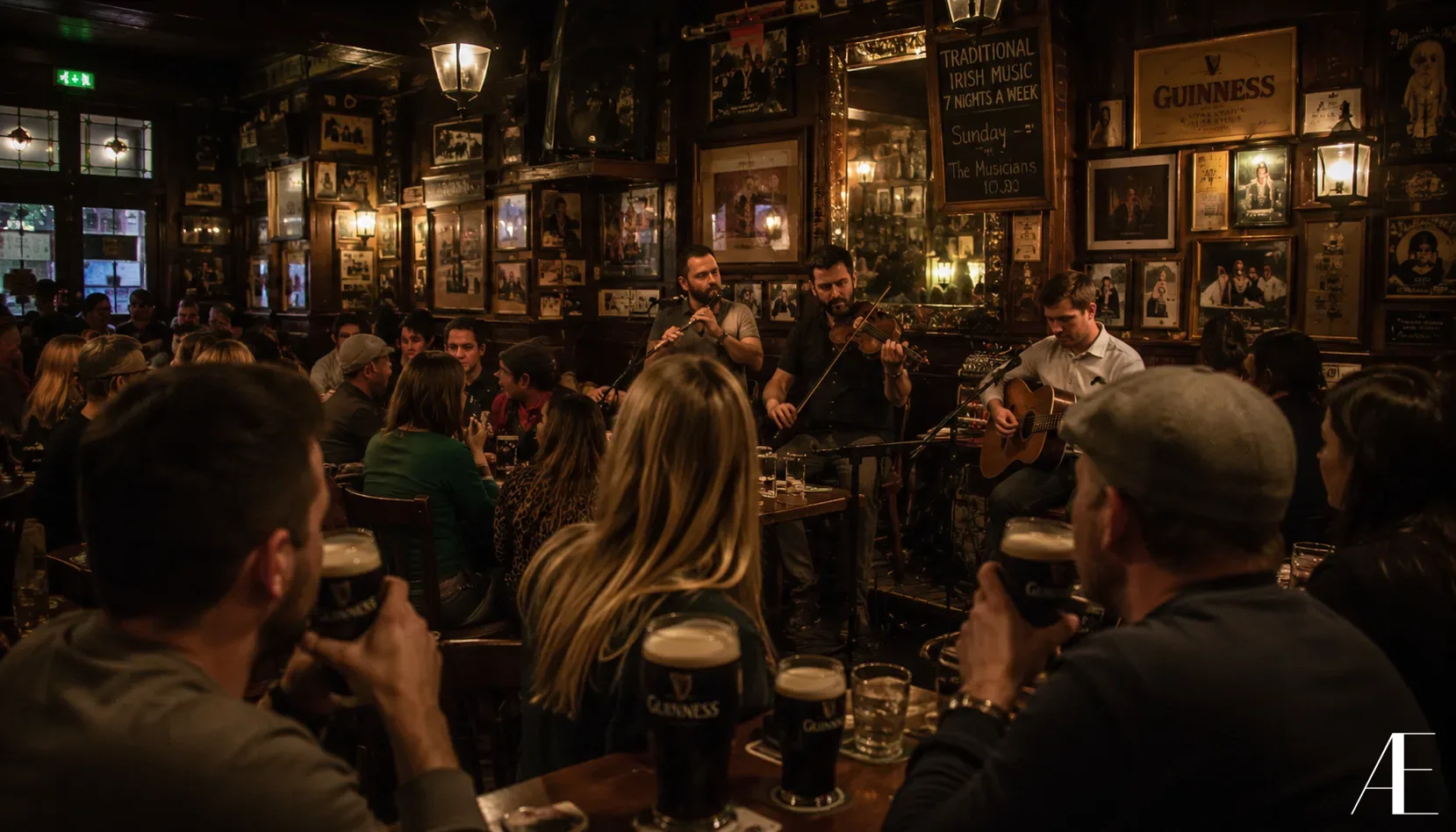
Dublin's pub culture is real, important and easily ruined by bad recommendations. The best Dublin pubs are social institutions: places where people come to talk, listen, drink slowly and occasionally hear music that has not been arranged for their benefit. The worst Dublin pubs are expensive, loud, tourist-facing and indistinguishable from a theme park.
The difference between recommending the right pub and the wrong one is one of the most tangible ways an agent adds value for a Dublin client. Good recommendations depend on what the client actually wants.
Traditional atmosphere and serious whiskey selection: The Bow Bar's Dublin equivalent is The Long Hall on South Great George's Street, a Victorian pub with an extraordinary carved bar, warm light and no music. The Palace Bar on Fleet Street has been a Dublin institution since 1823, with a strong literary and journalistic history. Mulligan's on Poolbeg Street, where John F. Kennedy is said to have drunk before his 1963 visit, is the purist's choice. Kehoe's on South Anne Street is unchanged since the early 20th century and has one of the finest Victorian pub interiors in the city.
Music-focused sessions: The Cobblestone in Smithfield is the best traditional music pub in Dublin: informal, musician-led sessions most nights, no stage, no amplification, strong local following. O'Donoghue's on Merrion Row is where the Dubliners started and remains strong for trad sessions.
Literary and old Dublin atmosphere: Davy Byrnes on Duke Street is where Leopold Bloom stops for a gorgonzola sandwich and a glass of burgundy in Ulysses. It is explicitly described in the novel. Toner's on Baggot Street is the only pub W.B. Yeats is known to have visited; he allegedly sat in stony silence and left after one drink.
Food and quality pub comfort: The Legal Eagle near the Four Courts, L. Mulligan Grocer in Stoneybatter and The Old Spot on Bath Avenue all offer serious pub food alongside well-chosen beer and whiskey.
Agent note: For most first-time Dublin clients, the best evening is a proper dinner at a good restaurant followed by a single, well-chosen pub. Temple Bar is for the walk-through, not the evening. The pubs listed above will make the agent look knowledgeable. The Temple Bar pub will not.
The Day Trips & Regions to visit
Howth
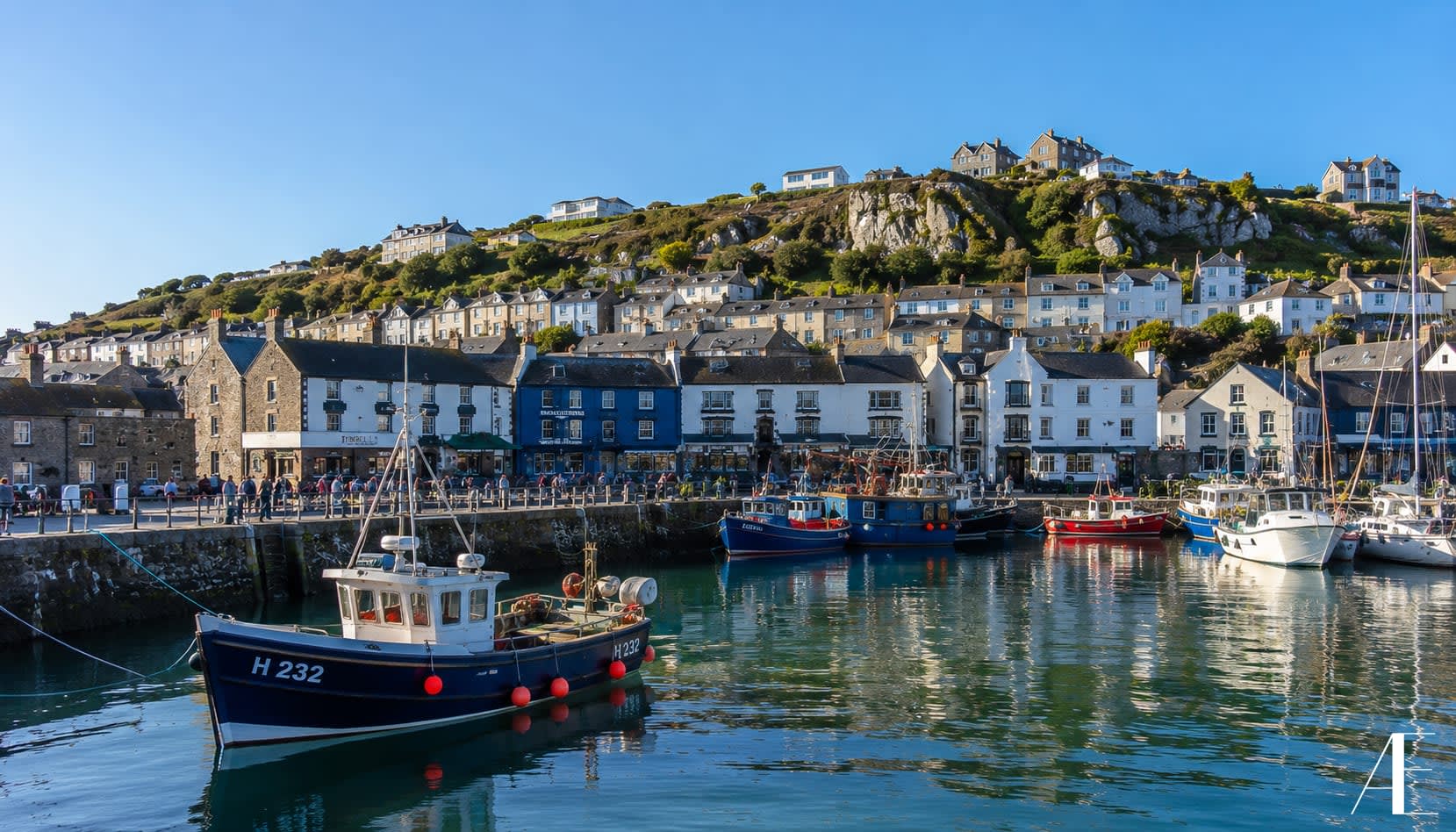
Distance / time: Approximately 30 minutes by DART from Pearse or Tara Street stations in central Dublin.
What's there: A working fishing village on a rocky headland northeast of Dublin, with a harbour, seafood restaurants, cliff walks with views across Dublin Bay, a ruined 15th-century abbey, Howth Castle and rhododendron gardens, and the general atmosphere of a place that has not entirely yielded to tourism.
Best for: Walkers, seafood clients, coastal clients, repeat visitors, clients with 4+ days. The cliff walk around the headland takes approximately 2.5 hours at a comfortable pace.
Worth it? Absolutely. Howth is the best coastal half-day from Dublin and requires nothing but a DART card.
Malahide
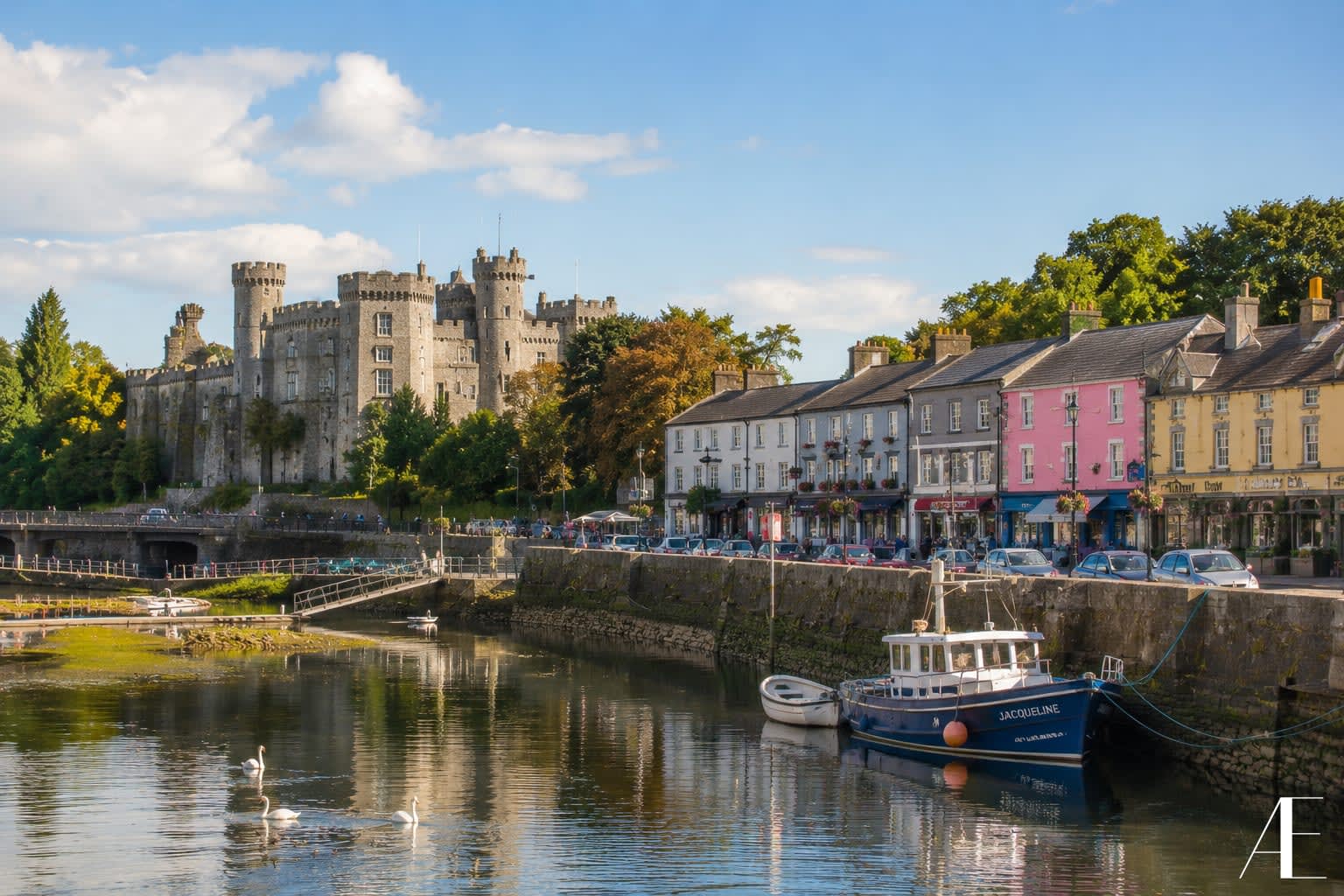
Distance / time: Approximately 25–35 minutes by DART or commuter rail from Connolly or Pearse stations.
What's there: Malahide Castle, set in 260 acres of parkland, is a genuine medieval structure occupied by the same family for nearly 800 years before passing to state ownership in 1975. The village centre is polished, with good cafés and restaurants along the main street. The estuary behind the village is excellent for walking.
Best for: Families, castle-interested clients, softer day-trip clients who want a pleasant village atmosphere without a long journey.
Worth it? Yes, particularly for families or clients who want a more manageable day than Wicklow.
Dún Laoghaire and Dalkey
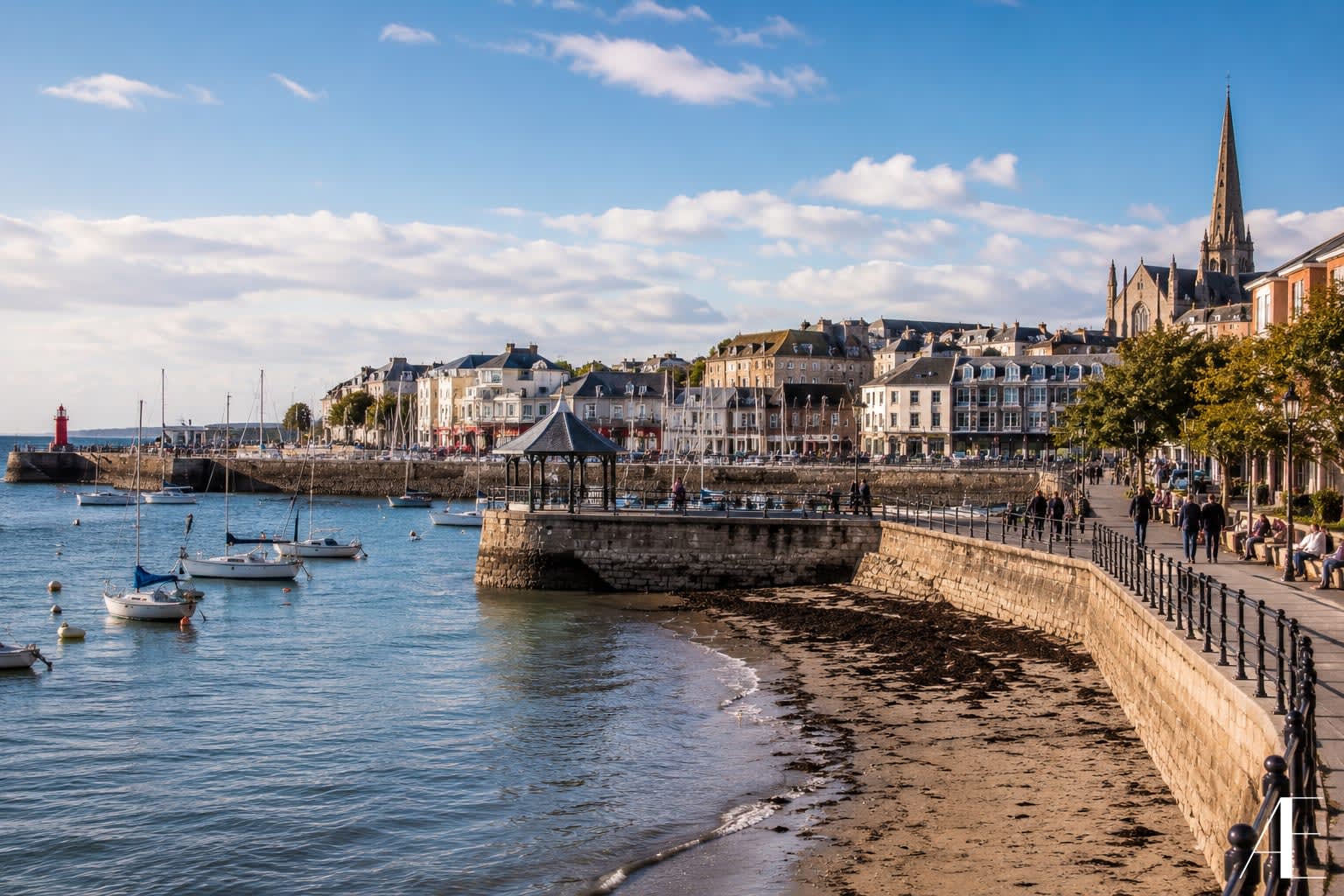
Distance / time: Approximately 25–30 minutes to Dún Laoghaire by DART; Dalkey is one more stop, approximately 35–40 minutes from the centre.
What's there: Dún Laoghaire is a Victorian harbour town with two long granite piers, sea swimming at the Forty Foot bathing place (year-round, all weathers, all ages), good cafés and the East Pier walk. Dalkey is a prosperous coastal village with a medieval castle, Coliemore Harbour, views to Dalkey Island and strong literary associations. Samuel Beckett grew up nearby; Maeve Binchy, Maeve Kelly and Hugh Leonard all lived in the area.
Best for: Coastal walkers, repeat visitors, clients who like an elegant small town with sea air and independent cafés.
Worth it? Very good half-day, particularly in good weather, and a natural match with a cruise call at Dún Laoghaire itself.
Glendalough and the Wicklow Mountains
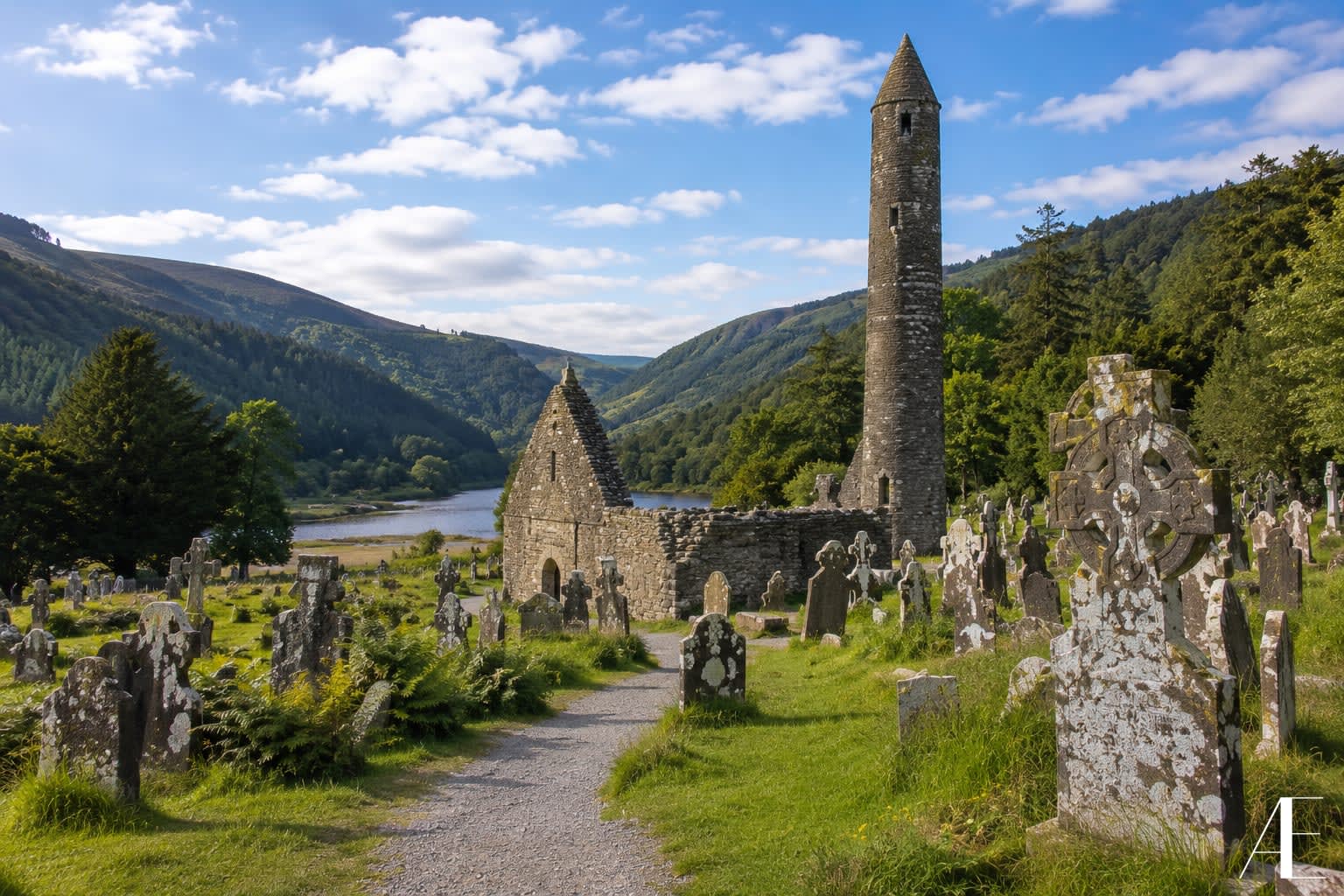
Distance / time: Best by guided day tour or private driver from Dublin; the drive from central Dublin takes approximately 1 hour to 1.5 hours depending on the route and stops.
What's there: Glendalough (the Glen of Two Lakes) is a 6th-century monastic site founded by St Kevin in one of the most dramatically beautiful glacial valleys in Ireland. The round tower, standing to its full height of 30 metres, the ruined cathedral and the lakeside setting make it one of the genuinely moving heritage experiences in Ireland. Powerscourt Estate and Gardens, the Wicklow Gap and the Sally Gap are natural additions depending on the pacing and the client's interests.
Best for: First-time Ireland clients who want landscape and early Irish history. Clients interested in Celtic spirituality and monastic heritage. The Wicklow Mountains landscape is compelling even without the historical overlay.
Worth it? Yes, unequivocally. This is the most natural and rewarding countryside day trip from Dublin.
Powerscourt Estate and Gardens
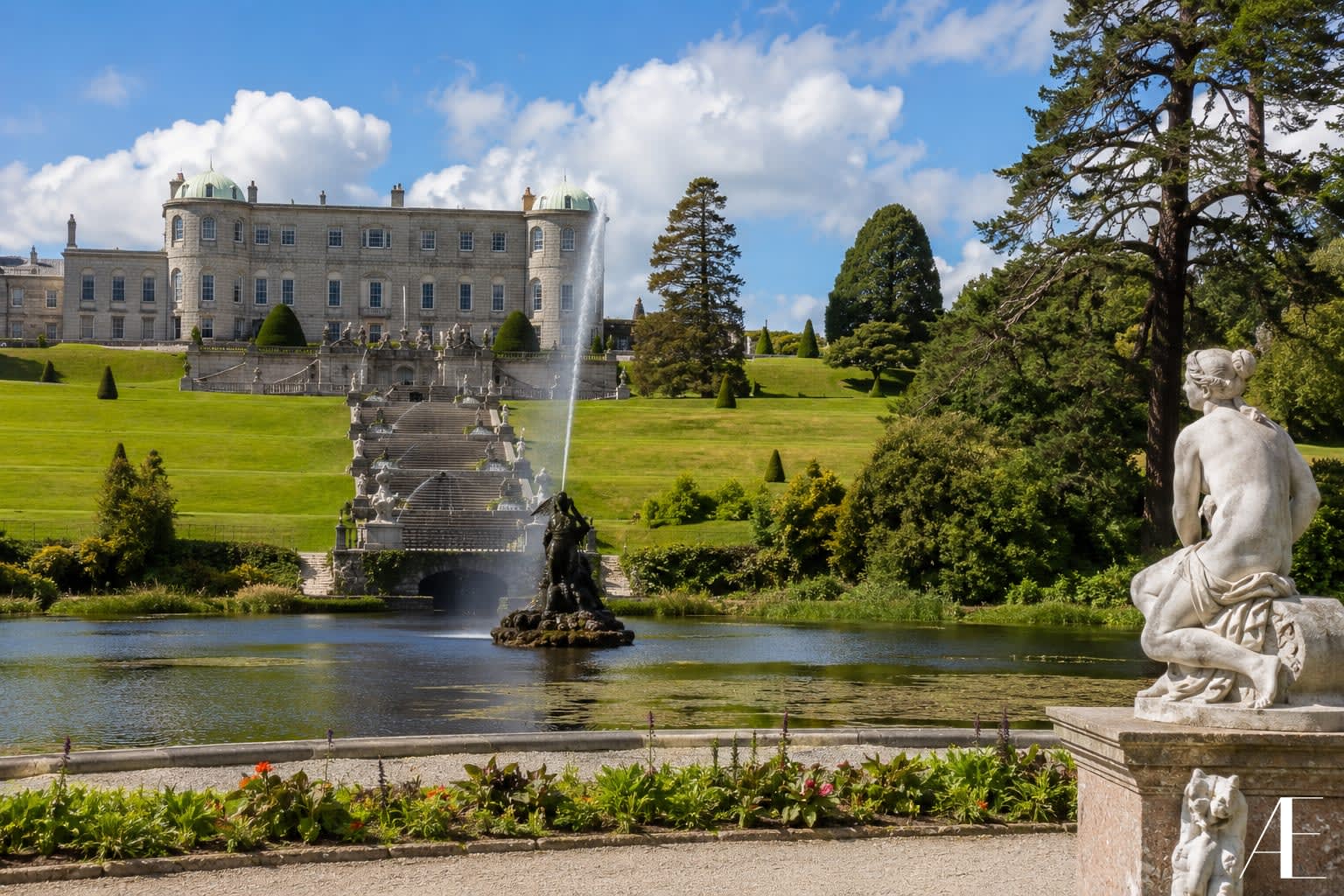
Distance / time: Approximately 45–60 minutes by road from central Dublin.
What's there: Powerscourt is one of the finest estate gardens in Europe: 47 acres of formal terraces, statuary, a Japanese garden, a walled garden, a tower and, beyond the garden boundary, the Wicklow Mountains rising directly behind the upper terraces. The Powerscourt Waterfall, the highest in Ireland at 121 metres, is approximately 5 km from the main house and garden.
Best for: Garden-loving clients, landscape clients, luxury and private touring clients, couples.
Worth it? Yes, particularly in spring (tulips, blossom) and early summer (roses, full colour). Pairs naturally with Glendalough for a full Wicklow day.
Newgrange and the Boyne Valley
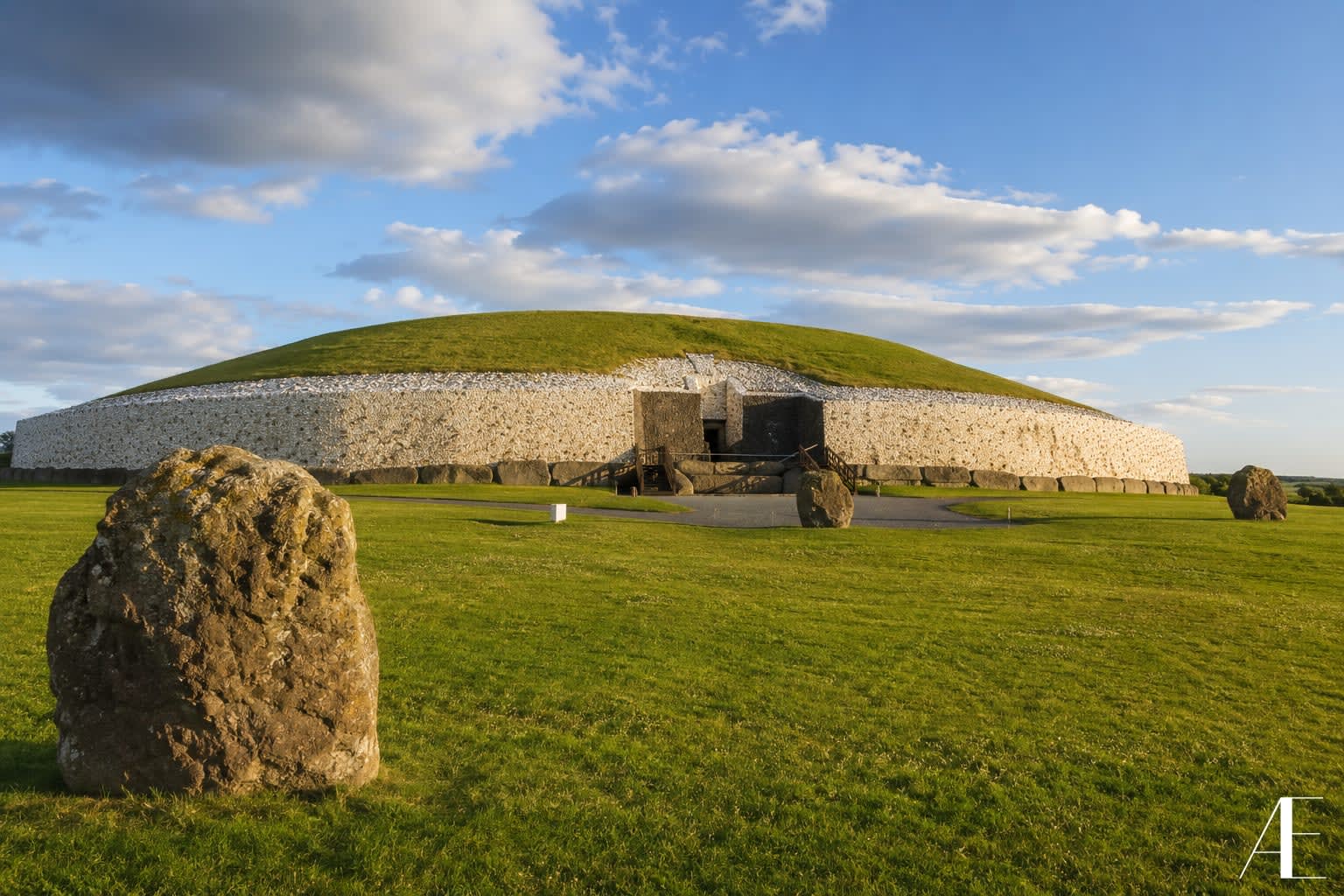
Distance / time: Best by guided tour or private driver; approximately 1 hour to 1.5 hours by road from central Dublin.
What's there: Brú na Bóinne (Palace of the Boyne) is a UNESCO World Heritage Site encompassing Newgrange, Knowth and Dowth: a complex of passage tombs built approximately 5,200 years ago, predating Stonehenge by approximately 500 years and the Egyptian pyramids by approximately 500 years. Newgrange is oriented so that at the winter solstice, a shaft of sunlight enters through a roofbox above the entrance and illuminates the central chamber for approximately 17 minutes. Access is managed through the Brú na Bóinne Visitor Centre, from which guided tours depart.
Best for: Archaeology clients, deep-history clients, clients interested in prehistoric Ireland and Neolithic Europe. This is one of the most important prehistoric landscapes in the world, not just in Ireland.
Worth it? Absolutely for the right client. Must be planned carefully because entry to Newgrange itself is by timed guided tour only, and summer availability is limited.
Belfast
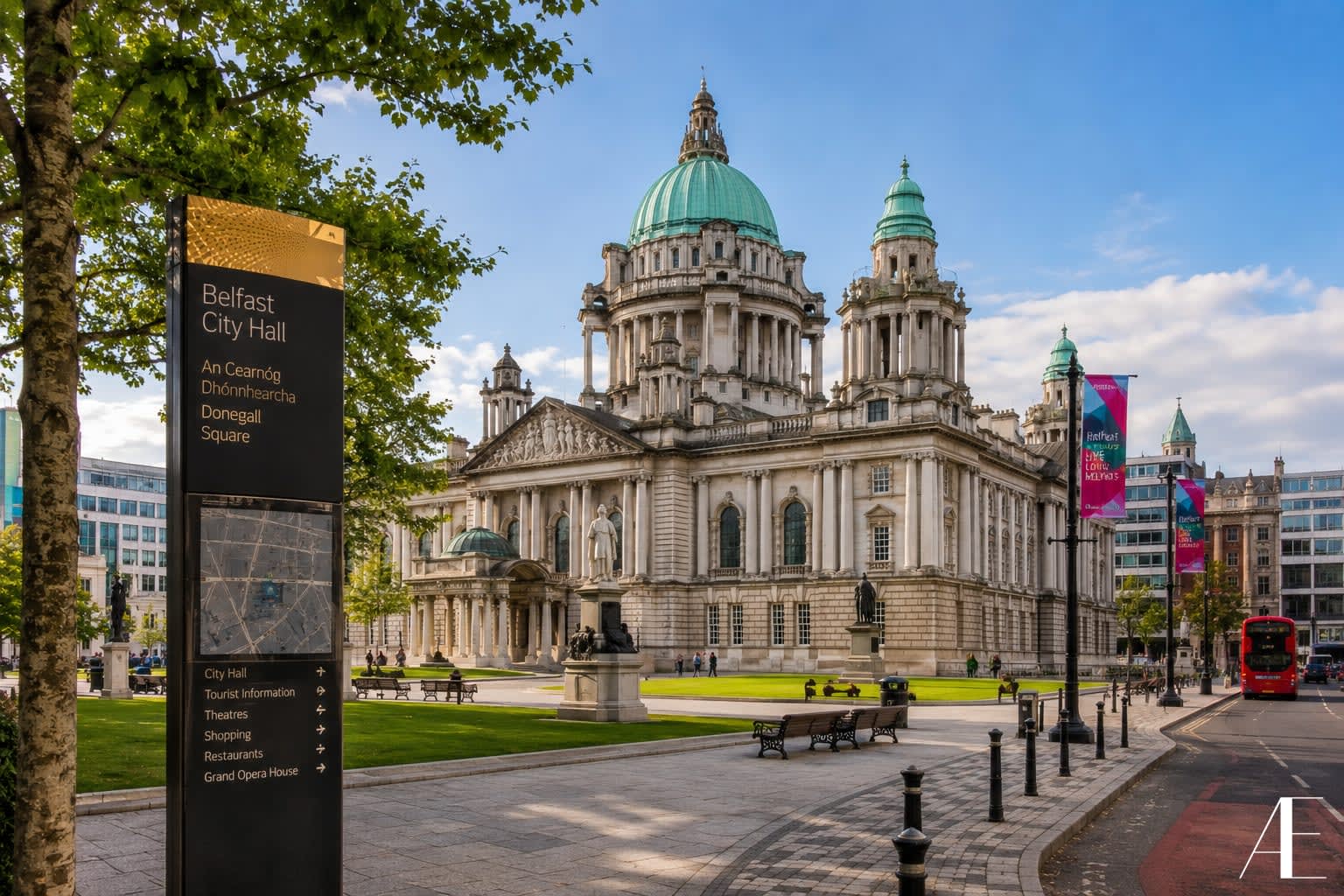
Distance / time: Approximately 2 hours by Enterprise train from Dublin Connolly to Belfast Grand Central.
What's there: Titanic Belfast (the most visited attraction in Ireland and Northern Ireland); Belfast City Hall; the Titanic Quarter; the political murals of the Falls Road and Shankill Road (best experienced by Black Taxi tour with a knowledgeable driver); St George's Market on Friday and Saturday mornings; the Cathedral Quarter; and a lively restaurant and bar scene centred on Botanic Avenue and the Cathedral Quarter.
Best for: Clients interested in modern political history, the Titanic story, murals and divided-city narratives. Clients who want a two-capitals structure within a single trip.
Worth it? As a day trip from Dublin, yes, but the journey time means a genuinely full day with careful planning. Better as one overnight in Belfast if the budget and schedule allow, which also opens the Causeway Coast.
Kilkenny
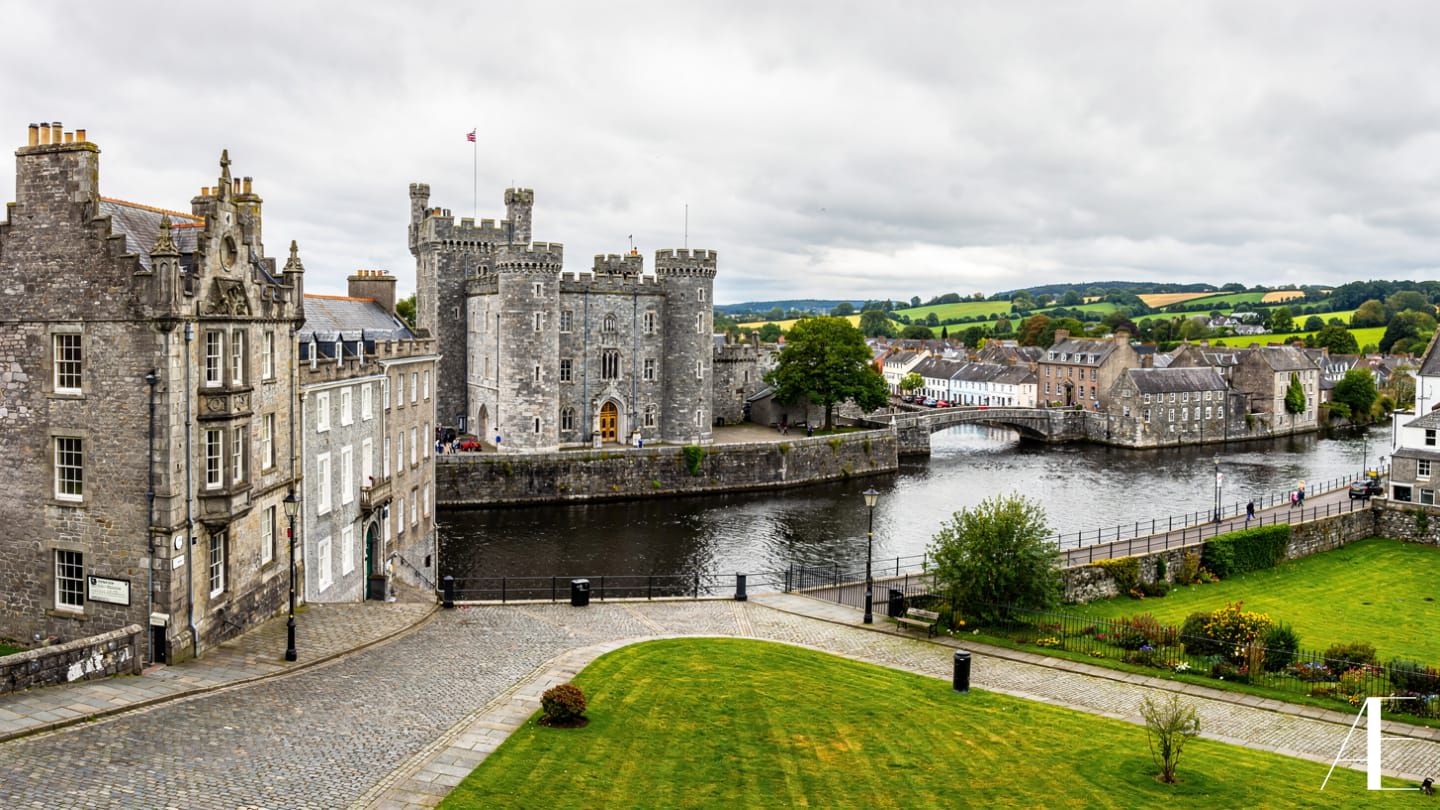
Distance / time: Approximately 1.5 hours by train from Dublin Heuston.
What's there: Kilkenny is Ireland's best-preserved medieval city, built around a bend in the River Nore. Kilkenny Castle (12th-century, restored, with outstanding Long Gallery), the Medieval Mile (a heritage trail connecting the castle, the medieval cathedrals and the city's surviving medieval street plan), the Black Abbey, Kyteler's Inn (allegedly associated with Ireland's most famous accused witch), craft shops, galleries and pubs.
Best for: Clients who want a self-contained small-city day trip by rail. Families. Architecture and medieval history clients. Craft and design clients.
Worth it? Yes. Very manageable and consistently rewarding. Kilkenny is one of those destinations that clients reliably mention as a highlight when they return.
Galway
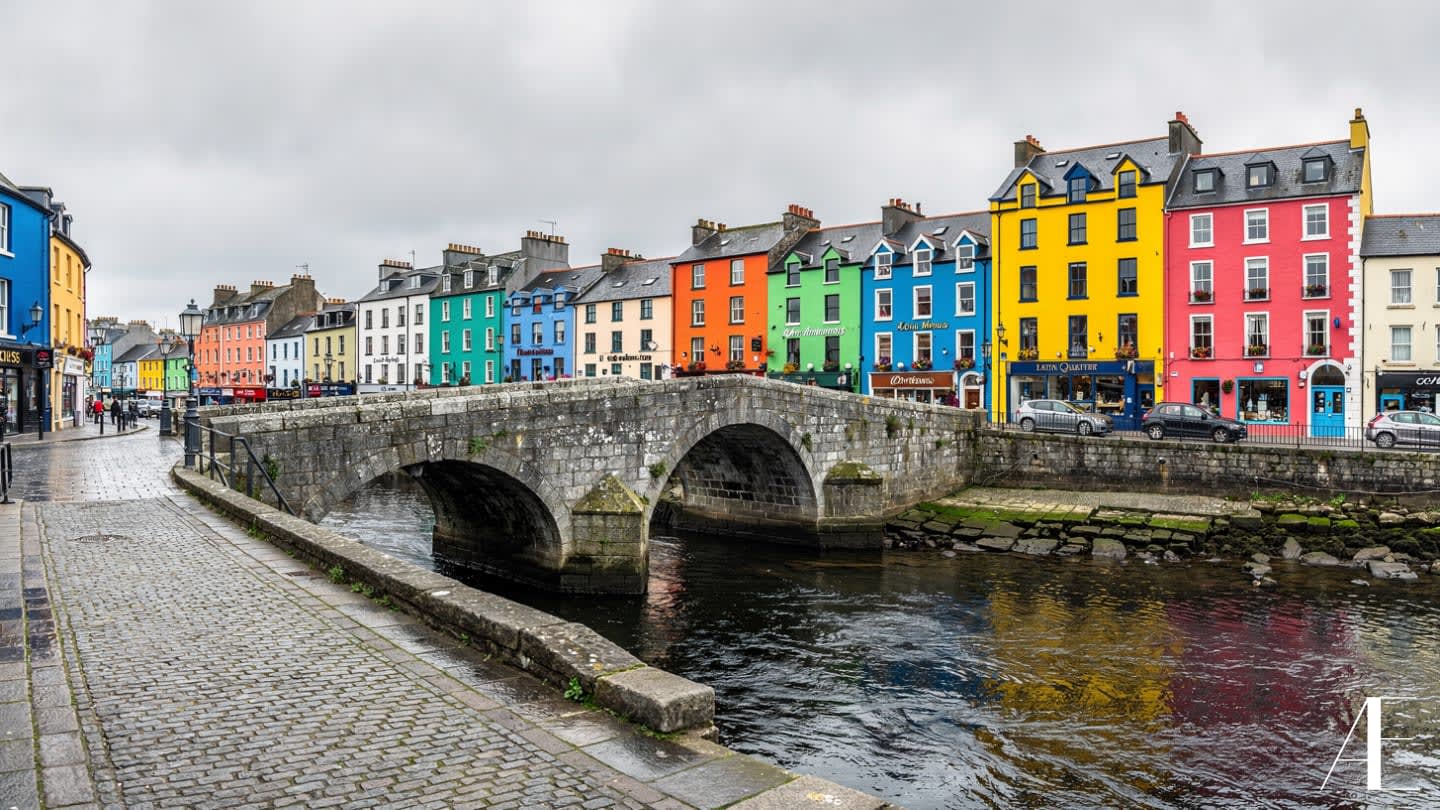
Distance / time: Approximately 2.5 hours by train from Dublin Heuston.
What's there: A lively university city on the west coast: the Spanish Arch, the Latin Quarter, the Claddagh, Galway Cathedral, Salthill, access to Connemara and the Aran Islands, an excellent restaurant scene and some of the best pub music in Ireland.
Best for: Better recommended as an overnight or multi-night extension than a day trip. The train journey is comfortable, but arriving in Galway with only 3–4 hours to spend does not do it justice.
Worth it? As part of a broader Ireland itinerary, Galway is essential. As a day trip from Dublin for most clients, it is more rush than reward.
The Broader Dublin Itineraries
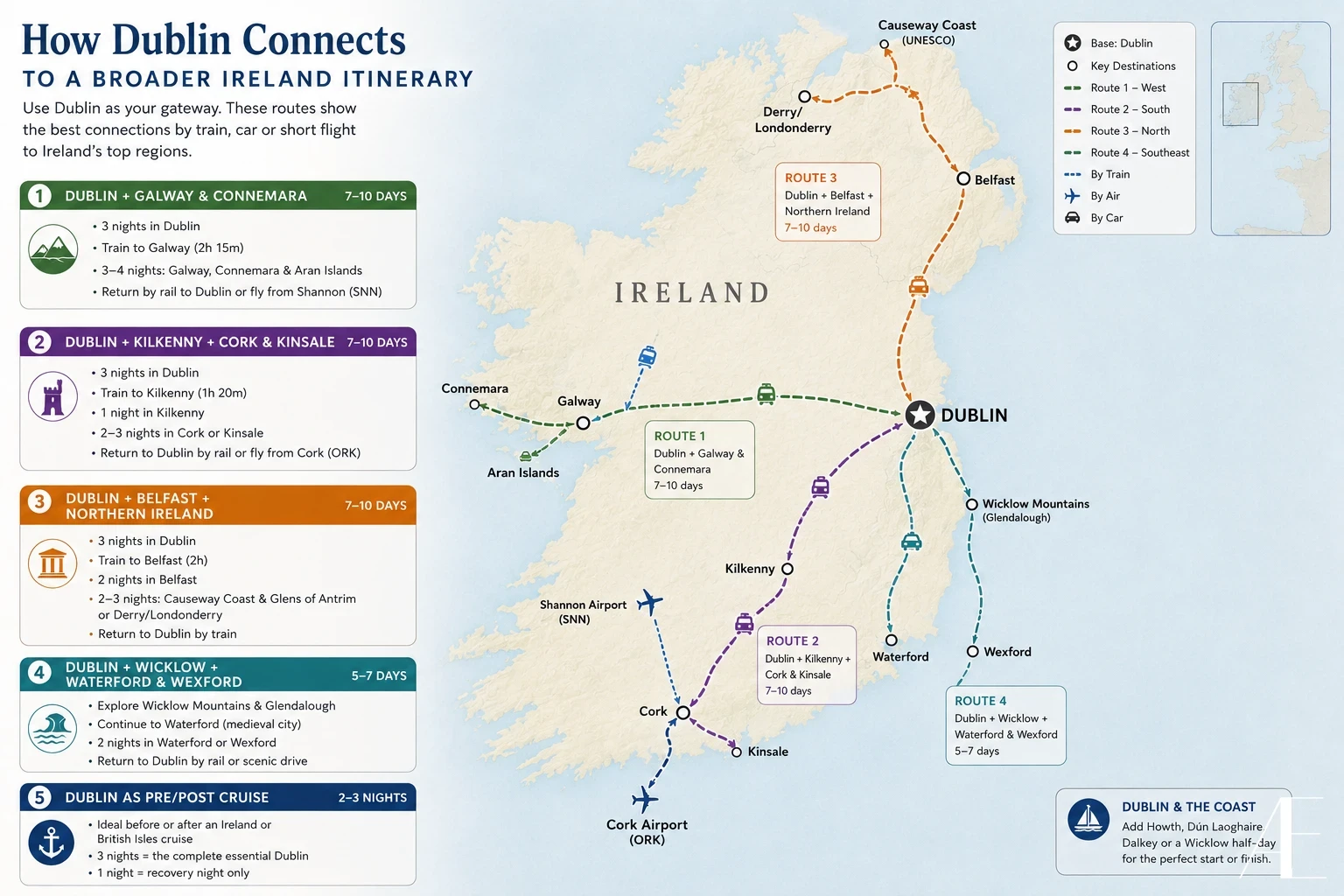
Dublin + Galway and Connemara (7–10 days): 3 nights Dublin, train to Galway, 3–4 nights west coast including Galway, Connemara and possibly the Aran Islands, return by rail or fly home from Shannon. This is the most popular Ireland itinerary for North American clients and the most natural structure for a first visit.
Dublin + Kilkenny + Cork and Kinsale (7–10 days): 3 nights Dublin, 1 night Kilkenny (train from Heuston), 2–3 nights Cork or Kinsale, return to Dublin by rail or fly from Cork. A stronger cultural and food-focused itinerary than the western route, and underused by agents.
Dublin + Belfast + Northern Ireland (7–10 days): 3 nights Dublin, 2 nights Belfast, 2–3 nights Causeway Coast and the Glens of Antrim or Derry depending on routing. A politically and historically rich combination that Canadian and American clients often find unexpectedly compelling.
Dublin + Wicklow + Waterford and Wexford (5–7 days): A softer east and southeast itinerary for clients who want beautiful coastal landscapes, monastic heritage and manageable driving without committing to the west coast. Underused by agents and consistently appreciated by the clients who do it.
Dublin as pre/post cruise: 2–3 nights is the right recommendation before or after an Ireland or British Isles cruise. One night is useful only as a recovery night. Three nights gives clients Trinity, Kilmainham, Guinness or Jameson, one major museum, one strong dinner and one coastal or Wicklow half-day: the complete essential Dublin.
When to Visit Dublin
Spring (March–May)
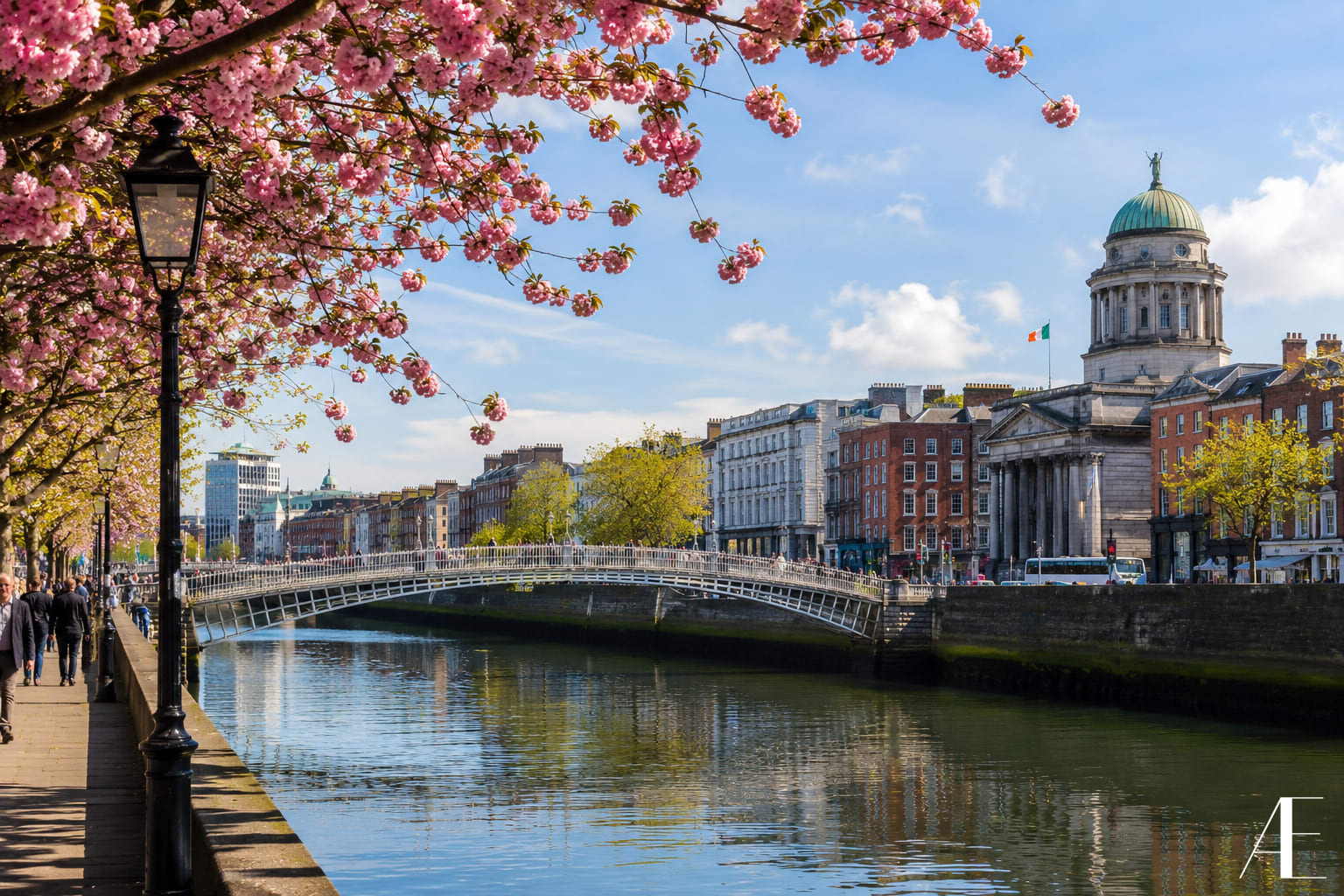
- Average temperatures: 8–14°C (46–57°F), improving through the season
- Daylight hours: Rising from 11 hours in early March to over 15 hours by late May
- Rainfall: Moderate and changeable. April can be surprisingly wet or surprisingly beautiful.
- Crowd levels: Moderate around St Patrick's Festival in March; otherwise manageable and significantly below summer levels
- Key events: St Patrick's Festival (mid-March, approximately 5 days of events, parades, culture and concerts); Easter period for the 1916 commemorations at the GPO and Kilmainham; spring gardens and blossom from April onwards
- What is open/limited: Almost everything is fully operational. Spring is a strong season across the board.
- Who this season is right for: Culture clients, first-timers, value-conscious clients, couples and anyone who wants Dublin before the summer crowds. May in particular is an excellent month.
- Booking lead time: 4–8 weeks for most accommodation; St Patrick's Festival period requires 3–6 months for good Dublin hotel availability.
Summer (June–August)
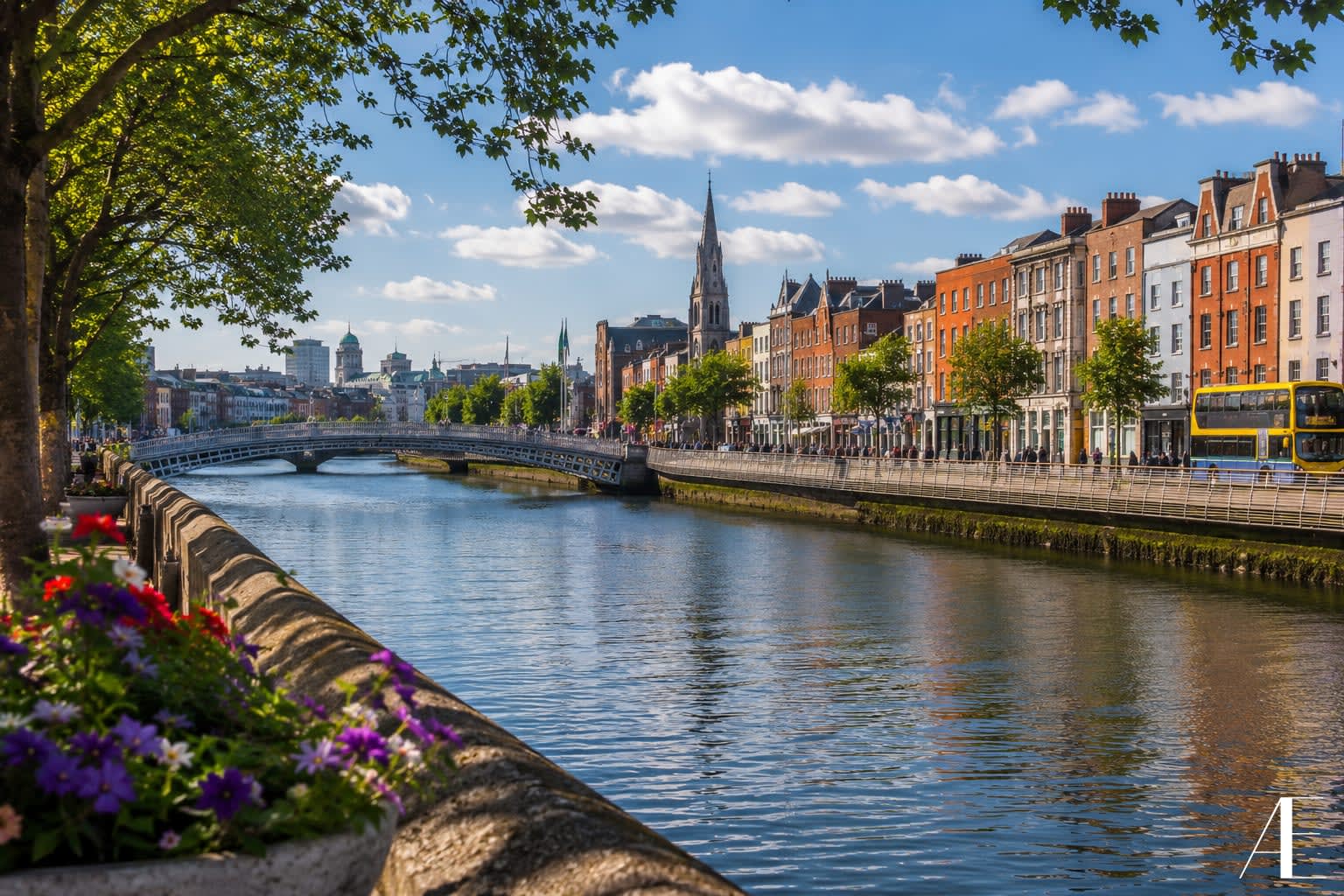
- Average temperatures: 14–20°C (57–68°F), occasionally warmer during heat events
- Daylight hours: Extraordinary. Late June gives over 16 hours of daylight; sunset is after 10pm at midsummer. The long evenings are one of Dublin's great summer assets.
- Rainfall: Moderate. Summer is Ireland's driest season, but rain remains possible at any point.
- Crowd levels: High, especially at Trinity, the Guinness Storehouse, Kilmainham and the main visitor sites. July and August are peak season.
- Key events: Bloomsday (16 June, the most literary day in Europe); Dublin Horse Show (August, at the RDS); summer concerts and outdoor festivals; the busy cruise and touring season
- What is open/limited: Everything is fully operational and extended hours apply at many attractions.
- Who this season is right for: Families, cruise clients, Bloomsday literary clients and those who prioritise long evenings and the best statistical chance of mild weather.
- Booking lead time: 3–6 months for preferred hotels in July and August. Kilmainham tickets: book as early as possible for summer dates.
Autumn (September–October)
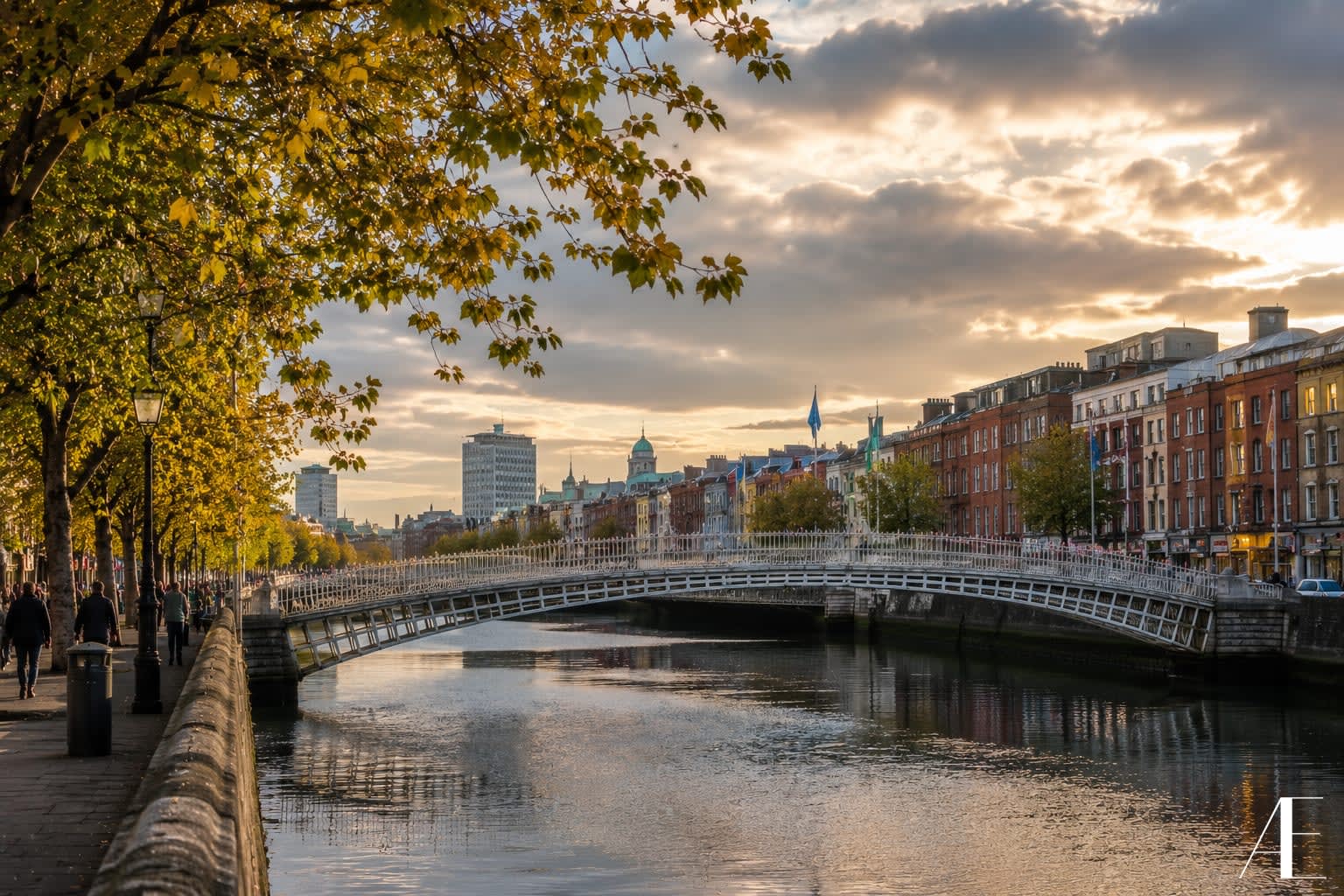
- Average temperatures: 10–16°C (50–61°F)
- Daylight hours: Declining from approximately 13 hours in early September to 10 hours by late October
- Rainfall: Increasing through October. September is often one of Ireland's finest months.
- Crowd levels: Moderate to low. A noticeable and welcome drop from peak summer.
- Key events: Cultural season at full operation — theatre, music, literary events, the Bram Stoker Festival in late October, the Dublin Theatre Festival in October
- Who this season is right for: Almost all adult client types. September is the single month most often recommended by experienced Dublin travellers as the ideal balance of weather, culture, manageable crowds and hotel availability.
- Booking lead time: 4–8 weeks usually sufficient for most accommodation. Always book Kilmainham and major attractions in advance.
Winter (November–February)
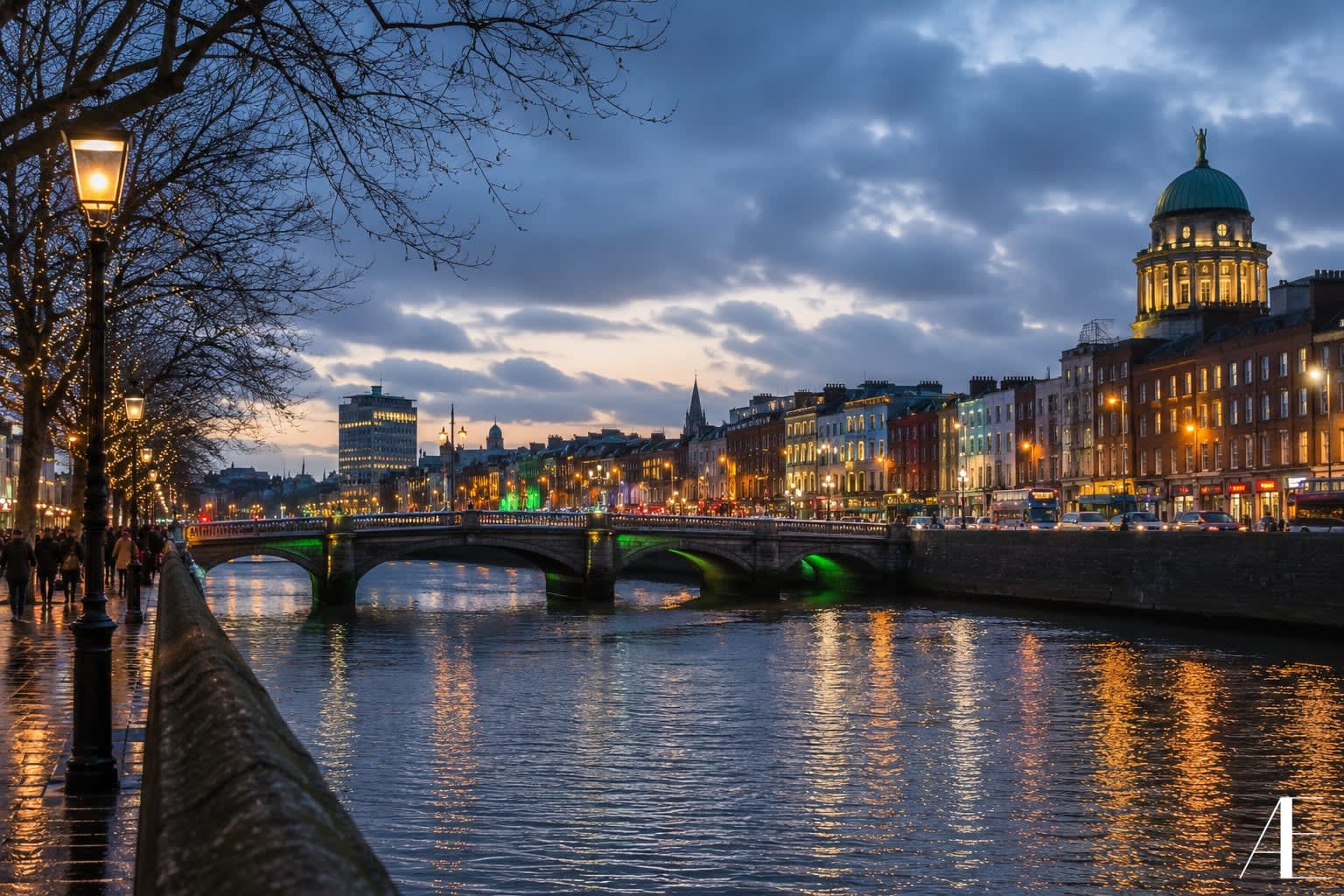
- Average temperatures: 4–10°C (39–50°F)
- Daylight hours: Minimum approximately 8 hours in December. Short days limit outdoor itineraries.
- Rainfall: Regular and frequent, though rarely extreme.
- Crowd levels: Low outside the Christmas and New Year period.
- Key events: Christmas lights and markets; the pub and music scene is at its most atmospheric; theatre season; Hogmanay-equivalent New Year celebrations around Temple Bar and the city centre
- Who this season is right for: Budget-conscious clients (lowest hotel prices of the year outside the festive period); pub and music clients; museum clients; repeat visitors who want the city without the crowds.
- Booking lead time: Christmas week and New Year's Eve: 4–6 months. Standard winter: 2–4 weeks often sufficient.
Month-by-Month Quick Reference
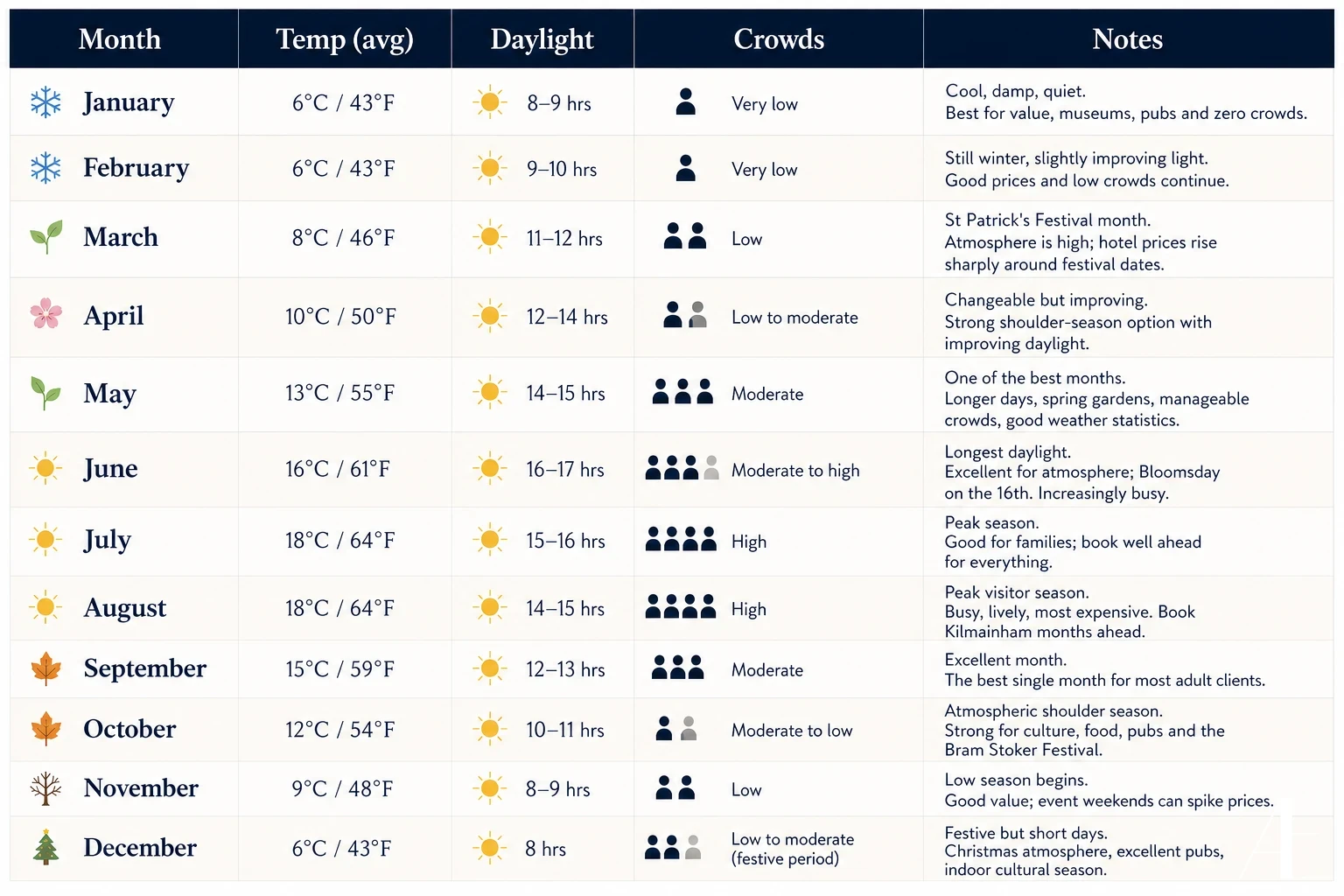
How Many Days: The Honest Answer
1 day (cruise call or layover only): Pick one theme and commit to it: Trinity and Georgian Dublin; Guinness and the Liberties; or Kilmainham and Phoenix Park. Do not attempt all three. The clients who try to see everything in a single day see none of it properly.
2 days (minimum city stay): Day 1: Trinity, Book of Kells, Grafton Street, St Stephen's Green, Georgian Dublin, National Gallery or National Museum. Day 2: Guinness Storehouse or Jameson, St Patrick's Cathedral or Christ Church, a Temple Bar walk-through, one properly chosen pub for the evening. This is workable but tight. Two nights is a taste, not a stay.
3 days (standard first visit): Adds Kilmainham Gaol (essential, book in advance), EPIC or the National Museum of Ireland, a stronger restaurant evening in a proper Dublin dining room and a real pub experience beyond the tourist circuit. Three nights is the minimum recommendation for any client who wants to come home understanding Dublin.
4–5 days (the complete Dublin visit): Adds a coastal DART half-day to Howth or Dalkey, neighbourhood time in Stoneybatter or Ranelagh, Phoenix Park, Glasnevin Cemetery (for the right client) and a proper day trip to Wicklow and Glendalough or Kilkenny. This is the ideal first visit.
7 days: Allows Dublin to function as a genuine base: the Boyne Valley, Belfast and Kilkenny all become realistic alongside the full city programme. The city itself gives more at this length: smaller galleries, the Museum of Literature Ireland, the GPO on a morning without crowds, a long dinner in Ranelagh.
The rule for agents: Two nights is a landing. Three nights is the proper minimum. Four nights is where Dublin stops being a gateway and becomes a destination in its own right.
Where to Eat: The Curated List
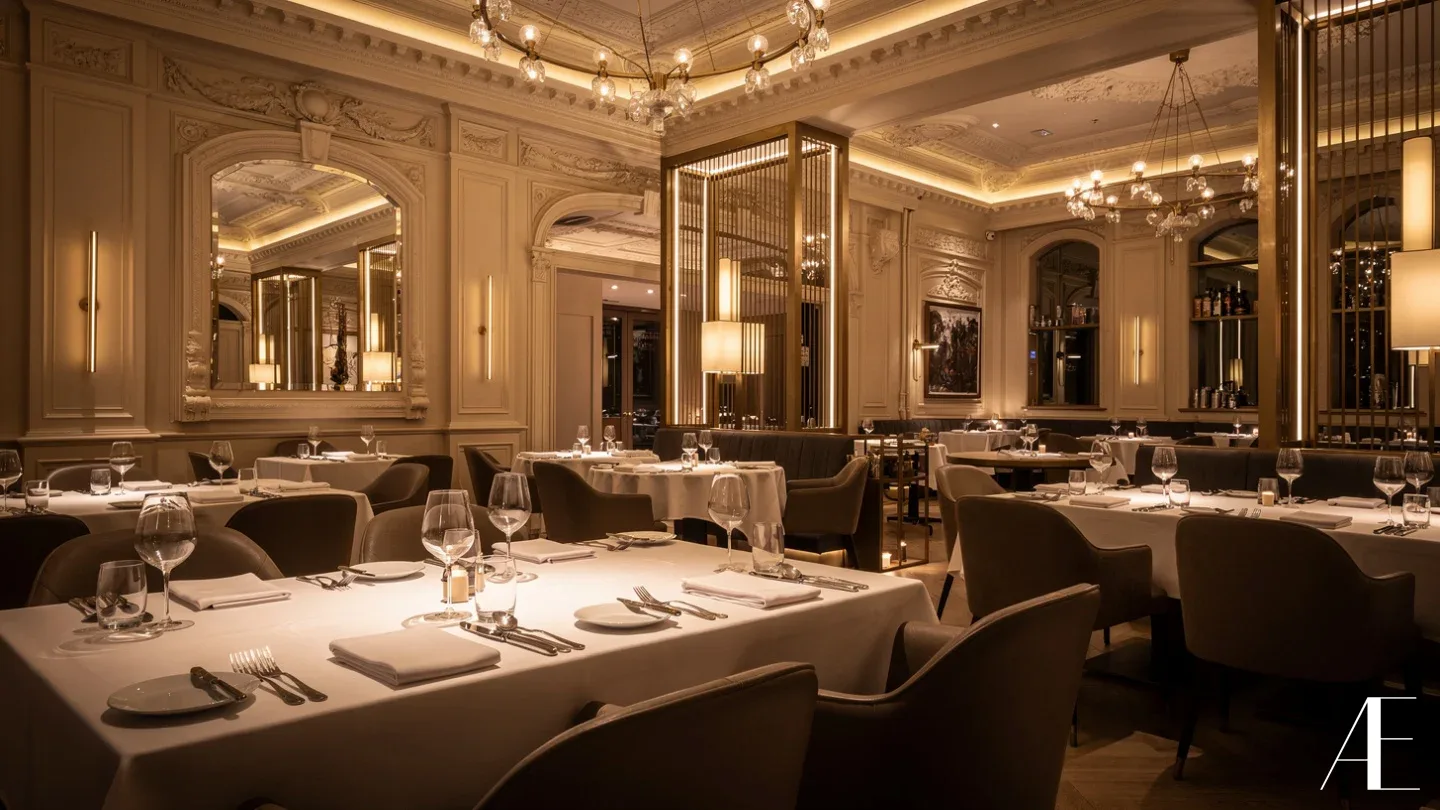
Dublin's food scene has been transformed over the past two decades. The strongest restaurants are no longer imitating London or Paris; they are confident, Irish-produce-driven, technically accomplished and increasingly internationally recognised. The National and International MICHELIN Guide Ireland edition now regularly features Dublin restaurants alongside entries from across the island. The mistake agents make is sending every client to the same tourist-facing pub dinner when the city has genuinely excellent options across every price point.
Chapter One by Mickael Viljanen
Parnell Square · Modern Irish / Fine Dining · €€€€
One of Ireland's leading fine-dining restaurants, holding two Michelin stars in the 2026 Michelin Guide. Mickael Viljanen's cooking is technically precise, luxurious and deeply polished, using Irish ingredients through a contemporary European lens. The tasting menu changes with the seasons and the room, set in the basement of the Dublin Writers Museum building, is warm, serious and beautifully run.
- Right for: Luxury clients, serious food clients, milestone dinners and clients who want the best formal dining Dublin offers
- Booking: Essential, well in advance, especially for weekends and summer dates
- Insider detail: The pre-dinner drinks in the bar area, with its own small snacks, is one of the better ways to arrive at a major Dublin dining occasion
Restaurant Patrick Guilbaud
Merrion Street · French / Contemporary · €€€€
A Dublin institution and one of Ireland's most established luxury restaurants, holding two Michelin stars for decades and long regarded as the benchmark for formal luxury dining in the city. Located adjacent to The Merrion hotel, it serves a French-influenced contemporary menu in a formally beautiful room with an outstanding art collection on the walls. For clients staying at The Merrion or celebrating a major occasion, it remains the obvious choice.
- Right for: Traditional luxury clients, anniversaries, clients staying at The Merrion, those who want the most established fine-dining address in Dublin
- Booking: Essential. Book several weeks ahead for weekend dates.
Variety Jones
The Liberties · Modern / Tasting Menu · €€€€
An intimate Michelin-starred restaurant on Thomas Street in the heart of the Liberties, known for open-fire cooking, a highly personal menu and a less formal atmosphere than Dublin's grander dining rooms. Small, characterful and driven by a very clear culinary point of view.
- Right for: Food-focused clients who want something distinctive, contemporary and less corporate than the hotel-anchored fine-dining options
- Booking: Essential. Small room means limited covers; book early.
Bastible
Portobello · Modern Irish · €€€€
A Michelin-starred neighbourhood restaurant on Camden Street with a concise tasting-menu format and a strong reputation for thoughtful, ingredient-led cooking. The room is intimate, the service is warm and the food reflects a genuine engagement with Irish produce and seasons.
- Right for: Serious food clients, couples, repeat visitors who want something less central and more neighbourhood-grounded
- Booking: Essential. One of the harder Dublin reservations to secure at short notice.
- Insider detail: Portobello is one of Dublin's most interesting local neighbourhoods; pair the dinner with a pre-meal walk along the canal or a drink at one of the nearby independent bars.
Uno Mas
Aungier Street · Spanish / Mediterranean · €€–€€€
One of Dublin's strongest mid-to-upper casual restaurants: excellent produce, a Spanish and Mediterranean influence, a strong natural wine list and a room with enough energy to feel celebratory without being overwhelming.
- Right for: Couples, food-forward clients, clients who want quality without formality or fine-dining prices
- Booking: Recommended, especially for dinner. One of the most reliably enjoyable Dublin restaurants across client types.
Etto
Merrion Row · Italian / European · €€–€€€
Small, deeply reliable and much-loved by food-aware Dubliners. The cooking is direct and satisfying, the room is compact, and the wine list, with a strong selection of smaller Italian and natural producers, is one of the best in Dublin for its price range.
- Right for: Couples, solo travellers, repeat visitors and wine-focused clients
- Booking: Recommended. The room is small and fills quickly.
The Winding Stair
Ormond Quay · Irish / Literary Dublin · €€–€€€
A classic Dublin restaurant above a well-stocked independent bookshop on the north quays, overlooking the Liffey and the Ha'penny Bridge. The cooking is straightforward Irish, using good local produce, and the room has a genuine warmth and literary character.
- Right for: First-timers, literary clients, clients who want a characterful Irish meal without pub clichés or fine-dining formality
- Booking: Recommended, especially for dinner.
- Insider detail: The bookshop downstairs is worth 20 minutes on its own. Buy something Irish before dinner.
The Woollen Mills
Ormond Quay · Casual Irish / All-day · €€
Casual, central and reliably good. Set in a former woollen textile warehouse on the north quays, it works for lunch, brunch, families and clients who need an easy, quality meal close to the Ha'penny Bridge and O'Connell Street.
- Right for: Families, groups, casual lunches, clients who need something central and manageable
- Booking: Recommended at peak lunch and weekend times
The Legal Eagle
Inns Quay / Four Courts · Gastropub · €€
A proper pub-food address near the Four Courts: craft beer, good Irish produce and a historic pub setting that feels local rather than tourist-facing. More useful than a standard Temple Bar dinner.
- Right for: Clients who want a proper pub meal rather than a tourist pub dinner; clients doing the northside or GPO day
- Booking: Recommended for evening
Queen of Tarts
Dame Street / Cows Lane · Café / Bakery · €
A long-standing Dublin institution for cakes, tarts, scones, tea and light lunch in two small, warm rooms near Dublin Castle and Temple Bar. One of the genuinely beloved café experiences in the city.
- Right for: Families, couples, clients needing a quality café stop near the medieval city or Temple Bar
- Insider detail: The Cows Lane location (the smaller of the two) is quieter and more intimate than the Dame Street branch.
Where to Stay: The Full Breakdown
Dublin hotels are expensive relative to room size and European city comparisons. Clients who have recently stayed in Paris or Lisbon may be surprised. The best agent strategy is to match the hotel to the client's actual needs: central convenience, historic character, modern comfort, room size or value. Getting all five is rare.
For the Luxury Client
The Merrion
Merrion Street / Georgian Dublin · €€€€
Dublin's most polished traditional luxury hotel, assembled from four restored Georgian townhouses opposite the government buildings and adjacent to the National Gallery. The Merrion combines elegant rooms, one of the finest private art collections in any Irish hotel (including works by Jack B. Yeats, William Orpen and Louis le Brocquy), a spa, two garden courtyards and immediate access to Georgian Dublin's finest streets. Restaurant Patrick Guilbaud is next door. The pool, in the original basement of the Georgian houses, is one of the most characterful hotel pools in Ireland.
- Commission-eligible: Yes, through luxury hotel programs and standard advisor booking channels.
- Agent note: Best for clients who want classic luxury, calm service, Georgian elegance and the feeling of staying in a genuinely important Dublin building. Not the right choice for clients who want contemporary design or nightlife proximity.
The Shelbourne, Autograph Collection
St Stephen's Green · €€€€
One of Dublin's most historically significant hotels, facing St Stephen's Green since 1824. The Irish Constitution was drafted in Room 112 in 1922. The Shelbourne's position at the top of Grafton Street and on St Stephen's Green makes it one of the most central luxury addresses in Dublin, and the No. 27 Bar is one of the city's better hotel bar experiences.
- Rooms to request: Rooms facing St Stephen's Green for the park view and the morning light.
- Agent note: Best for clients who want history, landmark status and excellent central position. The room product is more traditional than some newer luxury hotels; set expectations accordingly.
The Westbury
Grafton Street / Creative Quarter · €€€€
A sophisticated central luxury hotel set just off Grafton Street, with a recently updated room product, the Gallery Brasserie and excellent proximity to Trinity, the major southside museums and the city's best shopping streets.
- Agent note: Best for luxury clients who want to be embedded in the polished southside action: shopping, galleries, restaurants and theatre all within easy reach. The Westbury Terrace is one of the better-known hotel terraces in central Dublin for afternoon drinks.
The College Green Hotel Dublin
College Green · €€€€
A grand hotel occupying the former Permanent TSB headquarters, a striking 19th-century building facing the façade of Trinity College and the Bank of Ireland on College Green. The location is arguably the most historically symbolic address in Dublin: clients look out directly onto the scene where Irish political history was made across several centuries.
- Agent note: Strong for clients who want a landmark location and significant architectural character. The building itself is part of the experience.
Anantara The Marker Dublin
Grand Canal Square / Docklands · €€€€
A contemporary luxury hotel in the Docklands, with a rooftop bar and pool terrace, a strong spa and a modern room product that contrasts deliberately with the Georgian southside luxury hotels. Less historically embedded; more design-forward and spatially generous.
- Agent note: Best for modern-luxury clients, business and leisure travellers who prefer Docklands space over Georgian character, and guests attending events at the Bord Gáis Energy Theatre.
For the Boutique / Design Client
The Dean Dublin
Harcourt Street · €€€
A design-led hotel with strong social energy, a rooftop restaurant and bar with panoramic city views, and a deliberately youthful, music-and-culture-oriented atmosphere. Not a restful choice; very much the right choice for clients who want to be in the middle of something.
- Agent note: Best for younger clients, design-conscious travellers and anyone who wants a buzzy hotel with a strong nightlife orientation. Do not recommend to clients seeking quiet or traditional service.
The Alex
Merrion Square / Dublin 2 · €€€
A well-regarded contemporary hotel near Merrion Square, Trinity and the Docklands, with a good room product, a useful location and a restful atmosphere that works for a wide range of client types.
- Agent note: A strong mid-range recommendation for couples, business-leisure clients and first-timers who want modern comfort in a central southside location.
The Wilder
Adelaide Road / Southside · €€€
A boutique townhouse hotel in a quieter southside residential street near St Stephen's Green, with carefully designed rooms and a more intimate scale than most central Dublin hotels.
- Agent note: Best for couples and clients who want individual character, calm surroundings and a genuine boutique experience rather than a hotel-chain formula.
Number 31
Leeson Close · €€€
A distinctive boutique guesthouse in a mid-century coach house and Georgian townhouse combination near Leeson Street, with a strong reputation for exceptional breakfasts, personal service and a genuinely unusual design (the sunken living room in the coach house section is unlike anything else in Dublin).
- Agent note: Good for independent clients who value character, personal service and a genuinely different Dublin accommodation experience over standard hotel amenities.
For the Value-Conscious Client
Motel One Dublin
Dublin 2 · €€
The Motel One formula at its most useful: compact, smartly designed rooms, a good public bar area and a reliable central location. Strong value for clients who need centrality without luxury pricing.
- Agent note: Best for budget-conscious clients who want to spend their money on food and experiences rather than room size. Set expectations on room dimensions clearly.
The Hendrick Smithfield
Smithfield · €€
Compact, design-forward rooms in a useful neighbourhood close to Jameson Bow St., Smithfield Square, the Red Luas line and a growing concentration of good independent restaurants and bars.
- Agent note: Best for clients who want a neighbourhood feel, good transport connections and good value. Younger travellers and solo clients particularly suited.
Generator Dublin
Smithfield · €
A large and well-run hostel and hybrid hotel beside Smithfield, offering dorms, private rooms and social common spaces. Generator's Dublin property is one of the better-regarded hybrid accommodation options in the city.
- Agent note: Best for budget clients, solo travellers and younger groups who are comfortable with hostel energy and want the social infrastructure that comes with it.
Staycity Aparthotels
Multiple Dublin locations · €€
Apartment-style accommodation with kitchenettes, living areas and practical layouts that work especially well for families, longer stays and clients who want to self-cater for some meals.
- Agent note: Strong for families and clients staying 5+ nights. Location varies by property, so choose carefully based on the client's planned itinerary.
For Families
The Croke Park Hotel
Drumcondra · €€–€€€
Larger-than-average rooms, professional service and competitive pricing relative to the central southside, though the location (near Croke Park, the national GAA stadium) means using transport for most visitor sights.
- Agent note: Good for families who prioritise space and value over walking distance to attractions. Access to the city is straightforward by taxi or bus.
Clayton Hotel Cardiff Lane
Docklands · €€–€€€
A large, modern hotel in the Docklands near Grand Canal Square and the Bord Gáis Energy Theatre, with family-friendly room options and practical facilities.
- Agent note: Useful for families, conference clients and guests attending Docklands events. EPIC is walkable; the city centre is a short taxi or Luas ride.
For Solo Travellers
Motel One Dublin
Central, clean, well-designed and practical. Good for solo travellers who want to walk to most things and spend their budget on eating and drinking rather than accommodation.
The Hendrick Smithfield
Good for solo clients who want a neighbourhood base, proximity to Smithfield and Stoneybatter and a local feel rather than a tourist-corridor hotel.
Generator Dublin
Best for social solo travellers, younger clients and budget-focused guests who are comfortable with a hybrid hostel environment and want the social energy that comes with it.
The Practical Information
Currency and payment
Euro (EUR / €). Contactless payment is universal in Dublin: buses, Luas, DART, taxis, restaurants, cafés, pubs and most markets all accept contactless bank cards and Apple or Google Pay. Cash is still useful for some tips, small independent shops and rural extensions, but clients can function almost entirely by card in the city.
Getting from Dublin Airport to the city centre
Dublin Airport is approximately 10 km north of the city centre. There is no rail connection; transfers are by bus, coach, taxi or private car.
- Aircoach / Dublin Express / other airport coaches: The most reliable balance of cost and comfort for most visitors. The X-Press 747 and similar services stop at key central points. Travel time is 30–50 minutes depending on traffic.
- Dublin Bus routes (41, 16, others): Cheaper than the express coaches but slower, less frequent and less luggage-friendly.
- Taxi: Metered taxis are available immediately outside arrivals. The journey to the city centre takes 25–45 minutes depending on traffic and costs approximately €25–€35. For two or more clients with luggage, often the most practical option.
- Private transfer: Strongly recommended for luxury clients, families with young children, late-night arrivals and pre/post-cruise clients with significant luggage.
Getting around the city:
- Walking: The best and most revealing way to experience central Dublin. Structure each day by neighbourhood cluster.
- Luas: Dublin's tram system, with two lines. The Red Line connects Saggart and Tallaght to the city via Heuston Station and Smithfield. The Green Line connects Brides Glen and Sandyford to St Stephen's Green. Useful for Smithfield, Heuston, Kilmainham (Red, to Suir Road) and the south suburban connector.
- DART: The coastal rail line is one of Dublin's great practical assets. Runs from Malahide and Howth in the north to Greystones in County Wicklow, passing through Connolly and Tara Street in the city centre, and serving Dún Laoghaire, Dalkey and Bray on the south coast. For any coastal day trip, the DART is the right answer.
- Dublin Bus: Extensive network covering areas not served by Luas or DART. Less intuitive for first-time visitors; the TFI Live app makes it significantly more manageable.
- Leap Visitor Card: A tourist transport card offering unlimited travel for selected periods on Dublin city bus services, Luas, DART and commuter rail within the Dublin city zone. The 24-hour, 72-hour and 7-day options are all useful depending on client length of stay.
- Taxis and Free Now: Licensed taxis (metered, reliable, available at ranks and by app) are practical for Kilmainham, Phoenix Park, late nights, rain and anything involving luggage. The Free Now app is the most used taxi booking platform.
Driving
Do not recommend renting a car for use within Dublin. Parking is expensive, city traffic is congested, bus lanes restrict movement significantly, and the city is best navigated on foot and by public transport. If clients plan to self-drive Ireland, recommend picking up the rental car when they leave Dublin for the first day of regional driving.
Tipping Standards
- Restaurants: 10–12.5% for good service if not already included in the bill. Many Dublin restaurants include a discretionary service charge; check before adding extra.
- Pubs: No tip expected for drinks ordered at the bar. If food is served table service, a small tip or rounding up is appropriate.
- Taxis: Round up to the nearest euro or add 10% for good service.
- Private guides: €10–€20 per person depending on tour length and quality.
- Hotel porterage: €1–€2 per bag.
- Housekeeping: €2–€5 per night at luxury hotels.
Accessibility
Dublin is improving but uneven. Historic streets and the cobblestones of Temple Bar, the Liberties and many city-centre areas are challenging for wheelchair users and clients with mobility limitations. Many modern hotels, the Docklands and newer museum facilities are fully accessible. Kilmainham Gaol, medieval cathedrals and older heritage buildings require advance checking; some have significant physical limitations. The DART is largely step-free; the Luas is fully accessible; older Dublin Bus fleet is mixed. Advise clients with significant mobility concerns to contact attractions directly before booking.
Health and safety
Dublin is generally safe for visitors. Petty theft, pickpocketing and late-night antisocial behaviour occur in busy central areas, particularly in and around Temple Bar late at night. Standard precautions apply: keep bags in front of you in crowds, avoid leaving phones on pub tables, use licensed taxis or the Free Now app rather than unmarked vehicles, and treat unfamiliar late-night street situations with the same caution as any major European city.
Emergency number: 112 or 999. Non-emergency Garda (police): 1800 666 111. NHS equivalent (HSE): GP or hospital for non-emergency medical needs. Travel insurance with medical coverage is essential for all non-EU visitors.
Power
Type G three-pin plug, 230V / 50Hz. The same standard as the UK. North American clients require a plug adaptor. Most modern electronics (laptops, phone chargers, cameras) are dual-voltage and need only an adaptor; clients should check hair dryers, straighteners and specialty devices before packing.
Internet and connectivity
A European or Ireland-specific eSIM is the most practical option for North American visitors. Dublin hotels, cafés and restaurants generally offer good Wi-Fi, but clients who plan to navigate extensively on foot, use the DART or make bookings on the go should have reliable mobile data.
Open an affiliate account with Breeze eSim, GigSky or Holafly and receive commissions on the sales of eSims.
Useful apps
- TFI Live: Real-time public transport information for all Dublin services
- Leap Top-Up: Manage and top up a Leap Card remotely
- Free Now: Taxi booking, the most used platform in Dublin
- Google Maps: Essential for walking and transit navigation; download offline maps before arrival
- Irish Rail: Intercity train booking and schedules
- OpenTable / Resy: Restaurant reservations where available
- GetYourGuide / Viator: Commissionable tours and pre-booked attraction tickets
What to pack that most visitors forget
- A waterproof layer, not just an umbrella. Irish rain is often sideways and brief.
- Comfortable waterproof walking shoes. Cobblestones are harder on feet than they look.
- Layers for unpredictable temperature changes within a single day.
- A Type G plug adaptor.
- A power bank. Long days of navigation drain phones faster than expected.
- A light scarf or sweater even in summer: Irish evenings cool faster than the afternoon suggests they will.
Who Is This Destination For?
The first-time Ireland traveller
Dublin is the natural gateway. Lead with: "Start in Dublin so the rest of Ireland makes sense. History, literature, emigration, music, politics and the pub culture all begin to connect once you understand Dublin first."
The history and politics client
Dublin is one of Europe's great capitals for revolutionary and political history. Kilmainham Gaol, the GPO, Dublin Castle, Glasnevin Cemetery and the National Museum form one of the most coherent and emotionally powerful historical sequences available in any European capital. Lead with the 1916 story.
The literary client
Few cities concentrate more literary significance in a small area. Trinity, Swift, Wilde, Joyce, Beckett, Yeats, Heaney, MoLI, the Abbey Theatre, Sweny's Pharmacy, Davy Byrnes and Toner's give literary clients more than a week's worth of genuine engagement. Lead with: "This is the most literary city in the English-speaking world, and you can walk all of it."
The pub and music client
Dublin is exceptional for this when curated properly. The difference between a tourist pub and a real Dublin pub is not immediately obvious and requires an agent who knows the difference. The right curation makes the entire trip.
The food and drink traveller
Dublin now has a serious and confident restaurant scene, excellent coffee, outstanding bakeries, modern Irish cooking at multiple price points, whiskey experiences at Jameson and Teeling, Guinness, natural wine bars and a growing cocktail culture. Lead with the surprise: "Dublin has become a genuinely good food city. Your clients will be impressed."
The ancestry and diaspora client
EPIC, Glasnevin Cemetery, genealogy services and the emigration story make Dublin especially meaningful for North American clients with Irish roots. This is often the most emotionally impactful Dublin visit of any type. Handle it with appropriate care and recommend EPIC as the non-negotiable foundation.
The cruise client
Dublin is an excellent port call with realistic expectations and careful logistics. Confirm the port (Dublin vs Dún Laoghaire), explain the tendering implications if relevant, pre-book Kilmainham if it is a priority, and manage time expectations clearly. A well-planned Dublin cruise day is memorable; an over-promised one is exhausting.
The family client
Dublin works well for families when paced with care. Dublin Zoo, Phoenix Park, EPIC (very engaging for older children and teenagers), Dublinia beside Christ Church, the coastal DART trips to Howth and Malahide, and the free museums all carry families comfortably. The city is compact enough that children do not spend the day in transit.
The luxury client
Dublin's luxury offer is less about spectacle than access. The Merrion, The Shelbourne, private guides, after-hours experiences, the best Michelin-starred tables, countryside estate visits and curated pub evenings create a luxury trip that feels genuinely personal. Frame it that way.
The repeat visitor
Dublin rewards return visits more than it rewards rushing. Send them to Stoneybatter, Portobello, Glasnevin, Dalkey, Howth, Ranelagh, the smaller galleries, serious restaurants they have not tried and less obvious pubs. The city they thought they knew is quite different from the city they are about to discover.
The client who says "we've already done London"
Perfect lead-in. "London is one city. Dublin is the door into an entirely different culture, one that shaped North America as much as Britain did. They share a language and almost nothing else."
The client who says "is there much to do there?"
Answer directly: "Two Michelin-starred restaurants, a Viking history, a medieval castle, Georgian architecture that rivals Edinburgh, the best pub culture in Europe when you know where to go, one of the world's most important illuminated manuscripts, the site where Irish independence was declared, and a coastal DART line that takes you to a fishing village in 30 minutes. There is plenty to do."
The Common Client Objections
Client says: "Dublin is too expensive."
Agent answers: "The hotels can be, yes, but the city itself gives excellent value. Several of the best museums are completely free, including the National Museum and the National Gallery. The DART takes you to coastal villages for the cost of a local fare. The key is choosing the right hotel location and avoiding the overpriced tourist-facing restaurants, both of which I can help with."
Client says: "Is Dublin just pubs?"
Agent answers: "The pubs are one part of a very full picture. Trinity College, the Book of Kells, Kilmainham Gaol, Georgian architecture, EPIC, the National Museum, the Docklands, coastal villages by DART and one of Europe's strongest concentrations of literary history all sit in the same compact city. The best Dublin itinerary uses the pubs as atmosphere and social experience, not as the entire plan."
Client says: "We've heard Temple Bar is touristy."
Agent answers: "It is, and it is worth a look for the atmosphere and the cobblestones. But your evening should not be spent there. I will point you to the right pubs, where the locals actually drink, and the experience will be completely different."
Client says: "We only need one night in Dublin before going west."
Agent answers: "One night is enough to sleep and start adjusting to the time zone. It is not enough to understand anything. Give Dublin three nights minimum and you will arrive in the west with a completely different relationship to what you are seeing. The rest of Ireland makes more sense with Dublin in your system."
Client says: "We're nervous about driving in Ireland."
Agent answers: "You do not need a car in Dublin at all. I actively recommend against one in the city: parking is expensive, traffic is real, and Dublin is best on foot and by transit. Pick up the rental car on the day you leave Dublin for the first regional stop. The driving in Ireland itself, once you are out of the city, is one of the most enjoyable parts of the trip."
Client says: "Will it rain the whole time?"
Agent answers: "Ireland's weather is changeable rather than reliably wet. The solution is not waiting for perfect conditions; it is dressing properly and building the itinerary with both indoor and outdoor options every day. Dublin is unusually well suited to mixed weather: the museums, pubs, galleries and covered markets are all close together, and a rainy afternoon in the National Museum or a good pub is genuinely part of the Dublin experience."
Client says: "Is the Guinness Storehouse too touristy?"
Agent answers: "It is polished and popular, and it is also very well done. For a first visit, the Gravity Bar view alone makes most clients glad they went. If you want something smaller and more local, we can pair it with Teeling Whiskey Distillery or a craft beer experience instead, or do both and compare."
Client says: "Can we do Dublin and the Cliffs of Moher in one day?"
Agent answers: "Technically possible by long coach tour, but it makes for a very long and tiring day with limited time at either end. For most clients, I would build the Cliffs of Moher into the west coast portion of the itinerary, based out of Galway or Clare, and give Dublin the focus it deserves on its own terms."
Client says: "Scotland seems more dramatic. Why choose Dublin over Edinburgh?"
Agent answers: "They are both extraordinary, and I would sell them together as a Celtic capitals itinerary in a heartbeat. But Dublin offers something Edinburgh does not: the Irish emigration story, which for Canadian and American clients is often the most personally resonant history they encounter in Europe. If they have any Irish ancestry at all, Dublin is not optional."
Client says: "We heard the food in Ireland isn't great."
Agent answers: "That has not been true for about twenty years. Dublin now has multiple Michelin-starred restaurants, a confident natural wine scene, exceptional seafood, some of the best bread and dairy produce in Europe, and neighbourhood dining that stands up against any comparable European city. The days of boiled potatoes and tourist menus are gone. I can show you the right places."
The Conversation Starters
The Ha'penny Bridge was named after its toll
The Ha'penny Bridge, Dublin's iconic cast-iron pedestrian footbridge over the Liffey, opened in 1816. Pedestrians paid a halfpenny toll to cross it. The toll was abolished in 1919, but the name stayed. The bridge was so completely identified with its price that no official name ever displaced it, and Dubliners still call it the Ha'penny Bridge more than a century after the last coin was collected.
Bram Stoker was born in Clontarf and educated at Trinity
The author of Dracula was born on Marino Crescent in Clontarf, on Dublin's north bay, in 1847, and studied at Trinity College Dublin where he excelled at athletics. He spent much of his adult life in London as the theatre manager for the actor Henry Irving, but the gothic sensibility that produced Dracula was shaped in part by Irish folklore, his father's stories of the 1832 cholera epidemic, and the landscape of a country that takes its ghost traditions seriously. Dublin has no Dracula museum. The city mostly ignores him. That is, arguably, very Dublin.
Molly Malone almost certainly never existed
The statue of Molly Malone on Suffolk Street is one of the most photographed objects in Dublin, but there is no documentary evidence that the fishmonger immortalised in the song ever lived. The song itself only appears in print in the late 1880s, with disputed origins, and may have been written by a Scottish songwriter. The statue was commissioned for the city's millennium celebrations in 1988. Dubliners call her "The Tart with the Cart," and the nickname has outlasted all civic attempts at dignity.
The Book of Kells was hidden from the Vikings in a bog
During the Viking raids of the 9th and 10th centuries, the monks of Kells in County Meath concealed their most precious manuscripts to protect them from Norse raiders. The Book of Kells was buried, moved and hidden multiple times over several centuries before arriving at Trinity College in the 1650s. The manuscript survived largely because the community around it considered it too important to lose, even at significant personal risk. The monks were right.
Oscar Wilde's trial was destroyed by a detail he controlled
Oscar Wilde initiated the legal action that ended his career by suing the Marquess of Queensberry, his lover's father, for criminal libel over a visiting card that accused Wilde of being a "sodomite." Wilde's lawyers advised against the suit. Wilde pressed ahead. When Queensberry's lawyers produced evidence from private letters and witness accounts, Wilde withdrew the case. The Crown immediately prosecuted Wilde using evidence he had effectively forced into the open. He was convicted of gross indecency in 1895, sentenced to two years' hard labour and died in Paris in 1900, aged 46. The statue on Merrion Square shows him reclining with characteristic ease opposite his birthplace. The inscription reads: "I can resist everything except temptation."
Glasnevin Cemetery holds more Irish history than most textbooks
Glasnevin Cemetery, founded in 1832 by Daniel O'Connell specifically to allow Catholics and Protestants to be buried in the same consecrated ground (a legal right denied under earlier Penal Laws), contains the remains of O'Connell himself, Michael Collins, Éamon de Valera, Constance Markievicz, Brendan Behan, Luke Kelly and over 1.5 million others. The round tower visible from the main entrance is a replica of an Irish monastic round tower, built as O'Connell's monument. The cemetery's own museum and guided tours are among the most historically informative experiences in Dublin. For any client interested in Irish political or cultural history, it belongs on the itinerary.
Bloomsday turns a Thursday into Europe's most literary day
On 16 June 1904, Leopold Bloom walked across Dublin for a single day. Every year on 16 June, Dubliners and visitors dress in Edwardian clothing, walk the routes described in Ulysses, eat gorgonzola sandwiches and burgundy at Davy Byrnes pub on Duke Street, and read passages aloud at Sweny's Pharmacy on Lincoln Place, where Bloom buys his bar of lemon soap. The soap is still sold. The observation has run continuously since 1954. For literary clients visiting in mid-June, Bloomsday is one of the genuinely unrepeatable cultural experiences in European travel.
The world's first purpose-built mainline railway terminus is in Dublin
Heuston Station, opened in 1846 as Kingsbridge Station on the south quays, is widely regarded as one of the earliest purpose-built mainline railway termini in the world. The building, designed by Sancton Wood in Italian Renaissance Revival style, remains in full daily operation as Dublin's western rail hub, serving Cork, Limerick, Galway, Waterford and Killarney. Most clients walk past it without knowing what they are looking at. Most guidebooks do not mention it at all.
The Irish famine emigrants often went to Quebec, not New York
For many of the Irish fleeing the Great Famine of the 1845–1852 period, the destination was not Ellis Island. Ships that could not afford the higher transatlantic fares to American ports, or that were directed north by charter agreements, landed at Grosse Île quarantine station in the St Lawrence River east of Quebec City. Thousands of Famine emigrants died at Grosse Île and are buried there. The Irish Memorial at Grosse Île is one of the most significant Irish diaspora heritage sites in North America, and many Canadian families of Irish descent trace their origins to this route rather than to New York. EPIC in Dublin covers this history clearly and with intelligence. For Canadian clients, it can be the most personally resonant moment of the entire trip.
Dublin had a functioning pneumatic railway in the 19th century
In 1890, the Atmospheric Railway operated briefly between Dalkey and Kingstown (now Dún Laoghaire) using a vacuum pipe system to propel carriages without a locomotive. Passengers sat in a sealed tube-like carriage that was pushed along the track by air pressure differences. The system operated for 10 years before being abandoned in favour of conventional locomotive technology. The route ran through what is now one of the prettiest stretches of the Dart line on the south coast.
Arthur Guinness signed a 9,000-year lease on the St James's Gate brewery
When Arthur Guinness took over the St James's Gate site in 1759, he signed a lease for the then-rundown brewery at an annual rent of £45. The lease was for 9,000 years. The original document is on display in the Guinness Storehouse. Whether the terms have proved advantageous to either party is a matter of perspective, but it remains one of the more striking pieces of commercial optimism in Irish business history.
ÆRIA Voyages Academy
Professional resources for travel agents who want to sell with complete confidence.
© 2026 ÆRIA Voyages. All rights reserved.
The content, text, and images contained in this guide are the exclusive property of ÆRIA Voyages and are protected by copyright law.
No part of this material may be reproduced, distributed, transmitted, or republished in any form or by any means without the prior written permission of ÆRIA Voyages.
This guide is intended solely for the professional use of registered ÆRIA Voyages Academy members.


Member discussion