
London: The Brief Overview
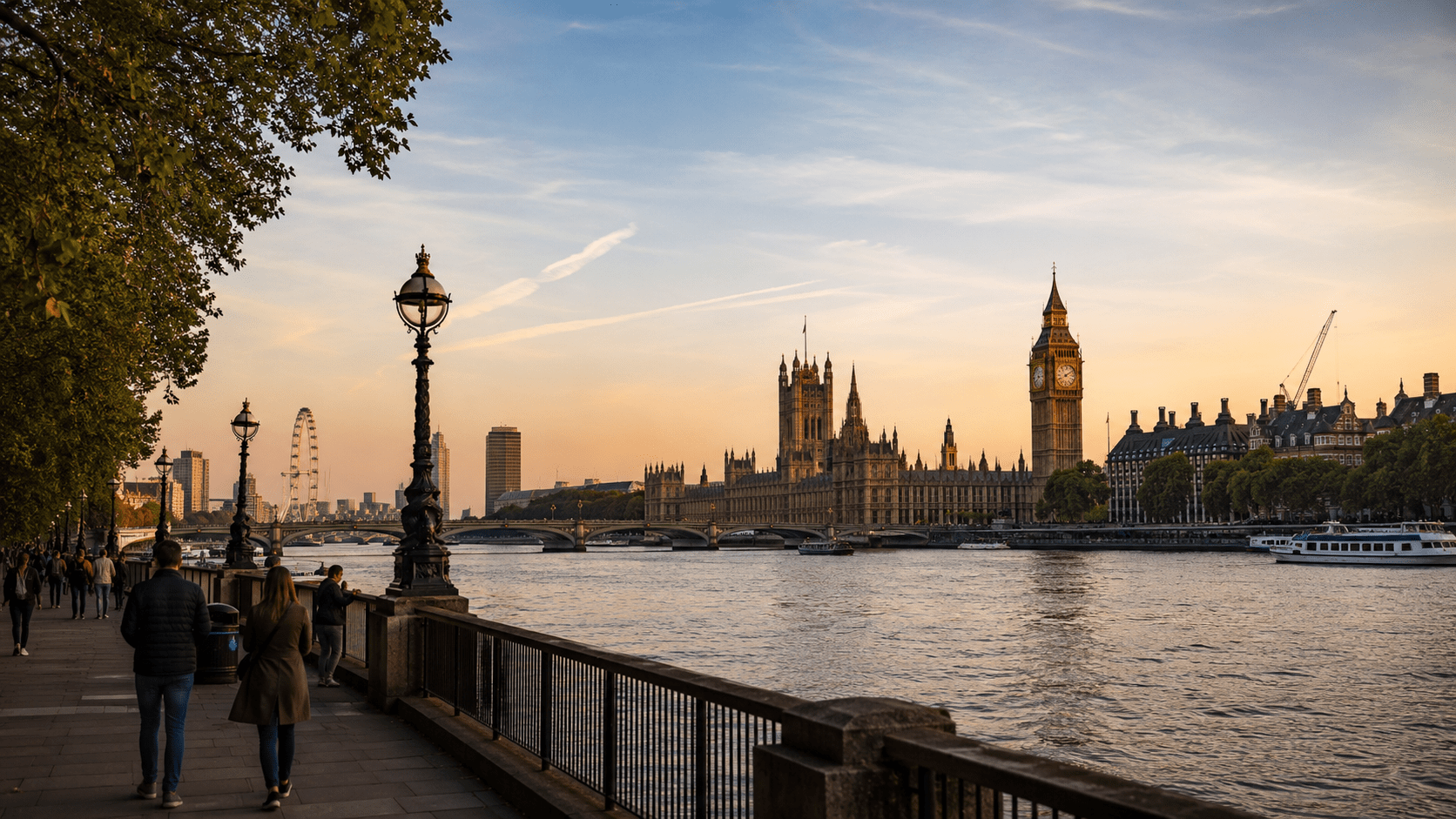
What London Is
London is the capital of England and the United Kingdom: a city of approximately nine million peoples that has been continuously inhabited and continuously reinventing itself for two thousand years. It sits on the River Thames in southeastern England, roughly 60 kilometres from the English Channel.
It is one of the world's three great financial capitals, one of its great cultural capitals, and one of the world's great visitor capitals. For a travel agent, it is both the easiest destination to sell (clients already want to go) and the most important one to sell well, because the difference between a mediocre London trip and a great one is almost entirely a matter of planning, sequencing, and knowing what the brochure does not tell you.
The city is not compact. It covers 1,572 square kilometres and spreads across 33 boroughs, each with its own character. Clients who treat it like Paris or Amsterdam, assuming they can walk between everything, will exhaust themselves and miss most of it. The key is the Tube, a mental map of the neighbourhoods, and a realistic sense of what is achievable per day.
One-line client pitch: "It is one of the world's great visitor capitals for a reason: two thousand years of history, the best theatre in the English-speaking world, world-class free museums, and a food scene that has nothing left to apologize for. And your clients already speak the language."
Quick Reference
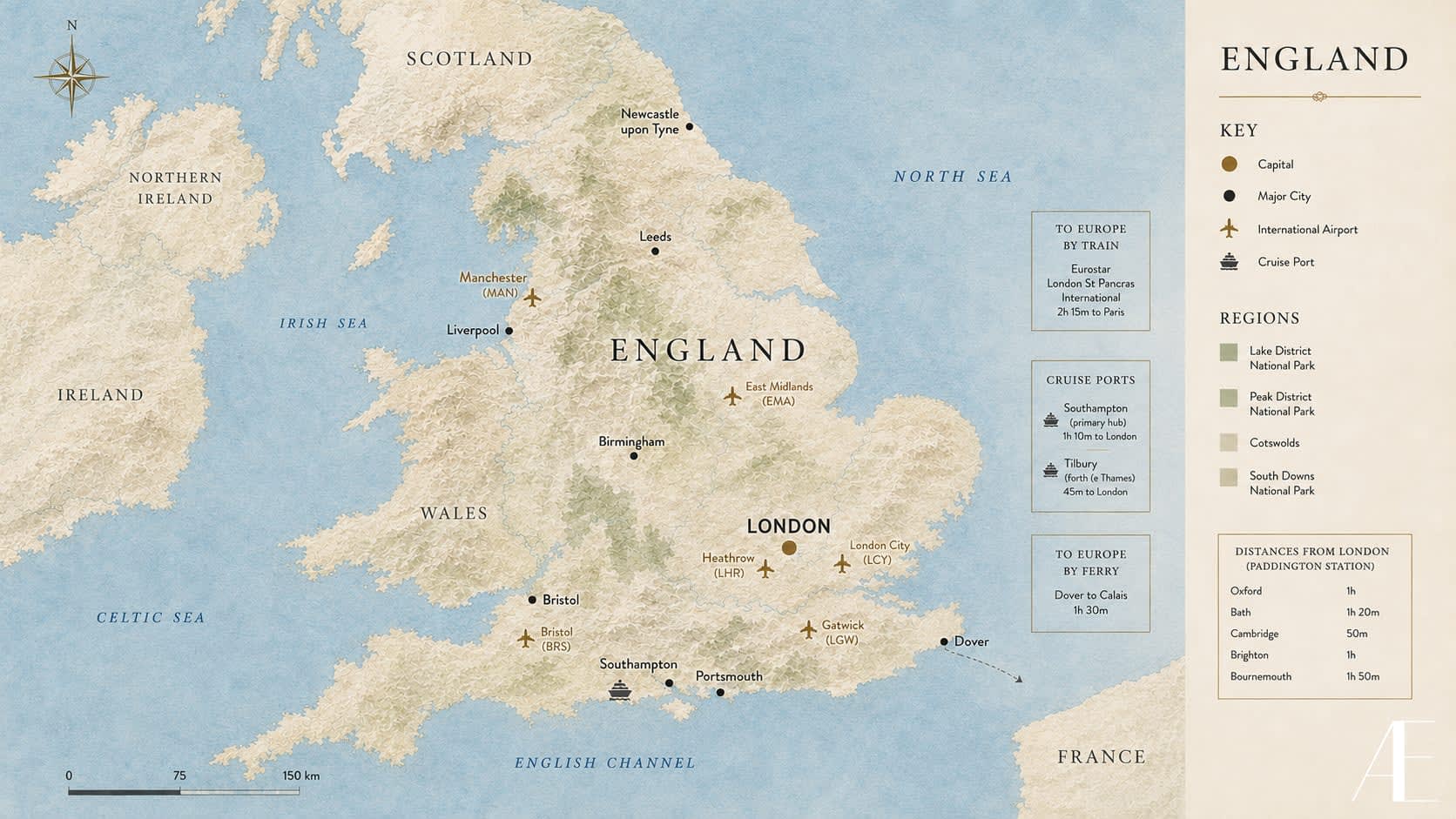
- Country / Region: England, United Kingdom
- Time zone: GMT (BST, UTC+1, late March to late October)
- Currency: British Pound Sterling (GBP / £)
- Language: English
- Best airports: Heathrow (LHR), primary hub. Gatwick (LGW), second largest. City Airport (LCY), closest to central London. Stansted (STN) and Luton (LTN) for budget carriers.
- From Montreal (YUL): 6.5 to 7 hrs non-stop (Air Canada, British Airways, Air Transat seasonal). Multiple daily departures to Heathrow.
- From Toronto (YYZ): 7 hrs non-stop (Air Canada, British Airways). One of the most-served transatlantic routes.
- From New York (JFK/EWR): 7 hrs non-stop (British Airways, American, Virgin Atlantic, Delta, others). Multiple daily departures.
- Visa, Canadian citizens: No visa required for standard tourism stays of up to 6 months. UK Electronic Travel Authorisation (ETA) required before travel. Apply only through GOV.UK or the official UK ETA app. Current cost: £20; always verify before departure.
- Visa, American citizens: No visa required for standard tourism stays of up to 6 months. UK ETA required before travel. Apply only through GOV.UK or the official UK ETA app. Current cost: £20; always verify before departure.
The Mental Map
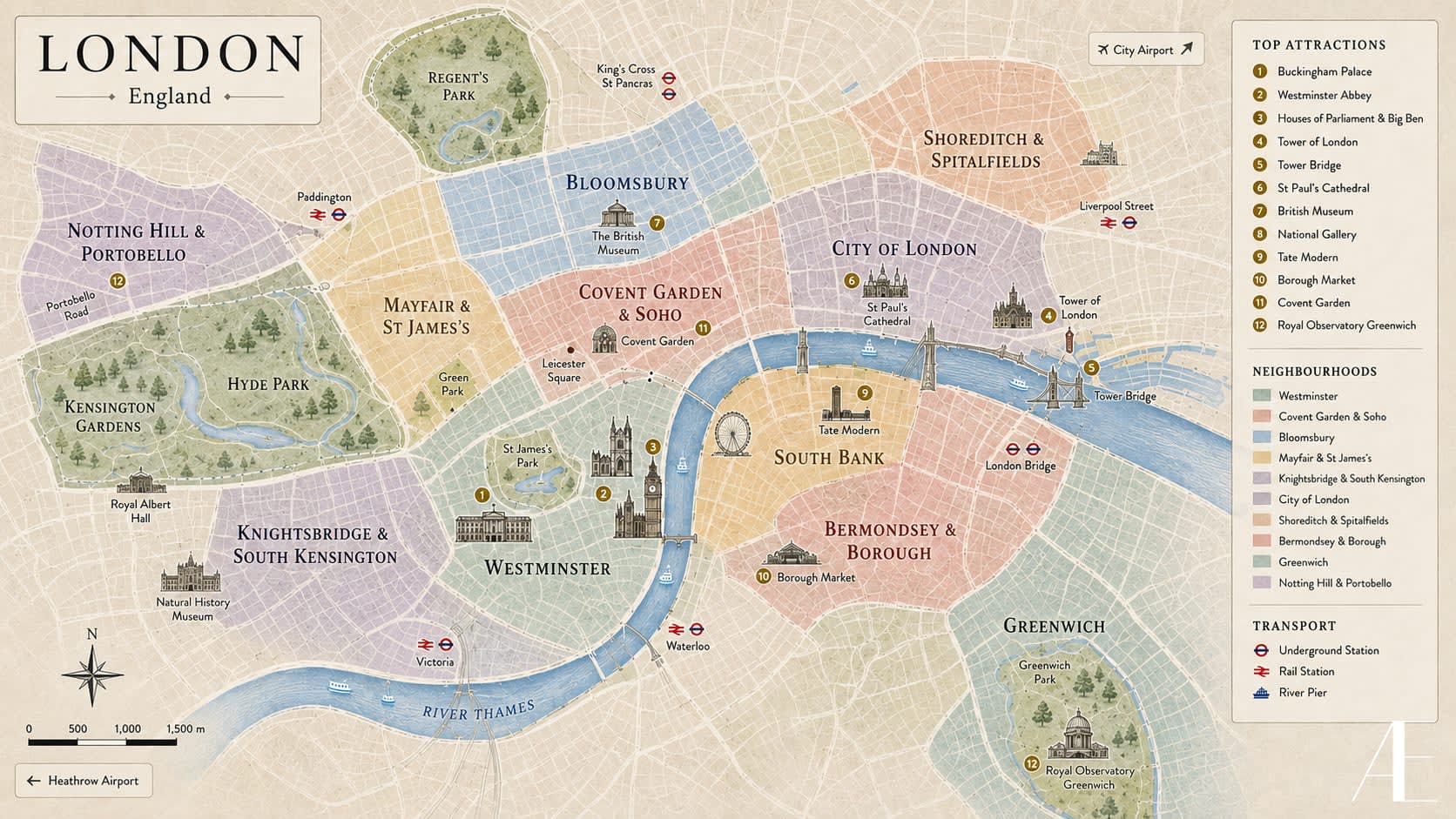
London is bisected by the Thames running east to west. Everything is oriented relative to the river. The centre of gravity for visitors is a rough triangle bounded by Hyde Park Corner to the west, Tower Bridge to the east, and King's Cross to the north. Almost all the major attractions, hotels, and restaurants fall within or just outside this triangle.
The key east-west axis: The South Bank walk from Westminster to Tower Bridge, the finest free promenade in the city.
The most useful planning principle: Group London by neighbourhood clusters. A day in Westminster and the South Bank is coherent. A day in Bloomsbury and Covent Garden is coherent. Trying to combine Shoreditch, South Kensington, and Greenwich in a single day is not.
The neighbourhoods agents need to know
Westminster
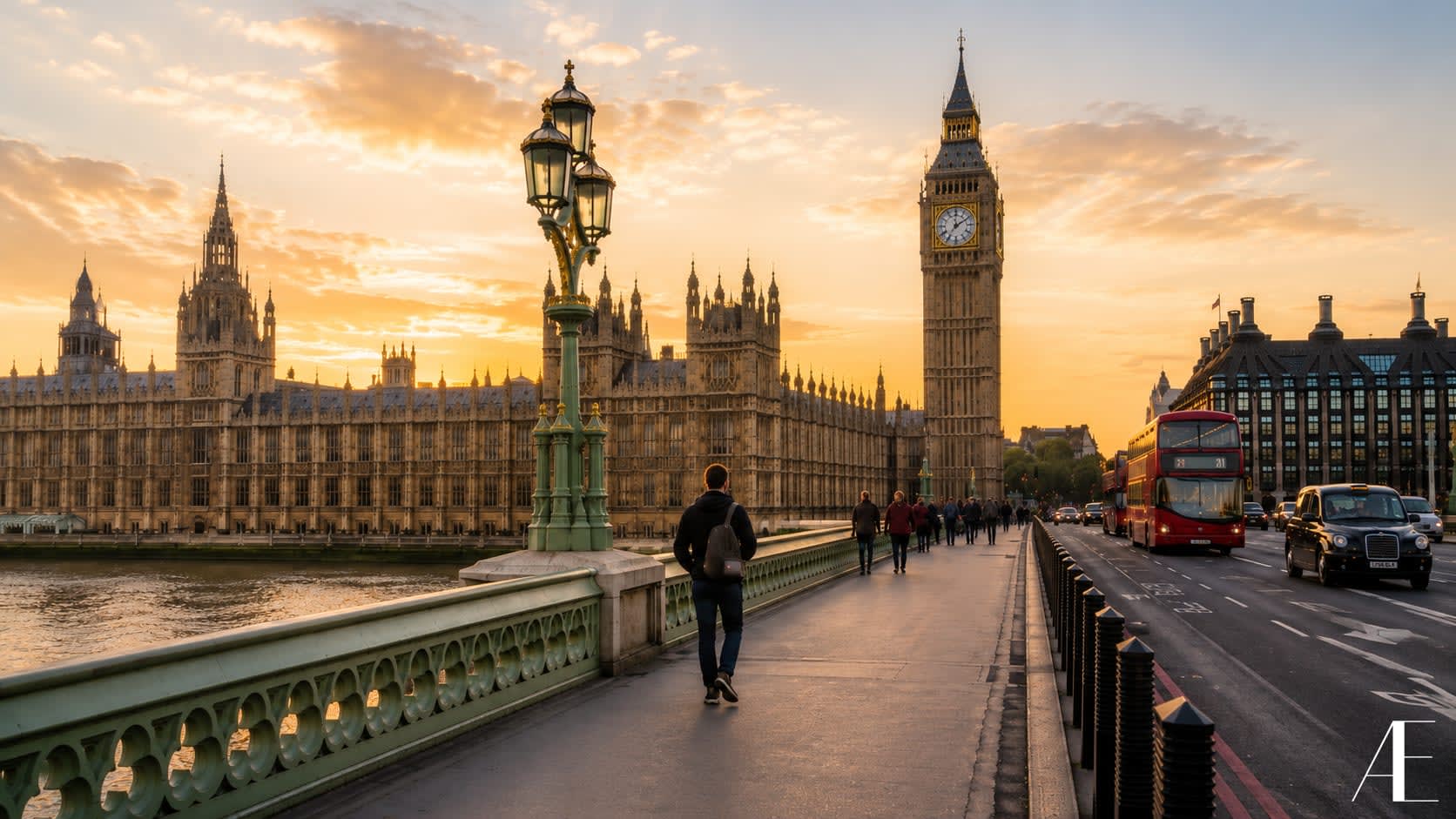
Parliament, Buckingham Palace, Westminster Abbey, St James's Park. Grand, formal, tourist-dense. Right for every first-timer.
The South Bank
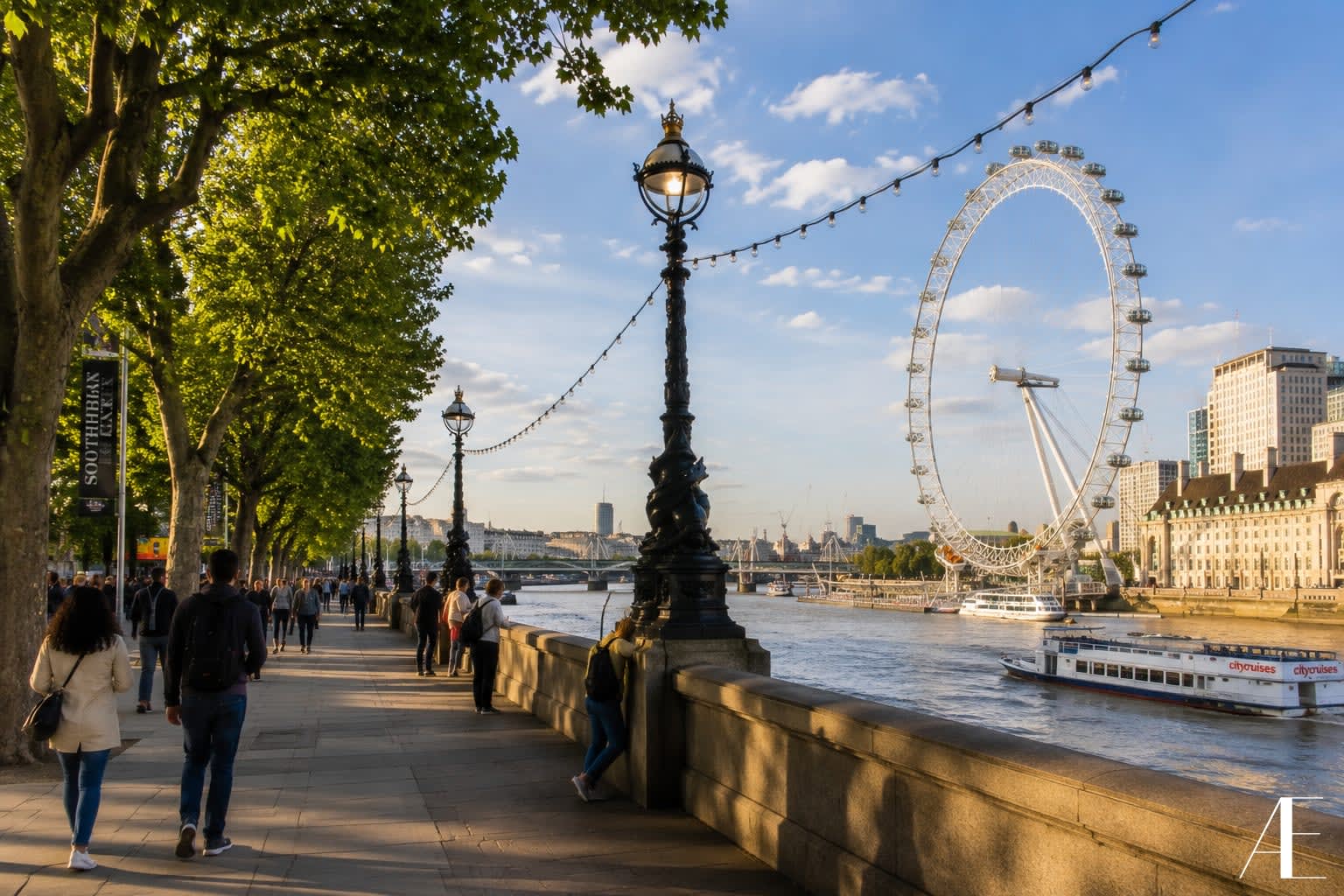
National Theatre, Tate Modern, Globe Theatre, Borough Market. Cultural, walkable, excellent for evening. Right for all clients.
Bloomsbury
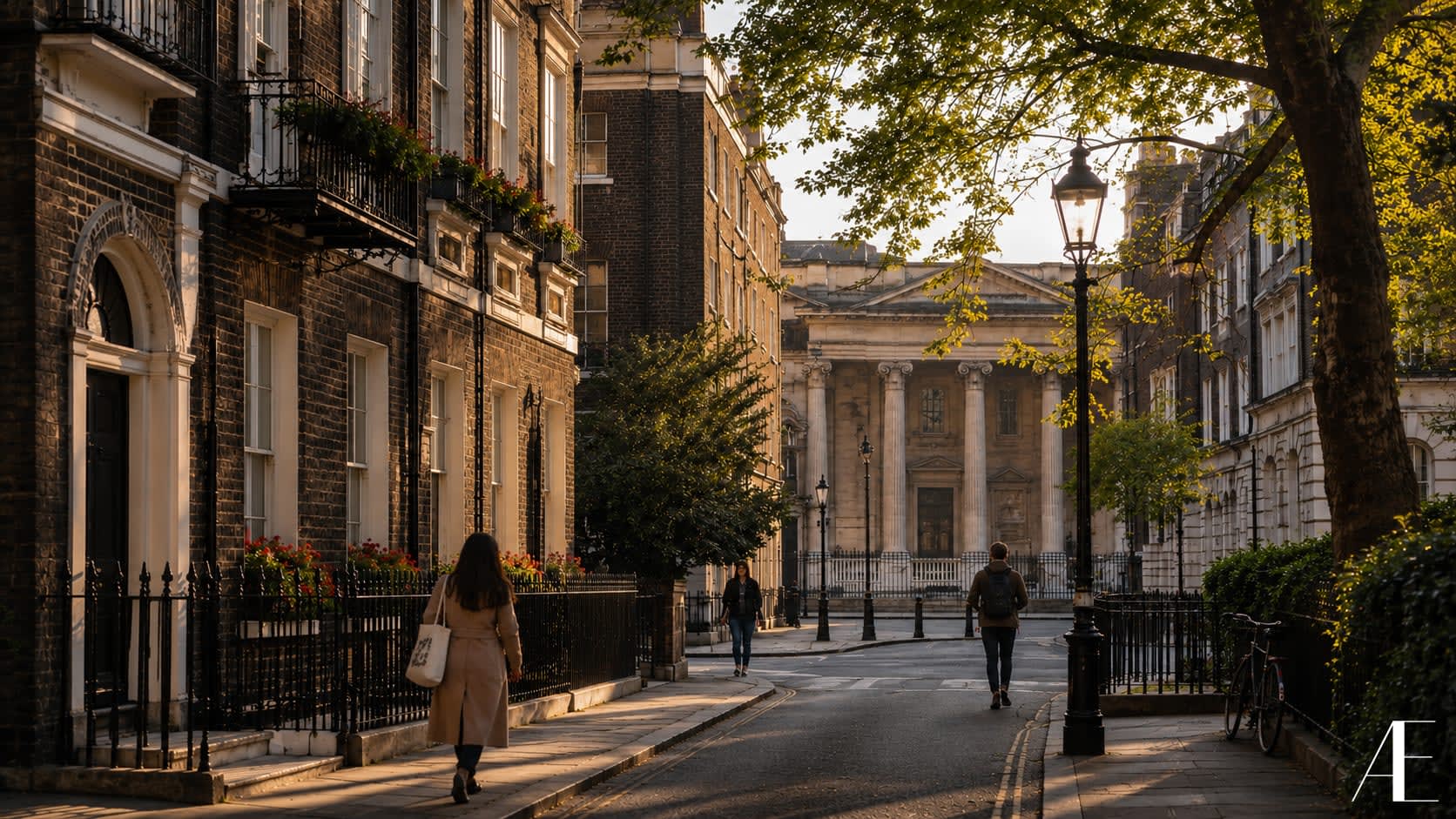
British Museum, University of London, literary history. Calm, intellectual, underrated. Good hotel territory.
Mayfair and St James's
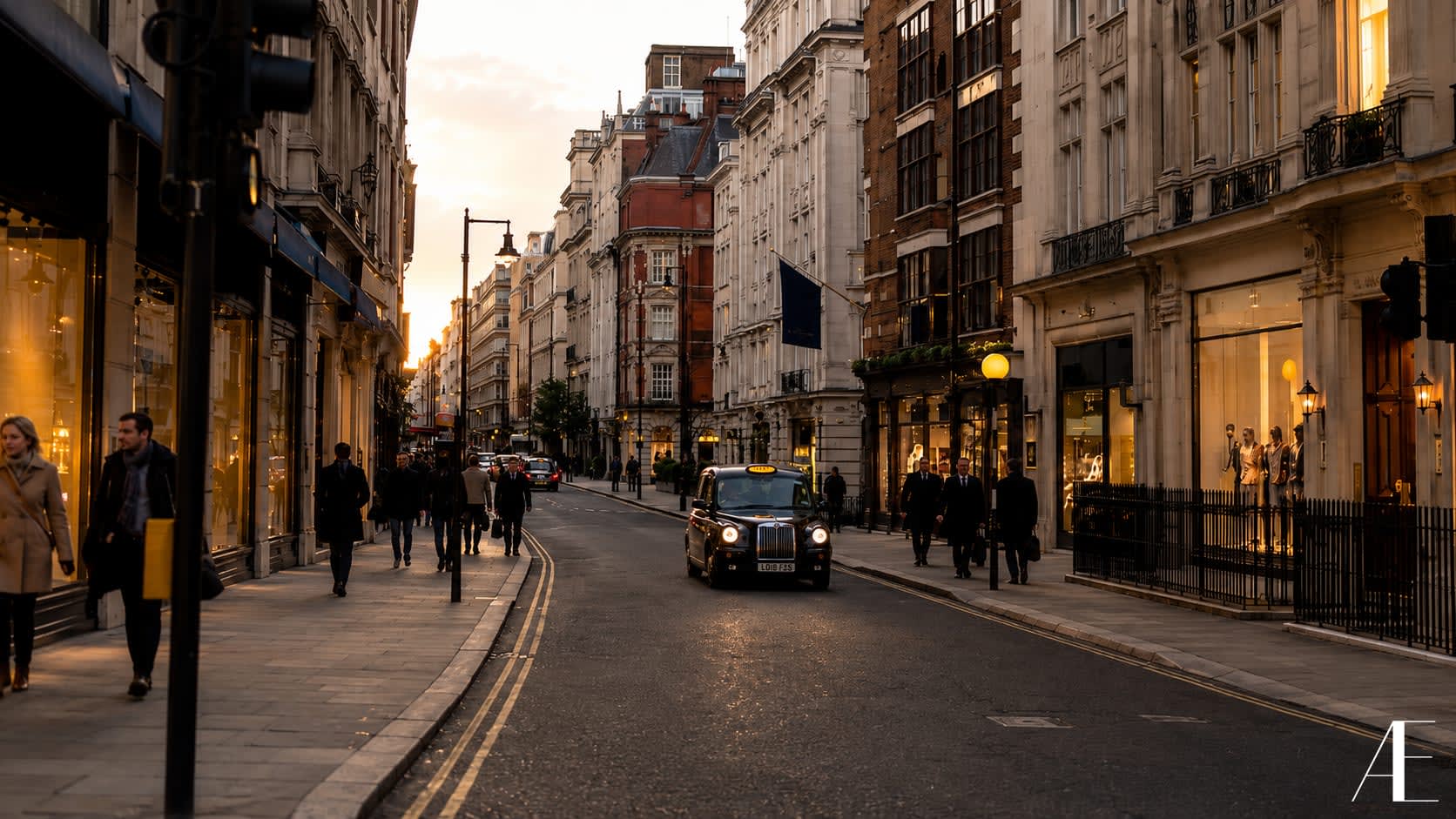
Bond Street, Burlington Arcade, Fortnum & Mason, the finest hotels. Right for luxury clients.
South Kensington
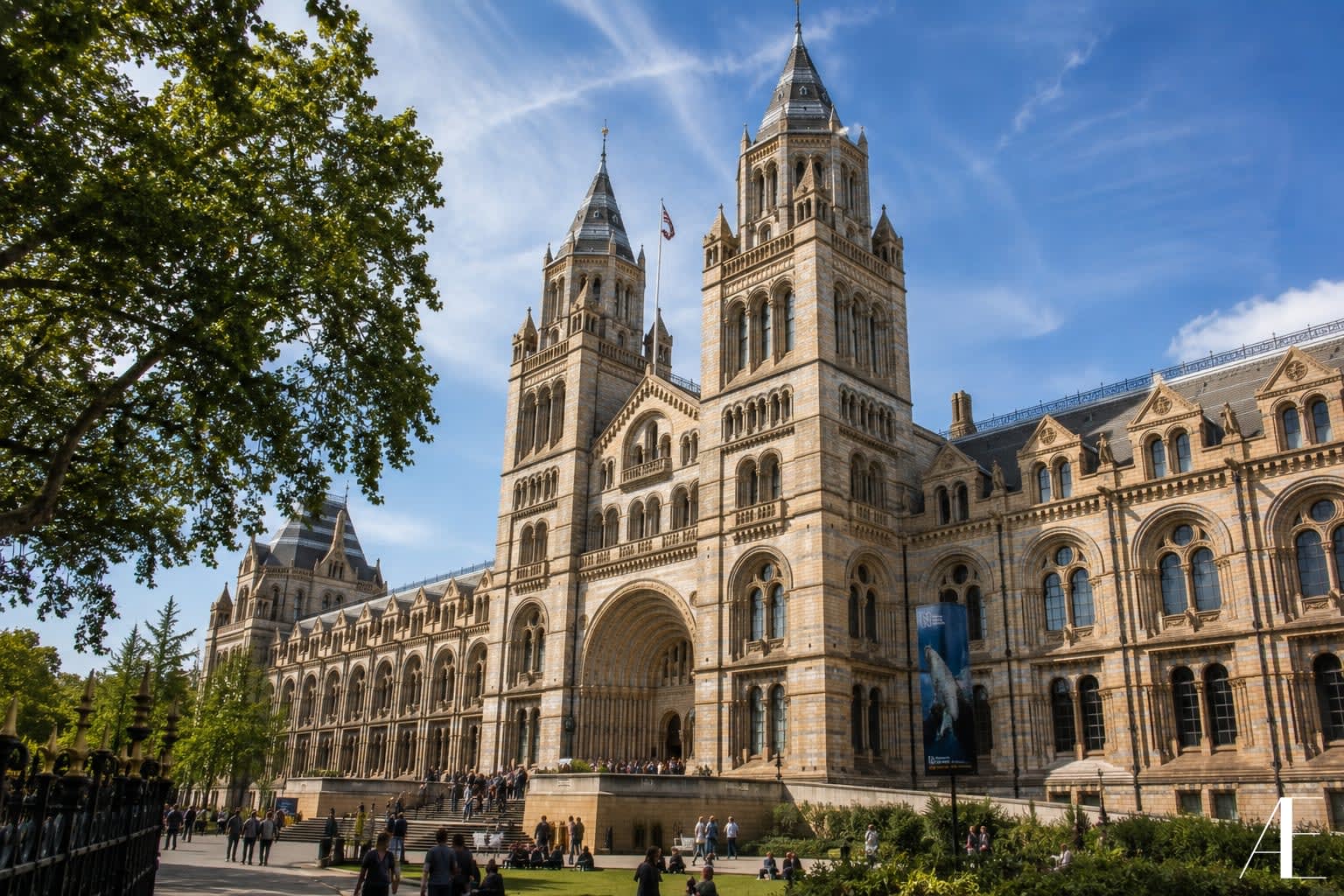
Natural History Museum, V&A, Science Museum, all free. Right for all clients, especially families.
Shoreditch and Spitalfields
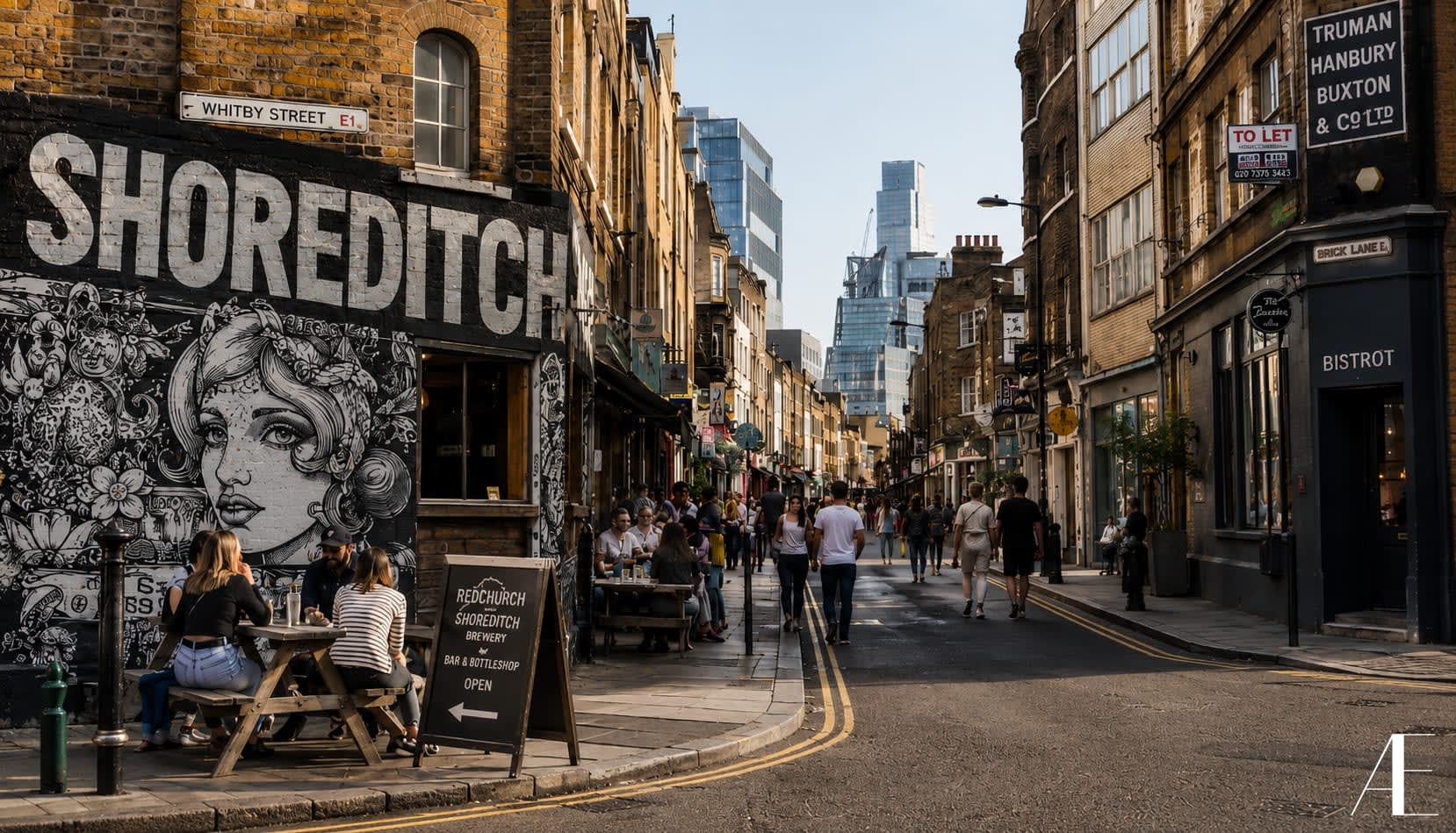
East London creative quarter. Street art, independent restaurants, Brick Lane, Spitalfields Market. Right for younger and food-focused clients.
Bermondsey and Borough
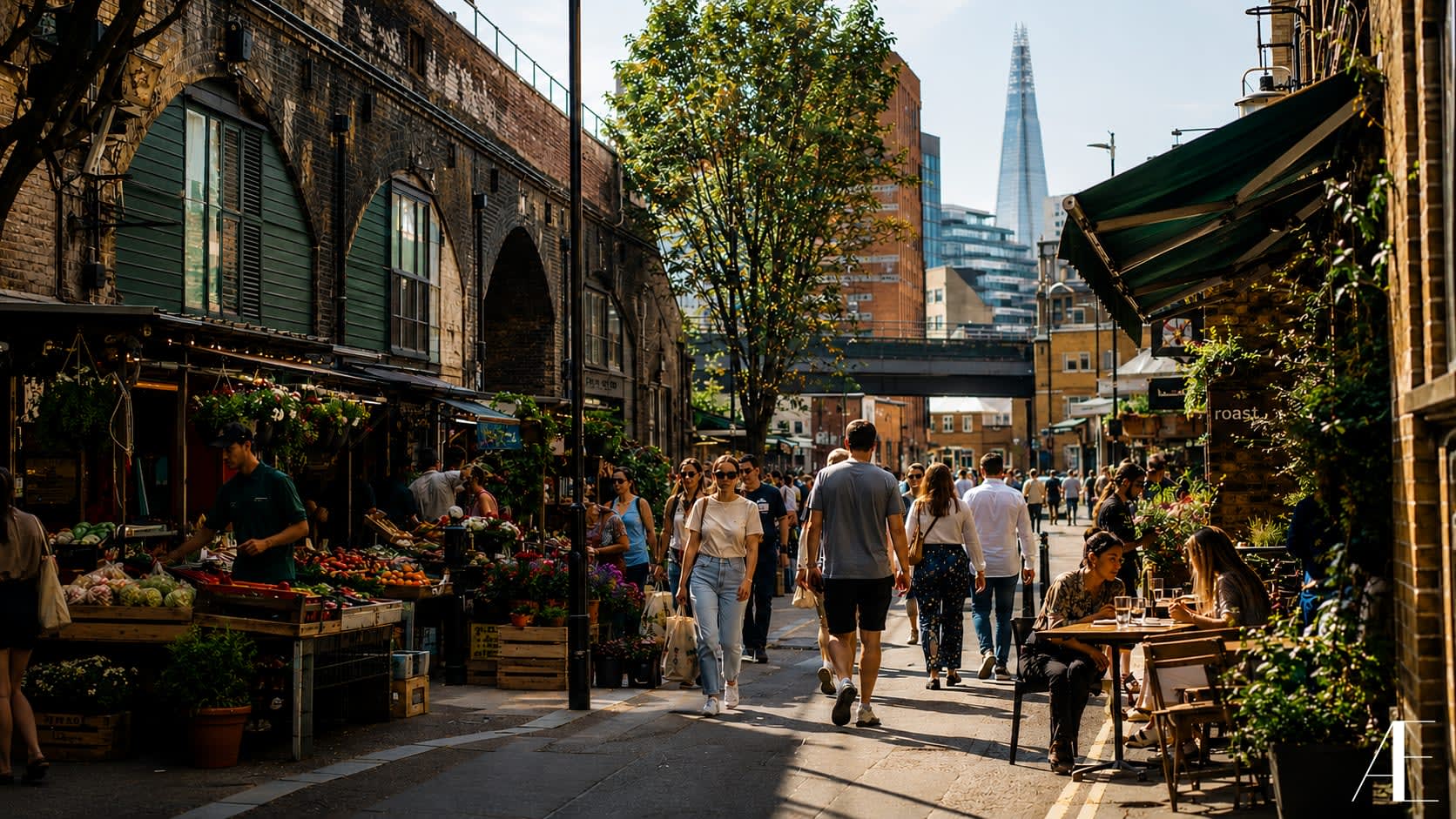
Borough Market, Maltby Street, the Bermondsey Beer Mile. Right for foodies and Saturday morning visitors.
Greenwich
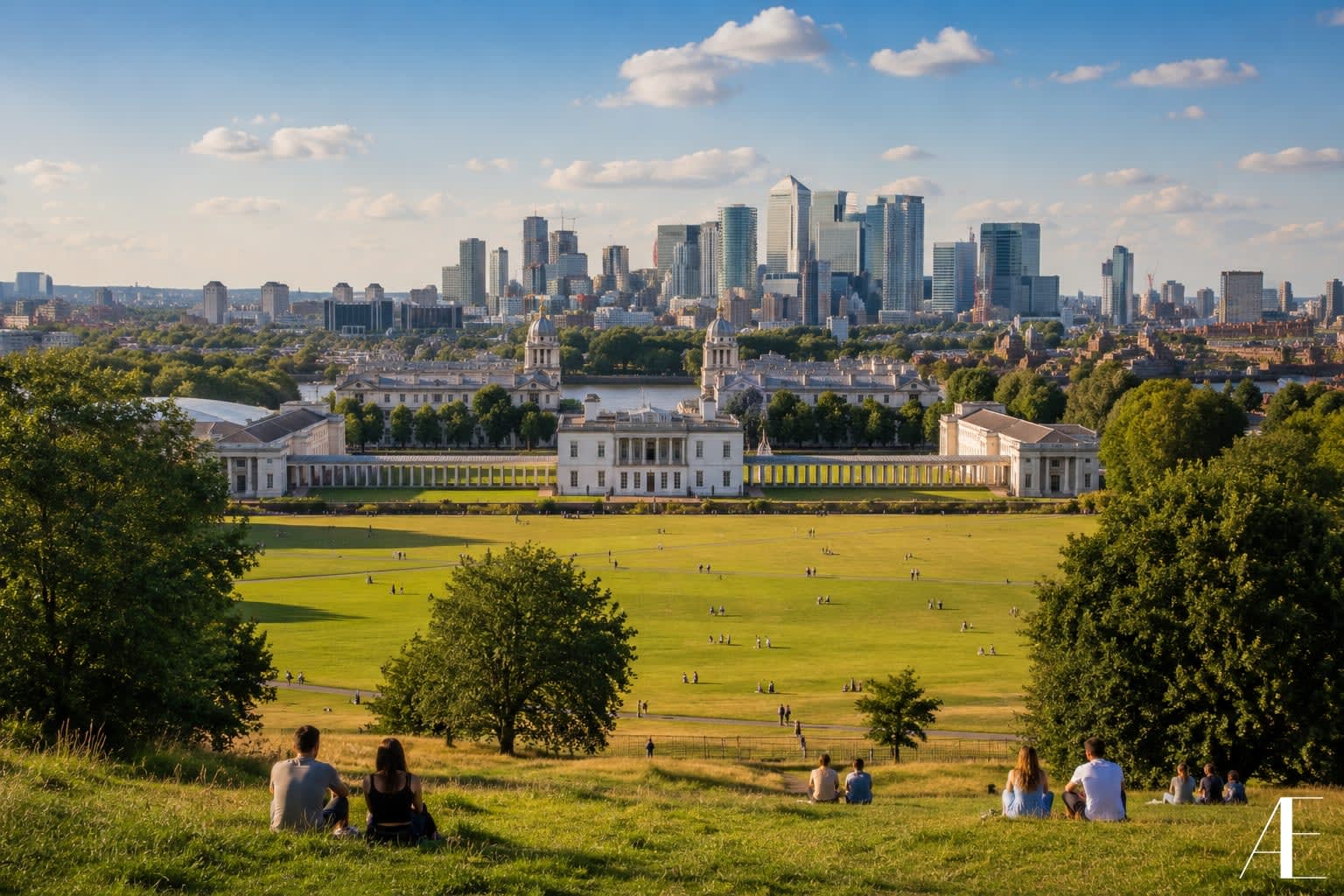
Royal Observatory, Cutty Sark, National Maritime Museum. Right for history and maritime clients, excellent for families.
The Five Things Every Agent Should Know
The major national museums are entirely free
The British Museum, the National Gallery, the Tate Modern, the Natural History Museum, the V&A, and the National Portrait Gallery are all free to enter. This is London's single most underused selling point. Lead with it for every budget-conscious client.
London is a cruise gateway, not a cruise port
Most ships associated with London do not berth in the city. They use Southampton, 130 km to the southwest, or Tilbury, 40 km downstream. For any cruise client flying into Heathrow for a Southampton embarkation, the London pre-stay is not an upsell; it is the correct itinerary structure. Always build in 2 to 3 nights.
The Tube makes the size manageable
London is not walkable as a whole but is very walkable by neighbourhood cluster. The Tube connects everything efficiently and operates on a contactless bank card tap-in, tap-out system with a daily fare cap. No paper tickets, no Oyster card required for most visitors.
The food scene is better than any client expects
London now belongs in the same conversation as Paris, Tokyo and New York for serious food travellers. The combination of world-class British seasonal produce and the city's extraordinary immigrant diversity has created a food culture with no real weaknesses. The food objection is the most outdated thing anyone says about London.
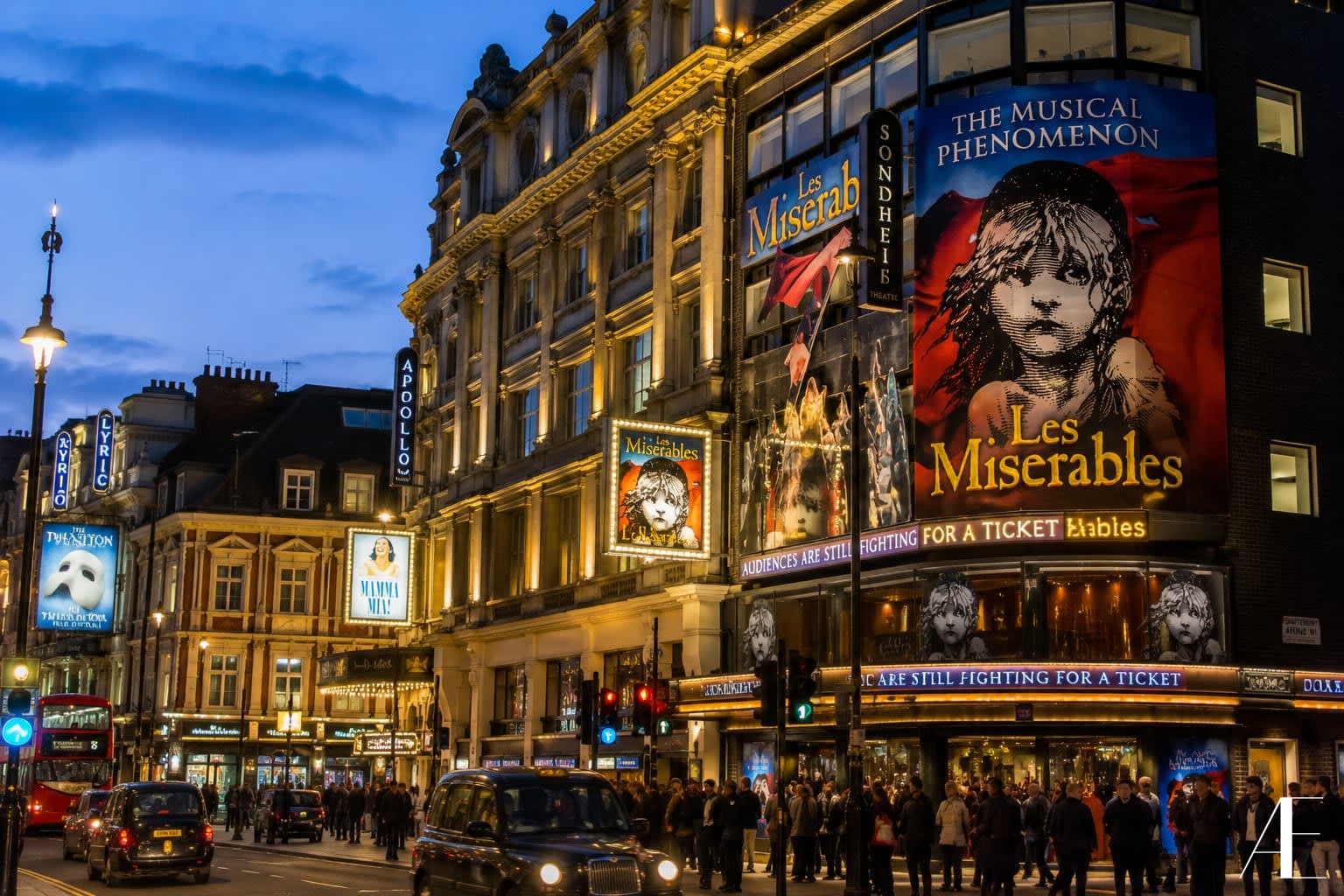
The West End is the world's theatrical capital
Over 40 major productions run simultaneously on any given evening. For any client who loves theatre, there is no better city on earth. Book popular shows 2 to 3 months ahead. The TKTS booth in Leicester Square offers same-day discounts of up to 50% on the day of performance.
When to Go
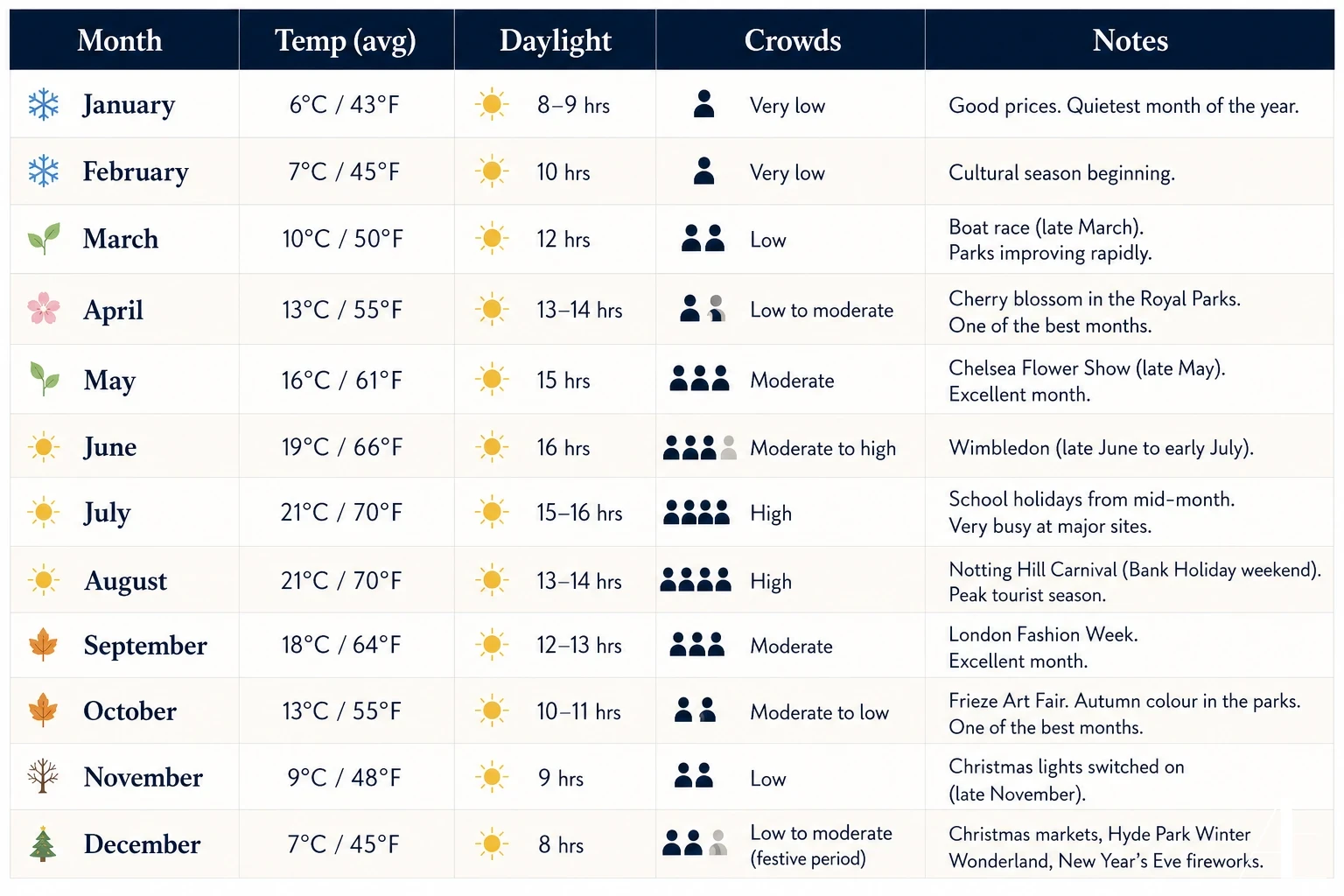
Best months: April, May, September, October The best balance of daylight, mild weather, cultural season in full swing, and manageable crowds. September and October are particularly strong: the theatre season is at its richest, the parks have autumn colour, and the major sites are significantly less crowded than in summer.
May: Chelsea Flower Show (late May). The parks are spectacular. One of the finest months to visit.
June to August: Long evenings, Wimbledon (late June to early July), Notting Hill Carnival (August Bank Holiday). Crowds are HIGH at major sites from late June onward. Book everything months ahead.
November to February: Lowest prices of the year outside the Christmas period. Christmas lights on Regent Street and Oxford Street from late November. Hyde Park Winter Wonderland from mid-November. Good for budget-conscious clients and those who want the festive atmosphere.
How Many Days
2 days (absolute minimum): Westminster and the Tower of London. Clients leave with the icons but miss almost everything else.
3 days (the standard short stay): Adds a West End evening, the National Gallery, Covent Garden or Soho, and time for a proper meal. Covers the essential range but remains tight.
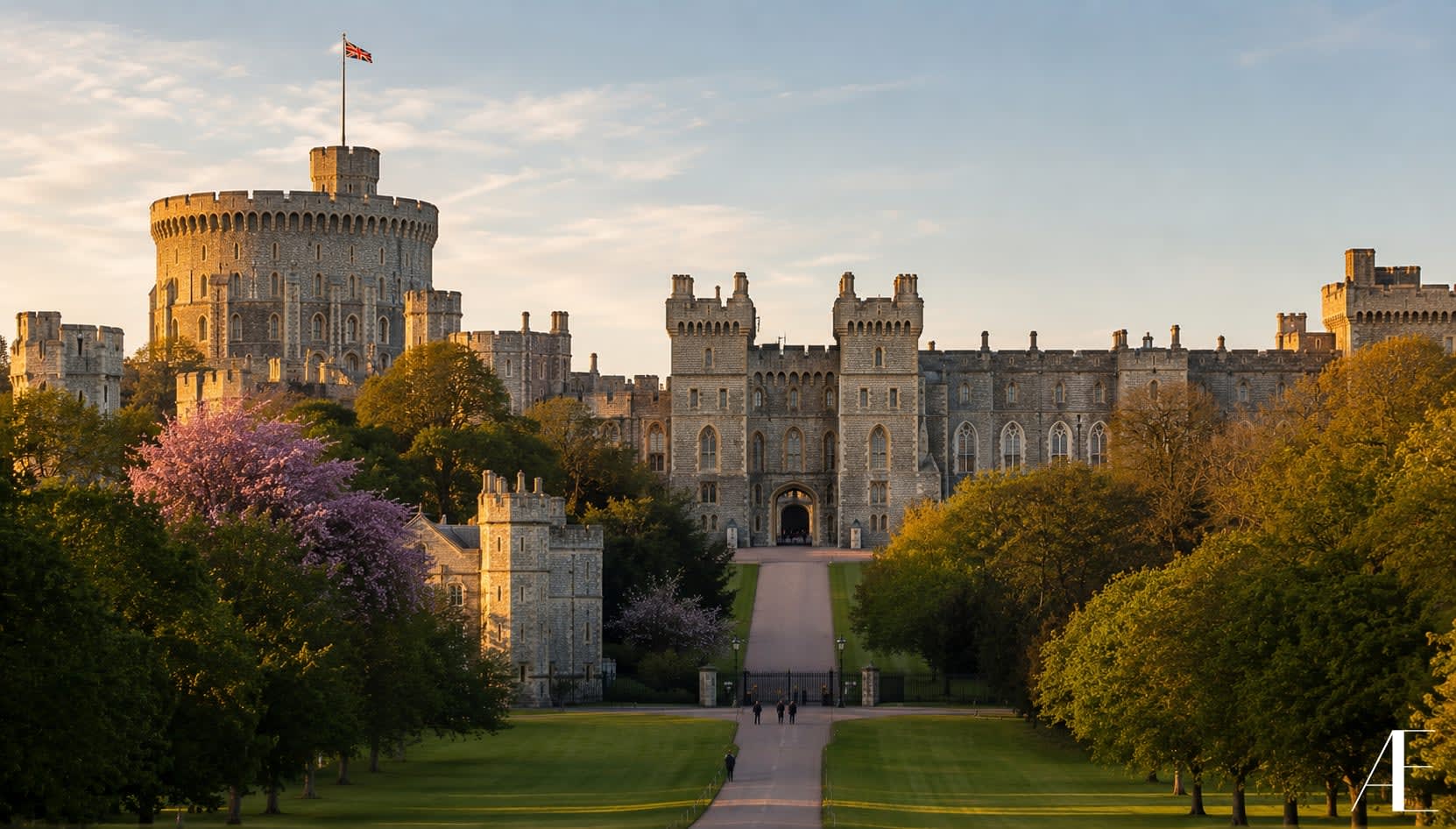
4 to 5 days (the ideal first visit): Adds South Kensington museums, a market morning at Borough or Portobello, neighbourhood time in Shoreditch or Notting Hill, and a day trip to Oxford, Windsor or Bath. This is the right recommendation for a meaningful first visit.
7 days: Adds Greenwich, a second theatre evening, the Wallace Collection or Courtauld Gallery, and deeper neighbourhood exploration. London begins to feel like a city to inhabit rather than just to visit.
The rule: Two days is a landing. Three days is a compressed introduction. Four to five days is the strongest recommendation for a first visit. A week is where London becomes genuinely rewarding.
The Must-Knows for Selling It
For the history client: The Tower of London, Westminster Abbey, St Paul's Cathedral, the British Museum, and the City of London walk form a history itinerary of extraordinary depth. Lead with the Great Fire narrative for the City; the royal and political history for Westminster. Two thousand years is visible on foot.
For the theatre and arts client: This is the most important selling point for the right client. The West End surpasses Broadway in range and variety. The National Theatre is the finest producing theatre company in the English language. Book 2 to 3 months ahead.
For the foodie: Lead with the surprise. St John for the British food revival. Dishoom for Bombay café culture done brilliantly. Borough Market on a Saturday morning. The Ledbury for a serious occasion dinner. The diversity of the immigrant communities means outstanding Indian, Japanese, West African, Korean and Vietnamese food at every price point.
For the luxury client: Claridge's, the Connaught, the Savoy. Bond Street and Burlington Arcade. Private tours of the Tower of London before opening. A box at the Royal Opera House. For North American luxury clients, always check the exchange rate; when favourable, London's top hotels and restaurants represent outstanding value.
For the family: Almost everything children love is free. The Natural History Museum's dinosaurs, the Science Museum's interactive galleries, the Tower of London's ravens and crown jewels, the river boat to Greenwich. Start there and build outward.
For the cruise client: Confirm the port. Southampton is 90 minutes from London by train; Tilbury is 40 minutes by rail. For any Southampton embarkation, the London pre-stay is not optional for North American clients. Two nights minimum; three nights is the proper recommendation. See The Cruise Connection: London for the full port guide.
For the "I've already been to London" client: "You've seen the headline London. Now let's show you the real one: Borough Market on Saturday morning, the South Bank at golden hour, Dishoom for breakfast, a Sunday afternoon in Portobello, the National Theatre in the evening. This is a different city."
One Conversation Starter
The Monument to the Great Fire of London is exactly 62 metres tall and stands exactly 62 metres from the bakery on Pudding Lane where the fire started in 1666. If you laid it on its side, the tip of the column would touch the origin of the fire. Wren and Hooke designed it this way deliberately, as a scientific instrument as well as a memorial. It takes ten seconds to explain and clients remember it for the rest of the trip.
Learn More

For the complete London guide covering full history, all attractions with practical details, restaurants, hotels, seasonal breakdown, day trips, client objections and curiosities, see London: The Complete Agent's Guide in the Academy.
For port-by-port cruise details, Southampton and Tilbury logistics, and what is realistic in a London port call, see The Cruise Connection: London.
For ready-to-use responses to every common client objection and the exact language to move hesitant clients from interest to booking, see London: The Pitch to Close Deals.


Member discussion