
Edinburgh: The Pitch to Close Deals

Edinburgh is the easiest sophisticated destination in Europe to sell well, and the easiest one to undersell badly. Most agents undersell it because they pitch it as London-but-smaller, or as a stopover before the Highlands, or as a single shore-excursion day on a cruise itinerary. None of those positions does the city justice. None of them earns the commission the city deserves. This guide is about doing it properly.
Before You Pitch: The Discovery Questions

Never pitch Edinburgh before you know which Edinburgh you are pitching. The city is sold five different ways to five different clients, and the wrong angle will lose the booking even when the destination is right.
Ask these six questions before you say anything else
- Have they been to Britain before, and what did they do?
Edinburgh-as-first-Britain-visit and Edinburgh-as-second-Britain-visit are completely different sales. The first leans on iconic moments. The second leans on everything London is not. - Are they cruising, land-touring, or both?
A pre- or post-cruise stay is sold against a completely different competing destination than a seven-day land trip. - What is their relationship to history?
Some clients want it, some tolerate it, some flee from it. Edinburgh's depth rewards engagement and exhausts disengagement. - Are they walkers?
This is not a small question. Edinburgh is built on volcanic hills and cobbled stone. The right client finds this charming. The wrong one finds it punishing within an afternoon. - August or not August?
The Festival period transforms the experience, the price, and the lead time. Confirm dates before you quote anything. - Do they have Scottish ancestry?
This is the easiest emotional sell in travel. Many Canadian and American clients with Highland surnames do not know that their ancestors were almost certainly Clearance refugees, and that the story of how they ended up in Cape Breton or the Carolinas is told intelligently at the National Museum of Scotland.
These six questions take three minutes. They are the difference between a generic pitch and a closed sale.
The Five Clients Who Buy Edinburgh
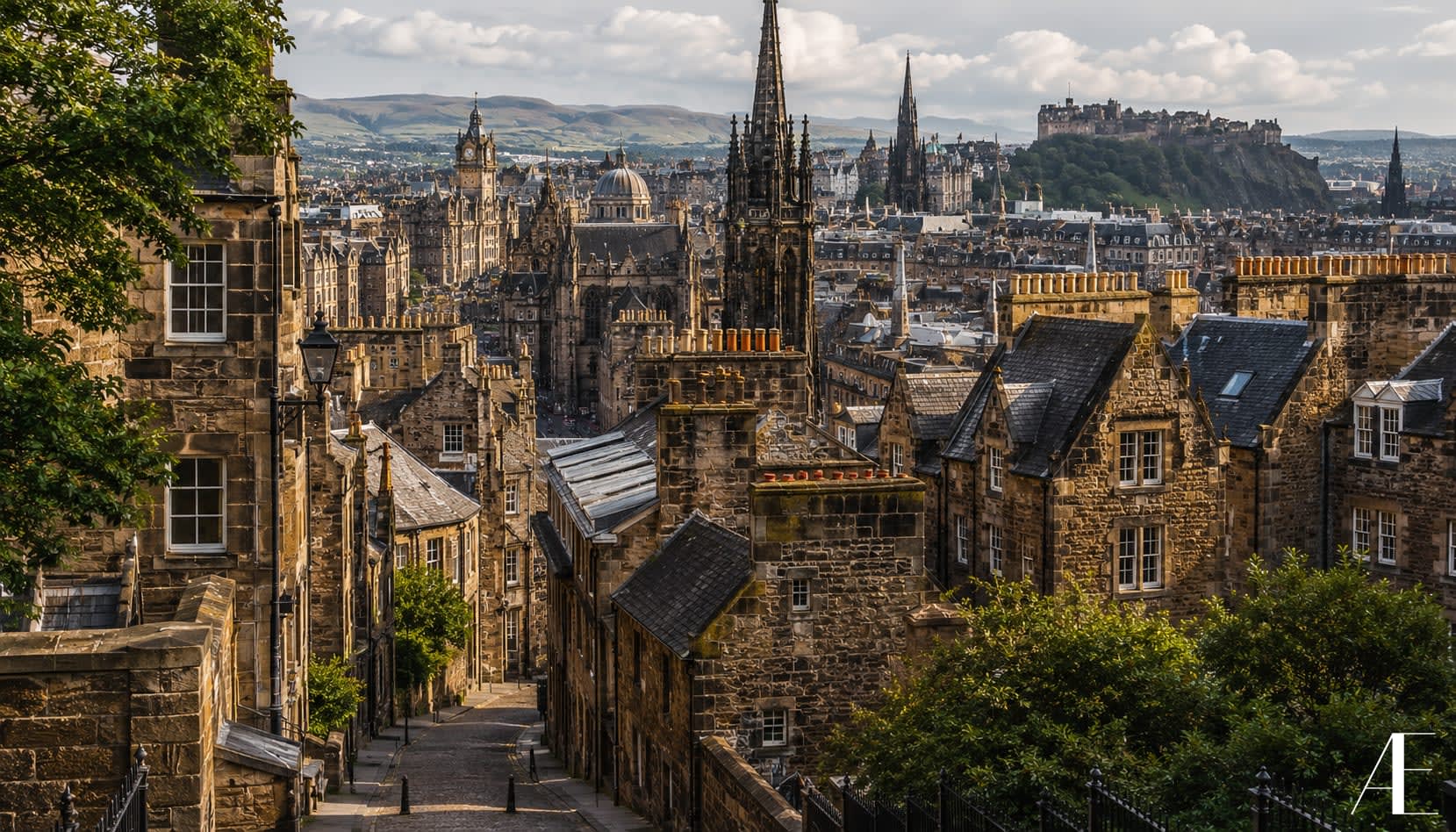
Almost every Edinburgh booking maps to one of five client profiles. Identify the profile first, and the pitch writes itself.
The History Client
The easiest sale and the highest-converting profile. Usually 55+ years old, has travelled in Europe before, reads non-fiction for pleasure, considers the trip both an experience and an education. What they want: Depth, story, atmosphere, walkability. The pitch: Edinburgh is two UNESCO World Heritage Sites laid out side by side on a volcanic ridge, and the entire story of Scotland, from the Picts to the Enlightenment to the Highland Clearances, can be walked between in a single afternoon. Mary Queen of Scots' bedroom, John Knox's pulpit, and Adam Smith's grave are all within fifteen minutes of each other. You do not get this concentration anywhere else in Europe. The upsell: Add Stirling and Bannockburn as a day trip, and a Scottish Borders day for the abbeys and Abbotsford. Five nights becomes seven. The trip becomes a Scottish history pilgrimage. Common objection: "We've already done Britain." See objection handling below.
The Scottish-Descent Client
A Canadian, American, or Australian client with a Highland surname: MacDonald, MacLeod, Campbell, Sinclair, Fraser, Stewart, Cameron. They may not know what they are looking for. Often, they think they want a clan-tartan-bagpipe experience. What they actually want is to understand where they come from. What they want: Connection. The trip is emotional before it is touristic. The pitch: Edinburgh is where the story your family carries actually happened. The Highland Clearances are covered seriously at the National Museum of Scotland, that's the history that put your great-great-grandparents on a ship to Cape Breton.
From Edinburgh you are two hours from Culloden, three hours from your clan country, and one taxi ride from a tartan weaver who can trace your sett. This is not a heritage tour. This is the trip that completes a story your family has been telling for four generations. The upsell: Add a Highlands extension routed through clan country. For Quebec and Maritime clients specifically, mention the Cape Breton / Skye / Outer Hebrides connection. Many will choose to extend the trip by three to four nights once they understand what is actually accessible. Agent note: This profile is significantly larger in the Canadian market than in the American one. The Maritimes, eastern Ontario, Quebec, and large parts of British Columbia all have substantial Scottish-descent populations. The bilingual Quebec market in particular is undertargeted by US-based agencies and represents real opportunity.
The Foodie
Usually 35 to 60 years old, urban, well-travelled, often a return Europe visitor. May have already done Paris, Rome, San Sebastian, Copenhagen. Looking for the next serious eating city. What they want: Quality, provenance, restaurants their friends do not know about yet. The pitch: Edinburgh, and particularly Leith, is having a moment that the food press has not fully caught up to. Tom Kitchin's flagship in Leith holds a Michelin star and is one of the most serious restaurants in the British Isles. Condita is doing tasting-menu work at world-class level out of a room with six tables. The produce, Loch Fyne oysters, hand-dived Orkney scallops, Highland venison, Borders lamb, is exceptional. You can spend five days eating very well in Edinburgh and never have the same restaurant tradition twice. The upsell: Add a Leith-focused full day with the Royal Yacht Britannia in the morning and lunch at The Shore. Pair the trip with St Andrews and the East Neuk for the Anstruther Fish Bar and the seafood villages. Common objection: "I thought Scottish food was bad." This is a 1980s stereotype. Lead with the produce, name the chefs, mention the Michelin count.
The Cruise Add-On Client
Booking a British Isles or Northern Europe cruise that calls at Edinburgh. The cruise is already sold. The question is whether to add a pre- or post-cruise land stay. What they want: To not waste the trip. They know one day in Edinburgh is not enough. They are looking for permission to add nights. The pitch: Edinburgh on a cruise day is a teaser. The ship gives you the castle and the Royal Mile and back to the ship by six. You will see Edinburgh the way someone sees Paris from a tour bus: accurately, but not really.
Add three nights pre-cruise, and you get the city properly, the New Town in the evening, Leith for dinner, Arthur's Seat at dawn, and time in the closes that does not feel rushed. Your clients who add the land stay come back saying it was the best part of the trip. The ones who do not, regret it. The upsell: Pre-cruise stay (3 nights minimum). If the cruise embarks in Southampton, position Edinburgh + London as the front half of the itinerary, with the train down the East Coast Main Line as a scenic transition. Agent note: This is the highest-yield Edinburgh sale per hour of advisor work. The cruise commission already exists; the land stay is additive revenue with very little additional booking effort. Always pitch the add-on. Always.
The Festival Client
Wants to go in August for the Edinburgh Festival Fringe, the International Festival, the Military Tattoo, or some combination. May be a returning theatregoer, a music client, or someone who has heard about Fringe for years and has finally decided to go. What they want: The full Edinburgh August experience, properly organised. The pitch: The Edinburgh Festival Fringe is the largest arts festival on earth, over 4500 shows in three weeks. The International Festival runs alongside it with serious classical, opera, and theatre work. The Military Tattoo on the castle esplanade is one of the great spectacles in the world.
The catch is that the city operates at a different intensity in August: accommodation is two to three times the normal rate, the Tattoo books out six to twelve months ahead, and the better restaurants are full every night. This is bookable, but it has to be bookable now. The upsell: Festival accommodation packages with pre-purchased Tattoo tickets and a curated handful of Fringe / International Festival show recommendations. Position the trip as a curated cultural experience, not a free-for-all. Common objection: "It sounds overwhelming." It is, slightly. The right answer is structure, a base hotel in the New Town (calmer), two booked shows per evening, the Tattoo on a specific night, and the days for the city itself. Curation is what they are paying you for.
The Objections (and How to Handle Them)
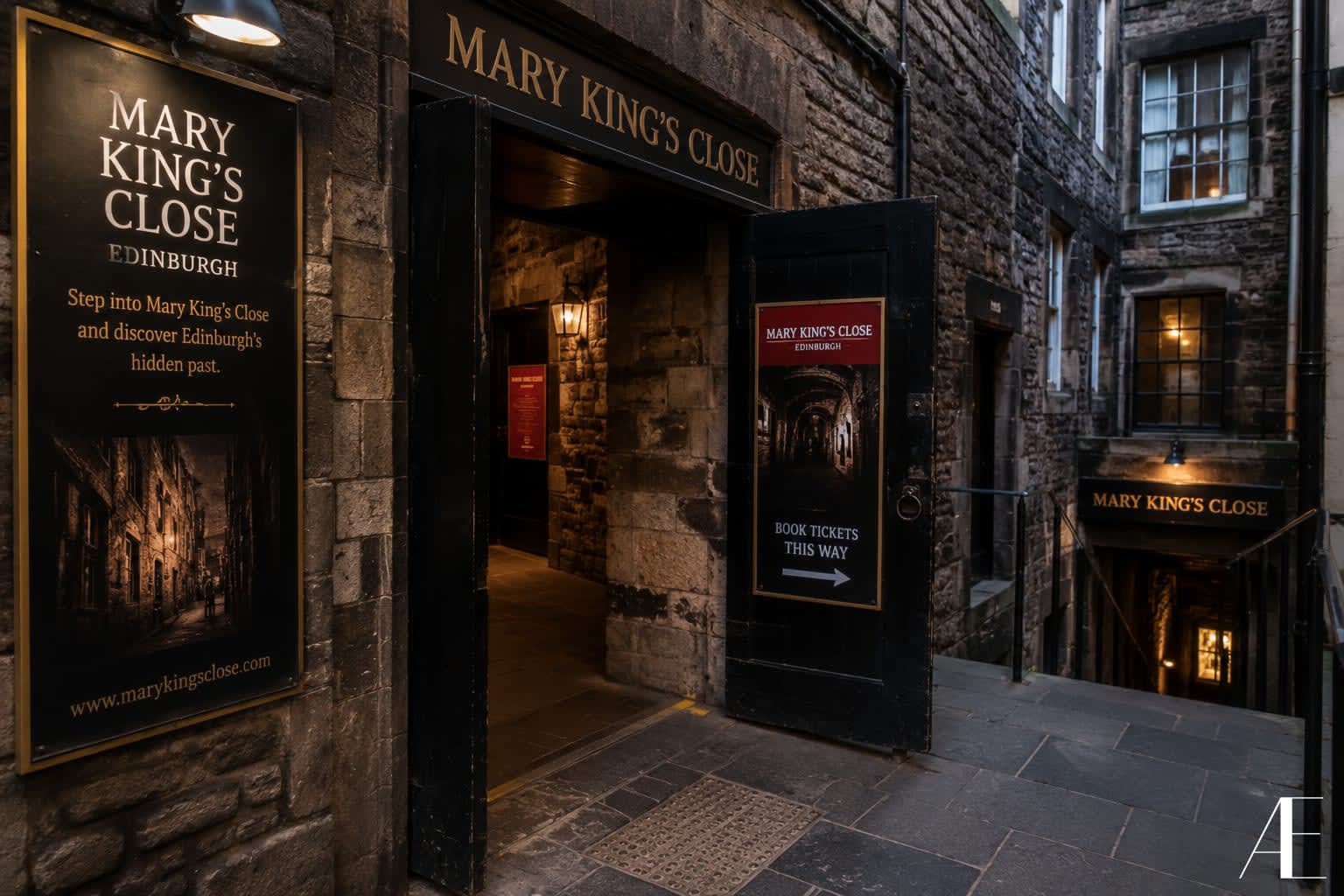
These are the objections that come up in roughly this order of frequency. Each has a real answer.
We've already done Britain.
The most common objection, and the easiest one to flip. Britain to most clients means London and maybe Bath or the Cotswolds. None of that is Scotland. The answer: London is England. Edinburgh is Scotland... a different country, a different church, a different legal system, a different currency tradition, and a completely different aesthetic.
Clients who tell me they have done Britain almost always mean they have done southern England. Scotland is the half they have not seen, and frankly it is the more visually dramatic half. The castle on a volcano alone is unlike anything in London.
Three days is enough, right?
Three days is enough if the goal is to say you have been. Three days is not enough if the goal is to experience the city. The answer: Three days covers the castle, the Royal Mile, Holyroodhouse, and Arthur's Seat. You will have seen Edinburgh.
Five days is when you start to know it: Leith for an evening, the National Museum properly, a day trip to Stirling or St Andrews, time in Stockbridge and Dean Village without an agenda. Three days is the minimum. Five is the sweet spot. Seven is a gift.
Why Edinburgh over Dublin?
This comes up especially for first-time British Isles visitors choosing one anchor city. The answer: Both are excellent, and very different. Dublin is literary, social, pub-driven, and best experienced through conversation; Edinburgh is visual, historical, architectural, and best experienced through walking. Dublin is the city of writers.
Edinburgh is the city of philosophers, kings, and a working castle. If your client wants atmosphere and music, lead with Dublin. If they want history and views, lead with Edinburgh. For the right itinerary, do not choose: combine them across a British Isles trip, ten nights minimum.
Does it really rain that much?
Yes, and no. The answer: Edinburgh has the same rainfall as London, distributed over more days. It rarely pours; it often drizzles. The locals carry a folding waterproof and do not change their plans.
The weather is part of the city's character: the light after a rain shower on the castle rock is one of the views people come back for. Pack layers and a waterproof and the weather is a non-issue.
Edinburgh in winter, is it worth it?
Depends entirely on the client. The answer: Edinburgh in November and early December is genuinely lovely: low light, Christmas markets on Princes Street, the castle illuminated at four o'clock in the afternoon. Hogmanay, December 31, is the most famous New Year's celebration in the world and worth a trip in itself, but it must be booked six months ahead.
January and February are cold, dark, and quiet, with the lowest prices of the year; ideal for budget-conscious clients who want atmosphere without crowds. Skip if your client needs daylight; winter days run seven hours.
My clients are not big walkers.
This one has to be answered honestly. The answer: Edinburgh is a walking city, and the Old Town in particular is heavily cobbled and steeply graded. For clients with mobility limitations, we adjust: the New Town is flat and elegant, the National Museum and National Galleries are fully accessible, Holyroodhouse is largely level, and the Royal Yacht Britannia is taxi-accessible. The castle has internal transport for those who cannot manage the entrance climb.
The Old Town closes and Arthur's Seat are not for everyone, and I will tell you honestly if your client's mobility makes this the wrong destination. Most clients with moderate limitations do beautifully here. Severe limitations require a different conversation.
Is it safe?
Edinburgh is one of the safer European capitals. The answer takes one sentence and should be confident. The answer: Edinburgh is very safe. Standard urban vigilance only, no different from Quebec City or Boston. Late-night Cowgate gets rowdy with students but it is not threatening. Your clients will feel comfortable walking back to a New Town hotel at eleven at night.
What about the food, though? Isn't Scottish food terrible?
Already covered in the foodie pitch above, but worth restating in objection form. The answer: That reputation is from the 1980s and has not been accurate for twenty years. Scotland's produce is among the best in Europe: cold-water seafood, Highland game, hill lamb, and a serious whisky and beer tradition.
Edinburgh has two Michelin-starred restaurants and a Leith food scene that the food press is still catching up to. Your clients will eat better in Edinburgh than they did in London.
The Upsell Paths
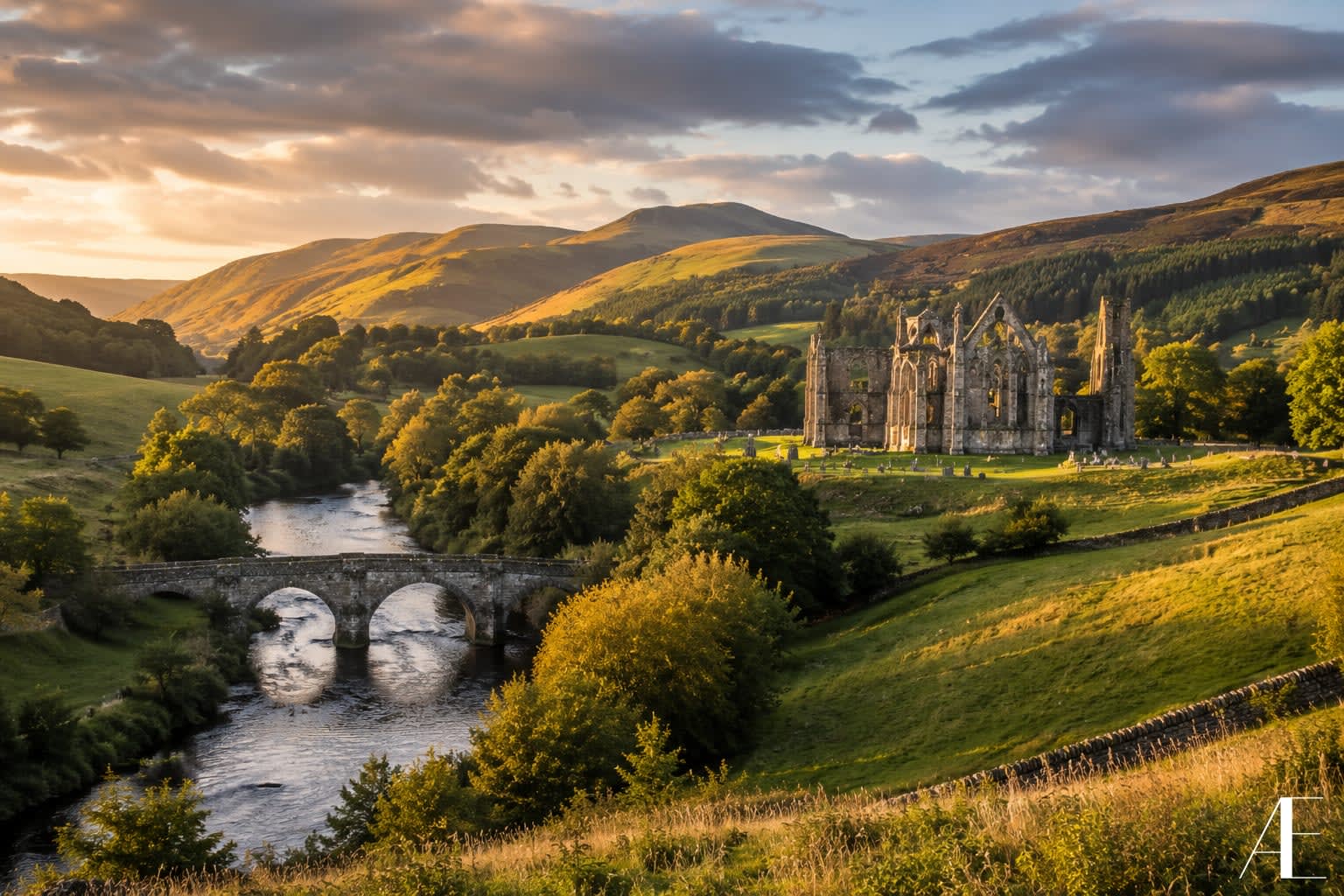
Edinburgh is rarely the whole trip. The structured upsell is where the commission compounds.
Edinburgh & Highlands
Edinburgh & Highlands is the classic. Three to five nights in Edinburgh, then a hire car or guided extension through Pitlochry, Inverness, Loch Ness, and Glencoe. Ten nights total.
The right client: anyone whose discovery questions revealed a love of landscape or Scottish ancestry.
Edinburgh & Glasgow
Edinburgh & Glasgow is the underrated alternative. Two hugely different cities forty-five minutes apart by train. Glasgow is grittier, friendlier, and the better music city; Edinburgh is the more conventional anchor. Two nights Glasgow on top of an Edinburgh anchor gives clients a much richer sense of Scotland.
The right client: foodies, music clients, architecture clients, anyone who has done Edinburgh before.
Edinburgh & the Borders
Edinburgh & the Borders is the slow, literary option. Walter Scott's Abbotsford, the ruined abbeys at Melrose and Dryburgh, the rolling countryside. Two nights at a Borders country house hotel, returning to Edinburgh.
The right client: gardeners, literary clients, repeat Edinburgh visitors who want something quieter.
Edinburgh & the East Neuk of Fife
Edinburgh & the East Neuk of Fife is a day trip but worth selling explicitly. St Andrews, Anstruther, Crail, Pittenweem. The Anstruther Fish Bar fish supper on the harbour wall. One of the most underrated days in the British Isles.
Edinburgh & a Highland clan-country base
Edinburgh & a Highland clan-country base is the heritage upsell. For the Scottish-descent client, choose a small Highland or Speyside hotel positioned near their ancestral country, with a private driver-guide for two days. The trip becomes the trip of a lifetime, and the commission scales accordingly.
The Cross-Sell Paths
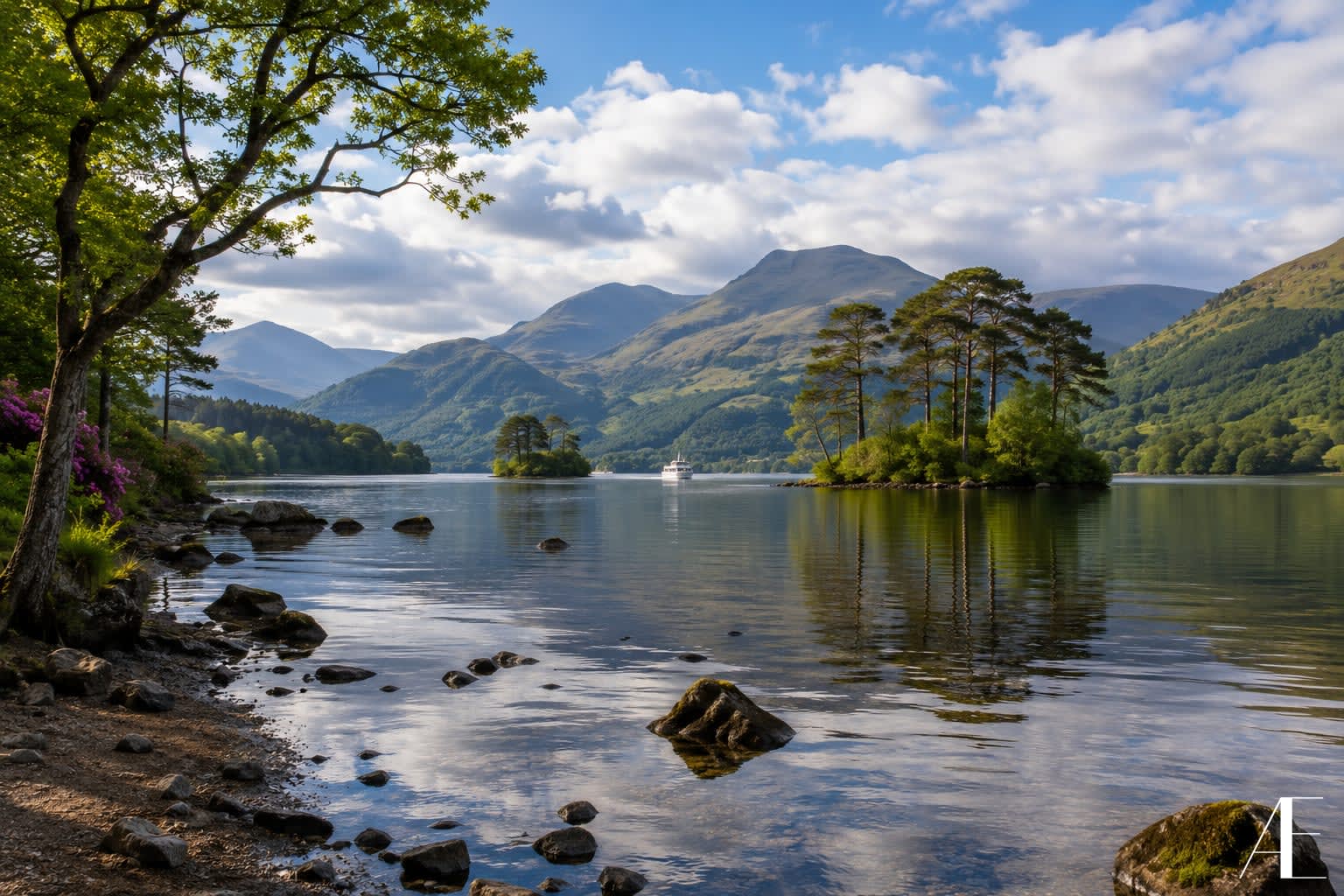
These are the multi-city itineraries to position when the client is open to more than one destination.
The British Isles Triangle
London, Edinburgh & Dublin. Ten to fourteen nights. The single best first-time-to-Britain itinerary on the market, and almost never sold as a coherent package by agents who default to London-only.
The Northern Capitals
Edinburgh, Bergen & Copenhagen or Edinburgh, Stockholm & Helsinki, often as a cruise & land combination. For clients drawn to high-latitude cities and dramatic landscapes.
The Celtic Coast
Edinburgh, Belfast (or Galway) & Dublin. For clients with mixed Scots-Irish heritage, or for a music and literary trip across the Celtic world. The Belfast component adds the Titanic Quarter and the Giant's Causeway.
The Cruise Anchor
Edinburgh as the post-cruise stay for a British Isles, Northern Europe, or transatlantic itinerary that ends at Southampton or Greenwich. The train up to Edinburgh on the East Coast Main Line is itself one of the great rail journeys in Britain.
The Email Templates
Three templates to adapt. Each should be customised to the client and the discovery answers, but the structure works.
Template 1: The Initial Pitch (after discovery call)
Subject: Edinburgh, the trip we discussed Hi [name], Thinking about our call yesterday. Based on what you told me about [first-time Britain / returning visitor / cruise add-on / family connection], Edinburgh is the right anchor for this trip, and here is why. [Two to three sentences from the relevant client-profile pitch above, customised.] What I would suggest: [number] nights in Edinburgh, anchored at [hotel category], with [day trip / upsell] built in. Total trip length [X] nights, ballpark investment [range], best months [based on discovery]. I will put together a proper proposal once you confirm direction. Two quick questions before I do: 1. [Question about dates if August is in play, or about mobility, or about specific interests] 2. [Question about cruise component, ancestry, or budget anchor] Looking forward to building this one. [Signature]
Template 2: The Cruise Add-On Pitch
Subject: Your [cruise line] itinerary, one suggestion Hi [name], One thought on your [ship name] sailing in [month]. The itinerary calls at Edinburgh on [date] for a single day. That day will give you the castle and a walk down the Royal Mile, and you will be back on the ship by six. Edinburgh deserves more than that. I would strongly suggest adding three nights pre-cruise, flying into Edinburgh directly and joining the ship in [embarkation port] by train. You would get the city properly: Leith for dinner, the National Museum, Arthur's Seat at dawn, the closes without a tour bus schedule. The ship day then becomes a relaxed return rather than a first impression. The pre-cruise stay typically adds [range] to the total trip cost and is the part most clients remember. Want me to price it out? [Signature]
Template 3: The Heritage Pitch
Subject: Edinburgh, and what we found about your family Hi [name], Thinking more about our conversation. The [surname] name traces back to [clan / region], and from Edinburgh you are within reach of the country your family came from. Here is what I would suggest: Four nights in Edinburgh, including a half-day at the National Museum of Scotland: they cover the Highland Clearances seriously, which is the history that put your family on a ship to [Cape Breton / the Carolinas / wherever]. Then three nights with a private driver-guide through the Highlands and your specific clan country, returning to Edinburgh for a final night and departure. This is the trip that completes the story your family has been telling for four generations. It is also one of the most meaningful itineraries I sell. Let me know if you would like to see the full proposal. [Signature]
When NOT to Sell Edinburgh

The hardest part of advisor work is telling a client their idea is wrong. Edinburgh is wrong for some clients, and saying so builds more trust than any pitch ever will.
Skip Edinburgh for sun-and-beach clients. This is obvious, but worth saying. The Edinburgh weather is part of its charm and your client should want grey-light-on-stone, not warm-sand-and-mojito. If they want the latter, sell the mediterranean or the Caribbean.
Skip Edinburgh for clients with severe mobility limitations. Edinburgh's Old Town is built on a volcanic ridge with cobbled streets and steep approaches. Wheelchair-only clients can do parts of the city: the New Town, the National Museum, the Royal Yacht Britannia. But they will miss what makes Edinburgh Edinburgh. For these clients, recommend Dublin, which is flatter, or Bath, or a river cruise instead.
Skip Edinburgh as the first Britain visit for very budget-conscious clients. Counterintuitive, but true. London offers more iconic moments per dollar for a first-time visitor. Edinburgh is the sophisticated second visit. The client who has done London comes to Edinburgh wanting depth; the client who has not, feels cheated of the Big Ben moment.
Skip Edinburgh in deep winter for daylight-sensitive clients. Seven hours of daylight in December. Beautiful for some, depressing for others. Ask honestly.
Skip Edinburgh for clients who want a beach-resort experience with a city day. Edinburgh is not a resort. Coastal Scotland is rugged, cold, and beautiful but not beach-oriented. If they want city & warm coast, send them to Lisbon or Barcelona.
Saying these things, in plain language, is the act of a specialist. Clients will trust the destinations you recommend more once they have heard you turn one down honestly.
The Close
Closing an Edinburgh booking is rarely about clever language. It is about positioning the city correctly for the specific client in front of you, handling two or three objections without flinching, and offering a structured proposal within twenty-four hours of the discovery call.
The clients who book Edinburgh are not impulsive. They are deliberate, well-travelled, and looking for a destination that respects their intelligence. The pitch that wins them is not enthusiastic. It is informed.
Be specific. Name the restaurants. Name the hotels. Tell them about parking space twenty-three at St Giles' Cathedral, and the One O'Clock Gun, and the Mary Queen of Scots supper room where David Rizzio was stabbed fifty-six times.
Tell them which day of the week to climb Arthur's Seat (any day, but go early). Tell them the cobblestones are real and the rain is real and the city rewards the client who comes prepared.
The clients who hear that pitch "this is what your trip will actually be like, told by someone who knows the city" book. Not always immediately. But they book.
This is part of the ÆRIA Voyages Academy series on Edinburgh.
See also:


Member discussion