
Dublin: The Brief Overview
What Dublin Is
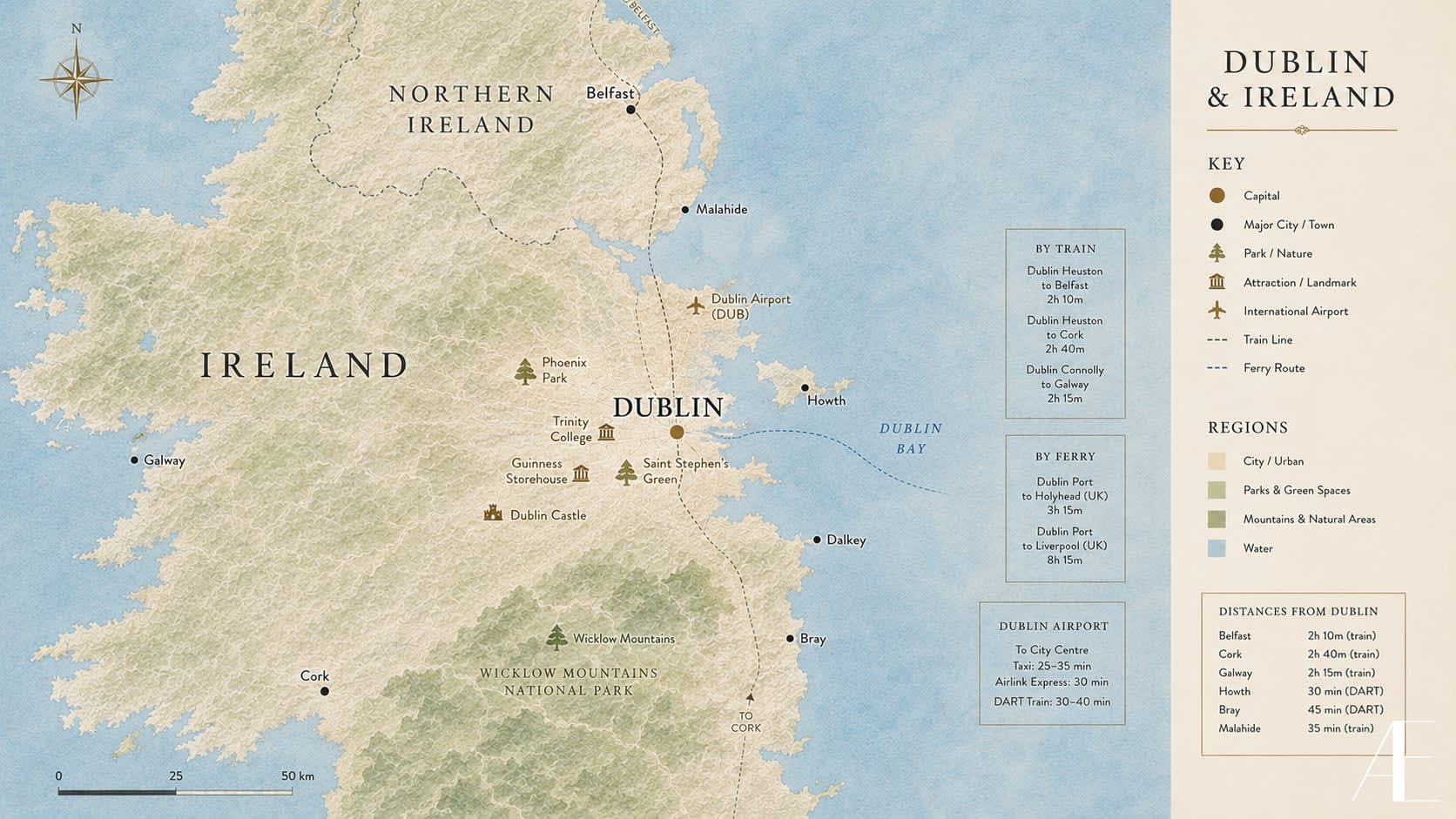
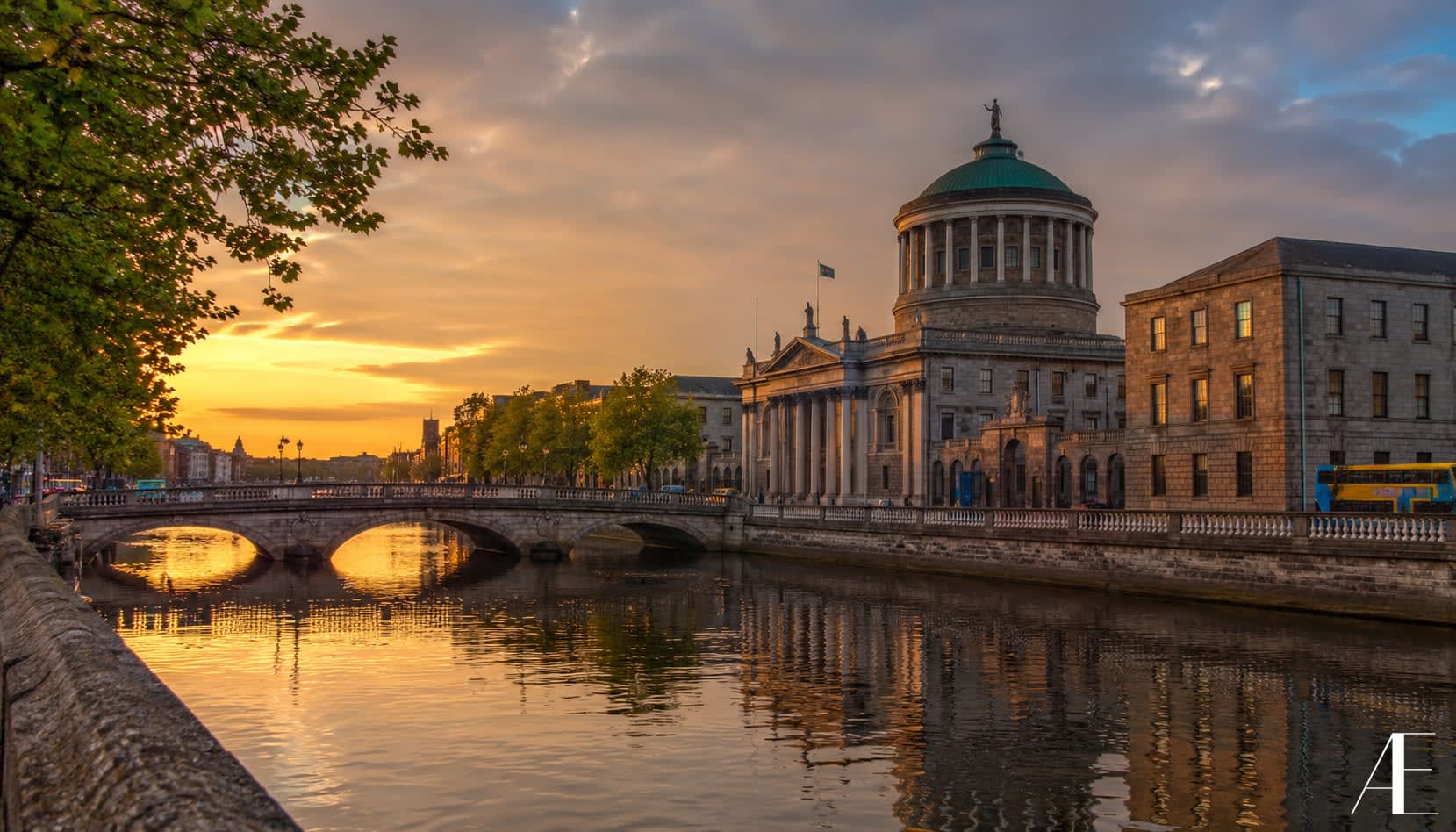
Dublin is the capital of the Republic of Ireland and the main gateway for most North American clients visiting the island. It sits on Dublin Bay at the mouth of the River Liffey, on Ireland's east coast, with the Dublin Mountains rising to the south and the Irish Sea opening toward Britain to the east.
It is not Ireland's most beautiful landscape, and it is not the entire Irish experience. That distinction matters. Dublin is where clients begin to understand the country: politics, literature, music, migration, whiskey, rebellion, Georgian elegance, working-class humour, and the complicated intimacy of a small capital with an outsized cultural voice.
For travel agents, Dublin is easy to sell but easy to under-plan. Clients often treat it as a soft landing before "real Ireland": arrive, see Trinity, drink a Guinness, leave for the west. That is a mistake. Dublin rewards clients who give it enough time and who understand that the city is not just a list of sights.
One-line pitch: "Dublin is the best introduction to Ireland: literary, musical, historic, walkable, pub-friendly, food-forward, and easy to combine with the rest of the island."
Quick Reference
- Country / Region: Republic of Ireland
- Time zone: GMT in winter; Irish Standard Time (UTC+1) from late March to late October
- Currency: Euro (EUR / €)
- Language: English is the everyday language. Irish appears on all signage, public transport and official institutions.
- Best airport: Dublin Airport (DUB), approximately 10 km north of the city centre. No rail connection to the city; transfer by express coach, bus, or taxi.
- From Montreal (YUL): Air Transat has listed seasonal service; Air Canada has filed planned nonstop service for 2027. Always verify current schedules before quoting.
- From Toronto (YYZ): Nonstop service available seasonally on Aer Lingus and Air Canada. Verify exact operating dates.
- From New York (JFK/EWR): Nonstop service widely available on Aer Lingus and U.S. carriers.
- Visa, Canadian citizens: No visa required for stays up to 90 days.
- Visa, American citizens: No visa required for tourism or business stays up to 90 days.
- Schengen note: Ireland is in the European Union but not in the Schengen Area. A Schengen visa does not cover Ireland.
- Best months: May, June, September, and early October.
The Mental Map
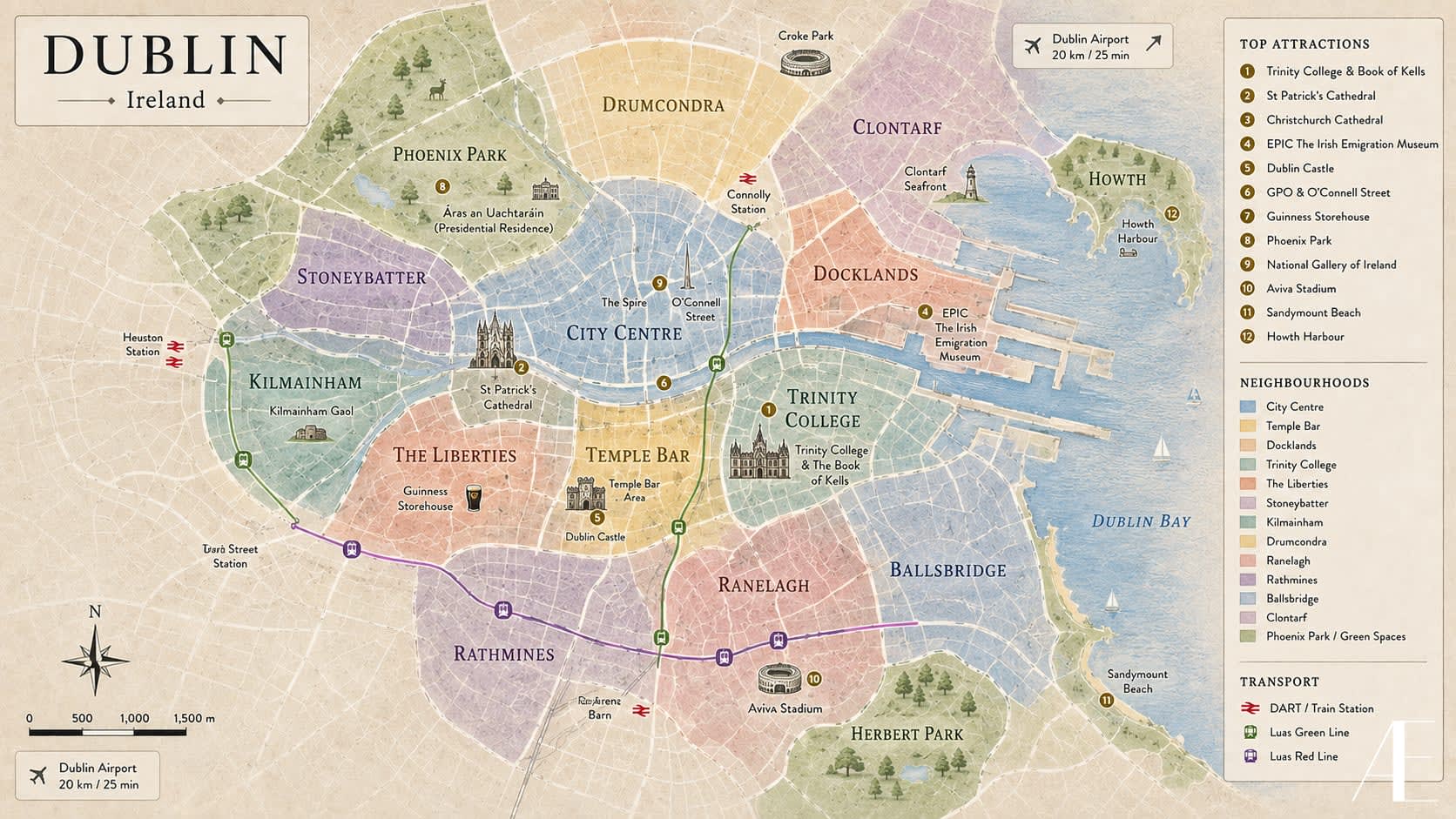
Dublin is organised by the River Liffey, which runs west to east through the city into Dublin Bay. The traditional shorthand is northside and southside, a distinction that is social, cultural, and historical.
The key north-south axis: O'Connell Street, across the Liffey via O'Connell Bridge, then College Green, Grafton Street and St Stephen's Green. This is how most clients orient themselves.
The most useful planning principle: Group Dublin by neighbourhood clusters. A day in Georgian Dublin (Trinity, National Gallery, Merrion Square, National Museum) is coherent. A day in the Liberties (Guinness, Teeling, St Patrick's) is coherent. Trying to combine Kilmainham and Howth and the Docklands in a single day is not. The five neighbourhoods agents need to know
Trinity / Grafton Street
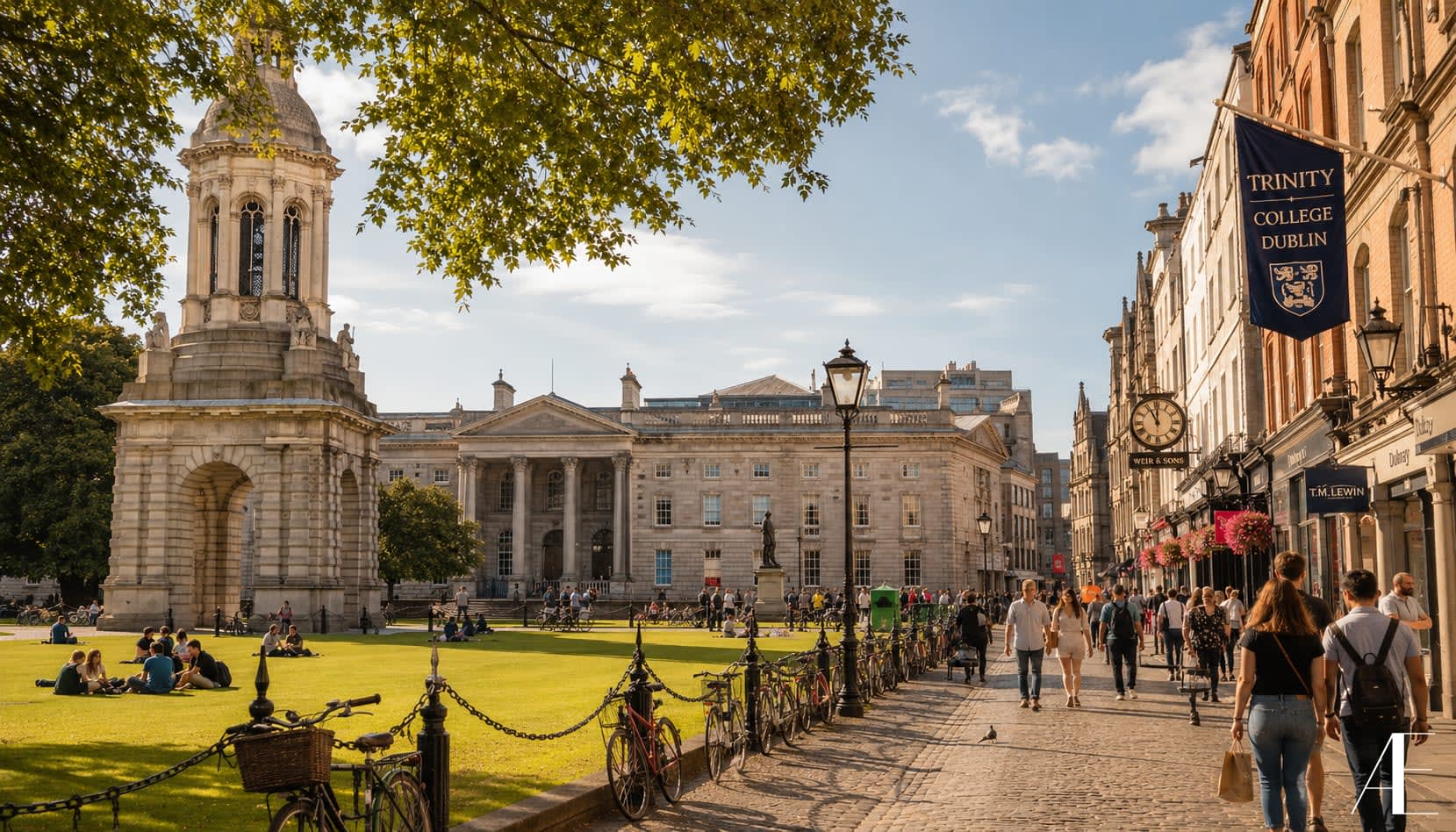
The polished visitor core. Central, elegant, useful. Right for first-timers and luxury clients.
The Liberties
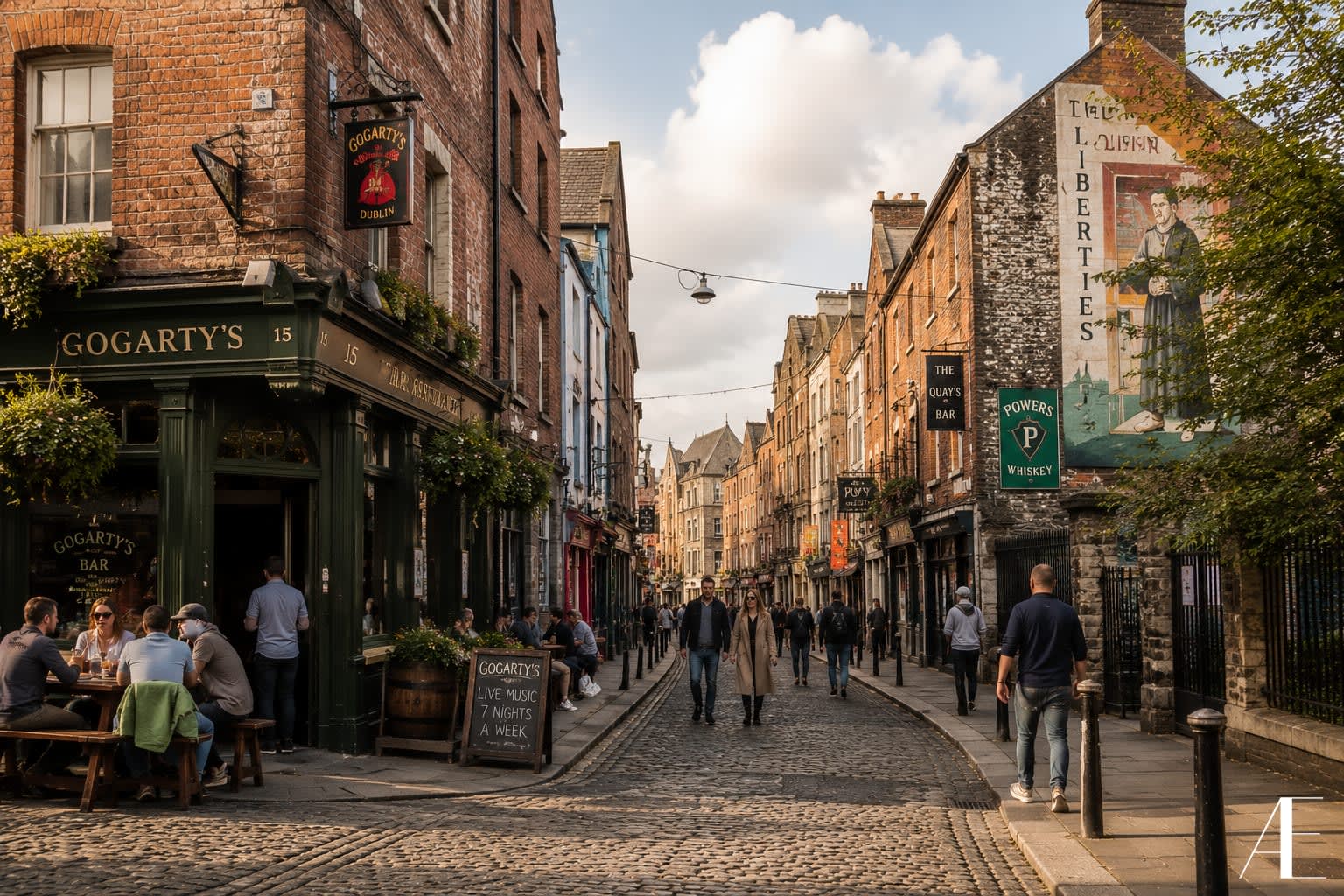
One of Dublin's oldest working-class districts. Guinness Storehouse, Teeling Whiskey, St Patrick's Cathedral, a growing food scene and strong local identity. Right for whiskey clients, history clients and repeat visitors.
Georgian Dublin / Merrion Square
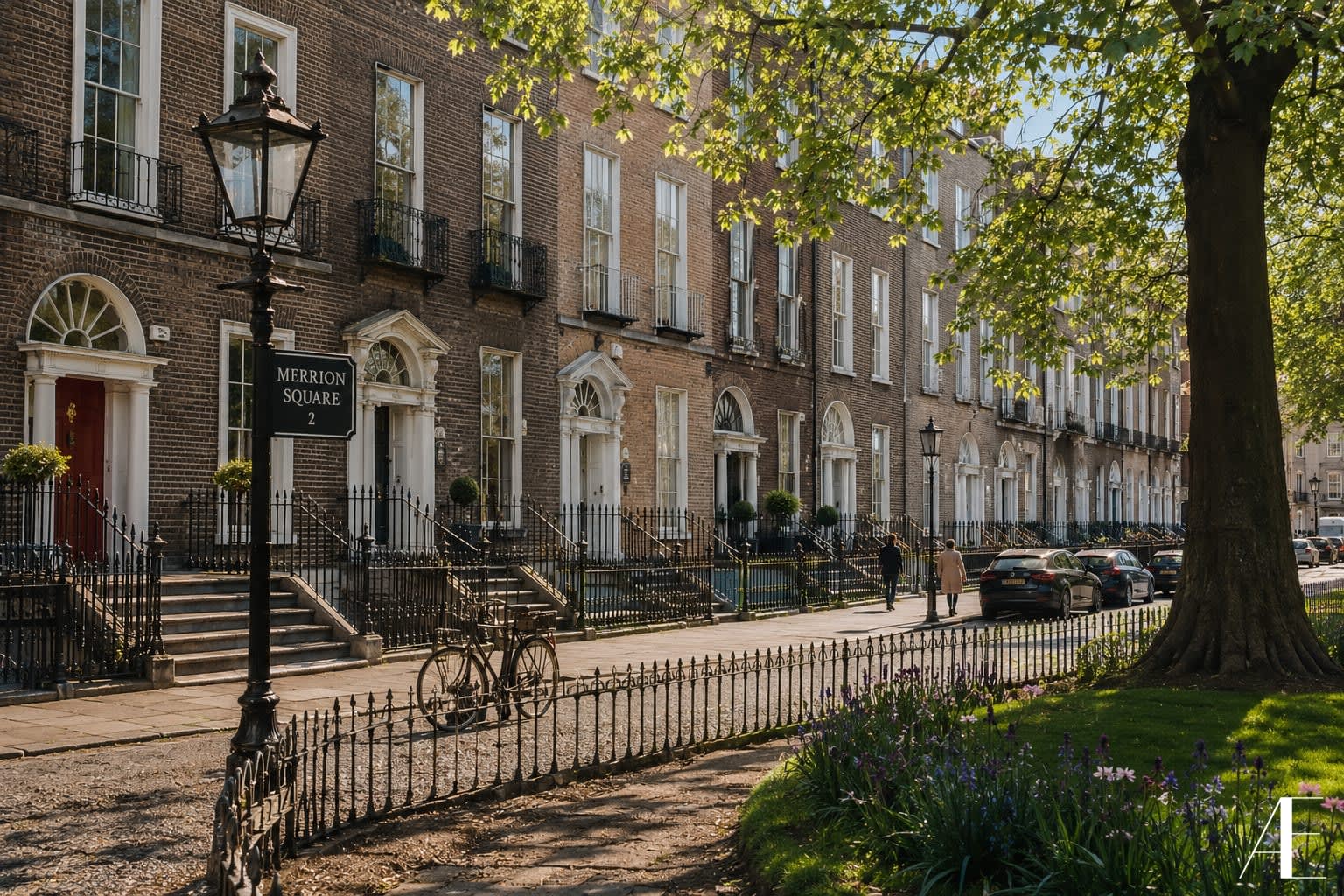
Elegant southside squares, colourful doors, the National Gallery, the National Museum, Oscar Wilde's statue in the square opposite his birthplace. One of the finest urban squares in Europe. Right for culture and architecture clients.
Smithfield / Stoneybatter
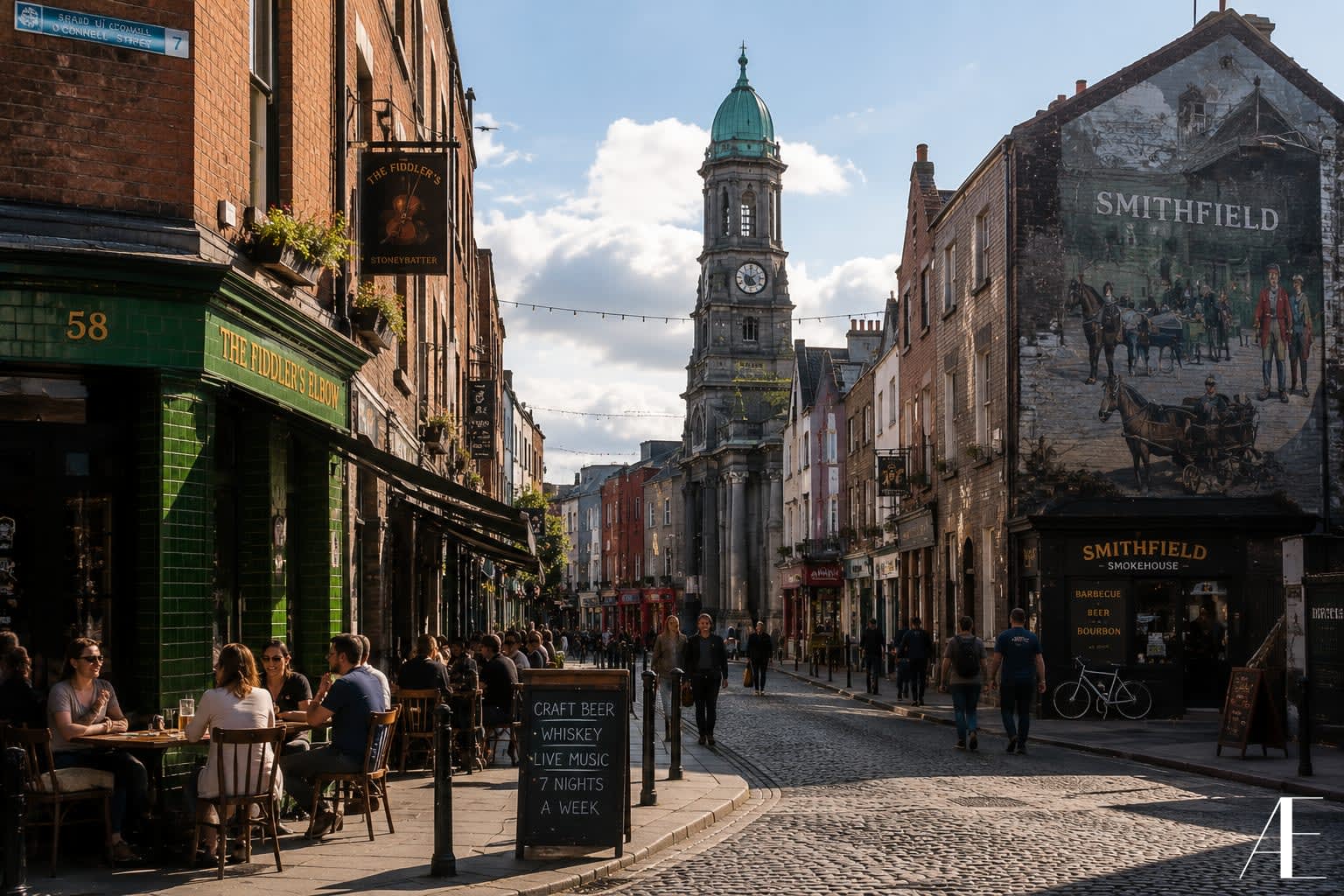
Rapidly transformed neighbourhood with Jameson Bow St., excellent independent cafés, serious bars and restaurants. Right for repeat visitors and food clients.
Docklands
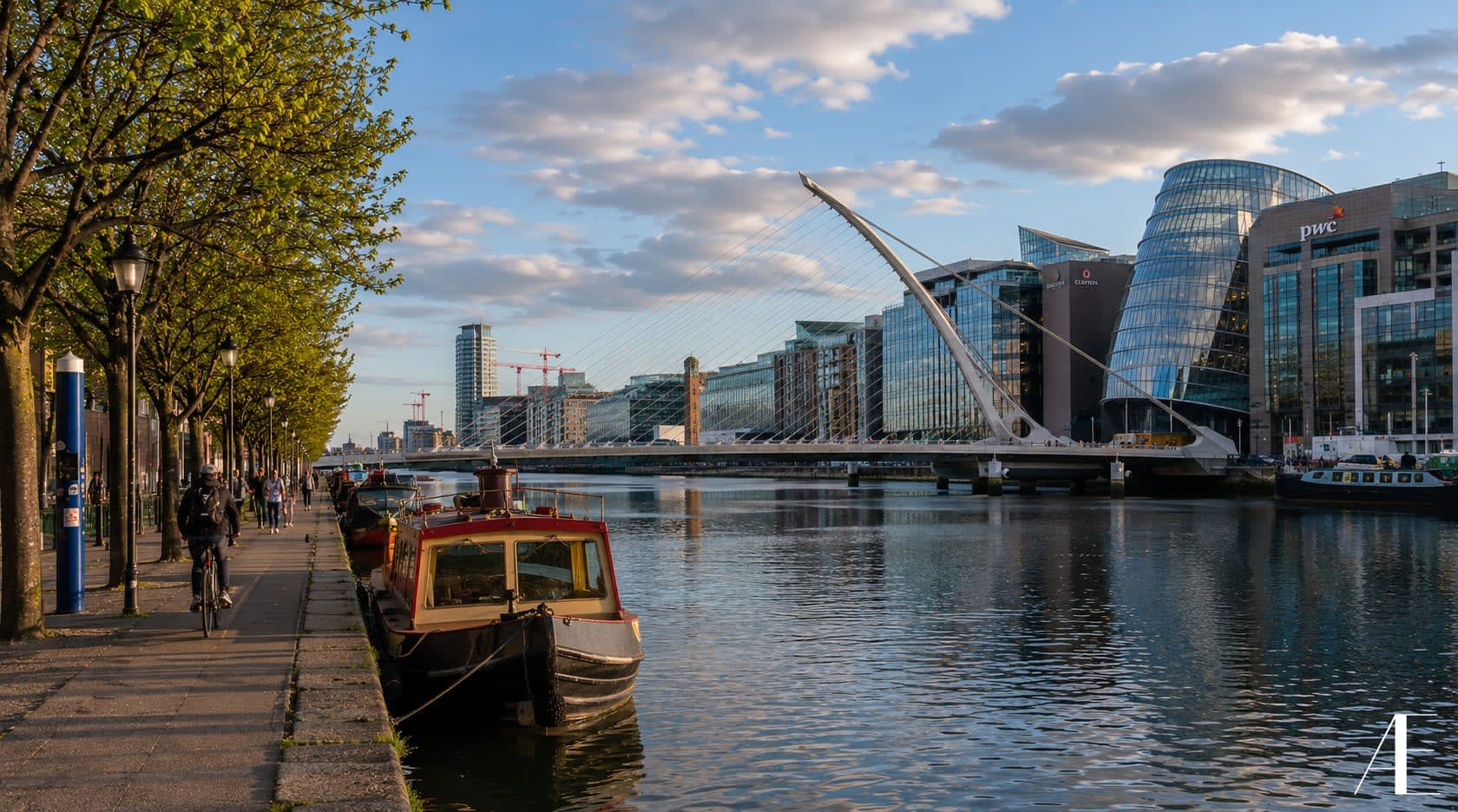
Modern Dublin. EPIC The Irish Emigration Museum, the Samuel Beckett Bridge (designed by Calatrava in the shape of a harp), the Bord Gáis Energy Theatre. Right for cruise clients, business travellers and anyone visiting EPIC.
The Five Things Every Agent Should Know
Kilmainham Gaol must be booked before the client leaves
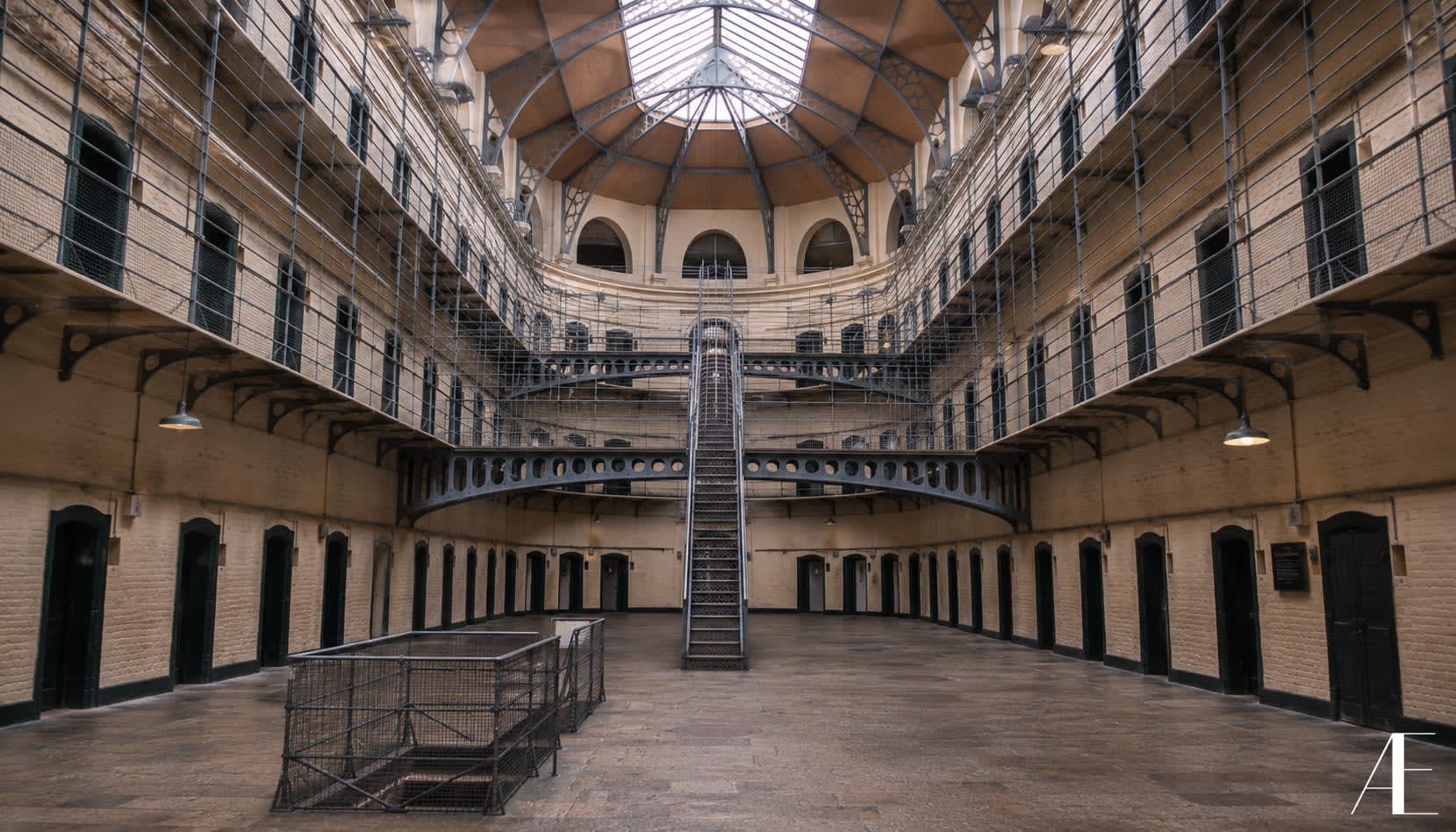
It is guided tour only, availability is consistently limited, and there is no reliable walk-up option in peak season. If clients want Kilmainham, they book it before they board the plane. No exceptions.
Temple Bar is for the walk-through, not the evening
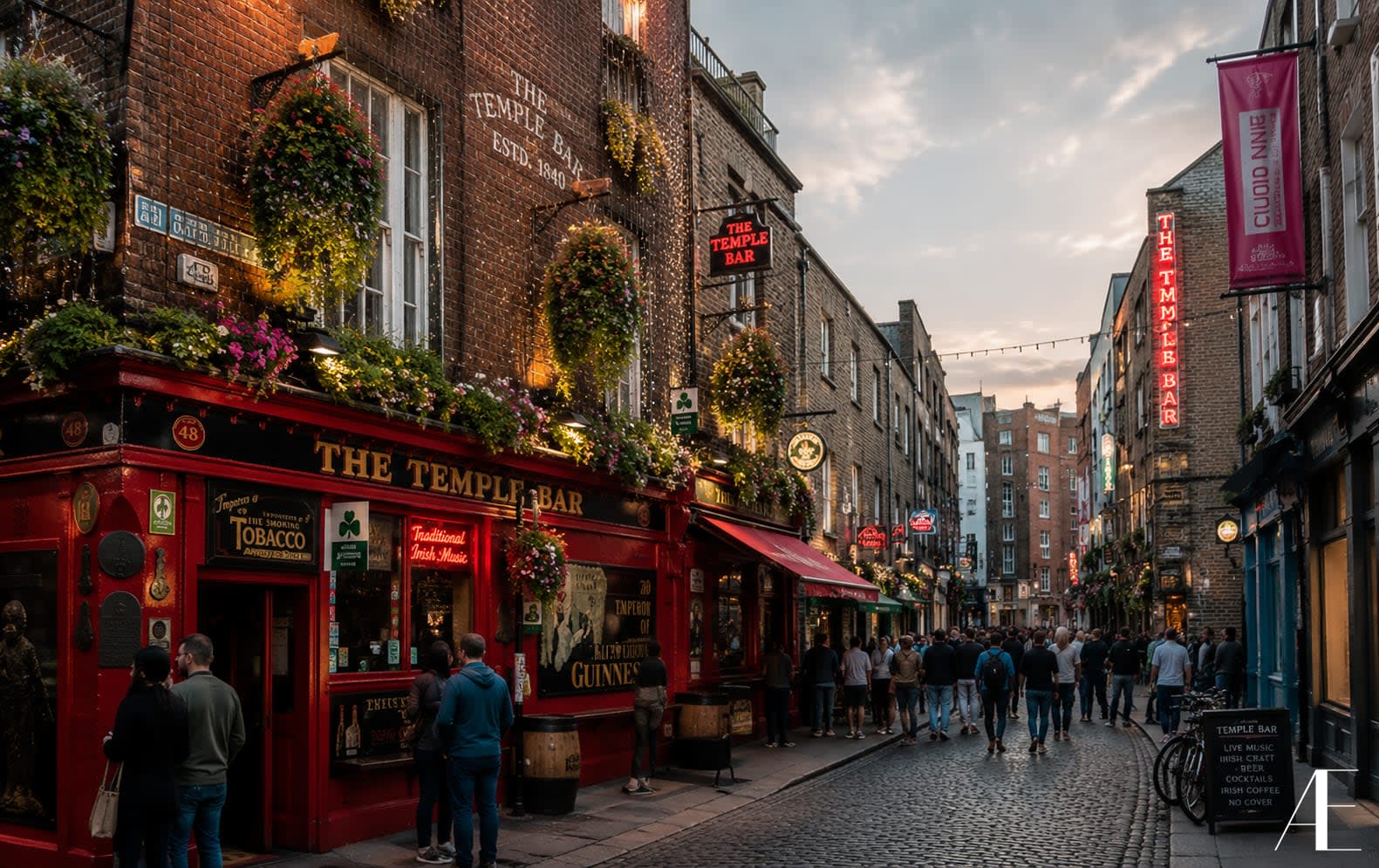
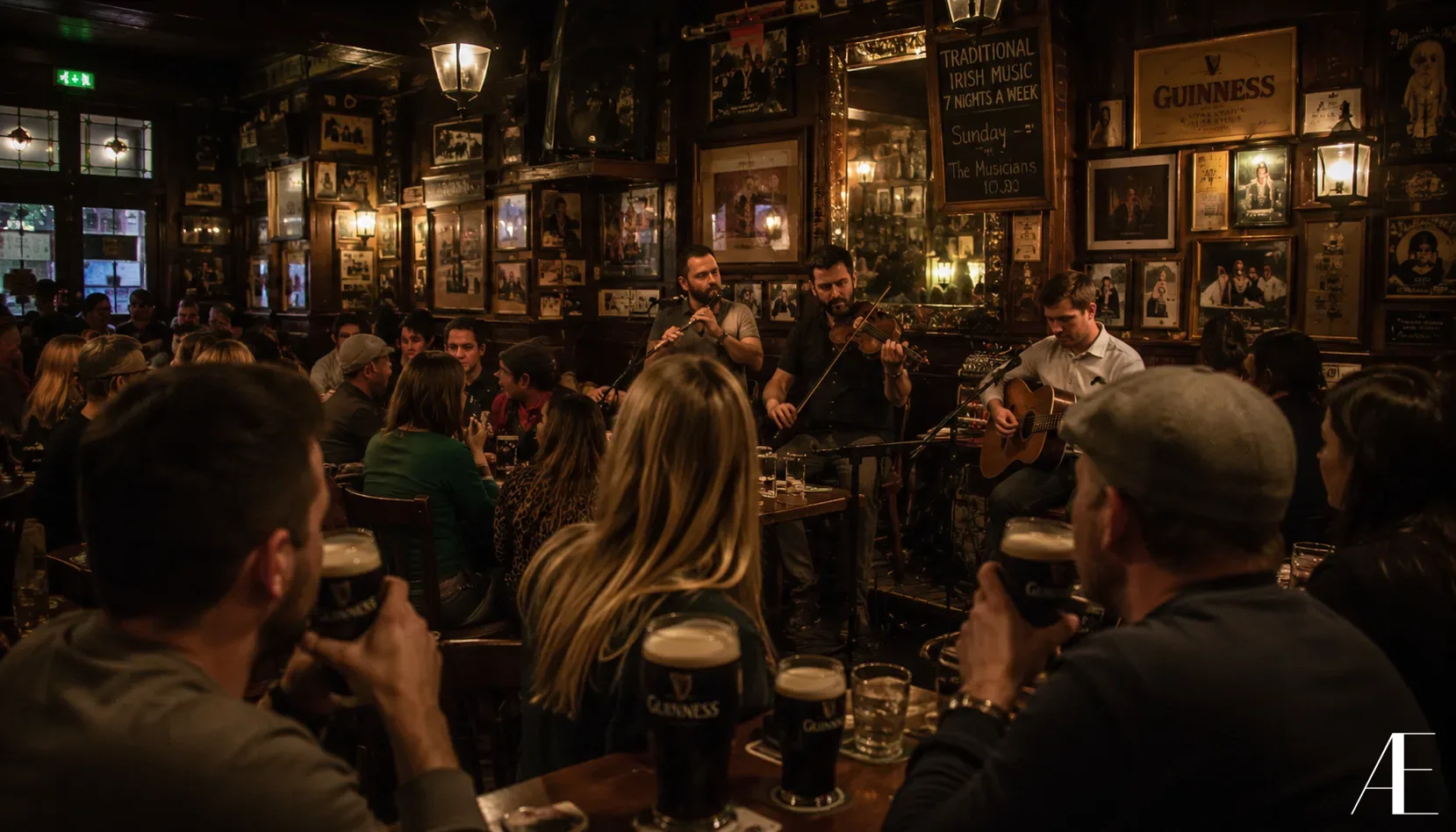
It is central, photogenic and useful as an orientation point. It is not where clients should spend their evening. The best Dublin pubs are a short walk away. The difference between recommending the right pub and the wrong one is one of the most tangible ways an agent adds value for a Dublin client.
Dublin is the front door to the rest of the island
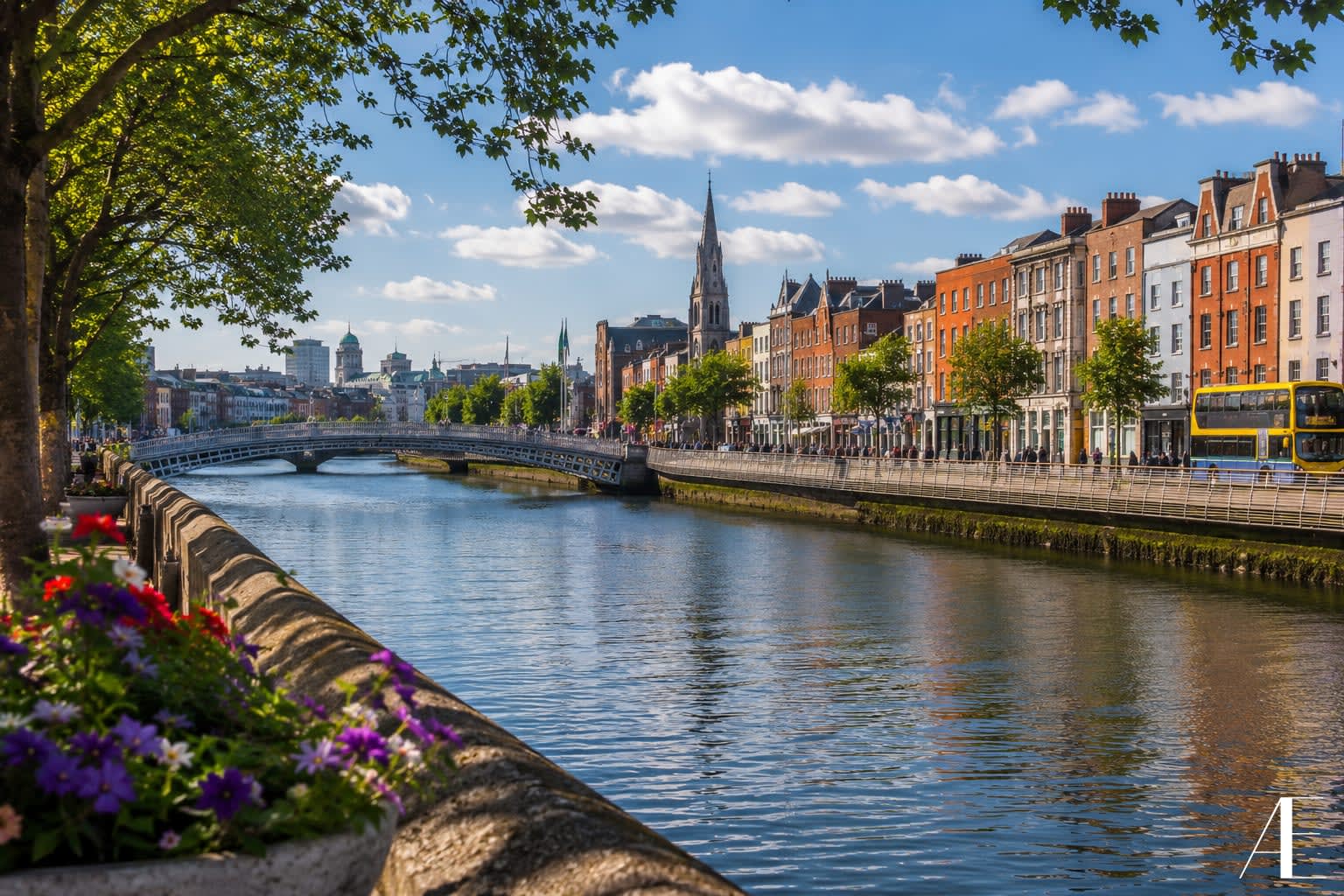
The instinct to rush through Dublin and get to "real Ireland" is understandable but wrong. Give clients three nights in Dublin and they arrive in Galway or Kerry with a completely different relationship to what they are seeing. Dublin makes the rest of Ireland make sense.
EPIC The Irish Emigration Museum is not just an attraction
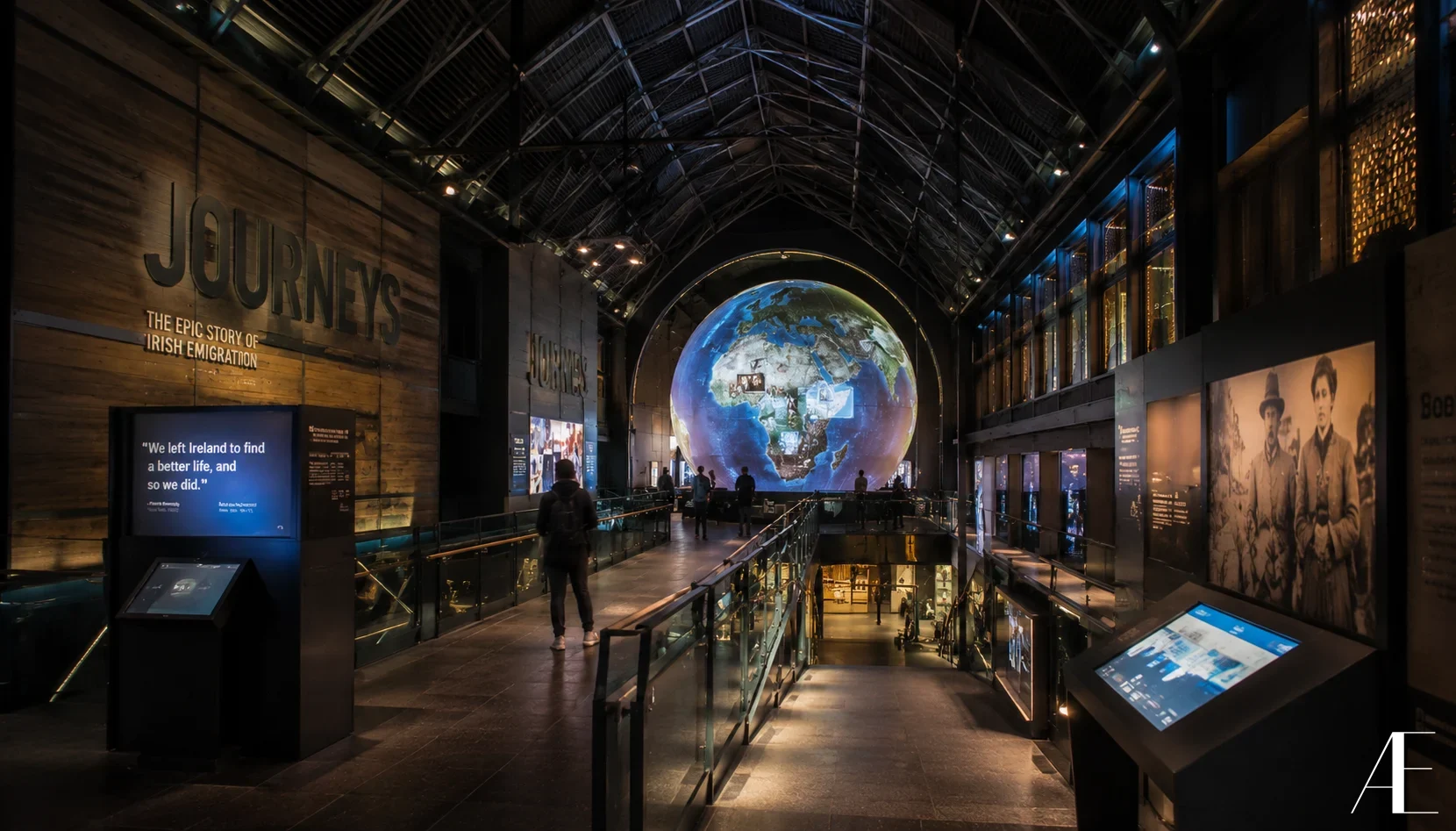
For Canadian and American clients with Irish ancestry, this museum can be genuinely and unexpectedly emotional. It explains why Irish identity is simultaneously local and global, and why a city of half a million can claim cultural ownership over tens of millions of people worldwide. Always recommend it for the right client.
The food scene is better than clients expect
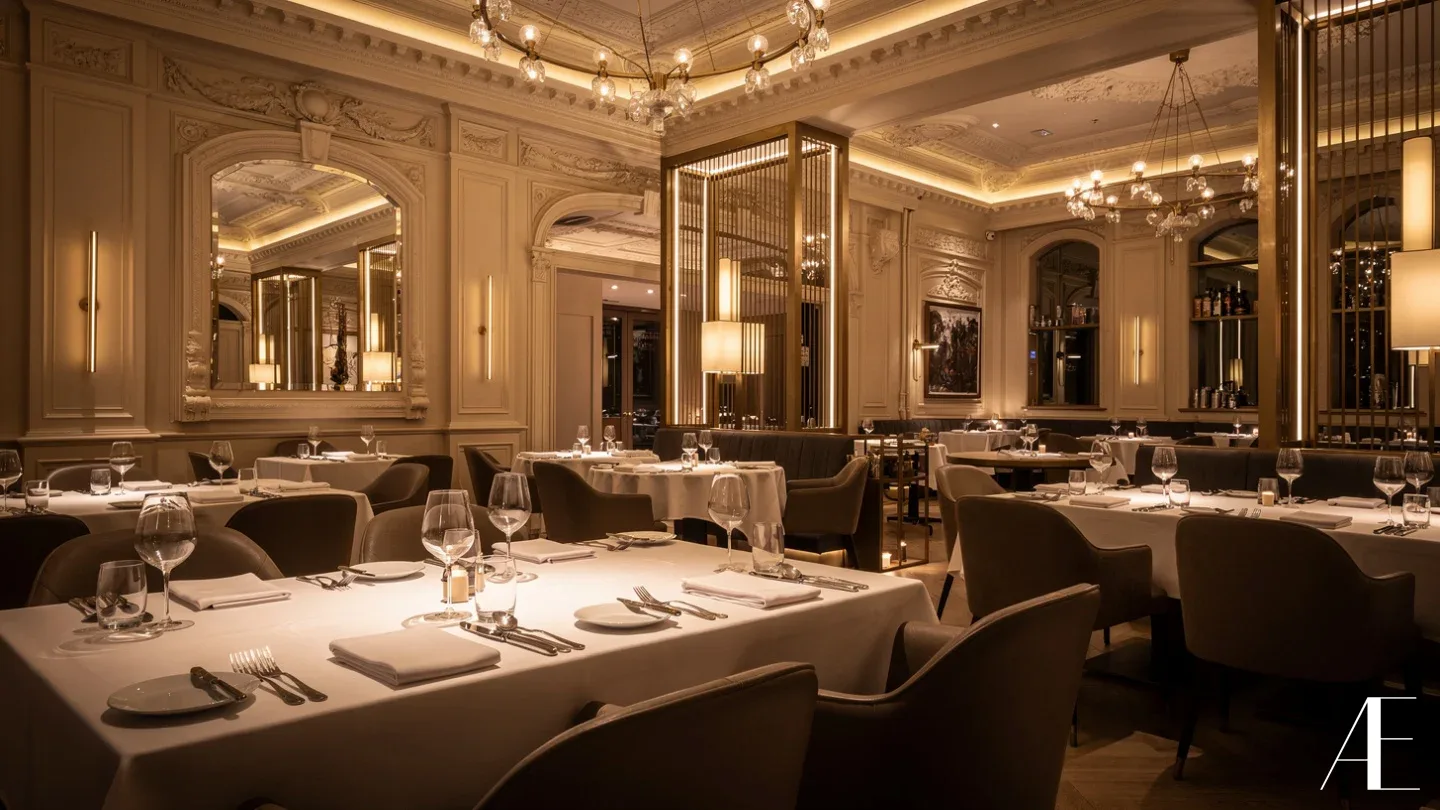
Dublin now has multiple Michelin-starred restaurants, excellent coffee, outstanding bakeries, modern Irish cooking at every price point, and whiskey experiences that have nothing to apologise for. Lead with the surprise. Clients will be impressed.
When to Go
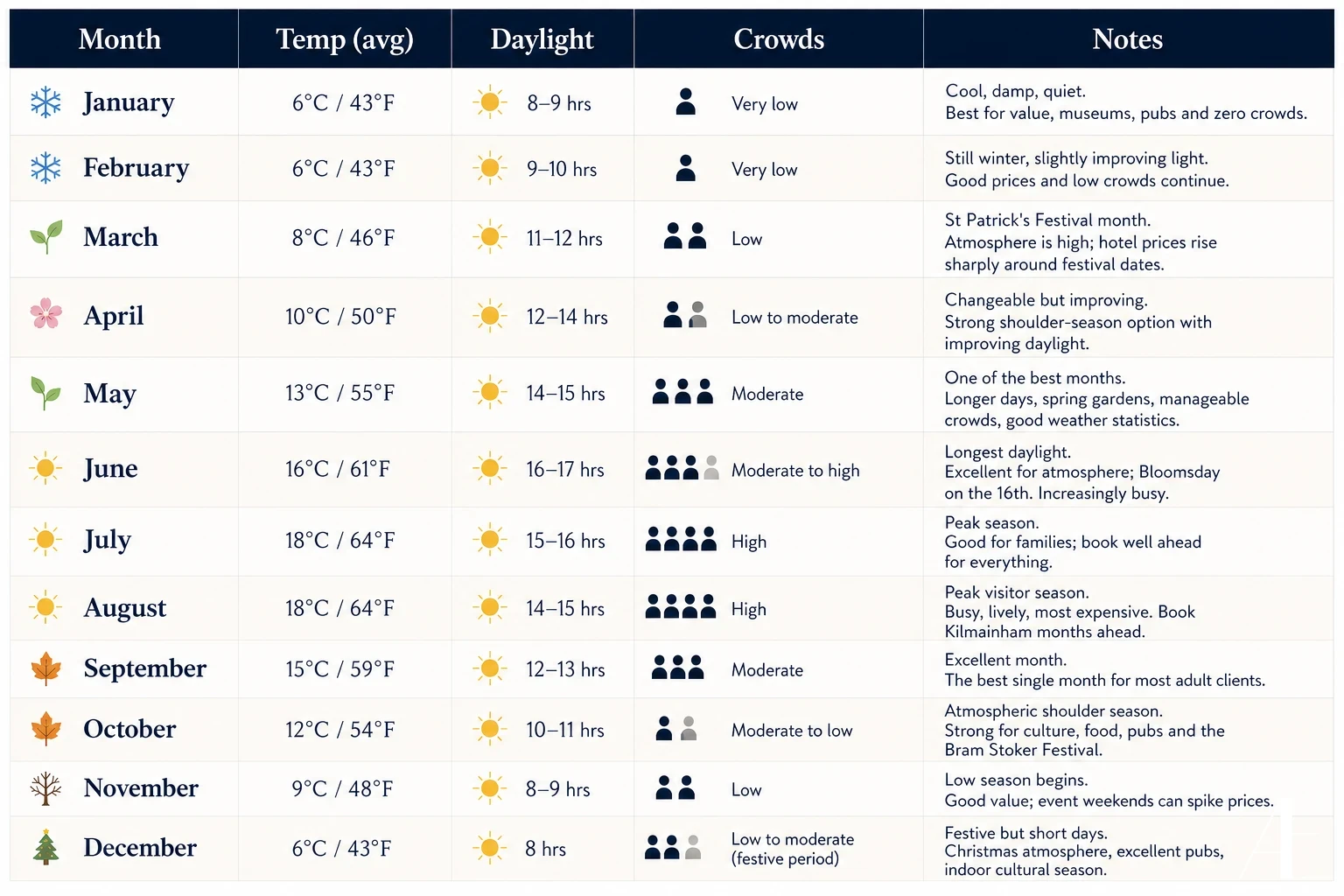
Best months: May, June, September, early October The best balance of daylight, mild weather and manageable crowds. September in particular is consistently recommended by experienced Dublin travellers as the ideal month.
June: Long evenings (sunset after 10pm at midsummer), Bloomsday on 16 June (the most literary day in Europe), and the beginning of the busy season. Book ahead.
March: St Patrick's Festival in mid-March brings significant energy to the city but also significant crowds and hotel prices. Book 3 to 6 months ahead for the festival period.
August: Peak season. Very busy at Trinity, the Guinness Storehouse and Kilmainham. Worth it for the long evenings; plan ahead accordingly.
November to February: Lowest hotel prices of the year, genuinely atmospheric pub and music season, short days. Good for repeat visitors and budget-conscious clients who want to see the real city.
How Many Days
1 day (cruise call only): Pick one theme and commit to it. Trinity and Georgian Dublin; Guinness and the Liberties; or Kilmainham and Phoenix Park. Do not attempt all three. The clients who try to see everything in a single day see none of it properly.
2 days (minimum city stay): Day 1 covers Trinity, Grafton Street, Georgian Dublin and one major museum. Day 2 covers Guinness or Jameson, St Patrick's or Christ Church, Temple Bar walk-through, and a proper pub in the evening. Workable but tight.
3 days (the standard, and the minimum recommendation): Adds Kilmainham Gaol (essential, book in advance), EPIC or the National Museum, a stronger restaurant evening and a real pub experience beyond the tourist circuit. Three nights is the minimum for a client who wants to come home understanding Dublin.
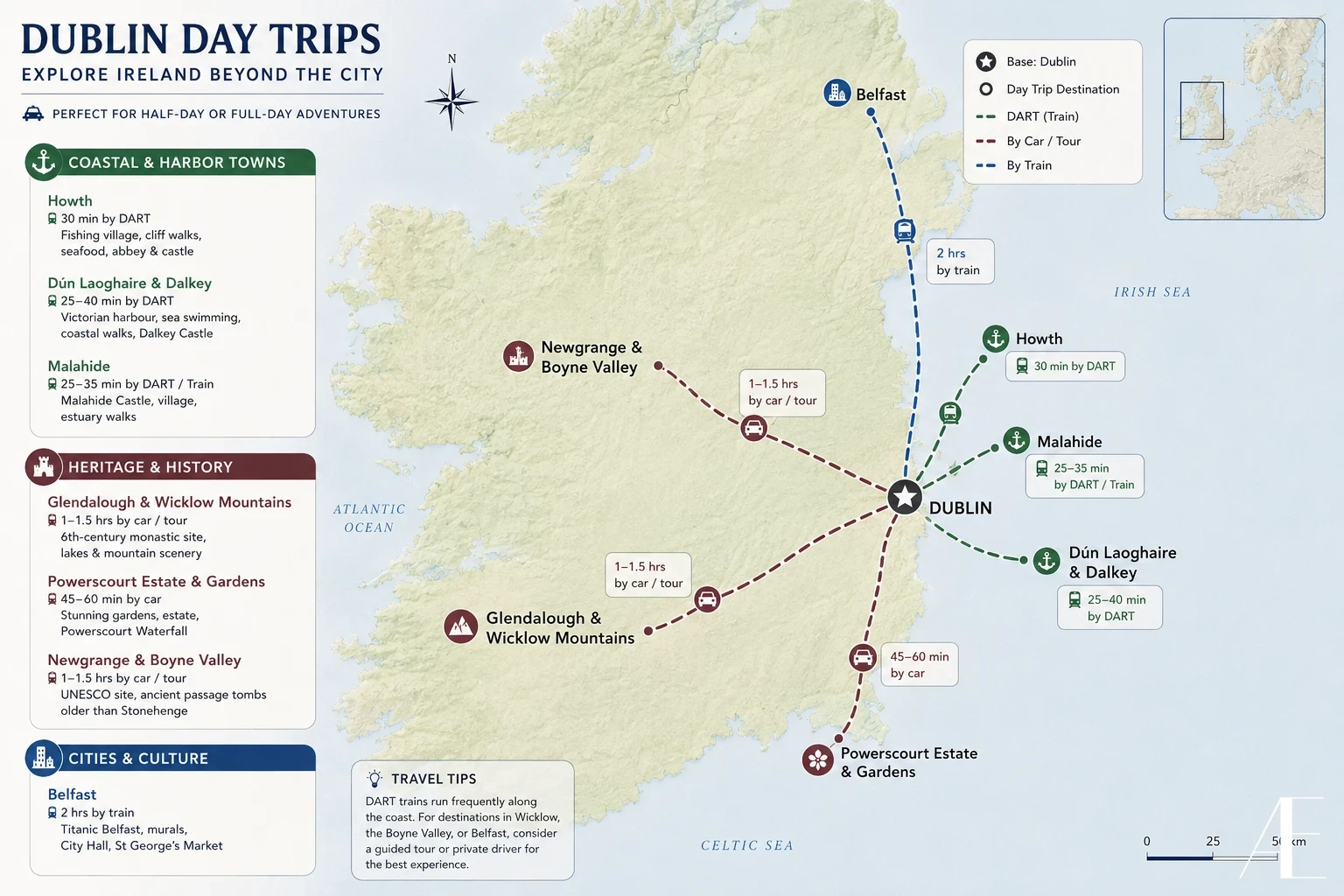
4 to 5 days (the complete first visit): Adds a coastal DART half-day to Howth or Dalkey, neighbourhood time in Stoneybatter or Ranelagh, Phoenix Park, and a proper day trip to Glendalough and the Wicklow Mountains or to Kilkenny.
The rule: Two nights is a landing. Three nights is the proper minimum. Four nights is where Dublin stops being a gateway and becomes a destination in its own right.
The Must-Knows for Selling It
For the history and politics client: Kilmainham Gaol, the GPO, Dublin Castle, Glasnevin Cemetery and the National Museum form one of the most coherent and emotionally powerful historical sequences in any European capital. Lead with the 1916 Easter Rising story and frame it correctly: not as Irish history only, but as one of the most consequential events in 20th-century European political history.
For the literary client: This is the most literary city in the English-speaking world and you can walk all of it. Swift, Wilde, Joyce, Beckett, Yeats, MoLI, the Abbey Theatre, Davy Byrnes on Duke Street where Bloom stopped for a gorgonzola sandwich in Ulysses, Toner's on Baggot Street where Yeats allegedly sat in stony silence and left after one drink.
For the ancestry and diaspora client: EPIC is the non-negotiable starting point. Pair it with Glasnevin Cemetery and, if the client wants to go further, a genealogy research session. Handle this visit with appropriate care. It is often the most emotionally meaningful thing a North American client does in Ireland.
For the whiskey client: Jameson Bow St. in Smithfield for the brand narrative and a good introductory tasting. Teeling in the Liberties for a working craft distillery with a different character. The Cobblestone pub in Smithfield for a proper pint after.
For the foodie: Lead with the surprise. Chapter One by Mickael Viljanen (two Michelin stars), Bastible in Portobello, Variety Jones in the Liberties. For more casual but excellent meals: Uno Mas on Aungier Street, Etto on Merrion Row, the Winding Stair above a bookshop on the north quays. The clients will not expect Dublin to eat this well.
For the cruise client: Confirm whether the ship docks at Dublin Port or tenders into Dún Laoghaire. These create fundamentally different logistics. See The Cruise Connection: Dublin for the full port guide.
For the "we've already done London" client: "London is one city. Dublin is the door into an entirely different culture, one that shaped North America as much as Britain did. They share a language and almost nothing else."
One Conversation Starter;
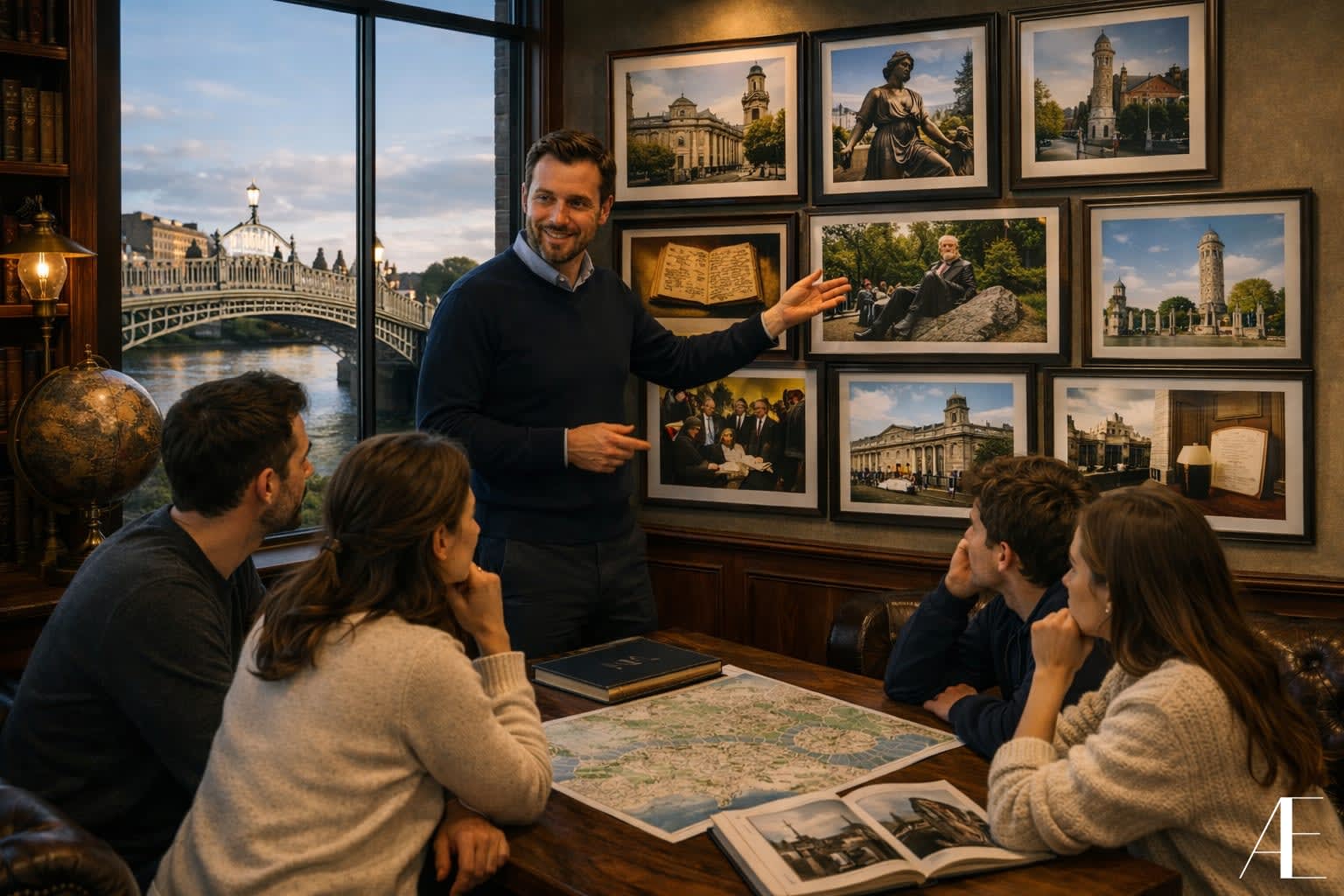
Sweny's Pharmacy on Lincoln Place, near Trinity College, still sells the lemon soap that Leopold Bloom buys in James Joyce's Ulysses. The shop has been preserved exactly as it was in the novel and is staffed by volunteers who read Joyce aloud to whoever is there. It costs nothing to enter. It is one of the stranger and more moving things in Dublin, and it takes ten minutes to explain to a client before they go. They will remember it.
Learn More
For the complete Dublin guide covering full history, all attractions with practical details, restaurants, hotels, seasonal breakdown, day trips, client objections and curiosities, see Dublin: The Complete Agent Guide in the Academy.
For port-by-port cruise details, shore excursion recommendations, and what is realistic in a Dublin port call, see The Cruise Connection: Dublin.


Member discussion